Kirjojen hintavertailu. Mukana 12 253 529 kirjaa ja 12 kauppaa.

Kirjailija

Alex J. Bellamy

Kirjat ja teokset yhdessä paikassa: 21 kirjaa, julkaisuja vuosilta 2002-2023, suosituimpien joukossa The Responsibility to Protect. Vertaile teosten hintoja ja tarkista saatavuus suomalaisista kirjakaupoista.

21 kirjaa

Kirjojen julkaisuhaarukka 2002-2023.

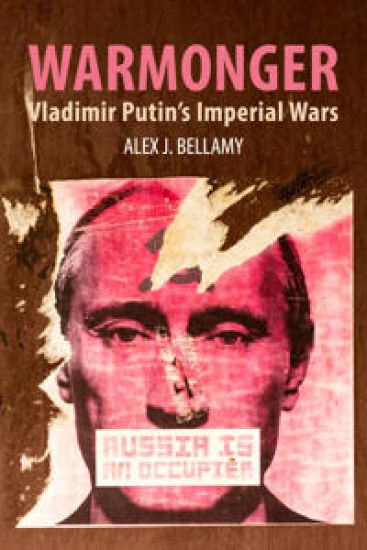
Warmonger

Warmonger

Alex J. Bellamy

AGENDA PUBLISHING
2023
sidottu
Russia’s invasion of Ukraine in 2022 was a war long in the making and is the latest in a series of military interventions that have showcased Vladimir Putin’s deadly imperial ambitions and the ruthless and bloody strategies that serve his vision of a greater Russia. Putin’s Russia wants its empire back and it has taken the events in Ukraine for the West to finally realize it. Alex Bellamy examines the road to Ukraine 2022 and charts the path from Chechnya, Putin’s first war which helped propel him to the presidency, through to conflict in Georgia, Crimea, the South Caucasus and Syria. He shows the central role war has played in Putin’s rule and how it has helped craft a new social contract between president and people grounded in a shared vision of Russian national identity. For anyone wanting to understand the hows and whys of the war in Ukraine, Alex Bellamy’s clear and insightful analysis is a must-read.
Warmonger

Warmonger

Alex J. Bellamy

AGENDA PUBLISHING
2023
nidottu
Russia’s invasion of Ukraine in 2022 was a war long in the making and is the latest in a series of military interventions that have showcased Vladimir Putin’s deadly imperial ambitions and the ruthless and bloody strategies that serve his vision of a greater Russia. Putin’s Russia wants its empire back and it has taken the events in Ukraine for the West to finally realize it. Alex Bellamy examines the road to Ukraine 2022 and charts the path from Chechnya, Putin’s first war which helped propel him to the presidency, through to conflict in Georgia, Crimea, the South Caucasus and Syria. He shows the central role war has played in Putin’s rule and how it has helped craft a new social contract between president and people grounded in a shared vision of Russian national identity. For anyone wanting to understand the hows and whys of the war in Ukraine, Alex Bellamy’s clear and insightful analysis is a must-read.
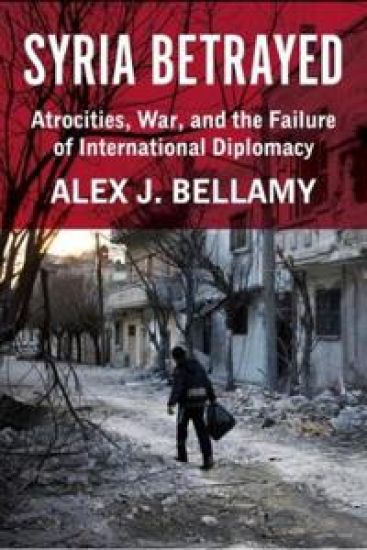
Syria Betrayed

Syria Betrayed

Alex J. Bellamy

Columbia University Press
2022
sidottu
The suffering of Syrian civilians, caught between the government’s barrel bombs and chemical weapons and religious fanatics’ beheadings and mass killings, shocked the world. Yet despite international law and political commitments proclaiming a responsibility to protect civilians from mass atrocities, world actors stood aside as Syria burned. Again and again, neighboring states, global powers, and the United Nations opted for half-measures or made counterproductive choices that caused even more harm.Alex J. Bellamy provides a forensic account of the world’s failure to protect Syrian civilians from mass atrocities. Drawing on interviews with key players, documents from the United Nations and other international organizations, and sources from the Middle East and beyond, he traces the missteps of the international response to Syria’s civil war. Bellamy systematically examines the various peace processes and the reasons they failed, highlighting potential alternative paths. He details how and why key actors prioritized their own national interest, geopolitical standing, regional stability, local rivalries, counterterrorism goals, or domestic politics rather than the welfare of Syrians. Some governments settled on unrealistic strategies founded on misguided assumptions while others pursued naked ambition; the United Nations descended into irrelevance and even complicity. Shedding new light on the decisions that led to a vast calamity, Syria Betrayed also draws out lessons for more effective responses to future civil conflicts.
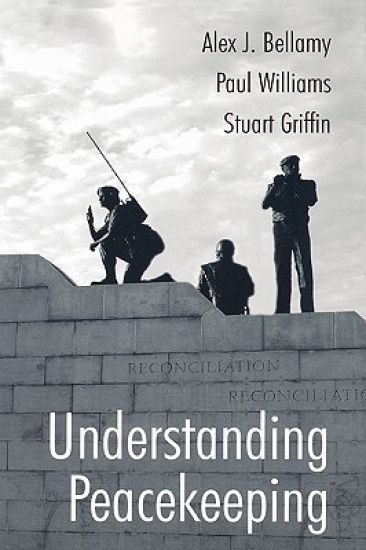
Understanding Peacekeeping, 2nd Edition

Understanding Peacekeeping, 2nd Edition

Alex J. Bellamy; Paul Williams; Stuart Griffin

John Wiley Sons
2020
sidottu
Peace operations are now a principal tool for managing armed conflict and building world peace. The fully revised, expanded and updated second edition of Understanding Peacekeeping provides a comprehensive and up-to-date introduction to the theory, practice and politics of contemporary peace operations. Drawing on more than twenty-five historical and contemporary case studies, this book evaluates the changing characteristics of the contemporary environment in which peacekeepers operate, what role peace operations play in wider processes of global politics, the growing impact of non-state actors, and the major challenges facing today's peacekeepers. All the chapters have been revised and expanded and eight new chapters have been added. Part 1 summarizes the central concepts and issues related to peace operations. It includes a new discussion of the theories of peace operations and analysis of the emerging responsibility to protect norm. Part 2 charts the historical development of peacekeeping from 1945 and includes a new chapter on peace operations in the 21st century.In Part 3, separate chapters analyze seven different types of peace operations: preventive deployments; traditional peacekeeping; assisting transition; transitional administrations; wider peacekeeping; peace enforcement; and peace support operations. Part 4 looks forward and examines the central challenges facing today's peacekeepers, namely, globalization, the regionalization of peace operations, the privatization of security, civilian protection, policing and gender issues. The second edition of Understanding Peacekeeping will be essential reading for students and scholars of peace and conflict studies, security studies, and international relations.
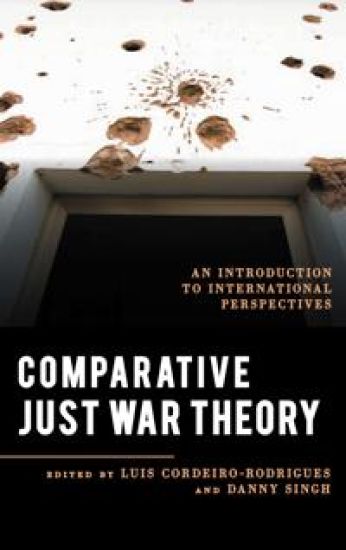
Comparative Just War Theory

Comparative Just War Theory

Alex J. Bellamy

Rowman Littlefield
2019
sidottu
There are a variety of reasons why it is important to have widespread cross-cultural and cross-ideological agreement regarding how to fight war (jus in bello) and when to enter war (jus ad bellum). Firstly, international humanitarian law was created in the West and states of power may either sidestep or use these norms as a political umbrella to pursue realist political ambitions. Secondly, war involves addressing the morality of killing and using violence and these two are normally impermissible. It is important to avoid biased perspectives and find a reasonable agreement. Thirdly, attacking compounds and media systems that serve military purposes can result to unnecessary deaths of civilians when the rule of proportionality is exercised. Fourthly, there is an increasing involvement of different countries in each other’s’ security legislation. Common grounds on how to understand war are necessary to explore. The major theme of this edited book will precisely address issues regarding the morality of war from a comparative perspective. The chapters in this book will look at two important debates regarding war ethics: a) when is it morally justified to enter in war? b) If one is in war, what are the morally acceptable violent methods? These topics have been debated substantially in the Western liberal context. What this volume does new is to address these topics taking into consideration concepts from non-mainstream Western and non-Western philosophical theories, with the use of concrete examples. Particularly, this means addressing those two issues taking into consideration concepts like Confucian Yi/Rightness, Ahimsa, Class Struggle, Ubuntu, Anarchism, Pacifism, Buddhism, Islam, Jihad, among other concepts. Therefore, this book provides a wider conceptual framework to deal with the morality of war by offering a comparative philosophical approach to just war theory. Fresh insights into how the normative problems that arise from just war can be addressed. Ethnocentrism and the preservation of superpowers’ interests dominate international politics, contravene international law and are not compliant with just war theory. The world organization is largely driven (as a facilitator) for superpowers’ geopolitical interests to wage war, even if not morally justified, and stretching the boundaries of international law. By way of illustration, United Nations (UN) weapons inspectors did not find weapons of mass destruction under Security Council Resolution 1441 (2002) in Iraq but an intervention under the façade of humanitarian justifications was driven by the United States (US) and coalition of the willing. Similarly, in the aftermath of the 9/11 terrorist attacks, the US influenced immediate collective military intervention (via Chapter 51 of the UN Charter) against Al-Qaeda and the Taliban in Afghanistan under Security Council Resolutions 1368 and 1373 (2001). However, Al-Qaeda is a transnational organization, and non-state actor, and is not entirely based in Afghanistan and thus Article 51 only applies, as a last resort, to states that are attacking a UN Member State.[1] The intervention was not jus ad bellum. Therefore, an increasing moral concern in contemporary politics and moral theory is to address moral issues from a non-ethnocentric point of view. In terms of moral theory, this pattern is noticeable with the increasing relevance of comparative philosophy. For example, philosophers such as Chenyang Li (Li 2016), Thaddeus Metz and Daniel Bell (Bell and Metz 2011)have compared African and Confucian ethical values and built up a moral theory based on the combination of both schools of philosophy. Bai Tongdong (Bai 2010), Joseph Chan (Chan 2015), Mario Wenning (Wenning 2011), among others, have equally compared Chinese philosophy with Western philosophy with the goal of finding a moral system that comprises East and West. Thus, the concern of finding ethical values that are cross-cultural is an increasing concern in politics and moral philosophy. One particular area where this concern is urgent is the morality of war. The morality of war/just war theory deals with the justification of how and why wars are fought. There are a variety of reasons why it is important to have widespread cross-cultural and cross-ideological agreement regarding how to fight war (jus in bello) and when to enter war (jus ad bellum). Firstly, it can be argued that international humanitarian law was created in the West (deriving from the visit of Swiss businessman Henri Dunant to the aftermath of the Battle of Solferino[2]) and under a realist perspective in international relations the international system is anarchic meaning that states of power may either sidestep or use these norms as a political umbrella to pursue political ambitions. Secondly, war involves addressing the morality of killing and using violence and these two are normally impermissible. Therefore, to justify something that is usually considered morally impermissible it is important to avoid biased perspectives and find a reasonable agreement. Thirdly, attacking compounds and media systems that serve military purposes can result to unnecessary deaths of civilians as evident with the North Atlantic Treaty Organization (NATO) aircraft bombing of Belgrade’s government supported radio television broadcasting on 23 April 1999. Despite 16 civilians (employees of Radio Television Serbia) being killed at its headquarters during these coordinated attacks, NATO justified the bombing (Eko 2012, pp. 393–394). It was argued that the station served a dual military and civilian purpose and therefore the control communications system was a justified target, and not intentionally Serbian civilians, due to its military use that reached over 100 radio relay sites across Serbia (Burri 2015, p. 151). The rule of proportionality is a vexed area and argued as lawful by NATO due to the fact that civilian harm was not excessive in comparison to the success of destroying the military communications command structure.[3] However, the International Criminal Tribunal for Yugoslavia (ICTY) argued that the bombing for three hours of media coverage in comparison to 16 civilian workers being killed was disproportionate but no investigation of NATO negligence from the Office of the Prosecutor was recommended (ICTY 2000, para. 50, 90–91). Fourthly, there is an increasing involvement of different countries in each other’s’ security legislation. For instance China has been cooperating substantially to develop existing peace and security structures in various African countries. Thus, common grounds on how to understand war are necessary to explore. Just war theory has been driven from a liberal Western point of view, with a Christian perspective and almost solely by analytical philosophers. This volume wishes to offer a comparative perspective on just war theory which encompasses neglected perspectives. Drawing on expert contributions that cut across different ideologies and philosophical traditions, this volume provides fresh insights into how the normative problems that arise from just war can be addressed. The aim of this volume is to explore how different philosophical traditions and ideologies can provide normative insights to the conflicts that result of entering war and being in war. Therefore, this book steps out from common edited volumes that only engage with liberal analytic philosophy as a response to these conflicts and tries to offer a wider conceptual framework to deal with the morality of war. Consequently, this book offers a comparative philosophical approach to just war theory. In particular, this volume does this by having articles dedicated to neglected Western views, namely as Anarchism, Pacifism, Marxism, and continental philosophy (Schmitt) and articles dedicated to non-Western views, which encompass Confucian, Indian, African and Islamic perspectives. [1] Singh’s chapter 5 utilizing critical legal theory and international relations theory will provide more substance on a critique of interventions post 9/11. [2] The Battle of Solferino commenced on 24 June 1859 and concerned the victorious Franco-Sardinian Alliance which defeated the Austrian Army. In the aftermath, Dunant witnessed great suffering of the remaining wounded soldiers, inadequate hospitals and then self-published a pamphlet titled ‘A Memory of Solferino’ in 1862 (Crawford and Pert 2015, pp. 5–6). [3] Again, Singh’s chapter 5 will provide more substance on just war ethics being applied as a political umbrella to pursue institutional security and political ambitions.
Comparative Just War Theory

Comparative Just War Theory

Alex J. Bellamy

Rowman Littlefield
2019
nidottu
There are a variety of reasons why it is important to have widespread cross-cultural and cross-ideological agreement regarding how to fight war (jus in bello) and when to enter war (jus ad bellum). Firstly, international humanitarian law was created in the West and states of power may either sidestep or use these norms as a political umbrella to pursue realist political ambitions. Secondly, war involves addressing the morality of killing and using violence and these two are normally impermissible. It is important to avoid biased perspectives and find a reasonable agreement. Thirdly, attacking compounds and media systems that serve military purposes can result to unnecessary deaths of civilians when the rule of proportionality is exercised. Fourthly, there is an increasing involvement of different countries in each other’s’ security legislation. Common grounds on how to understand war are necessary to explore. The major theme of this edited book will precisely address issues regarding the morality of war from a comparative perspective. The chapters in this book will look at two important debates regarding war ethics: a) when is it morally justified to enter in war? b) If one is in war, what are the morally acceptable violent methods? These topics have been debated substantially in the Western liberal context. What this volume does new is to address these topics taking into consideration concepts from non-mainstream Western and non-Western philosophical theories, with the use of concrete examples. Particularly, this means addressing those two issues taking into consideration concepts like Confucian Yi/Rightness, Ahimsa, Class Struggle, Ubuntu, Anarchism, Pacifism, Buddhism, Islam, Jihad, among other concepts. Therefore, this book provides a wider conceptual framework to deal with the morality of war by offering a comparative philosophical approach to just war theory. Fresh insights into how the normative problems that arise from just war can be addressed. Ethnocentrism and the preservation of superpowers’ interests dominate international politics, contravene international law and are not compliant with just war theory. The world organization is largely driven (as a facilitator) for superpowers’ geopolitical interests to wage war, even if not morally justified, and stretching the boundaries of international law. By way of illustration, United Nations (UN) weapons inspectors did not find weapons of mass destruction under Security Council Resolution 1441 (2002) in Iraq but an intervention under the façade of humanitarian justifications was driven by the United States (US) and coalition of the willing. Similarly, in the aftermath of the 9/11 terrorist attacks, the US influenced immediate collective military intervention (via Chapter 51 of the UN Charter) against Al-Qaeda and the Taliban in Afghanistan under Security Council Resolutions 1368 and 1373 (2001). However, Al-Qaeda is a transnational organization, and non-state actor, and is not entirely based in Afghanistan and thus Article 51 only applies, as a last resort, to states that are attacking a UN Member State.[1] The intervention was not jus ad bellum. Therefore, an increasing moral concern in contemporary politics and moral theory is to address moral issues from a non-ethnocentric point of view. In terms of moral theory, this pattern is noticeable with the increasing relevance of comparative philosophy. For example, philosophers such as Chenyang Li (Li 2016), Thaddeus Metz and Daniel Bell (Bell and Metz 2011)have compared African and Confucian ethical values and built up a moral theory based on the combination of both schools of philosophy. Bai Tongdong (Bai 2010), Joseph Chan (Chan 2015), Mario Wenning (Wenning 2011), among others, have equally compared Chinese philosophy with Western philosophy with the goal of finding a moral system that comprises East and West. Thus, the concern of finding ethical values that are cross-cultural is an increasing concern in politics and moral philosophy. One particular area where this concern is urgent is the morality of war. The morality of war/just war theory deals with the justification of how and why wars are fought. There are a variety of reasons why it is important to have widespread cross-cultural and cross-ideological agreement regarding how to fight war (jus in bello) and when to enter war (jus ad bellum). Firstly, it can be argued that international humanitarian law was created in the West (deriving from the visit of Swiss businessman Henri Dunant to the aftermath of the Battle of Solferino[2]) and under a realist perspective in international relations the international system is anarchic meaning that states of power may either sidestep or use these norms as a political umbrella to pursue political ambitions. Secondly, war involves addressing the morality of killing and using violence and these two are normally impermissible. Therefore, to justify something that is usually considered morally impermissible it is important to avoid biased perspectives and find a reasonable agreement. Thirdly, attacking compounds and media systems that serve military purposes can result to unnecessary deaths of civilians as evident with the North Atlantic Treaty Organization (NATO) aircraft bombing of Belgrade’s government supported radio television broadcasting on 23 April 1999. Despite 16 civilians (employees of Radio Television Serbia) being killed at its headquarters during these coordinated attacks, NATO justified the bombing (Eko 2012, pp. 393–394). It was argued that the station served a dual military and civilian purpose and therefore the control communications system was a justified target, and not intentionally Serbian civilians, due to its military use that reached over 100 radio relay sites across Serbia (Burri 2015, p. 151). The rule of proportionality is a vexed area and argued as lawful by NATO due to the fact that civilian harm was not excessive in comparison to the success of destroying the military communications command structure.[3] However, the International Criminal Tribunal for Yugoslavia (ICTY) argued that the bombing for three hours of media coverage in comparison to 16 civilian workers being killed was disproportionate but no investigation of NATO negligence from the Office of the Prosecutor was recommended (ICTY 2000, para. 50, 90–91). Fourthly, there is an increasing involvement of different countries in each other’s’ security legislation. For instance China has been cooperating substantially to develop existing peace and security structures in various African countries. Thus, common grounds on how to understand war are necessary to explore. Just war theory has been driven from a liberal Western point of view, with a Christian perspective and almost solely by analytical philosophers. This volume wishes to offer a comparative perspective on just war theory which encompasses neglected perspectives. Drawing on expert contributions that cut across different ideologies and philosophical traditions, this volume provides fresh insights into how the normative problems that arise from just war can be addressed. The aim of this volume is to explore how different philosophical traditions and ideologies can provide normative insights to the conflicts that result of entering war and being in war. Therefore, this book steps out from common edited volumes that only engage with liberal analytic philosophy as a response to these conflicts and tries to offer a wider conceptual framework to deal with the morality of war. Consequently, this book offers a comparative philosophical approach to just war theory. In particular, this volume does this by having articles dedicated to neglected Western views, namely as Anarchism, Pacifism, Marxism, and continental philosophy (Schmitt) and articles dedicated to non-Western views, which encompass Confucian, Indian, African and Islamic perspectives. [1] Singh’s chapter 5 utilizing critical legal theory and international relations theory will provide more substance on a critique of interventions post 9/11. [2] The Battle of Solferino commenced on 24 June 1859 and concerned the victorious Franco-Sardinian Alliance which defeated the Austrian Army. In the aftermath, Dunant witnessed great suffering of the remaining wounded soldiers, inadequate hospitals and then self-published a pamphlet titled ‘A Memory of Solferino’ in 1862 (Crawford and Pert 2015, pp. 5–6). [3] Again, Singh’s chapter 5 will provide more substance on just war ethics being applied as a political umbrella to pursue institutional security and political ambitions.
World Peace

World Peace

Alex J. Bellamy

Oxford University Press
2019
sidottu
For as long as there has been war, there have been demands for its elimination. The quest for world peace has excited and eluded political leaders, philosophers, religious elders, activists, and artists for millennia. With war on the rise once again, we rarely reflect on what world peace might look like; much less on how it might be achieved. World Peace aims to change all that and show that world peace is possible. Because the motives, rationales, and impulses that give rise to war - the quest for survival, enrichment, solidarity, and glory - are now better satisfied through peaceful means, war is an increasingly anachronistic practice, more likely to impoverish and harm us humans than satisfy and protect us. This book shows that we already have many of the institutions and practices needed to make peace possible and sets out an agenda for building world peace. In the immediate term, it shows how steps to strengthen compliance with international law, improve collective action such as international peacekeeping and peacebuilding, better regulate the flow of arms, and hold individuals legally accountable for acts of aggression or atrocity crimes can make our world more peaceful. It also shows how in the long term, building strong and legitimate states that protect the rights and secure the livelihoods of their people, gender equal societies, and protecting the right of individuals to opt-out of wars has the potential to establish and sustain world peace. But it will only happen, if individuals organize to make it happen.
The Responsibility to Protect

The Responsibility to Protect

Alex J. Bellamy; Edward C. Luck

Polity Press
2018
nidottu
In 2005, the international community made a landmark commitment to prevent mass atrocities by unanimously adopting the UN’s “Responsibility to Protect” (R2P) principle. As often as not, however, R2P has failed to translate into decisive action. Why does this gap persist between the world’s normative pledges to R2P and its ability to make it a daily lived reality? In this new book, leading global authorities on humanitarian protection Alex Bellamy and Edward Luck offer a probing and in-depth response to this fundamental question, calling for a more comprehensive approach to the practice of R2P – one that moves beyond states and the UN to include the full range of actors that play a role in protecting vulnerable populations. Drawing on cases from the Middle East to sub-Saharan Africa and Southeast Asia, they examine the forces and conditions that produce atrocity crimes and the challenge of responding to them quickly and effectively. Ultimately, they advocate both for emergency policies to temporarily stop carnage and for policies leading to sustainable change within societies and governments. Only by introducing these additional elements to the R2P toolkit will the failures associated with humanitarian crises like Syria and Libya become a thing of the past.
The Responsibility to Protect

The Responsibility to Protect

Alex J. Bellamy; Edward C. Luck

Polity Press
2018
sidottu
In 2005, the international community made a landmark commitment to prevent mass atrocities by unanimously adopting the UN’s “Responsibility to Protect” (R2P) principle. As often as not, however, R2P has failed to translate into decisive action. Why does this gap persist between the world’s normative pledges to R2P and its ability to make it a daily lived reality? In this new book, leading global authorities on humanitarian protection Alex Bellamy and Edward Luck offer a probing and in-depth response to this fundamental question, calling for a more comprehensive approach to the practice of R2P – one that moves beyond states and the UN to include the full range of actors that play a role in protecting vulnerable populations. Drawing on cases from the Middle East to sub-Saharan Africa and Southeast Asia, they examine the forces and conditions that produce atrocity crimes and the challenge of responding to them quickly and effectively. Ultimately, they advocate both for emergency policies to temporarily stop carnage and for policies leading to sustainable change within societies and governments. Only by introducing these additional elements to the R2P toolkit will the failures associated with humanitarian crises like Syria and Libya become a thing of the past.
Rethinking Humanitarian Intervention

Rethinking Humanitarian Intervention

Alex J. Bellamy; Stephen McLoughlin

Red Globe Press
2018
nidottu
Two leading experts in the field re-examine the traditional understanding of humanitarian intervention in this major new text. The recent high-profile interventions in Iraq, Libya and Syria show the various international responses to impending or ongoing humanitarian crises, tracking the development from ad hoc military interventions to a more formalised international human rights regime. This evolution has fundamentally changed the way that states and international society think about, and respond to, atrocities. This textbook charts and explains the transformation, examines the challenges that confront it, and asks whether this new politics can withstand the growing crises in international politics. The human protection system is not perfect, but attempts to reduce both the incidence and lethality of atrocity crimes.The authors argue that armed intervention alone is rarely sufficient to halt humanitarian atrocities, but must be understood within the wider context of peacemaking, including non-violent action. The requirement for states to intervene is codified in international law, and this raises important practical, political and moral questions for consistent humanitarian action.Based on the authors' two decades of research, this text is the ideal companion for students of International Relations, taking modules on Humanitarian Intervention and the Responsibility to Protect at undergraduate and postgraduate levels.
East Asia's Other Miracle

East Asia's Other Miracle

Alex J. Bellamy

Oxford University Press
2017
sidottu
East Asia, until recently the scene of widespread blood-letting, has achieved relative peace. A region that at the height of the Cold War had accounted for around eighty percent of the world's mass atrocities has experienced such a decline in violence that by 2015 it accounted for less than five percent. This book explains East Asia's 'other' miracle and asks whether it is merely a temporary blip in the historical cycle or the dawning of a new, and more peaceful, era for the region. It argues that the decline of mass atrocities in East Asia resulted from four interconnected factors: the consolidation of states and emergence of responsible sovereigns; the prioritization of economic development through trade; the development of norms and habits of multilateralism, and transformations in the practice of power politics. Particular attention is paid to North Korea and Myanmar, countries whose experience has bucked regional trends largely because these states have not succeeded in consolidating themselves to the point where they no longer depend on violence to survive. Although the region faces several significant future challenges, this book argues that the much reduced incidence of mass atrocities in East Asia is likely to be sustained into the foreseeable future.
Responsibility to Protect

Responsibility to Protect

Alex J. Bellamy

Oxford University Press
2014
sidottu
The Responsibility to Protect (R2P) principle is the international community's major response to the problem of genocide and mass atrocities - a problem seen in Bosnia, Rwanda and more recently in Syria. This book argues that although it is far from perfect R2P offers the best chance we have of building an international community that works to prevent these crimes and protect vulnerable populations. To make this argument, the book sets out the logic of R2P and its key ambitions, examines some of the critiques of the principle and its implementation in situations such as Libya, and sets out ways of overcoming some of the practical problems associated with moving this principle from words into deeds.
Massacres and Morality

Massacres and Morality

Alex J. Bellamy

Oxford University Press
2014
nidottu
Most cultural and legal codes agree that the intentional killing of civilians, whether in peacetime or war, is prohibited. This is the norm of civilian immunity, widely considered to be a fundamental moral and legal principle. Yet despite this fact, the deliberate killing of large numbers of civilians remains a persistent feature of global political life. What is more, the perpetrators have often avoided criticism and punishment. Examining dozens of episodes of mass killing perpetrated by states since the French Revolution late eighteenth century, this book attempts to explain this paradox. It studies the role that civilian immunity has played in shaping the behaviour of perpetrators and how international society has responded to mass killing. The book argues that although the world has made impressive progress in legislating against the intentional killing of civilians and in constructing institutions to give meaning to that prohibition, the norm's history in practice suggests that the ascendancy of civilian immunity is both more recent and more fragile than might otherwise be thought. In practice, decisions to violate a norm are shaped by factors relating to the norm and the situation at hand, so too is the manner in which international society and individual states respond to norm violations. Responses to norm violations are not simply matters of normative obligation or calculations of self-interest but are instead guided by a combination of these logics as well as perceptions about the situation at hand, existing relations with the actors involved, and power relations between actors holding different accounts of the situation. Thus, whilst civilian immunity has for the time being prevailed over 'anti-civilian ideologies' which seek to justify mass killing, it remains challenged by these ideologies and its implementation shaped by individual circumstances. As a result, whilst it has become much more difficult for states to get away with mass murder, it is still not entirely impossible for them to do so.
Massacres and Morality

Massacres and Morality

Alex J. Bellamy

Oxford University Press
2012
sidottu
Most cultural and legal codes agree that the intentional killing of civilians, whether in peacetime or war, is prohibited. This is the norm of civilian immunity, widely considered to be a fundamental moral and legal principle. Yet despite this fact, the deliberate killing of large numbers of civilians remains a persistent feature of global political life. What is more, the perpetrators have often avoided criticism and punishment. Examining dozens of episodes of mass killing perpetrated by states since the French Revolution late eighteenth century, this book attempts to explain this paradox. It studies the role that civilian immunity has played in shaping the behaviour of perpetrators and how international society has responded to mass killing. The book argues that although the world has made impressive progress in legislating against the intentional killing of civilians and in constructing institutions to give meaning to that prohibition, the norm's history in practice suggests that the ascendancy of civilian immunity is both more recent and more fragile than might otherwise be thought. In practice, decisions to violate a norm are shaped by factors relating to the norm and the situation at hand, so too is the manner in which international society and individual states respond to norm violations. Responses to norm violations are not simply matters of normative obligation or calculations of self-interest but are instead guided by a combination of these logics as well as perceptions about the situation at hand, existing relations with the actors involved, and power relations between actors holding different accounts of the situation. Thus, whilst civilian immunity has for the time being prevailed over 'anti-civilian ideologies' which seek to justify mass killing, it remains challenged by these ideologies and its implementation shaped by individual circumstances. As a result, whilst it has become much more difficult for states to get away with mass murder, it is still not entirely impossible for them to do so.
Global Politics and the Responsibility to Protect
This book provides an in-depth introduction to, and analysis of, the issues relating to the implementation of the recent Responsibility to Protect principle in international relationsThe Responsibility to Protect (RtoP) has come a long way in a short space of time. It was endorsed by the General Assembly of the UN in 2005, and unanimously reaffirmed by the Security Council in 2006 (Resolution 1674) and 2009 (Resolution 1894). UN Secretary-General Ban Ki-moon has identified the challenge of implementing RtoP as one of the cornerstones of his Secretary-Generalship. The principle has also become part of the working language of international engagement with humanitarian crises and has been debated in relation to almost every recent international crisis – including Sudan, Sri Lanka, Myanmar, Georgia, the Democratic Republic of Congo, Darfur and Somalia.Concentrating mainly on implementation challenges including the prevention of genocide and mass atrocities, strengthening the UN’s capacity to respond, and the role of regional organizations, this book introducing readers to contemporary debates on R2P and provides the first book-length analysis of the implementation agenda. The book will be of great interest to students of the responsibility to protect, humanitarian intervention, human rights, foreign policy, security studies and IR and politics in general.
Global Politics and the Responsibility to Protect
This book provides an in-depth introduction to, and analysis of, the issues relating to the implementation of the recent Responsibility to Protect principle in international relationsThe Responsibility to Protect (RtoP) has come a long way in a short space of time. It was endorsed by the General Assembly of the UN in 2005, and unanimously reaffirmed by the Security Council in 2006 (Resolution 1674) and 2009 (Resolution 1894). UN Secretary-General Ban Ki-moon has identified the challenge of implementing RtoP as one of the cornerstones of his Secretary-Generalship. The principle has also become part of the working language of international engagement with humanitarian crises and has been debated in relation to almost every recent international crisis – including Sudan, Sri Lanka, Myanmar, Georgia, the Democratic Republic of Congo, Darfur and Somalia.Concentrating mainly on implementation challenges including the prevention of genocide and mass atrocities, strengthening the UN’s capacity to respond, and the role of regional organizations, this book introducing readers to contemporary debates on R2P and provides the first book-length analysis of the implementation agenda. The book will be of great interest to students of the responsibility to protect, humanitarian intervention, human rights, foreign policy, security studies and IR and politics in general.
Responsibility to Protect

Responsibility to Protect

Alex J. Bellamy

Polity Press
2008
nidottu
At the 2005 UN World Summit, world leaders endorsed the international principle of Responsibility to Protect (R2P), acknowledging that they had a responsibility to protect their citizens from genocide and mass atrocities and pledging to act in cases where governments manifestly failed in their responsibility. This marked a significant turning point in attitudes towards the protection of citizens worldwide. This important new book charts the emergence of this principle, from its origins in a doctrine of sovereignty as responsibility, through debates about the legitimacy of humanitarian intervention and the findings of a prominent international commission, and finally through the long and hard negotiations that preceded the 2005 commitment. It explores how world leaders came to acknowledge that sovereign rights entailed fundamental responsibilities and what that acknowledgment actually means. The book goes on to analyze in detail the ways in which R2P can contribute to the global effort to end genocide and mass atrocities. Focusing on the prevention of these crimes and the improvement of the world’s reaction to them, the book explores the question of how to build sustainable peace in their aftermath. Alex J. Bellamy argues that although 2005 marked an important watershed, much more work is needed to defend R2P from those who would walk away from their commitments and – in the words of UN Secretary-General Ban Ki-moon – to translate the principle ‘from words into deeds’. This fascinating book will appeal to students and scholars of international relations, international affairs, human rights and humanitarian emergencies, as well as anyone concerned about the protection of civilians on a global scale
Responsibility to Protect

Responsibility to Protect

Alex J. Bellamy

Polity Press
2008
sidottu
At the 2005 UN World Summit, world leaders endorsed the international principle of Responsibility to Protect (R2P), acknowledging that they had a responsibility to protect their citizens from genocide and mass atrocities and pledging to act in cases where governments manifestly failed in their responsibility. This marked a significant turning point in attitudes towards the protection of citizens worldwide. This important new book charts the emergence of this principle, from its origins in a doctrine of sovereignty as responsibility, through debates about the legitimacy of humanitarian intervention and the findings of a prominent international commission, and finally through the long and hard negotiations that preceded the 2005 commitment. It explores how world leaders came to acknowledge that sovereign rights entailed fundamental responsibilities and what that acknowledgment actually means. The book goes on to analyze in detail the ways in which R2P can contribute to the global effort to end genocide and mass atrocities. Focusing on the prevention of these crimes and the improvement of the world’s reaction to them, the book explores the question of how to build sustainable peace in their aftermath. Alex J. Bellamy argues that although 2005 marked an important watershed, much more work is needed to defend R2P from those who would walk away from their commitments and – in the words of UN Secretary-General Ban Ki-moon – to translate the principle ‘from words into deeds’. This fascinating book will appeal to students and scholars of international relations, international affairs, human rights and humanitarian emergencies, as well as anyone concerned about the protection of civilians on a global scale
Just Wars

Just Wars

Alex J. Bellamy

Polity Press
2006
nidottu
In what circumstances is it legitimate to use force? How should force be used? These are two of the most crucial questions confronting world politics today. The Just War tradition provides a set of criteria which political leaders and soldiers use to defend and rationalize war. This book explores the evolution of thinking about just wars and examines its role in shaping contemporary judgements about the use of force, from grand strategic issues of whether states have a right to pre-emptive self-defence, to the minutiae of targeting. Bellamy maps the evolution of the Just War tradition, demonstrating how it arose from a myriad of sub-traditions, including scholasticism, the holy war tradition, chivalry, natural law, positive law, Erasmus and Kant's reformism, and realism from Machiavelli to Morgenthau. He then applies this tradition to a range of contemporary normative dilemmas related to terrorism, pre-emption, aerial bombardment and humanitarian intervention.
Understanding Peacekeeping

Understanding Peacekeeping

Alex J. Bellamy; Paul Williams; Stuart Griffin

Polity Press
2004
sidottu
Understanding Peacekeeping provides a comprehensive and up to date introduction to the theory, practice and politics of contemporary peacekeeping. It evaluates the changing characteristics of the contemporary environment in which peacekeepers operate, what role peacekeeping plays in wider processes of global politics, the growing impact of non-state actors, and the major challenges facing peacekeepers in the future. Drawing on a wide range of historical and contemporary case studies, including: Afghanistan; Cambodia, Cyprus; the Democratic Republic of Congo; East Timor; El Salvador; Haiti, Liberia; Rwanda; Sierra Leone; Somalia; and the former Yugoslavia, this book develops an original conceptual framework to chart the evolution of the role of peacekeeping in global politics, and highlights the unique characteristics of different types of peacekeeping operations. Part 1 examines concepts and issues related to peacekeeping in global politics. Part 2 charts the historical development of peacekeeping from 1945 to the present. In Part 3, separate chapters are devoted to different types of peacekeeping operations: traditional peacekeeping; managing transition; wider peacekeeping; peace enforcement; and peace support operations. Part 4 looks forward and examines developments in global politics that are presenting serious challenges to the concept and practice of peacekeeping, namely, globalization, the privatization of security, preventing violent conflict, and the establishment of protectorates. Understanding Peacekeeping will be essential reading for students and scholars of peace and conflict studies, security studies, and international relations.