Kirjojen hintavertailu. Mukana 12 253 920 kirjaa ja 12 kauppaa.

Kirjailija

Alex Marland

Kirjat ja teokset yhdessä paikassa: 9 kirjaa, julkaisuja vuosilta 2014-2025, suosituimpien joukossa First among Unequals. Vertaile teosten hintoja ja tarkista saatavuus suomalaisista kirjakaupoista.

9 kirjaa

Kirjojen julkaisuhaarukka 2014-2025.

No "I" in Team

No "I" in Team

Alex Marland; Jared J. Wesley; Mireille Lalancette

UNIVERSITY OF TORONTO PRESS
2025
sidottu
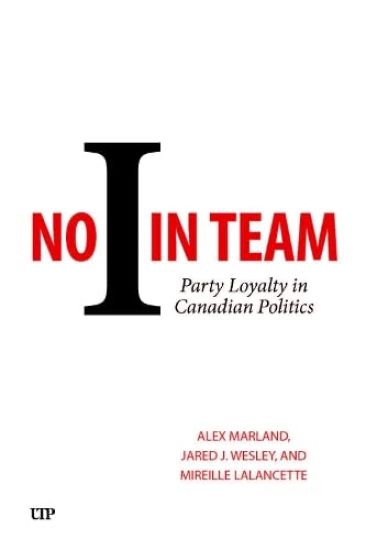
Why are Canadian politicians so loyal to their parties? Why do so few parliamentarians rebel as mavericks or switch sides? And can anything loosen the grip that party leaders have on elected representatives? No "I" in Team: Party Loyalty in Canadian Politics by political scientists Alex Marland, Jared J. Wesley, and Mireille Lalancette provides the first in-depth examination of the forces shaping party loyalty in Canadian politics, revealing how Members of Parliament and provincial legislators are conditioned to prioritize partisan interests over constituents and independent judgment. The authors show how institutional rules, political pressure, social dynamics, and digital technologies reinforce a system demanding unwavering loyalty. Drawing on extensive interviews with politicians and senior staff, plus analyses of thousands of news stories spanning four decades, this book traces how party discipline evolved into message discipline, where control over speech is as strict as control over votes. As political parties consolidate power and dissenting voices grow rarer, No "I" in Team raises urgent questions about the state of democratic representation in Canada – one of the world’s most stable democracies – where elected officials increasingly act as partisans rather than delegates of their communities or trustees of the broader public good.
No "I" in Team

No "I" in Team

Alex Marland; Jared J. Wesley; Mireille Lalancette

UNIVERSITY OF TORONTO PRESS
2025
pokkari
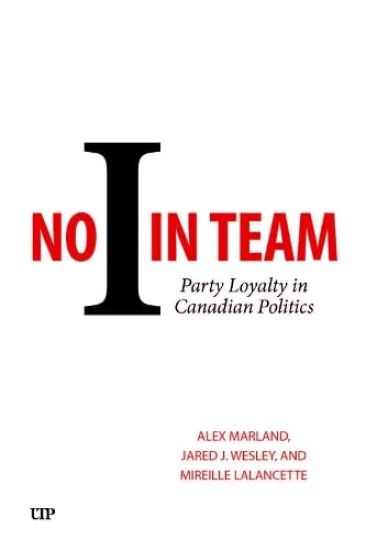
Why are Canadian politicians so loyal to their parties? Why do so few parliamentarians rebel as mavericks or switch sides? And can anything loosen the grip that party leaders have on elected representatives? No "I" in Team: Party Loyalty in Canadian Politics by political scientists Alex Marland, Jared J. Wesley, and Mireille Lalancette provides the first in-depth examination of the forces shaping party loyalty in Canadian politics, revealing how Members of Parliament and provincial legislators are conditioned to prioritize partisan interests over constituents and independent judgment. The authors show how institutional rules, political pressure, social dynamics, and digital technologies reinforce a system demanding unwavering loyalty. Drawing on extensive interviews with politicians and senior staff, plus analyses of thousands of news stories spanning four decades, this book traces how party discipline evolved into message discipline, where control over speech is as strict as control over votes. As political parties consolidate power and dissenting voices grow rarer, No "I" in Team raises urgent questions about the state of democratic representation in Canada – one of the world’s most stable democracies – where elected officials increasingly act as partisans rather than delegates of their communities or trustees of the broader public good.

The Public Servant's Guide to Government in Canada

The Public Servant's Guide to Government in Canada

Alex Marland; Jared J. Wesley

UNIVERSITY OF TORONTO PRESS
2025
pokkari
Navigating a career in Canada’s public service can be a complex journey. The Public Servant’s Guide to Government in Canada serves as an essential resource for those seeking to transition into and thrive in provincial and federal government roles. Written for university students, early-career public servants, and those shifting into government from other sectors, the book demystifies spaces between politics and public administration. The new, updated edition is organized into five concise chapters. It begins with an exploration of what it means to be a public servant, the core principles of governance, and the division of power in Canadian government. It demonstrates the value of helping to define and deliver the public good in a politically charged environment and explores the expectations and realities of government employment, delving into the politicized nature of public administration and public policy. Providing comprehensive insights into the roles, competencies, and career development strategies essential for success in public service, each chapter includes practical tips and key takeaways that reinforce learning and practice. More than merely a tool for individual advancement, this guide is a call to action for building a more informed and effective public service in Canada.
Whipped

Whipped

Alex Marland

University of British Columbia Press
2020
pokkari
Canadians often see politicians as little more than trained seals who vote on command and repeat robotic talking points. Politicians are torn by dilemmas of loyalty to party versus loyalty to voters. Whipped examines the hidden ways that political parties exert control over elected members of Canadian legislatures. Drawing on extensive interviews with politicians and staffers across the country, award-winning author Alex Marland explains why Members of Parliament and provincial legislators toe the party line, and shows how party discipline has expanded into message discipline. He recounts stories from Prime Minister Brian Mulroney's drive for caucus cohesion in the 1980s through to the turmoil that the SNC-Lavalin crisis wrought on Justin Trudeau and the Liberal Party in 2019. From caucus meetings to vote instructions, this book exposes how democracy works in our age of instant communication and political polarization. Filled with political tips, Whipped is a must-read for anyone interested in the real world of Canadian politics.
The Public Servant's Guide to Government in Canada

The Public Servant's Guide to Government in Canada

Alex Marland; Jared J. Wesley

University of Toronto Press
2019
pokkari
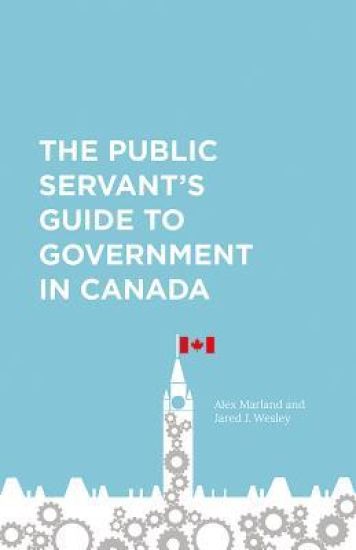
The Public Servant’s Guide to Government in Canada is a concise primer on the inner workings of government in Canada. This is a go-to resource for students, for early career public servants, and for anyone who wants to know more about how government works. Grounded in experience, the book connects core concepts in political science and public administration to the real-world practice of working in the public service. The authors provide valuable insights into the messy realities of governing and the art of diplomacy, as well as best practices for climbing the career ladder.
Brand Command

Brand Command

Alex Marland

University of British Columbia Press
2017
pokkari
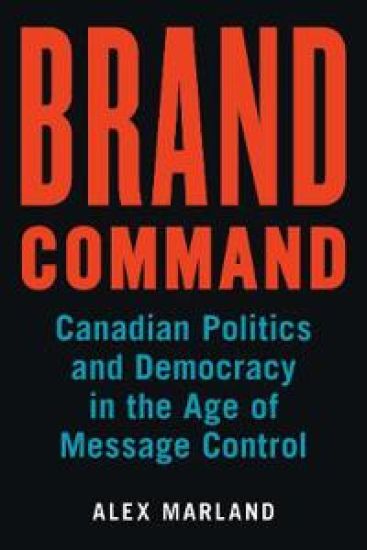
The pursuit of political power is strategic as never before. Ministers, MPs, and candidates parrot the same catchphrases. The public service has become politicized. And decision making is increasingly centralized in the Prime Minister's Office. What is happening to our democracy? In this persuasive book, Alex argues that political parties and government are beholden to the same marketing principles used by the world's largest corporations. Called branding, the strategy demands repetition of spoken, written, and visual messages, predetermined by the leader's inner circle. Marland warns that public sector branding is an unstoppable force that will persist no matter who is in power. It also creates serious problems for parliamentary democracy that must be confronted. This book will fascinate anyone who is interested in how Ottawa works and where Canadian politics is headed.
Brand Command

Brand Command

Alex Marland

University of British Columbia Press
2016
sidottu
The pursuit of political power is strategic as never before. Ministers, MPs, and candidates parrot the same catchphrases. The public service has become politicized. And decision making is increasingly centralized in the Prime Minister's Office. What is happening to our democracy? In this persuasive book, Alex argues that political parties and government are beholden to the same marketing principles used by the world's largest corporations. Called branding, the strategy demands repetition of spoken, written, and visual messages, predetermined by the leader's inner circle. Marland warns that public sector branding is an unstoppable force that will persist no matter who is in power. It also creates serious problems for parliamentary democracy that must be confronted. This book will fascinate anyone who is interested in how Ottawa works and where Canadian politics is headed.
First among Unequals

First among Unequals

Alex Marland; Matthew Kerby

McGill-Queen's University Press
2014
nidottu
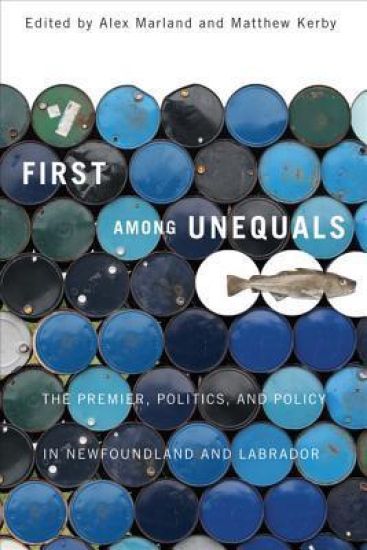
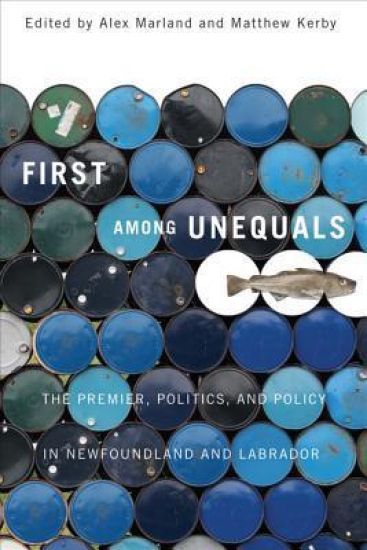
Canadians are told that provincial premiers wield considerable sway. Critics decry premiers as autocrats and dictators, while supporters label them as altruists and great leaders. In Newfoundland and Labrador the premier is expected to be the province's overlord, a patriotic defender of provincial interests, and the decision-maker who brokers competing policy priorities. But does a premier have as much power over government policy decisions as is popularly believed? First among Unequals, a detailed enquiry into the administration of Premier Danny Williams and the first year of his successor Kathy Dunderdale, suggests that the power of the premier is exaggerated by the media, critics, political parties, the public service, and the leaders themselves. With perspectives from economics, education, geography, health policy, history, and political science, contributors explore how dominant Williams was and test theories to show how power operates in provincial governments. They examine politics and government through case studies of the healthcare sectors, education, the fisheries, rural and regional development, hydroelectric projects, and the labour market. Focusing on an era of political populism and rapid economic growth, First among Unequals reasons that there is not enough evidence to suggest that the Premier's Office - even with someone like Danny Williams at the helm - independently shapes public policy. Contributors include Karlo Basta (Memorial), Sean Cadigan (Memorial), Angela Carter (Waterloo), Christopher Dunn (Memorial), Jim Feehan (Memorial), Gerald Galway (Memorial), Ryan Gibson (Memorial), James Kelly (Concordia), Royce Koop (Manitoba), Mario Levesque (Mount Allison), Maria Mathews (Memorial), John Peters (Laurentian), Michelle Porter (Memorial), Kate Puddister (McGill), Valerie Vezina (UQAM), and Kelly Vodden (Memorial, Grenfell).
First among Unequals

First among Unequals

Alex Marland; Matthew Kerby

McGill-Queen's University Press
2014
sidottu
Canadians are told that provincial premiers wield considerable sway. Critics decry premiers as autocrats and dictators, while supporters label them as altruists and great leaders. In Newfoundland and Labrador the premier is expected to be the province's overlord, a patriotic defender of provincial interests, and the decision-maker who brokers competing policy priorities. But does a premier have as much power over government policy decisions as is popularly believed? First among Unequals, a detailed enquiry into the administration of Premier Danny Williams and the first year of his successor Kathy Dunderdale, suggests that the power of the premier is exaggerated by the media, critics, political parties, the public service, and the leaders themselves. With perspectives from economics, education, geography, health policy, history, and political science, contributors explore how dominant Williams was and test theories to show how power operates in provincial governments. They examine politics and government through case studies of the healthcare sectors, education, the fisheries, rural and regional development, hydroelectric projects, and the labour market. Focusing on an era of political populism and rapid economic growth, First among Unequals reasons that there is not enough evidence to suggest that the Premier's Office - even with someone like Danny Williams at the helm - independently shapes public policy. Contributors include Karlo Basta (Memorial), Sean Cadigan (Memorial), Angela Carter (Waterloo), Christopher Dunn (Memorial), Jim Feehan (Memorial), Gerald Galway (Memorial), Ryan Gibson (Memorial), James Kelly (Concordia), Royce Koop (Manitoba), Mario Levesque (Mount Allison), Maria Mathews (Memorial), John Peters (Laurentian), Michelle Porter (Memorial), Kate Puddister (McGill), Valerie Vezina (UQAM), and Kelly Vodden (Memorial, Grenfell).