Kirjojen hintavertailu. Mukana 12 293 309 kirjaa ja 12 kauppaa.

Kirjailija

Alex Tuckness

Kirjat ja teokset yhdessä paikassa: 6 kirjaa, julkaisuja vuosilta 2002-2023, suosituimpien joukossa This Is Political Philosophy. Vertaile teosten hintoja ja tarkista saatavuus suomalaisista kirjakaupoista.

6 kirjaa

Kirjojen julkaisuhaarukka 2002-2023.

Morality as Legislation

Morality as Legislation

Alex Tuckness

Cambridge University Press
2023
pokkari
'What would happen if everyone acted that way?' This question is often used in everyday moral assessments, but it has a paradoxical quality: it draws not only on Kantian ideas of a universal moral law but also on consequentialist claims that what is right depends on the outcome. In this book, Alex Tuckness examines how the question came to be seen as paradoxical, tracing its history from the theistic approaches of the seventeenth century to the secular accounts of the present. Tuckness shows that the earlier interpretations were hybrid theories that included both consequentialist and non-consequentialist elements, and argues that contemporary uses of this approach will likewise need to combine consequentialist and non-consequentialist commitments.
Morality as Legislation

Morality as Legislation

Alex Tuckness

Cambridge University Press
2021
sidottu
'What would happen if everyone acted that way?' This question is often used in everyday moral assessments, but it has a paradoxical quality: it draws not only on Kantian ideas of a universal moral law but also on consequentialist claims that what is right depends on the outcome. In this book, Alex Tuckness examines how the question came to be seen as paradoxical, tracing its history from the theistic approaches of the seventeenth century to the secular accounts of the present. Tuckness shows that the earlier interpretations were hybrid theories that included both consequentialist and non-consequentialist elements, and argues that contemporary uses of this approach will likewise need to combine consequentialist and non-consequentialist commitments.
This Is Political Philosophy

This Is Political Philosophy

Alex Tuckness; Clark Wolf

John Wiley Sons Inc
2016
sidottu
This is Political Philosophy is an accessible and well-balanced introduction to the main issues in political philosophy written by an author team from the fields of both philosophy and politics. This text connects issues at the core of political philosophy with current, live debates in policy, politics, and law and addresses different ideals of political organization, such as democracy, liberty, equality, justice, and happiness. Written with great clarity, This is Political Philosophy is accessible and engaging to those who have little or no prior knowledge of political philosophy and is supported with supplemental pedagogical and instructor material on the This Is Philosophy series site.Available at https://www.wiley.com/en-us/thisisphilosophy/thisispoliticalphilosophyanintroduction
This Is Political Philosophy

This Is Political Philosophy

Alex Tuckness; Clark Wolf

John Wiley Sons Inc
2016
nidottu
This is Political Philosophy is an accessible and well-balanced introduction to the main issues in political philosophy written by an author team from the fields of both philosophy and politics. This text connects issues at the core of political philosophy with current, live debates in policy, politics, and law and addresses different ideals of political organization, such as democracy, liberty, equality, justice, and happiness. Written with great clarity, This is Political Philosophy is accessible and engaging to those who have little or no prior knowledge of political philosophy and is supported with supplemental pedagogical and instructor material on the This Is Philosophy series site.Available at https://www.wiley.com/en-us/thisisphilosophy/thisispoliticalphilosophyanintroduction
The Decline of Mercy in Public Life

The Decline of Mercy in Public Life

Alex Tuckness; John M. Parrish

Cambridge University Press
2014
sidottu
The virtue of mercy is widely admired, but is now marginalized in contemporary public life. Yet for centuries it held a secure place in western public discourse without implying a necessary contradiction with justice. Alex Tuckness and John M. Parrish ask how and why this changed. Examining Christian and non-Christian ancient traditions, along with Kantian and utilitarian strains of thought, they offer a persuasive account of how our perception of mercy has been transformed by Enlightenment conceptions of impartiality and equality that place justice and mercy in tension. Understanding the logic of this decline, they argue, will make it possible to promote and defend a more robust role for mercy in public life. Their study ranges from Homer to the late Enlightenment and from ancient tragedies to medieval theologies to contemporary philosophical texts, and will be valuable to readers in political philosophy, political theory, and the philosophy of law.
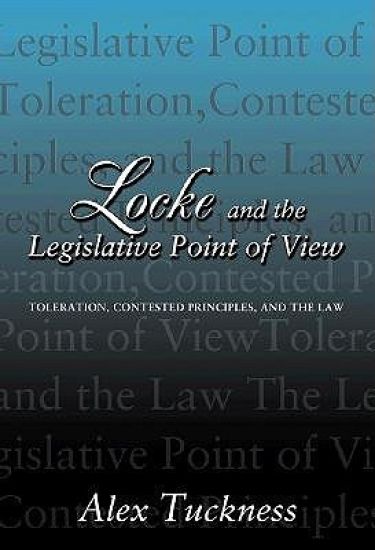
Locke and the Legislative Point of View

Locke and the Legislative Point of View

Alex Tuckness

Princeton University Press
2002
pokkari
Determining which moral principles should guide political action is a vexing question in political theory. This is especially true when faced with the "toleration paradox": believing that something is morally wrong but also believing that it is wrong to suppress it. In this book, Alex Tuckness argues that John Locke's potential contribution to this debate--what Tuckness terms the "legislative point of view"--has long been obscured by overemphasis on his doctrine of consent. Building on a line of reasoning Locke made explicit in his later writings on religious toleration, Tuckness explores the idea that we should act politically only on those moral principles that a reasonable legislator would endorse; someone, that is, who would avoid enacting measures that could be self-defeating when applied by fallible human beings. Tuckness argues that the legislative point of view has implications that go far beyond the question of religious toleration. Locke suggests an approach to political justification that is a provocative alternative to the utilitarian, contractualist, and perfectionist approaches dominating contemporary liberalism. The legislative point of view is relevant to our thinking about many types of disputed principles, Tuckness writes. He examines claims of moral wrong, invocations of the public good, and contested political roles with emphasis on the roles of legislators and judges. This book is must reading not only for students and scholars of Locke but all those interested in liberalism, toleration, and constitutional theory.