Kirjojen hintavertailu. Mukana 12 595 353 kirjaa ja 12 kauppaa.

Kirjailija

Alexander Etkind

Kirjat ja teokset yhdessä paikassa: 20 kirjaa, julkaisuja vuosilta 2011-2025, suosituimpien joukossa Remembering Katyn. Vertaile teosten hintoja ja tarkista saatavuus suomalaisista kirjakaupoista.

20 kirjaa

Kirjojen julkaisuhaarukka 2011-2025.

Remembering Katyn

Remembering Katyn

Alexander Etkind; Rory Finnin; Uilleam Blacker; Julie Fedor; Simon Lewis; Maria Mälksoo; Matilda Mroz

Polity Press
2012
sidottu
Katyn– the Soviet massacre of over 21,000 Polish prisoners in 1940 – has come to be remembered as Stalin’s emblematic mass murder, an event obscured by one of the most extensive cover-ups in history. Yet paradoxically, a majority of its victims perished far from the forest in western Russia that gives the tragedy its name. Their remains lie buried in killing fields throughout Russia, Ukraine and, most likely, Belarus. Today their ghosts haunt the cultural landscape of Eastern Europe. This book traces the legacy of Katyn through the interconnected memory cultures of seven countries: Belarus, Poland, Russia, Ukraine, and the Baltic States. It explores the meaning of Katyn as site and symbol, event and idea, fact and crypt. It shows how Katyn both incites nationalist sentiments in Eastern Europe and fosters an emerging cosmopolitan memory of Soviet terror. It also examines the strange impact of the 2010 plane crash that claimed the lives of Poland’s leaders en route to Katyn. Drawing on novels and films, debates and controversies, this book makes the case for a transnational study of cultural memory and navigates a contested past in a region that will define Europe’s future.
Remembering Katyn

Remembering Katyn

Alexander Etkind; Rory Finnin; Uilleam Blacker; Julie Fedor; Simon Lewis; Maria Mälksoo; Matilda Mroz

Polity Press
2012
nidottu
Katyn– the Soviet massacre of over 21,000 Polish prisoners in 1940 – has come to be remembered as Stalin’s emblematic mass murder, an event obscured by one of the most extensive cover-ups in history. Yet paradoxically, a majority of its victims perished far from the forest in western Russia that gives the tragedy its name. Their remains lie buried in killing fields throughout Russia, Ukraine and, most likely, Belarus. Today their ghosts haunt the cultural landscape of Eastern Europe. This book traces the legacy of Katyn through the interconnected memory cultures of seven countries: Belarus, Poland, Russia, Ukraine, and the Baltic States. It explores the meaning of Katyn as site and symbol, event and idea, fact and crypt. It shows how Katyn both incites nationalist sentiments in Eastern Europe and fosters an emerging cosmopolitan memory of Soviet terror. It also examines the strange impact of the 2010 plane crash that claimed the lives of Poland’s leaders en route to Katyn. Drawing on novels and films, debates and controversies, this book makes the case for a transnational study of cultural memory and navigates a contested past in a region that will define Europe’s future.
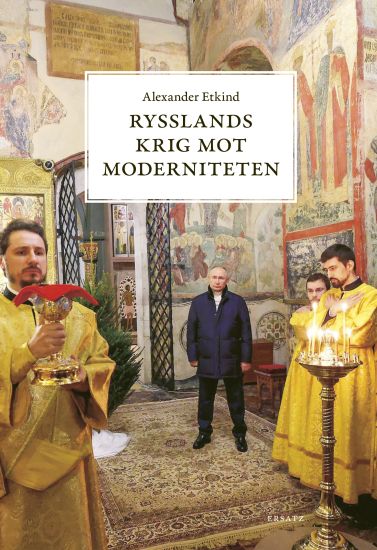
Rysslands krig mot moderniteten

Rysslands krig mot moderniteten

Alexander Etkind

Ersatz
2024
sidottu
Putins krig är en »specialoperation« mot moderniteten. Invasionen riktades mot Ukraina, men kriget har ett större mål: att bekämpa den moderna världen med dess klimatmedvetenhet, energiomställning och digitalisering av arbetet. Genom att handla med olja och gas, främja Trump och Brexit, sprida korruption, öka ojämlikhet och homofobi, ­subventionera höger­extrema rörelser och invadera Ukraina försöker Putin och hans regim att stoppa den pågående omvandlingen av det moderna samhället. Den ryske historikern Alexander Etkind analyserar drivkrafterna bakom det ryska kriget mot moderniteten och förutspår Rysslands sönderfall och avfederalisering. Alexander Etkind, född i Lenin­grad 1955, är professor i internationella relationer vid Central European University i Wien. Han har varit gästprofessor vid New York University och Georgetown University samt forskare vid Harvard och Princeton. Hans forskningsområden omfattar bland annat intern kolonisation i Ryska imperiet, komparativa studier i kulturhistoria och rysk-amerikanska samt rysk-europeiska relationer. Han är mest känd för sin bok Det omöjligas eros. Psykoanalysens historia i Ryssland (1993).
Russia Against Modernity

Russia Against Modernity

Alexander Etkind

JOHN WILEY AND SONS LTD
2023
nidottu
Putin’s war is a “special operation” against modernity. The invasion has been directed against Ukraine, but the war has a broader target: the modern world of climate awareness, energy transition and digital labor. By trading oil and gas, promoting Trump and Brexit, spreading corruption, boosting inequality and homophobia, subsidizing far-right movements and destroying Ukraine, Putin’s clique aims at suppressing the ongoing transformation of modern societies. Alexander Etkind distinguishes between Russia’s pompous, weaponized paleomodernity, on the one hand, and the lean, decentralized gaiamodernity of the Anthropocene, on the other. Putin’s clique has used various strategies – from climate denialism and electoral interference to war and genocide – to resist and subvert modernity. Working on political, cultural and even demographic levels, social mechanisms convert the vicious energy of the oil curse into all-out aggression. Dissecting these mechanisms, Etkind’s brief but rigorous analyses of social structuration, cultural dynamics and family models reveal the agency that drives the Russian war against modernity. This short, sharp critique of the Russian regime combines political economy, social history and demography to predict the decolonizing and defederating of Russia.
Russia Against Modernity

Russia Against Modernity

Alexander Etkind

JOHN WILEY AND SONS LTD
2023
sidottu
Putin’s war is a “special operation” against modernity. The invasion has been directed against Ukraine, but the war has a broader target: the modern world of climate awareness, energy transition and digital labor. By trading oil and gas, promoting Trump and Brexit, spreading corruption, boosting inequality and homophobia, subsidizing far-right movements and destroying Ukraine, Putin’s clique aims at suppressing the ongoing transformation of modern societies. Alexander Etkind distinguishes between Russia’s pompous, weaponized paleomodernity, on the one hand, and the lean, decentralized gaiamodernity of the Anthropocene, on the other. Putin’s clique has used various strategies – from climate denialism and electoral interference to war and genocide – to resist and subvert modernity. Working on political, cultural and even demographic levels, social mechanisms convert the vicious energy of the oil curse into all-out aggression. Dissecting these mechanisms, Etkind’s brief but rigorous analyses of social structuration, cultural dynamics and family models reveal the agency that drives the Russian war against modernity. This short, sharp critique of the Russian regime combines political economy, social history and demography to predict the decolonizing and defederating of Russia.
Nature's Evil

Nature's Evil

Alexander Etkind

JOHN WILEY AND SONS LTD
2023
nidottu
This bold and wide-ranging book views the history of humankind through the prism of natural resources – how we acquire them, use them, value them, trade them, exploit them. History needs a cast of characters and in this story the leading actors are peat and hemp, grain and iron, fur and oil, each with its own tale to tell. The uneven spread of available resources was the prime mover for trade, which in turn led to the accumulation of wealth, the growth of inequality and the proliferation of evil. Different sorts of raw material have different political implications and give rise to different social institutions. When a country switches its reliance from one commodity to another, this often leads to wars and revolutions. But none of these crises go to waste – they all lead to dramatic changes in the relations between matter, labour and the state. Our world is the result of a fragile pact between people and nature. As we stand on the verge of climate catastrophe, nature has joined us in our struggle to distinguish between good and evil. And since we have failed to change the world, now is the moment to understand how it works.
Nature's Evil

Nature's Evil

Alexander Etkind

Polity Press
2021
sidottu
This bold and wide-ranging book views the history of humankind through the prism of natural resources – how we acquire them, use them, value them, trade them, exploit them. History needs a cast of characters and in this story the leading actors are peat and hemp, grain and iron, fur and oil, each with its own tale to tell. The uneven spread of available resources was the prime mover for trade, which in turn led to the accumulation of wealth, the growth of inequality and the proliferation of evil. Different sorts of raw material have different political implications and give rise to different social institutions. When a country switches its reliance from one commodity to another, this often leads to wars and revolutions. But none of these crises go to waste – they all lead to dramatic changes in the relations between matter, labour and the state. Our world is the result of a fragile pact between people and nature. As we stand on the verge of climate catastrophe, nature has joined us in our struggle to distinguish between good and evil. And since we have failed to change the world, now is the moment to understand how it works.
Eros Of The Impossible

Eros Of The Impossible

Alexander Etkind

Routledge
2020
nidottu
This book reflects the complex fabric of history of Russian involvement in psychoanalysis. It focuses on the life and work of individuals and presents more general explorations of particular eras in the perception, development, and transformation of psychoanalysis in Russia. .
Eros of the Impossible

Eros of the Impossible

Alexander Etkind

Routledge
2019
sidottu
Marxism was not the only Western idea to influence the course of Russian history. In the early decades of this century, psychoanalysis was one of the most important components of Russian intellectual life. Freud himself, writing in 1912, said that "in Russia, there seems to be a veritable epidemic of psychoanalysis." But until Alexander Etkind's Eros of the Impossible, the hidden history of Russian involvement in psychoanalysis has gone largely unnoticed and untold. The early twentieth century was a time when the craving of Russian intellectuals for world culture found a natural outlet in extended sojourns in the West, linking some of the most creative Russian personalities of the day with the best universities, salons, and clinics of Germany, Austria, France, and Switzerland. These ambassadors of the Russian intelligentsia were also Freud's patients, students, and collaborators. They exerted a powerful influence on the formative phase of psychoanalysis throughout Europe, and they carried their ideas back to a receptive Russian culture teeming with new ideas and full of hopes of self-transformation. Fascinated by the potential of psychoanalysis to remake the human personality in the socialist mold, Trotsky and a handful of other Russian leaders sponsored an early form of Soviet psychiatry. But, as the Revolution began to ossify into Stalinism, the early promise of a uniquely Russian approach to psychoanalysis was cut short. An early attempt to merge medicine and politics forms final chapters of Etkind's tale, the telling of which has been made possible by the undoing of the Soviet system. The effervescent Russian contribution to modern psychoanalysis has gone unrecognized too long, but Eros of the Impossible restores this fascinating story to its rightful place in history.
War and Memory in Russia, Ukraine and Belarus

War and Memory in Russia, Ukraine and Belarus

Alexander Etkind

Springer International Publishing AG
2018
nidottu
This edited collection contributes to the current vivid multidisciplinary debate on East European memory politics and the post-communist instrumentalization and re-mythologization of World War II memories. The book focuses on the three Slavic countries of post-Soviet Eastern Europe – Russia, Ukraine and Belarus – the epicentre of Soviet war suffering, and the heartland of the Soviet war myth. The collection gives insight into the persistence of the Soviet commemorative culture and the myth of the Great Patriotic War in the post-Soviet space. It also demonstrates that for geopolitical, cultural, and historical reasons the political uses of World War II differ significantly across Ukraine, Russia and Belarus, with important ramifications for future developments in the region and beyond.The chapters 'Introduction: War and Memory in Russia, Ukraine and Belarus', ‘From the Trauma of Stalinism to the Triumph of Stalingrad: The Toponymic Dispute over Volgograd’ and 'The “Partisan Republic”: Colonial Myths and Memory Wars in Belarus' are published open access under a CC BY 4.0 license at link.springer.com. The chapter 'Memory, Kinship, and Mobilization of the Dead: The Russian State and the “Immortal Regiment” Movement' is published open access under a CC BY-NC-ND 4.0 license at link.springer.com.
Development and Dystopia

Development and Dystopia

Mikhail Minakov; Alexander Etkind

ibidem-Verlag, Jessica Haunschild u Christian Schon
2018
nidottu
This book dissectsfrom both philosophical and empirical viewpointsthe peculiar developmental challenges, geopolitical contexts, and dystopic stalemates that post-Soviet societies face during their transition to new political and cultural orders. The principal geographical focus of the essays is Ukraine, but most of the assembled texts are also relevant and/or refer to other post-Soviet countries. Mikhail Minakov describes how former Soviet nations are trying to re-invent, for their particular circumstances, democracy and capitalism while concurrently dealing with new poverty and inequality, facing unusual degrees of freedom and responsibility for their own future, coming to terms with complicated collective memories and individual pasts. Finally, the book puts forward novel perspectives on how Western and post-communist Europe may be able to create a sustainable pan-European common space. These include a new agenda for pan-European political communication, new East-Central European regional security mechanisms, a solution for the chain of separatist-controlled populations, and anti-patronalist institutions in East European countries.
War and Memory in Russia, Ukraine and Belarus

War and Memory in Russia, Ukraine and Belarus

Alexander Etkind

Springer International Publishing AG
2017
sidottu
This edited collection contributes to the current vivid multidisciplinary debate on East European memory politics and the post-communist instrumentalization and re-mythologization of World War II memories. The book focuses on the three Slavic countries of post-Soviet Eastern Europe – Russia, Ukraine and Belarus – the epicentre of Soviet war suffering, and the heartland of the Soviet war myth. The collection gives insight into the persistence of the Soviet commemorative culture and the myth of the Great Patriotic War in the post-Soviet space. It also demonstrates that for geopolitical, cultural, and historical reasons the political uses of World War II differ significantly across Ukraine, Russia and Belarus, with important ramifications for future developments in the region and beyond.The chapters 'Introduction: War and Memory in Russia, Ukraine and Belarus', ‘From the Trauma of Stalinism to the Triumph of Stalingrad: The Toponymic Dispute over Volgograd’ and 'The “Partisan Republic”: Colonial Myths and Memory Wars in Belarus' are published open access under a CC BY 4.0 license at link.springer.com. The chapter 'Memory, Kinship, and Mobilization of the Dead: The Russian State and the “Immortal Regiment” Movement' is published open access under a CC BY-NC-ND 4.0 license at link.springer.com.
Roads Not Taken

Roads Not Taken

Alexander Etkind

University of Pittsburgh Press
2017
nidottu
A journalist, diplomat, and writer, William Christian Bullitt (1891-1967) negotiated with Lenin and Stalin, Churchill and de Gaulle, Chiang Kai-shek and Goering. He took part in the talks that ended World War I and those that failed to prevent World War II. While his former disciples led American diplomacy into the Cold War, Bullitt became an early enthusiast of the European Union. From his early (1919) proposal of disassembling the former Russian Empire into dozens of independent states, to his much later (1944) advice to land the American troops in the Balkans rather than in Normandy, Bullitt developed a dissenting vision of the major events of his era. A connoisseur of American politics, Russian history, Viennese psychoanalysis, and French wine, Bullitt was also the author of two novels and a number of plays. A friend of Sigmund Freud, Bullitt coauthored with him a sensational biography of President Wilson. A friend of Bullitt, Mikhail Bulgakov depicted him as the devil figure in The Master and Margarita. Taking seriously Bullitt’s projects and foresights, this book portrays him as an original thinker and elucidates his role as a political actor. His roads were not taken, but the world would have been different if Bullitt’s warnings had been heeded. His experience suggests powerful though lost alternatives to the catastrophic history of the twentieth century. Based on Bullitt’s unpublished papers and diplomatic documents from the Russian archives, this new biography presents Bullitt as a truly cosmopolitan American, one of the first politicians of the global era. It is human ideas and choices, Bullitt’s projects and failures among them, that have brought the world to its current state.
Memory and Theory in Eastern Europe

Memory and Theory in Eastern Europe

Uilleam Blacker; Alexander Etkind

Palgrave Macmillan
2013
sidottu
It is the aim of this volume to investigate how academic practices of Memory Studies are being applied, adapted, and transformed in the countries of East-Central Europe and the former Soviet Union. It affords a new, startlingly different perspective for scholars of both Eastern European history and Memory Studies.
Warped Mourning

Warped Mourning

Alexander Etkind

Stanford University Press
2013
pokkari
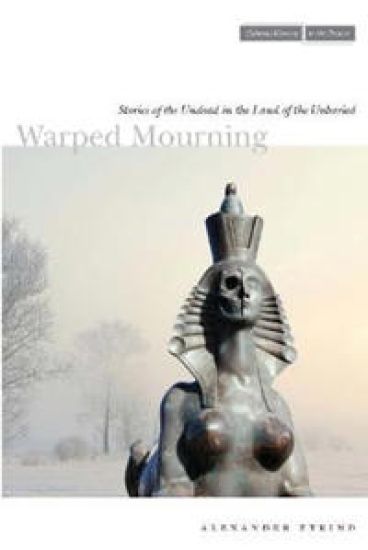
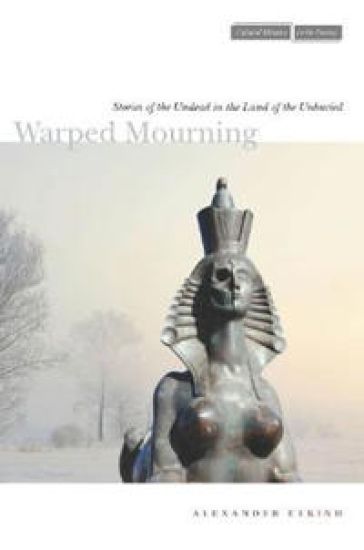
After Stalin's death in 1953, the Soviet Union dismantled the enormous system of terror and torture that he had created. But there has never been any Russian ban on former party functionaries, nor any external authority to dispense justice. Memorials to the Soviet victims are inadequate, and their families have received no significant compensation. This book's premise is that late Soviet and post-Soviet culture, haunted by its past, has produced a unique set of memorial practices. More than twenty years after the collapse of the Soviet Union, Russia remains "the land of the unburied": the events of the mid-twentieth century are still very much alive, and still contentious. Alexander Etkind shows how post-Soviet Russia has turned the painful process of mastering the past into an important part of its political present.
Warped Mourning

Warped Mourning

Alexander Etkind

Stanford University Press
2013
sidottu
After Stalin's death in 1953, the Soviet Union dismantled the enormous system of terror and torture that he had created. But there has never been any Russian ban on former party functionaries, nor any external authority to dispense justice. Memorials to the Soviet victims are inadequate, and their families have received no significant compensation. This book's premise is that late Soviet and post-Soviet culture, haunted by its past, has produced a unique set of memorial practices. More than twenty years after the collapse of the Soviet Union, Russia remains "the land of the unburied": the events of the mid-twentieth century are still very much alive, and still contentious. Alexander Etkind shows how post-Soviet Russia has turned the painful process of mastering the past into an important part of its political present.
Internal Colonization

Internal Colonization

Alexander Etkind

Polity Press
2011
sidottu
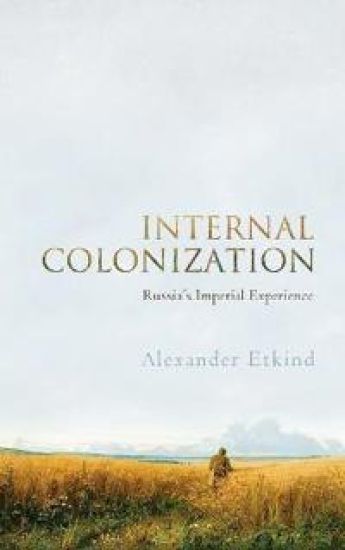
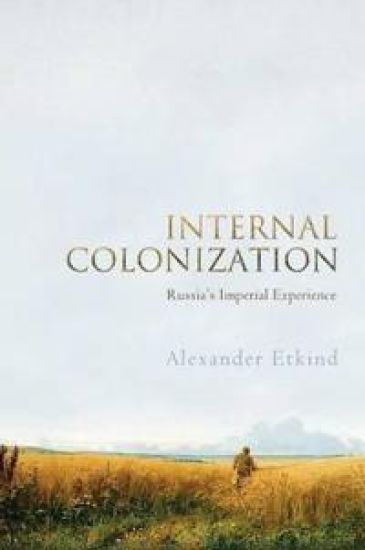
This book gives a radically new reading of Russia’s cultural history. Alexander Etkind traces how the Russian Empire conquered foreign territories and domesticated its own heartlands, thereby colonizing many peoples, Russians included. This vision of colonization as simultaneously internal and external, colonizing one’s own people as well as others, is crucial for scholars of empire, colonialism and globalization. Starting with the fur trade, which shaped its enormous territory, and ending with Russia’s collapse in 1917, Etkind explores serfdom, the peasant commune, and other institutions of internal colonization. His account brings out the formative role of foreign colonies in Russia, the self-colonizing discourse of Russian classical historiography, and the revolutionary leaders’ illusory hopes for an alliance with the exotic, pacifist sectarians. Transcending the boundaries between history and literature, Etkind examines striking writings about Russia’s imperial experience, from Defoe to Tolstoy and from Gogol to Conrad. This path-breaking book blends together historical, theoretical and literary analysis in a highly original way. It will be essential reading for students of Russian history and literature and for anyone interested in the literary and cultural aspects of colonization and its aftermath.
Internal Colonization

Internal Colonization

Alexander Etkind

Polity Press
2011
nidottu
This book gives a radically new reading of Russia’s cultural history. Alexander Etkind traces how the Russian Empire conquered foreign territories and domesticated its own heartlands, thereby colonizing many peoples, Russians included. This vision of colonization as simultaneously internal and external, colonizing one’s own people as well as others, is crucial for scholars of empire, colonialism and globalization. Starting with the fur trade, which shaped its enormous territory, and ending with Russia’s collapse in 1917, Etkind explores serfdom, the peasant commune, and other institutions of internal colonization. His account brings out the formative role of foreign colonies in Russia, the self-colonizing discourse of Russian classical historiography, and the revolutionary leaders’ illusory hopes for an alliance with the exotic, pacifist sectarians. Transcending the boundaries between history and literature, Etkind examines striking writings about Russia’s imperial experience, from Defoe to Tolstoy and from Gogol to Conrad. This path-breaking book blends together historical, theoretical and literary analysis in a highly original way. It will be essential reading for students of Russian history and literature and for anyone interested in the literary and cultural aspects of colonization and its aftermath.