Kirjojen hintavertailu. Mukana 12 471 197 kirjaa ja 12 kauppaa.

Kirjailija

Alexander Moseley

Kirjat ja teokset yhdessä paikassa: 9 kirjaa, julkaisuja vuosilta 2007-2020, suosituimpien joukossa John Locke. Vertaile teosten hintoja ja tarkista saatavuus suomalaisista kirjakaupoista.

9 kirjaa

Kirjojen julkaisuhaarukka 2007-2020.

John Locke

John Locke

Alexander Moseley

Continuum International Publishing Group Ltd.
2007
sidottu
John Locke is indisputably a major thinker in education. Alexander Moseley's volume offers the most coherent account of Locke's educational thought. This work is divided into: intellectual biography, critical exposition of Locke's work, and the reception and influence of Locke's work and the relevance of the work today.This is a major international reference series providing comprehensive accounts of the work of seminal educational thinkers from a variety of periods, disciplines and traditions. It is the most ambitious and prestigious such project ever published - a definitive resource for at least a generation. The thinkers include: Aquinas, Aristotle, Bourdieu, Bruner, Dewey, Foucault, Freire, Holt, Kant, Locke, Montessori, Neill, Newman, Owen, Peters, Piaget, Plato, Rousseau, Steiner, Vygotsky, West and Wollstonecraft.
Human Rights and Military Intervention

Human Rights and Military Intervention

Alexander Moseley; Richard Norman

Routledge
2020
nidottu
This title was first published in 2002. Was the bombing of Belgrade morally justified as an attempt to halt 'ethnic cleansing' in Kosovo'? Should Western states have tried to prevent the slaughter in Rwanda? Are there, indeed, genuinely universal 'human rights' which could justify such interventions, or is the upholding of such rights simply the imposition of culturally specific values on other cultures? Is national sovereignty a necessary and legitimate impediment to intervention, or are we seeing the emergence of a 'new international order' in which national boundaries are less significant? These and related ethical and political questions are addressed from a wide variety of perspectives by the contributors to this book. The answers presented form important reading for students and researchers in philosophy and in international relations, and for anyone interested in the difficult questions about whether and when other states may intervene in a country's internal affairs in order to uphold human rights.
Human Rights and Military Intervention

Human Rights and Military Intervention

Alexander Moseley; Richard Norman

Routledge
2017
sidottu
This title was first published in 2002. Was the bombing of Belgrade morally justified as an attempt to halt 'ethnic cleansing' in Kosovo'? Should Western states have tried to prevent the slaughter in Rwanda? Are there, indeed, genuinely universal 'human rights' which could justify such interventions, or is the upholding of such rights simply the imposition of culturally specific values on other cultures? Is national sovereignty a necessary and legitimate impediment to intervention, or are we seeing the emergence of a 'new international order' in which national boundaries are less significant? These and related ethical and political questions are addressed from a wide variety of perspectives by the contributors to this book. The answers presented form important reading for students and researchers in philosophy and in international relations, and for anyone interested in the difficult questions about whether and when other states may intervene in a country's internal affairs in order to uphold human rights.
John Locke

John Locke

Alexander Moseley

Bloomsbury Academic
2014
nidottu
John Locke is one of the great minds in educational history. Drawing on his perceptive observations of families and children he saw the importance of adapting learning to the child's dispositions. Critical of schools, he is the fountainhead of home tutoring, child-centred learning, and the importance of enjoyable learning. But for Locke learning was not about facts: a good education produced gentlemen who could in turn adapt themselves to commerce and politics. Locke's philosophy helped provide rigour to the scientific revolution, the impetus for the expansion of schools for the poor (which should be profitable) and child psychology. Alexander Mosely sets Locke’s educational writings in their context with a sensitive reading of what Locke understood by ‘education’ and highlights the relevance of the study of Locke’s work to our understanding of education today.
Aristotle

Aristotle

Alexander Moseley

Bloomsbury Academic
2014
nidottu
Aristotle is often underrated in educational circles but the impact of his philosophy and his actions are evident in the schools and universities around us today. Aristotle developed the first proper university that had different departments and vast collections of texts and artefacts. His philosophy has also influenced the greatest minds since his time, from Aquinas to today's logicians, rationalists, and empiricists. The influence of his educational thinking and his philosophy in general helped underpin the Renaissance and the modern era. In a nutshell, Aristotle took our thinking and said, 'make it sharper.' Alexander Moseley offers a thorough and comprehensive overview of the works of Aristotle and explores the influence of his thought and writings and their impact on our education systems today.
Aristotle

Aristotle

Alexander Moseley

Continuum International Publishing Group Ltd.
2009
sidottu
This title provides a comprehensive account of the work of the seminal educational thinker - Aristotle. Aristotle is undisputedly a major thinker in education. Alexander Mosley's volume offers the most coherent account of Aristotle's educational thought. This work is divided into: Intellectual Bibliography; Critical exposition of Aristotle's work; The reception and influence of Aristotle's work; and, The relevance of the work today. This is a major international reference series providing comprehensive accounts of the work of seminal educational thinkers from a variety of periods, disciplines and traditions. It is the most ambitious and prestigious such project ever published - a definitive resource for at least a generation. The thinkers include: Aquinas, Aristotle, Bourdieu, Bruner, Dewey, Foucault, Freire, Holt, Kant, Locke, Montessori, Neill, Newman, Owen, Peters, Piaget, Plato, Rousseau, Steiner, Vygotsky, West and Wollstonecraft.
A to Z of Philosophy

A to Z of Philosophy

Alexander Moseley

BLOOMSBURY PUBLISHING PLC
2008
sidottu
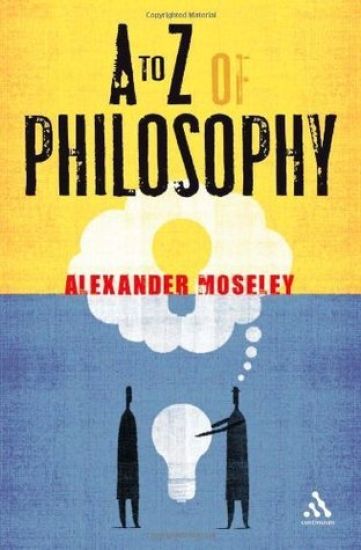
The A to Z of Philosophy is a concise and accessible introduction to a fascinating subject. Ideal for the general reader or first-year student, this A to Z guide covers all the key terms, concepts and thinkers. The book offers more than 100 jargon-free entries on topics from Animal Ethics to Wittgenstein and includes witty anecdotes and handy tips on further reading. No prior knowledge of philosophy is required to enjoy this reader-friendly guide - this is the ideal reference tool for anyone starting out in philosophy.
A to Z of Philosophy

A to Z of Philosophy

Alexander Moseley

Continuum International Publishing Group Ltd.
2008
nidottu
This is a fun introduction to philosophy, ideal for general readers and first-year students coming to this fascinating subject for the first time."A to Z of Philosophy" is a fun, concise and accessible introduction to a fascinating subject. Ideal for the general reader or first-year student, this A to Z guide covers all the key terms, concepts and thinkers. The book offers more than 100 jargon-free entries on topics from Animal Ethics to Wittgenstein and includes witty anecdotes and handy tips on further reading. No prior knowledge of philosophy is required to enjoy this reader-friendly guide - this is the ideal reference tool for anyone starting out in philosophy.
An Introduction to Political Philosophy

An Introduction to Political Philosophy

Alexander Moseley

Continuum International Publishing Group Ltd.
2007
nidottu
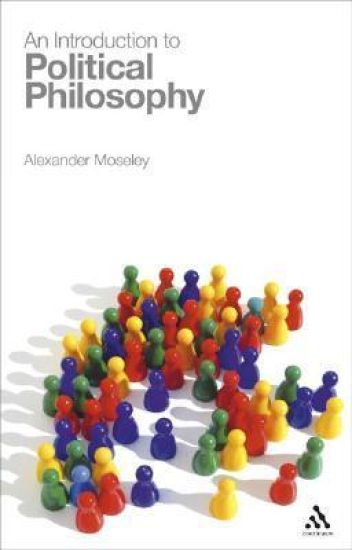
Philosophy underpins political concepts, ideals and debates. The extent and nature of our rights, liberties and responsibilities, the role of the state and the best means of its governance are all questions to have been addressed by great philosophers throughout history - and questions students of political philosophy must engage with. An Introduction to Political Philosophy offers a thorough, lucid and stimulating account of the central theories and ideas encountered in political philosophy. The text is thematically structured, covering the discipline's principal ideologies: Statism; Realism; Liberalism; Conservatism; Socialism; Anarchism; and Environmentalism. It also offers a brief history of political philosophy and the major political philosophers, including Plato, Aristotle, Locke, Rousseau, Hobbes, Marx and Rawls, and, valuably, concludes with a look at 'applied' political philosophy, relating the discipline to contemporary political situations and questions. This fascinating book offers a critical overview of one of the central concepts in philosophy, encountered by virtually every student of the subject.