Kirjailija
Alexander Nemerov
Kirjat ja teokset yhdessä paikassa: 18 kirjaa, julkaisuja vuosilta 2001-2026, suosituimpien joukossa Norman Rockwell. Vertaile teosten hintoja ja tarkista saatavuus suomalaisista kirjakaupoista.
18 kirjaa
Kirjojen julkaisuhaarukka 2001-2026.
In these works, Rockwell offered a nation battered by the Great Depression and World War II a reassuring image of American life: orderly, self-reliant, and picturesque. Through paintings and illustrations, Rockwell captured not simply scenes of New England life, but a deeply rooted ethos—one in which democratic community, moral clarity, and quiet individualism flourished. This book, and the accompanying exhibition, situates Rockwell’s Vermont years within a broader creative milieu, highlighting the Arlington artist circle that included John Atherton (1900–1952), and Gene Pelham (1909–2004)— all informally enticed to Arlington, Vermont. Together, they helped define a cultural moment in which Vermont was mythologized as democracy’s granite-strong refuge. Even Rockwell’s orchestrated friendship with Anna Mary “Grandma” Moses (1860–1961) was part of a wider crafting of New England as both authentic and marketable—where artists and audiences alike found a form of moral anchorage. Featuring two newly acquired Rockwell paintings to Shelburne Museum celebrating Vermont’s granite industry—long regarded as the state’s “backbone”—Norman Rockwell: At Home in Vermont examines not only the imagery but the careful mythmaking that made Vermont central to Rockwell’s enduring vision of America. Today, Rockwell’s work is housed in major museums across the country, a testament to his profound influence as an artist.
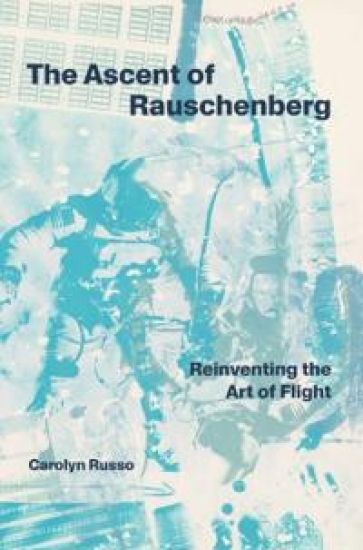
Take flight with postmodern artist Robert Rauschenberg in this tribute to his space and aviation art, featuring art history and 100+ fascinating images Most famous for his groundbreaking "Combines"--painting and sculpture hybrids that often incorporated everyday objects--American artist Robert Rauschenberg (1925-2008) created within a range of mediums, including collage, performance, photography, and printmaking. But a connective tissue through it all was his fascination with flight. The Ascent of Rauschenberg explores the flight motif across his work, spanning birds, insects, aviation, spaceflight, sensory experiences, and metaphors for his own life. More than 100 images reveal the vibrant scope of his work, from lithographs inspired by the Apollo 11 launch that NASA invited him to witness and document, to a Combine featuring a taxidermied eagle that evokes Roman mythology. Nine accompanying essays reflect on his many flight themes and subtleties that might otherwise be overlooked. Considered a forerunner of several artistic movements, most notably pop art, Rauschenberg was one of the most influential artists of his time. This gorgeous volume engages with his work at an intimate level and through a distinctive lens, revealing an artist deeply mesmerized by the innovation of flight within nature, technology, and art. By observing Rauschenberg's work through the prism of flight, The Ascent of Rauschenberg refracts to reveal the depth and dazzle of an unparalleled career.
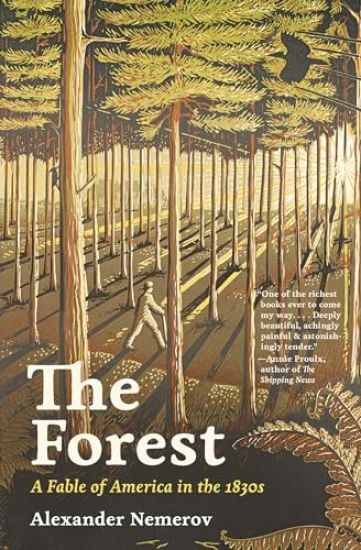
A vivid historical imagining of life in the early United States“One of the richest books ever to come my way.”—Annie Proulx, Pulitzer Prize–winning author of The Shipping News“This is a wonderful book. . . . An extraordinary achievement.”—Edmund de Waal, New York Times bestselling author of The Hare with Amber EyesSet amid the glimmering lakes and disappearing forests of the early United States, The Forest imagines how a wide variety of Americans experienced their lives. Part truth, part fiction, and featuring both real and invented characters, the book follows painters, poets, enslaved people, farmers, and artisans living and working in a world still made largely of wood. Some of the historical characters—such as Thomas Cole, Margaret Fuller, Nathaniel Hawthorne, Fanny Kemble, Edgar Allan Poe, and Nat Turner—are well known, while others are not. But all are creators of private and grand designs.The Forest unfolds in brief stories. Each episode reveals an intricate lost world. Characters cross paths or go their own ways, each striving for something different but together forming a pattern of life. For Alexander Nemerov, the forest is a description of American society, the dense and discontinuous woods of nation, the foliating thoughts of different people, each with their separate shade and sun. Through vivid descriptions of the people, sights, smells, and sounds of Jacksonian America, illustrated with paintings, prints, and photographs, The Forest brings American history to life on a human scale.Published in association with the Center for Advanced Study in the Visual Arts, National Gallery of Art, Washington, DC
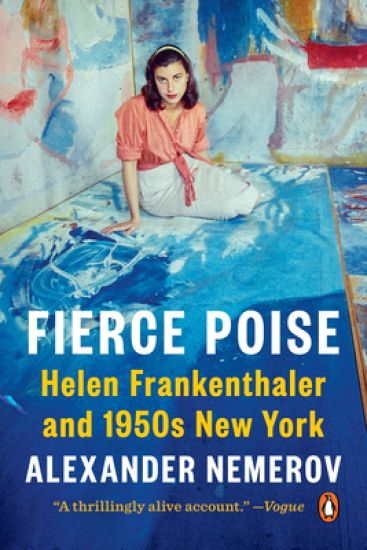
At the dawn of the 1950s, a promising and dedicated young painter named Helen Frankenthaler, fresh out of college, moved back home to New York City to make her name. By the decade's end, she had succeeded in establishing herself as an important American artist of the postwar period. In the years in between, she made some of the most daring paintings of her day and came into her own as a woman: traveling the world, falling in and out of love. Fierce Poise is an exhilarating ride through New York's 1950s art scene and a brilliant portrait of a young artist through the moments that shaped her.
A dazzling biography of one of the twentieth century's most respected painters, Helen Frankenthaler, as she came of age as an artist in postwar New York The magic of Alexander Nemerov's portrait of Helen Frankenthaler in Fierce Poise is that it reads like one of Helen's paintings. His poetic descriptions of her work and his rich insights into the years when Helen made her first artistic breakthroughs are both light and lush, seemingly easy and yet profound. His book is an ode to a truly great artist who, some seventy years after this story begins, we are only now beginning to understand.--Mary Gabriel, author of Ninth Street Women At the dawn of the 1950s, a promising and dedicated young painter named Helen Frankenthaler, fresh out of college, moved back home to New York City to make her name. By the decade's end, she had succeeded in establishing herself as an important American artist of the postwar period. In the years in between, she made some of the most daring, head-turning paintings of her day and also came into her own as a woman: traveling the world, falling in and out of love, and engaging in an ongoing artistic education. She also experienced anew--and left her mark on--the city in which she had been raised in privilege as the daughter of a judge, even as she left the security of that world to pursue her artistic ambitions. Brought to vivid life by acclaimed art historian Alexander Nemerov, these defining moments--from her first awed encounter with Jackson Pollock's drip paintings to her first solo gallery show to her tumultuous breakup with eminent art critic Clement Greenberg--comprise a portrait as bold and distinctive as the painter herself. Inspired by Pollock and the other male titans of abstract expressionism but committed to charting her own course, Frankenthaler was an artist whose talent was matched only by her unapologetic determination to distinguish herself in a man's world. Fierce Poise is an exhilarating ride through New York's 1950s art scene and a brilliant portrait of a young artist through the moments that shaped her.
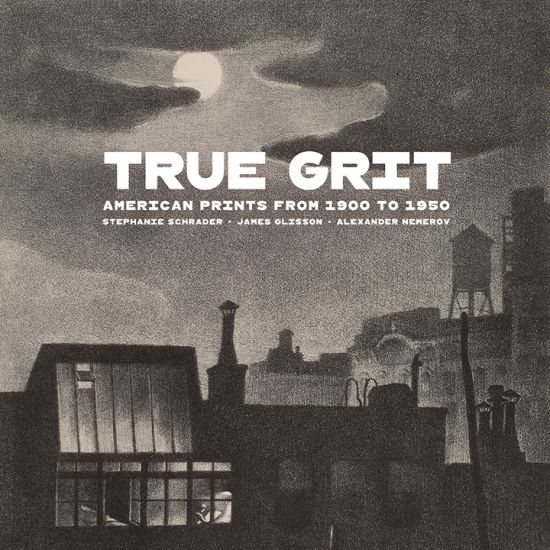
True Grit - American Prints from 1900 to 1950
Stephanie Schrader; James Glisson; Alexander Nemerov
Getty Publications
2019
sidottu
In the first half of the twentieth century, a group of American artists influenced by the painter and teacher Robert Henri aimed to reject the pretenses of academic fine art and polite society. Embracing the democratic inclusiveness of the Progressive movement, these artists turned to making prints, which were relatively inexpensive to produce and easy to distribute. For their subject matter, the artists mined the bustling activity and stark realities of the urban centers in which they lived and worked. Their prints feature sublime towering skyscrapers and stifling city streets, jazzy dance halls and bleak tenement interiors-intimate and anonymous everyday scenes that addressed modern life in America. True Grit examines a rich selection of prints by well-known figures like George Bellows, Edward Hopper, Joseph Pennell, and John Sloan as well as lesser-known artists such as Ida Abelman, Peggy Bacon, Miguel Covarrubias, and Mabel Dwight. Written by three scholars of printmaking and American art, the essays present nuanced discussions of gender, class, literature, and politics, contextualizing the prints in the rapidly changing milieu of the first decades of twentieth-century America.
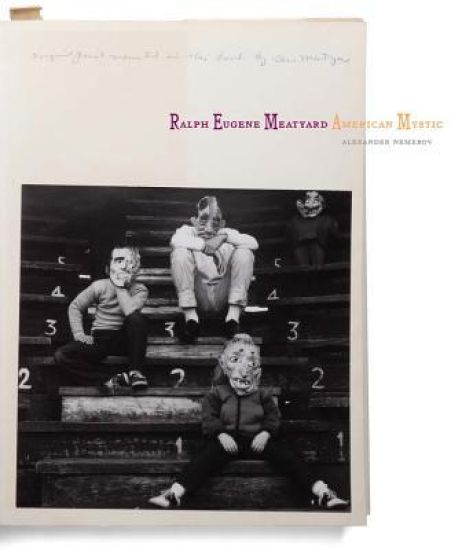
Meatyard as self-taught visionary: a portrait of the photographer by acclaimed art historian Alexander Nemerov The legendary, mysterious photographer Ralph Eugene Meatyard (1925–72) lived in Lexington, Kentucky, working in a close-knit community of artists and writers while making his living as an optician. Ralph Eugene Meatyard: American Mystic, by esteemed art historian Alexander Nemerov, is a groundbreaking study of Meatyard’s work, creative thinking and sources of inspiration. Given rare access to the personal library in which Meatyard had tellingly annotated works of fiction, poetry and other pages of personal significance, Nemerov examines the artist’s process of creating characters and staging dreamlike scenes. American Mystic also considers the artists and writers whose work influenced Meatyard, such as William Blake, Ludwig Wittgenstein and Thomas Merton. Meatyard’s celebrated series The Family Album of Lucybelle Crater and many of his other photographs cast family members and friends in central roles, often masked and enacting symbolic dramas. Of these mystical works, Nemerov writes, “For Meatyard, a photograph is a careful or casual arrangement meant to produce a feeling it cannot name.”
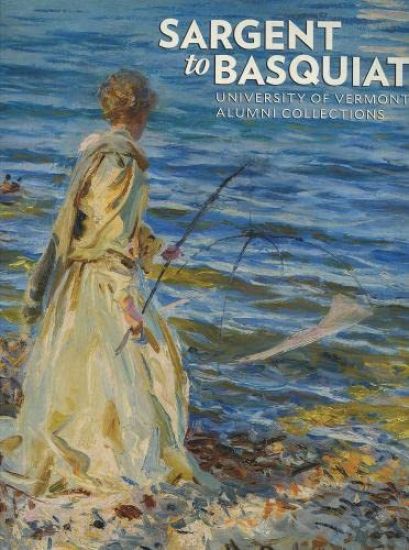
On the occasion of the University of Vermont's 225th anniversary, the Fleming Museum of Art presents an exhibition and accompanying catalogue featuring works from the outstanding art collections of the University's alumni. Highlights include painting, sculpture, and works on paper by John Singer Sargent, Childe Hassam, Wassily Kandinsky, Jean Dubuffet, Willem de Kooning, Robert Motherwell, Henry Moore, Andy Warhol, Howard Hodgkin, Keith Haring, and Jean-Michel Basquiat; and prints and photographs by Pablo Picasso, Frank Stella, Vik Muniz, Cindy Sherman, and Nan Goldin. The catalogue features essays by Anthony E. Grudin, Alexander Nemerov, Andrea P. Rosen, and Charles Russell, as well as short contributions by Claude Cernuschi, Janie Cohen, Lily deJongh Downing, Martha Richardson, and Philip Sprayregen.
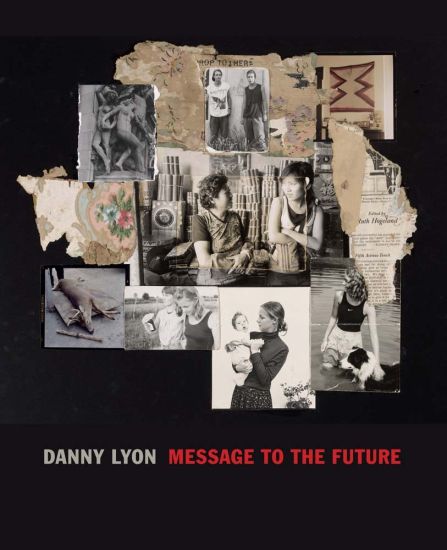
Danny Lyon
Julian Cox; Elisabeth Sussman; Alexander Nemerov; Danica Willard Sachs; Ed Halter; Alan Rinzler
Yale University Press
2016
sidottu
The first comprehensive overview of an influential American photographer and filmmaker whose work is known for its intimacy and social engagement Coming of age in the 1960s, the photographer Danny Lyon (b. 1942) distinguished himself with work that emphasized intimate social engagement. In 1962 Lyon traveled to the segregated South to photograph the civil rights movement. Subsequent projects on biker culture, the demolition and redevelopment of lower Manhattan, and the Texas prison system, and more recently on the Occupy movement and the vanishing culture in China’s booming Shanxi Province, share Lyon’s signature immersive approach and his commitment to social and political issues that concern those on the margins of society. Lyon’s photography is paralleled by his work as a filmmaker and a writer. Danny Lyon: Message to the Future is the first in-depth examination of this leading figure in American photography and film, and the first publication to present his influential bodies of work in all media in their full context. Lead essayists Julian Cox and Elisabeth Sussman provide an account of Lyon’s five-decade career. Alexander Nemerov writes about Lyon’s work in Knoxville, Tennessee; Ed Halter assesses the artist’s films; Danica Willard Sachs evaluates his photomontages; and Julian Cox interviews Alan Rinzler about his role in publishing Lyon’s earliest works. With extensive back matter and illustrations, this publication will be the most comprehensive account of this influential artist’s work.Published in association with the Fine Arts Museums of San FranciscoExhibition Schedule:Whitney Museum of American Art (06/17/16–09/25/16)de Young, Fine Arts Museums of San Francisco (11/05/16–03/12/17)Fotomuseum Winterthur (05/20/17–08/27/17)C/O Berlin Foundation (09/15/17–12/10/17)
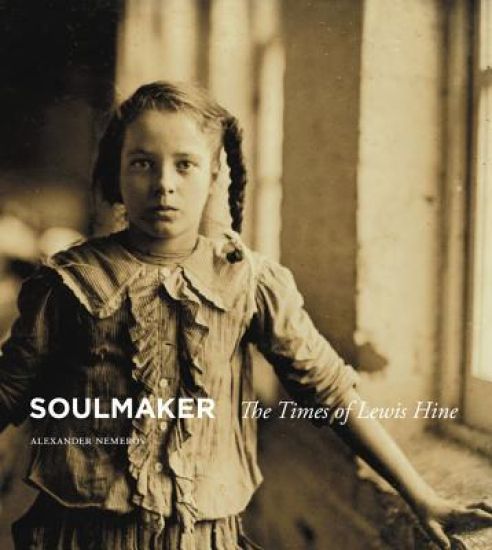
Between 1908 and 1917, the American photographer and sociologist Lewis Hine (1874-1940) took some of the most memorable pictures of child workers ever made. Traveling around the United States while working for the National Child Labor Committee, he photographed children in textile mills, coal mines, and factories from Vermont and Massachusetts to Georgia, Tennessee, and Missouri. Using his camera as a tool of social activism, Hine had a major influence on the development of documentary photography. But many of his pictures transcend their original purpose. Concentrating on these photographs, Alexander Nemerov reveals the special eeriness of Hine's beautiful and disturbing work as never before. Richly illustrated, the book also includes arresting contemporary photographs by Jason Francisco of the places Hine documented. Soulmaker is a striking new meditation on Hine's photographs. It explores how Hine's children lived in time, even how they might continue to live for all time. Thinking about what the mill would be like after he was gone, after the children were gone, Hine intuited what lives and dies in the second a photograph is made. His photographs seek the beauty, fragility, and terror of moments on earth.
Silent Dialogues, by art historian Alexander Nemerov, is a probing, intimate reflection about photographer Diane Arbus, the author's aunt, and her brother, Pulitzer Prize–winning poet Howard Nemerov, the author's father. "I have no memories of Diane Arbus," begins Alexander Nemerov in the first of two meditative essays that comprise this book. "A Resemblance" examines Howard Nemerov's complicated responses to his sister's photography. "The School" focuses on a body of Arbus' work known as the Untitled series, photographs made at residences for the mentally disabled between 1969 and 1971, in the last years of her life. Through their work, the author explores the siblings' disparate and distinct sensibilities, and in doing so uncovers signs of an unexpected aesthetic kinship. Illustrations complementing the essays include numerous examples of Arbus' photographs; paintings by artists as diverse as Pieter Brueghel, Norman Rockwell, Paul Feeley and Johannes Vermeer; and a selection of poems by Howard Nemerov, chosen by his son.
Hotel Texas
Olivier Meslay; Scott Barker; David M. Lubin; Alexander Nemerov; Nicola Longford
Yale University Press
2013
sidottu
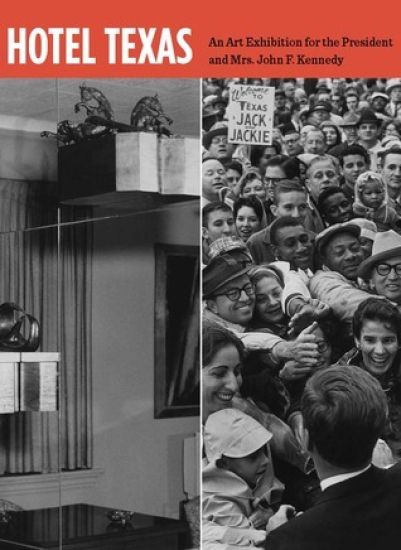
The story of a bittersweet, impromptu art exhibition for President and Mrs. Kennedy The events associated with John F. Kennedy’s death are etched into our nation’s memory. This fascinating book tells a less familiar part of the story, about a special art exhibition organized by a group of Fort Worth citizens. On November 21, 1963, the Kennedys arrived in Fort Worth around midnight, making their way to Suite 850 of the Hotel Texas. There, installed in their honor, was an intimate exhibition that included works by Monet, Van Gogh, Marin, Eakins, Feininger, and Picasso. Due to the late hour, it was not until the following morning that the couple viewed the exhibition and phoned one of the principal organizers, Ruth Carter Johnson, to offer thanks. Mrs. Kennedy indicated that she wished she could stay longer to admire the beautiful works. The couple was due to depart for Dallas, and the rest is history.This volume reunites the works in this exhibition for the first time and features some previously unpublished images of the hotel room. Essays examine this exhibition from several angles: anecdotal, analytical, cultural, and historical, and include discussions of what the local citizens wished to convey to their distinguished viewers.Distributed for the Dallas Museum of Art and Amon Carter Museum of American ArtExhibition Schedule:Dallas Museum of Art(05/26/13–09/15/13)Amon Carter Museum of American Art(10/12/13–01/12/14)
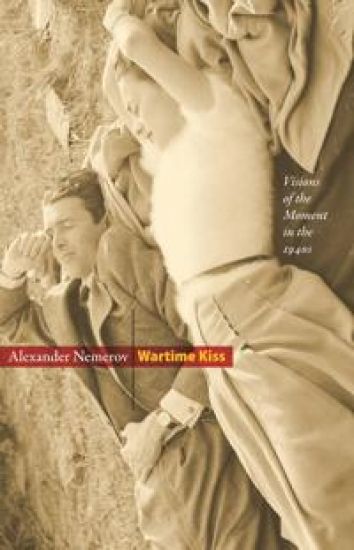
Wartime Kiss is a personal meditation on the haunting power of American photographs and films from World War II and the later 1940s. Starting with a stunning reinterpretation of one of the most famous photos of all time, Alfred Eisenstaedt's image of a sailor kissing a nurse in Times Square on V-J Day, Alexander Nemerov goes on to examine an array of mostly forgotten images and movie episodes--from a photo of Jimmy Stewart and Olivia de Havilland lying on a picnic blanket in the Santa Barbara hills to scenes from such films as Twelve O'Clock High and Hold Back the Dawn. Erotically charged and bearing traces of trauma even when they seem far removed from the war, these photos and scenes seem to hold out the promise of a palpable and emotional connection to those years. Through a series of fascinating stories, Nemerov reveals the surprising background of these bits of film and discovers unexpected connections between the war and Hollywood, from an obsession with aviation to Anne Frank's love of the movies. Beautifully written and illustrated, Wartime Kiss vividly evokes a world in which Margaret Bourke-White could follow a heroic assignment photographing a B-17 bombing mission over Tunis with a job in Hollywood documenting the filming of a war movie. Ultimately this is a book about history as a sensuous experience, a work as mysterious, indescribable, and affecting as a novel by W. G. Sebald.
What can the performance of a single play on one specific night tell us about the world this event inhabited so briefly? Alexander Nemerov takes a performance of Macbeth in Washington, DC on October 17, 1863 - with Abraham Lincoln in attendance - to explore this question and illuminate American art, politics, technology, and life as it was being lived. Nemerov's inspiration is Wallace Stevens and his poem "Anecdote of the Jar", in which a single object organizes the wilderness around it in the consciousness of the poet. For Nemerov, that evening's performance of Macbeth reached across the tragedy of civil war to acknowledge the horrors and emptiness of a world it tried and ultimately failed to change.
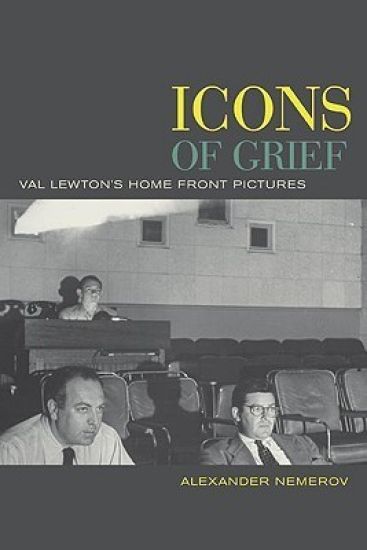
This beautifully written study looks at the haunting, melancholy horror films Val Lewton made between 1942 and 1946 and finds them to be powerful commentaries on the American home front during World War II. Alexander Nemerov focuses on the iconic, isolated figures who appear in four of Lewton's small-budget classics - "The Curse of the Cat People", "The Ghost Ship", "I Walked with a Zombie", and "Bedlam". These ghosts, outcasts, and other apparitions of sorrow crystallize the anxiety and grief experienced by Americans during the war, emotions decidedly at odds with the official insistence on courage, patriotism, and optimism. In an evocative meditation on Lewton's use of these 'icons of grief,' Nemerov demonstrates the film-maker's interest in those who found themselves alienated by wartime society and illuminates the dark side of the American psyche in the 1940s. Nemerov's rich study draws from Lewton's letters, novels, and scripts and from a wealth of historical material to shed light on both the visual and literary aspects of the filmmaker's work. Lavishly illustrated with more than fifty photographs, including many rare film stills, "Icons of Grief" recasts Lewton's horror films as suggestive commentaries on a troubled and hidden side of America during World War II.
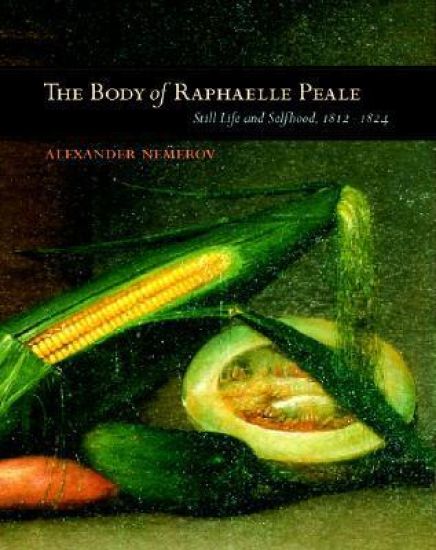
The American painter Raphaelle Peale (1774-1825) left a legacy of vibrantly beautiful still lifes depicting objects such as fruit, vegetables, and meat. In this lively and literate study, the first book-length exploration of the artist, Alexander Nemerov presents a radical new reading of these paintings focusing on the uncanny quality of Raphaelle's still-life objects. Nemerov argues that the physical presence of these objects is not strictly their own but that of the artist's body. This imagery of embodiment, Nemerov argues, relates deeply to Raphaelle's own time. "The Body of Raphaelle Peale" focuses on not just Raphaelle's paintings but also the visual and intellectual culture of early-nineteenth-century Philadelphia, to which these works intimately relate. More broadly, the book presents a reading of romanticism in the American visual arts. Above all, it is an argument about selfhood in Raphaelle's era. Raphaelle's focus - in paintings both playful and morbid - was the pleasures and horrors of being a mere body, of being less than a self. Nemerov's primary source of evidence in this study is Raphaelle's art itself. After considering its theoretical and historical implications, he returns to the images, deftly guiding us to a fresh understanding of these remarkable paintings. Nemerov's formal analysis is infused with a sophisticated awareness of interdisciplinary issues, and he gracefully balances the formal, the theoretical, and the historical throughout his narrative. This beautifully illustrated study is sure to stimulate renewed appreciation of an exceptional American artist.