Kirjojen hintavertailu. Mukana 12 267 467 kirjaa ja 12 kauppaa.

Kirjailija

Alexander Pushkin

Kirjat ja teokset yhdessä paikassa: 138 kirjaa, julkaisuja vuosilta 1978-2026, suosituimpien joukossa Marie. Vertaile teosten hintoja ja tarkista saatavuus suomalaisista kirjakaupoista.

138 kirjaa

Kirjojen julkaisuhaarukka 1978-2026.

Ruslan and Lyudmila: Dual Language

Ruslan and Lyudmila: Dual Language

Alexander Pushkin

Alma Classics
2012
nidottu
In order to rescue his beloved Lyudmila, who has been abducted by the evil wizard Chernomor, the warrior Ruslan faces an epic and perilous quest, encoutering a multitude of fantastic and terrifying characters along the way. The basis for Glinka's famous opera of the same name, Ruslan and Lyudmila - Pushkin's second longest poetical work - is a dramatic and ingenious retelling of Russian folklore, full of humour and irony.
The Captain's Daughter: And Other Stories
Famous for his enormously influential poetry and plays, Alexander Pushkin is also beloved for his short stories. This collection showcases his tremendous range, which enabled him to portray the Russian people through romance, drama, and satire. The sparkling humor of the five "Tales of Belkin" contrasts with a dark fable of gambling and obsessive greed in "The Queen of Spades" and the masterful historical novella, "The Captain's Daughter," a story of love and betrayal set during a rebellion in the time of Catherine the Great. Translated by Natalie Duddington and T. Keane
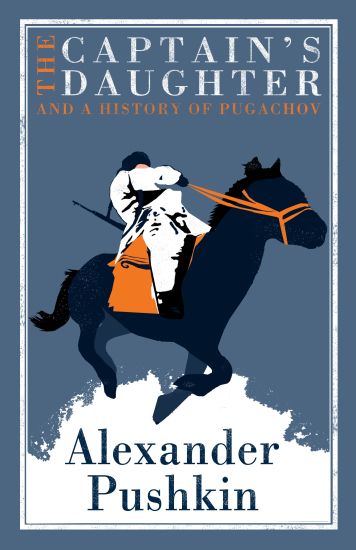
The The Captain's Daughter and A History of Pugachov
Set during the Pugachov rebellion against Catherine the Great, The Captain's Daughter was Pushkin's only completed novel and remains one of his most popular works. The inexperienced and impetuous young nobleman Pyotr Grinyev is sent on military service to a remote fortress, where he falls in love with Masha, Captain Mironov's daughter - but then the ruthless Cossack Pugachov lays siege to the stronghold, setting in motion a tragic train of events. This volume also contains another work by Pushkin on the same theme, A History of Pugachov, which presents an impartial, meticulously researched history of the revolt, but was regarded in aristocratic circles as subversive on its publication. Together, these two works provide a fascinating insight into the character of the peasant who tried to overthrow an empress, written with the clarity and insight of Russia's greatest poet.
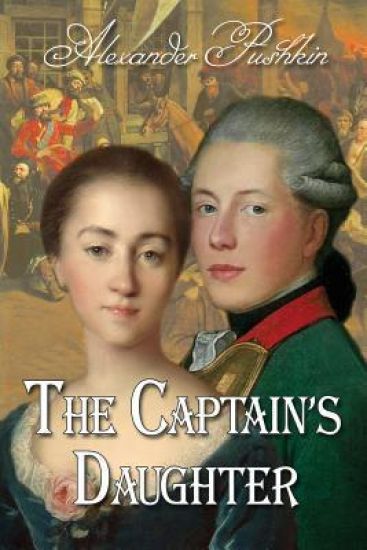
The Captain's Daughter

The Captain's Daughter

Alexander Pushkin

Createspace Independent Publishing Platform
2011
nidottu
"The Captain's Daughter" (also known as "The Daughter of the Commandant" or "Marie: A Story of Russian Love") is regarded as Pushkin's best prose work. It was first published in 1836 in the literary journal Sovremennik.This historical novel is dedicated to the events of the Pugachev's Rebellion in Russia in 1773-1775. It tells the story of a 17-years-old officer, Peter Grineff, sent by his father into military service. Peter was assigned to a small fortress of Belogorsk, where he fell in love with Maria, the daughter of the commandant...This edition includes illustrations by Pavel Sokolov and other artists of 18-19th century: V.L. Borovikovski, Vladimirov, S.V. Ivanov and V.G. Perov.
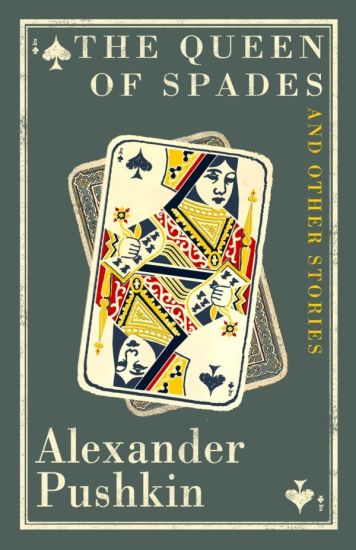
The Queen of Spades and Other Stories

The Queen of Spades and Other Stories

Alexander Pushkin

Alma Classics
2011
nidottu
This collection of Pushkin’s stories begins with ‘The Queen of Spades’, perhaps the most celebrated short story in Russian literature. The young Hermann, while watching some friends gambling, hears a rumour of how an officer’s grandmother is always able to predict the three winning cards in a game. He becomes obsessed with the woman and her seemingly mystical powers, and seeks to extract the secret from her at any cost.This volume, part of a new series of the complete works of Pushkin in English, also includes ‘Dubrovsky’, the story of a man’s desire to avenge himself after his land is unjustly taken from him by an aristocrat; ‘The Negro of Peter the Great’, a tale inspired by Pushkin’s maternal grandfather; and the unfinished story ‘Egyptian Nights’, a meditation on poetry and the poet. Together, they represent some of the most striking and enduring pieces of Pushkin’s prose fiction.
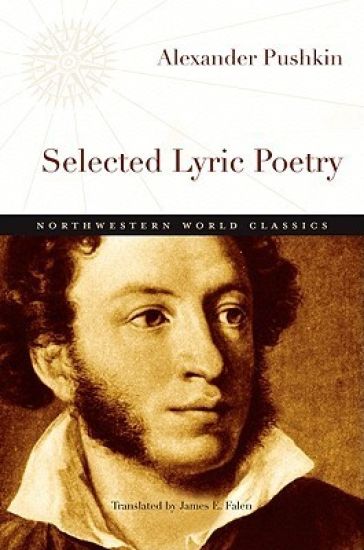
Selected Lyric Poetry

Selected Lyric Poetry

Alexander Pushkin

Northwestern University Press
2009
nidottu
It is most fitting that Northwestern University Press, long a leading publisher of Russian literature in translation, launches the ""Northwestern World Classics"" series with a new translation of Russia's greatest poet. Included are many famous poems well known to, and often memorized by, every educated Russian, as well as lighter, more occasional pieces. Renowned translator James Falen's collection of 167 of Pushkin's lyrics is arranged chronologically, beginning with verse written in the poet's teenage years - Pushkin published his first poem at fifteen and was widely revered by his later teens - and closing with lines composed shortly before his death. As a whole, these selections reveal Pushkin's development as a poet, but they also capture the wide range of subjects and styles in Pushkin's poetry. Born in Moscow in 1799, Alexander Pushkin was already a literary star by the time he graduated from the Imperial Lyceum in Tsarskoe Selo. Pushkin gradually turned to social reform and advocated literary radicalism, and he was eventually exiled to southern Russia. During this time, he wrote ""Boris Godunov"", but it was not published until years later. His novel in verse, ""Eugene Onegin"", was published serially from 1825 to 1832. He died in 1837 from wounds sustained in a duel.
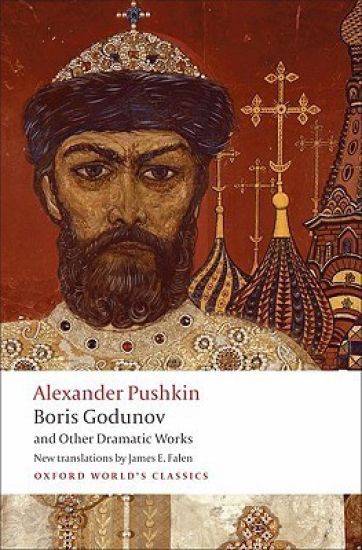
Boris Godunov and Other Dramatic Works

Boris Godunov and Other Dramatic Works

Alexander Pushkin

Oxford University Press
2009
nidottu
'The people are silent' So ends Pushkin's great historical drama Boris Godunov, in which Boris's reign as Tsar witnesses civil strife and intrigue, brutality and misery. Its legacy is an uncertain future for the new Tsar whose inauguration is met with devastating silence by the people. Pushkin's dramatic work displays a scintillating variety of forms, from the historical to the metaphysical and folkloric. After Boris Godunov, they evolved into Pushkin's own unique, condensed transformations of Western European themes and traditions. The fearful amorality of A Scene from Faust is followed by the four Little Tragedies which confront greed, envy, lust, and blasphemy , while Rusalka is a tragedy of a different kind - a lyric fairytale of despair and transformation. James E. Falen's verse translations of Pushkin's dramas are here accompanied by an Introduction by Caryl Emerson on Russia's most cosmopolitan playwright. ABOUT THE SERIES: For over 100 years Oxford World's Classics has made available the widest range of literature from around the globe. Each affordable volume reflects Oxford's commitment to scholarship, providing the most accurate text plus a wealth of other valuable features, including expert introductions by leading authorities, helpful notes to clarify the text, up-to-date bibliographies for further study, and much more.
Tales Of Belkin

Tales Of Belkin

Alexander Pushkin

Melville House Publishing
2009
nidottu
Ivan Petrovich Belkin left behind a great number of manuscripts.... Most of them, as Ivan Petrovich told me, were true stories heard from various people.First published anonymously in 1830, Alexander Pushkin's Tales of Belkin contains his first prose works. It is comprised of an introductory note and five linked stories, ostensibly collected by the scholar Ivan Belkin. The stories center variously around military figures, the wealthy, and businessmen; this beautiful novella gives a vivid portrait of nineteenth century Russian life. It has become, as well, one of the most beloved books in Russian literary history, and symbolic of the popularity of the novella form in Russia. In fact, it has become the namesake for Russia's most prestigious annual literary prize, the Belkin Prize, given each year to a book voted by judges to be the best novella of the year. It is presented here in a sparkling new translation by Josh Billings. Tales of Belkin also highlights the nature of our ongoing Art of the Novella Series--that is, that it specializes in important although albeit lesser-known works by major writers, often in new tranlsations. The Art of The Novella Series Too short to be a novel, too long to be a short story, the novella is generally unrecognized by academics and publishers. Nonetheless, it is a form beloved and practiced by literature's greatest writers. In the Art Of The Novella series, Melville House celebrates this renegade art form and its practitioners with titles that are, in many instances, presented in book form for the first time.
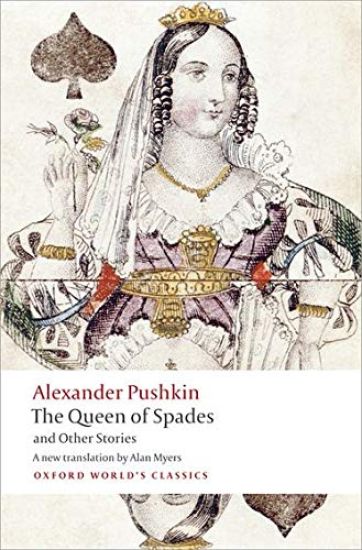
The Queen of Spades and Other Stories

The Queen of Spades and Other Stories

Alexander Pushkin

Oxford University Press
2009
nidottu
The Queen of Spades has long been acknowledged as one of the world's greatest short stories. In this classic literary representation of gambling, Alexander Pushkin explores the nature of obsession. Hints of the occult and gothic alternate with scenes of St Petersburg high-society in the story of the passionate Hermann's quest to master chance and make his fortune at the card-table. Underlying the taut plot is an ironical treatment of the romantic dreamer and social outcast. This volume contains three other major works of Pushkin's fiction, moving from the witty parodies of sentimentalism and high melodrama in The Tales of Belkin to an early experiment with recreating the past in Peter the Great's Blackamoor. It concludes with the novel-length masterpiece The Captain's Daughter, which combines historical fiction in the manner of Sir Walter Scott with the colour and devices of the Russian fairy-tale in a narrative of rebellion and romance. These new translations, as well as being meticulously faithful to the original, do full justice to the elegance and fluency of Pushkin's prose. The Introduction provides insightful readings of the stories and places them in their European literary context. A chronology of the Pugachov Uprising illuminates the events in The Captain's Daughter. ABOUT THE SERIES: For over 100 years Oxford World's Classics has made available the widest range of literature from around the globe. Each affordable volume reflects Oxford's commitment to scholarship, providing the most accurate text plus a wealth of other valuable features, including expert introductions by leading authorities, helpful notes to clarify the text, up-to-date bibliographies for further study, and much more.
Eugene Onegin: A Novel In Verse

Eugene Onegin: A Novel In Verse

Alexander Pushkin

Basic Books
2000
pokkari
Fans of Hofstadter's Le Ton beau de Marot will be delighted to see his meticulous theories of translation put into practice in what seems destined to become the definitive English-language version of Eugene Onegin. It is sure to bring new and deserving readers to this neglected literary jewel.
The Little Tragedies

The Little Tragedies

Alexander Pushkin

Yale University Press
2000
pokkari
In a major burst of creativity, Russian poet Alexander Pushkin during just three months in 1830 completed Eugene Onegin, composed more than thirty lyric poems, wrote several short stories and folk tales, and penned the four short dramas in verse that comprise the “little tragedies.” The “little tragedies” stand among the great masterpieces of Russian literature, yet they were last translated into English a quarter-century ago and have in recent years been out of print entirely. In this outstanding new translation, Nancy K. Anderson preserves the cadence and intensity of Pushkin’s work while aligning it with today’s poetic practices and freer approach to metrics. In addition she provides critical essays examining each play in depth, a discussion of her approach to translating the plays, and a consideration of the genre of these dramatic pieces and their performability.The four “little tragedies”—Mozart and Salieri, The Miserly Knight, The Stone Guest, and A Feast During the Plague—are extremely compressed dialogues, each dealing with a dominant protagonist whose central internal conflict determines both the plot and structure of the play. Pushkin focuses on human passions and the interplay between free will and fate: though each protagonist could avoid self-ruin, instead he freely chooses it.
The Queen of Spades and Other Stories

The Queen of Spades and Other Stories

Alexander Pushkin

Dover Publications Inc.
2000
nidottu
This volume contains new translations of four of Pushkin's best works of fiction. The Queen of Spades has long been acknowledged as one of the world's greatest short stories, in which Pushkin explores the nature of obsession. The Tales of Belkin are witty parodies of sentimentalism, while Peter the Great's Blackamoor is an early experiment with recreating the past. The Captain's Daughter is a novel-length masterpiece which combines historical fiction in the manner of Sir Walter Scott with the devices of the Russian fairy-tale. The Introduction provides close readings of the stories and places them in their European literary context.
Eugene Onegin And Other Poems

Eugene Onegin And Other Poems

Alexander Pushkin

Everymans Library
1999
sidottu
Pushkin was the first Russian writer of European stature, and he is among the very few artists - such as Homer and Shakespeare - to have shaped the consciousness and history of an entire nation and its language, thereby affecting the world at large.
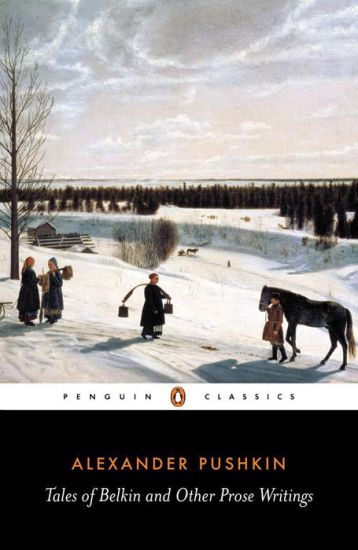
Tales of Belkin and Other Prose Writings

Tales of Belkin and Other Prose Writings

Alexander Pushkin

Penguin Classics
1998
pokkari
Alexander Pushkin was Russia's first true literary genius. Best known for his poetry, he also wrote sparkling prose that revealed his national culture with elegance and understated humour. Here, his gift for portraying the Russian people is fully revealed. The Tales of Belkin, his first prose masterpiece, presents a series of interlinked stories narrated by a good-hearted Russian squire - among them 'The Shot', in which a duel is revisited after many years, and the grotesque 'The Undertaker'. Elsewhere, works such as the novel-fragment Roslavlev and the Egyptian Nights, the tale of an Italian balladeer seeking an audience in St. Petersberg, demonstrate the wide range of Pushkin's fiction. A Journey to Arzrum, the final piece in this collection, offers an autobiographical account of Pushkin's own experiences in the 1829 war between Russia and Turkey, and remains one of the greatest of all pieces of journalistic adventure writing.
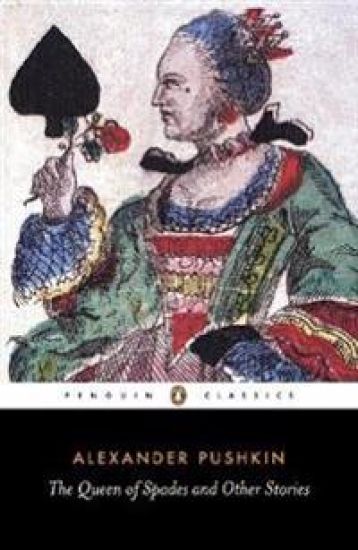
The Queen of Spades and Other Stories

The Queen of Spades and Other Stories

Alexander Pushkin

Penguin Classics
1978
pokkari
The Queen of Spades and Other Stories is a collection of short fiction showcasing Alexander Pushkin's application of Romantic sensibilities to uncompromising studies of human frailty. This Penguin Classics edition is translated with an introduction by Rosemary Edwards.'The Queen of Spades', one of Pushkin's most popular and chilling short stories, tells of an inveterate card player who develops a dangerous obsession with the secret of an old lady's luck, which he believes will bring him the wealth he craves. 'The Negro of Peter the Great', a story based on the life Pushkin's own great-grandfather, is a vivid depiction - and criticism - of both French and Russian society, while 'Dubrovsky' is the Byronic tale of a dispossessed young officer. 'The Captain's Daughter' tells of a young man sent to military service - based on the actual events of the rebellion against Catherine II, it demonstrates Pushkin's unparalleled skill at blending fiction and history. Together these four stories display the versatility and innovation that earned Pushkin his reputation as a master of prose and established him as the towering figure in Russian literature.Rosemary Edmonds's translation is accompanied by an introduction examining Pushkin's simplicity of style and the powerful influence he exerted on his country's literature.Alexander Pushkin (1799-1837) was born in Moscow in 1799. Leaving school in 1817, he spent three years in St Petersburg working in the Foreign Office and writing erotic verse. His flirtations with pre-Decembrist movements and his revolutionary verses lead to his exile in 1820. After a stay in the Caucasus and Crimea he was sent to Bessarabia, where he began to write more seriously, beginning Eugene Onegin and Tsygany. In 1831 he retired to a family estate, married, and his literary output slackened. He was mortally wounded in a duel and died in January 1837.If you enjoyed The Queen of Spades, you might like Fyodor Dostoyevsky's The Idiot, also available in Penguin Classics.