

Kirjailija
Alexander Russo
Kirjat ja teokset yhdessä paikassa: 4 kirjaa, julkaisuja vuosilta 2010-2013, suosituimpien joukossa Combat Artist, A Journal of Love and War. Vertaile teosten hintoja ja tarkista saatavuus suomalaisista kirjakaupoista.
4 kirjaa
Kirjojen julkaisuhaarukka 2010-2013.


The golden age of radio is often recalled as a time when the medium unified the nation, when families gathered around the radios in homes across the country to listen to live, commercially sponsored network broadcasts. In Points on the Dial, Alexander Russo revises our understanding of radio’s past by revealing the hidden histories of production, distribution, and reception practices during this era, which extended from the 1920s into the 1950s. Russo brings to light a tiered broadcasting system with intermingling but distinct national, regional, and local programming forms, sponsorship patterns, and methods of program distribution. Examining a wide range of practices, including regional networking, sound-on-disc transcription, the use of station representatives, spot advertising, and programming aimed at homes with several radios, he not only recasts our understanding of the relationship between national networks and local stations but also charts the development of new ways of listening-often distractedly rather than attentively-that set the stage for radio in the second half of the twentieth century.
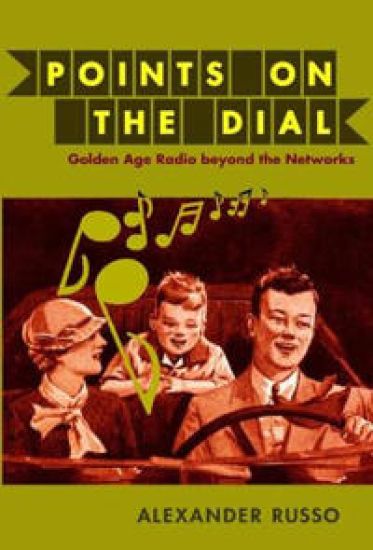
The golden age of radio is often recalled as a time when the medium unified the nation, when families gathered around the radios in homes across the country to listen to live, commercially sponsored network broadcasts. In Points on the Dial, Alexander Russo revises our understanding of radio’s past by revealing the hidden histories of production, distribution, and reception practices during this era, which extended from the 1920s into the 1950s. Russo brings to light a tiered broadcasting system with intermingling but distinct national, regional, and local programming forms, sponsorship patterns, and methods of program distribution. Examining a wide range of practices, including regional networking, sound-on-disc transcription, the use of station representatives, spot advertising, and programming aimed at homes with several radios, he not only recasts our understanding of the relationship between national networks and local stations but also charts the development of new ways of listening-often distractedly rather than attentively-that set the stage for radio in the second half of the twentieth century.