Kirjojen hintavertailu. Mukana 12 390 323 kirjaa ja 12 kauppaa.

Kirjailija

Alexandre Montagu

Kirjat ja teokset yhdessä paikassa: 6 kirjaa, julkaisuja vuosilta 2019-2025, suosituimpien joukossa Who Owns This Sentence?. Vertaile teosten hintoja ja tarkista saatavuus suomalaisista kirjakaupoista.

6 kirjaa

Kirjojen julkaisuhaarukka 2019-2025.

Who Owns This Sentence?: A History of Copyrights and Wrongs

Who Owns This Sentence?: A History of Copyrights and Wrongs

David Bellos; Alexandre Montagu

W. W. Norton Company
2025
nidottu
Copyright is everywhere. Your smartphone incorporates thousands of items of intellectual property. Someone owns the reproduction rights to photographs of your dining table. At this very moment, battles are raging over copyright in the output of artificial intelligence programs. Not only books but wallpaper, computer programs, pop songs, cartoon characters, snapshots, and cuddly toys are now deemed to be intellectual properties--making copyright a labyrinthine construction of laws with colorful and often baffling rationales covering almost all products of human creativity.It wasn't always so. Copyright has its roots in eighteenth-century London, where it was first established to limit printers' control of books. But a handful of little-noticed changes in the late twentieth century brought about a new enclosure of the cultural commons, concentrating ownership of immaterial goods in very few hands. Copyright's metastasis can't be understood without knowing its backstory, a long tangle of high ideals, low greed, opportunism, and word-mangling that allowed poems and novels (and now, even ringtones and databases) to be treated as if they were no different from farms and houses. Principled arguments against copyright arose from the start and nearly abolished it in the nineteenth century. Nonetheless, countless revisions have made copyright ever stronger. Who Owns This Sentence? is an often-humorous and always-enlightening cultural, legal, and global history of the idea that intangible things can be owned, and makes a persuasive case for seeing copyright as an engine of inequality in the twenty-first century.
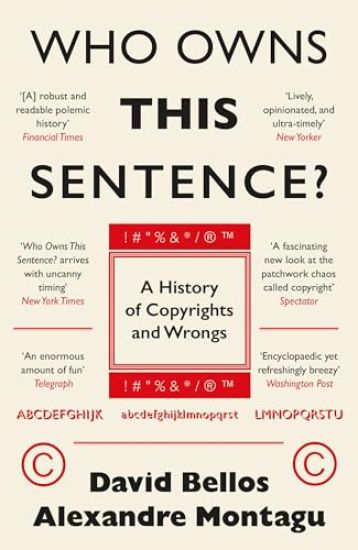
Who Owns This Sentence?

Who Owns This Sentence?

David Bellos; Alexandre Montagu

HEADLINE PUBLISHING GROUP
2024
pokkari
'Fascinating' Telegraph'Thorough and engaging' Washington Post'Lively, opinionated, and ultra-timely' New Yorker'[A] robust and readable polemic history' Financial Times'A fascinating new look at the patchwork chaos called copyright ... Not just authors, but artists in many media, scientists, mathematicians and every one of us with our own unique individual faces ... should read this book' SpectatorThis is the story of a relatively simple idea - that authors have rights in the works they create - which through many strange and startling twists and turns has come to frame and to constrain a wide range of things we do, for the benefit not of the many, but of the few.On December 16, 2021, Sony Music Group announced that it had acquired the rights to the work of singer songwriter Bruce Springsteen. The sale price was over half a billion dollars. The reason why a catalogue of songs and recordings can now be sold for the price of a fleet of small aircraft is the whole subject of this book: copyright. Who Owns this Sentence? is a fascinating and comprehensive cultural, legal and global history of how intangible things can be owned, and reveals how copyright is no longer for the benefit of creators but has been transformed into an engine of inequality in the twenty-first century.
Who Owns This Sentence?

Who Owns This Sentence?

David Bellos; Alexandre Montagu

HEADLINE PUBLISHING GROUP
2024
sidottu
'Fascinating' Telegraph'Thorough and engaging' Washington Post'Lively, opinionated, and ultra-timely' New Yorker'[A] robust and readable polemic history' Financial Times'A fascinating new look at the patchwork chaos called copyright ... Not just authors, but artists in many media, scientists, mathematicians and every one of us with our own unique individual faces ... should read this book' SpectatorThis is the story of a relatively simple idea - that authors have rights in the works they create - which through many strange and startling twists and turns has come to frame and to constrain a wide range of things we do, for the benefit not of the many, but of the few.Copyright is everywhere. Your smartphone incorporates thousands of items of intellectual property. Someone owns the reproduction rights to photographs of your dining table. At this very moment, battles are raging over copyright in the output of artificial intelligence programs. Not only books but wallpaper, computer programs and cuddly toys are now deemed to be intellectual properties - making copyright a labyrinthine construction of laws covering almost all products of human creativity.Copyright has its roots in eighteenth-century London, where it was first established to limit printers' control of books. Principled arguments against copyright arose from the start and nearly abolished it in the nineteenth century. But a handful of little-noticed changes in the late twentieth century concentrated ownership of immaterial goods into very few hands.Who Owns This Sentence? is an often-humorous and always-enlightening cultural, legal, and global history of the idea that intangible things can be owned, and makes a persuasive case for seeing copyright as an engine of inequality in the twenty-first century.
Who Owns This Sentence?

Who Owns This Sentence?

Alexandre Montagu; David Bellos

HEADLINE PUBLISHING GROUP
2024
pokkari
A fascinating and important exploration into how copyright has become a tool of unprecedented power and wealth for the few, widening the gap between the richest and poorest in society.
Who Owns This Sentence?: A History of Copyrights and Wrongs

Who Owns This Sentence?: A History of Copyrights and Wrongs

David Bellos; Alexandre Montagu

W. W. Norton Company
2024
sidottu
Copyright is everywhere. Your smartphone incorporates thousands of items of intellectual property. Someone owns the reproduction rights to photographs of your dining table. At this very moment, battles are raging over copyright in the output of artificial intelligence programs. Not only books but wallpaper, computer programs, pop songs, cartoon characters, snapshots, and cuddly toys are now deemed to be intellectual properties--making copyright a labyrinthine construction of laws with colorful and often baffling rationales covering almost all products of human creativity.It wasn't always so. Copyright has its roots in eighteenth-century London, where it was first established to limit printers' control of books. But a handful of little-noticed changes in the late twentieth century brought about a new enclosure of the cultural commons, concentrating ownership of immaterial goods in very few hands. Copyright's metastasis can't be understood without knowing its backstory, a long tangle of high ideals, low greed, opportunism, and word-mangling that allowed poems and novels (and now, even ringtones and databases) to be treated as if they were no different from farms and houses. Principled arguments against copyright arose from the start and nearly abolished it in the nineteenth century. Nonetheless, countless revisions have made copyright ever stronger. Who Owns This Sentence? is an often-humorous and always-enlightening cultural, legal, and global history of the idea that intangible things can be owned, and makes a persuasive case for seeing copyright as an engine of inequality in the twenty-first century.
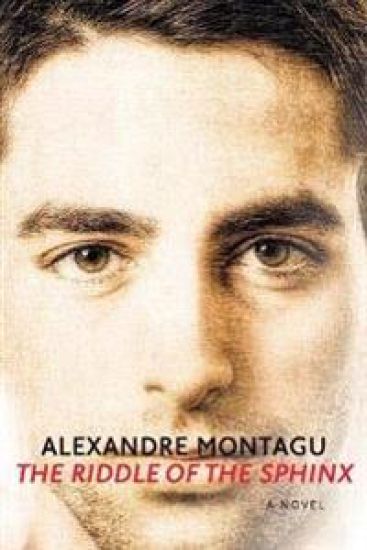
The Riddle of the Sphinx

The Riddle of the Sphinx

Alexandre Montagu

Persepolis Press
2019
pokkari
From a daring escape from revolutionary Iran, to the glittering night clubs of Paris; from the Caspian Sea to Wimbledon, from the halls of Princeton University to an exiled princess's palatial New York apartment, the story takes us on a dramatic journey in an epic and psychological novel of self-discovery, sexual obsession, exile and destiny.