Kirjojen hintavertailu. Mukana 12 101 085 kirjaa ja 12 kauppaa.

Kirjailija

Alexej Lochmatow

Kirjat ja teokset yhdessä paikassa: 2 kirjaa, julkaisuja vuosilta 2023-2025, suosituimpien joukossa Public Knowledge in Cold War Poland. Vertaile teosten hintoja ja tarkista saatavuus suomalaisista kirjakaupoista.

2 kirjaa

Kirjojen julkaisuhaarukka 2023-2025.

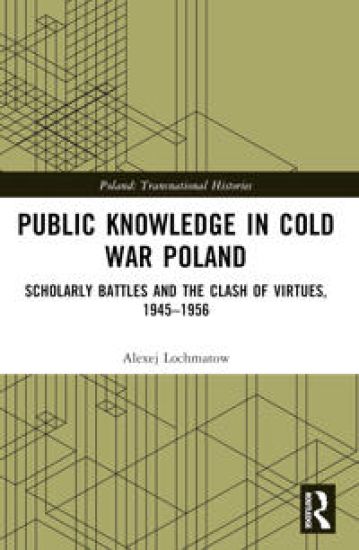
Public Knowledge in Cold War Poland

Public Knowledge in Cold War Poland

Alexej Lochmatow

TAYLOR FRANCIS LTD
2025
nidottu
This book explores the public debates among scholars that took place in Early Cold War Poland. The author challenges the traditional narrative on the ‘Sovietisation’ of Central and Eastern European countries and proposes to see this process not as a spread of Marxist ideology or a Soviet institutional model, but as an attempt to force scholars to rapidly adopt new academic and civic virtues. This book argues that this project failed to succeed in Poland and shows how the struggle against these new virtues united both Marxist and non-Marxist scholars. While covering the arc of Polish scholarly debates, the author invites the reader to go beyond Poland and to use ‘virtues’ as a framework for reflections on both the foundations of scholarly practice and the ‘nature’ of authoritarian regimes with their ambition to teach scholars how to be ‘virtuous.’
Public Knowledge in Cold War Poland

Public Knowledge in Cold War Poland

Alexej Lochmatow

TAYLOR FRANCIS LTD
2023
sidottu
This book explores the public debates among scholars that took place in Early Cold War Poland. The author challenges the traditional narrative on the ‘Sovietisation’ of Central and Eastern European countries and proposes to see this process not as a spread of Marxist ideology or a Soviet institutional model, but as an attempt to force scholars to rapidly adopt new academic and civic virtues. This book argues that this project failed to succeed in Poland and shows how the struggle against these new virtues united both Marxist and non-Marxist scholars. While covering the arc of Polish scholarly debates, the author invites the reader to go beyond Poland and to use ‘virtues’ as a framework for reflections on both the foundations of scholarly practice and the ‘nature’ of authoritarian regimes with their ambition to teach scholars how to be ‘virtuous.’