Kirjojen hintavertailu. Mukana 12 372 853 kirjaa ja 12 kauppaa.
Kirjailija
Alexis Pauline Gumbs
Kirjat ja teokset yhdessä paikassa: 25 kirjaa, julkaisuja vuosilta 2016-2027, suosituimpien joukossa The Gilda Stories. Vertaile teosten hintoja ja tarkista saatavuus suomalaisista kirjakaupoista.
'A groundbreaking work of Afrofuturism before the term was even coined' Guardian'A lush, exciting, inspiring read' Sarah WatersIn this radically reimagined vampire myth, the night hides many things...Louisiana, 1850. A young girl escapes slavery and is taken in by two mysterious women. Rumoured to be witches, the pair travel only at night, dress in men's clothing and seem to know others' innermost thoughts. But the girl sees the promise of true freedom in their dark glittering eyes: the promise to 'share the blood' and live forever. They name her Gilda.Over the next two hundred years, Gilda moves through unseen spaces: through antebellum brothels, gold-rush bars, Black women's suffrage groups, hair salons and jazz clubs, searching for a way to exist in the world. Her body, powerful against the passage of time, will know both beauty and horror through the women she desires and the blood she craves. But can Gilda truly outrun the darkness of history and face a future where the lives of everyone she loves are at stake?
Before Buffy, before Twilight, before Octavia Butler's Fledgling, there was The Gilda Stories, Jewelle Gomez's sexy vampire novel."The Gilda Stories is groundbreaking not just for the wild lives it portrays, but for how it portrays them--communally, unapologetically, roaming fiercely over space and time."--Emma Donoghue, author of Room"Jewelle Gomez sees right into the heart. This is a book to give to those you want most to find their own strength."?Dorothy AllisonThis remarkable novel begins in 1850s Louisiana, where Gilda escapes slavery and learns about freedom while working in a brothel. After being initiated into eternal life as one who "shares the blood" by two women there, Gilda spends the next two hundred years searching for a place to call home. An instant lesbian classic when it was first published in 1991, The Gilda Stories has endured as an auspiciously prescient book in its explorations of blackness, radical ecology, re-definitions of family, and yes, the erotic potential of the vampire story.Jewelle Gomez is a writer, activist, and the author of many books including Forty-Three Septembers, Don't Explain, The Lipstick Papers, Flamingoes and Bears, and Oral Tradition. The Gilda Stories was the recipient of two Lambda Literary Awards, and was adapted for the stage by the Urban Bush Women theater company in thirteen United States cities. Alexis Pauline Gumbs was named one of UTNE Reader's 50 Visionaries Transforming the World, a Reproductive Reality Check Shero, a Black Woman Rising nominee, and was awarded one of the first-ever "Too Sexy for 501c3" trophies. She lives in Durham, North Carolina.More praise for The Gilda Stories:"Jewelle's big-hearted novel pulls old rhythms out of the earth, the beauty shops and living rooms of black lesbian herstory, expressed by the dazzling vampire Gilda. Her resilience is a testament to black queer women’s love, power, and creativity. Brilliant!"--Joan Steinau Lester, author of Black, White, Other"In sensuous prose, Jewelle Gomez uses the vampire story as a vehicle for a re-telling of American history in which the disenfranchised finally get their say. Her take on queerness, community, and the vampire legend is as radical and relevant as ever."--Michael Nava, author of The City of Palaces"I devoured the 25th anniversary edition of Jewelle Gomez's The Gilda Stories with the same venal hunger as I did when I first read it. I still feel a connection to Gilda: her tenacity, her desire for community, her insistence on living among humanity with all its flaws and danger. The Gilda Stories are both classic and timely. Gilda emphasizes the import of tenets at the crux of black feminism while her stories ring with the urgency of problems that desperately need to be resolved in our current moment."--Theri A. Pickens, author of New Body Politics"This revolutionary classic by a pioneer in black speculative fiction will delight and inspire generations to come."--Tananarive Due, author of Ghost Summer"The Gilda Stories was ahead of its time when it was first published in 1991, and this anniversary edition reminds us why it's still an important novel. Gomez's characters are rooted in historical reality yet lift seductively out of it, to trouble traditional models of family, identity, and literary genre and imagine for us bold new patterns. A lush, exciting, inspiring read."--Sarah Waters, author of Tipping the Velvet" . . . its focus on a black lesbian who possesses considerable agency througout the centuries, and its commentary on gender and race, remain significant and powerful."--Publishers Weekly
This book tells the fascinating history of mutual aid organizing before the twentieth century, showing how its origins intersect with abolitionist and anti-carceral movements in the United States. Mutual aid has gone mainstream over the past couple of years, but few people know how far back it reaches. Dramatic and inspiring, the stories told describe people banding together, often against all odds, in the face of disaster, crisis, violence, and repression, to change the forces of history. From anti-slavery vigilance committees working tirelessly on the frontlines to rescue and protect those vulnerable to kidnapping, incarceration, and violence, to subcultural experiments in communal living and healthcare, nineteenth-century abolitionists, free lovers, feminists, queers, fugitives, and workers came up with a number of collective solutions to racial capitalism's biopolitical imperatives.
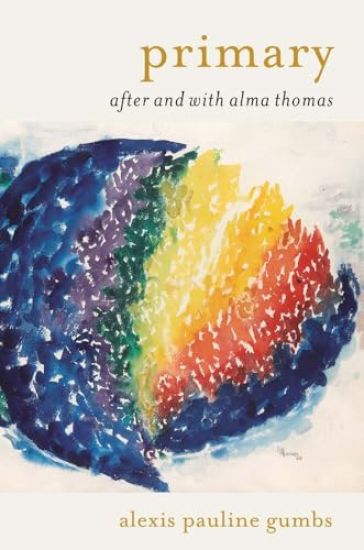
An exploration of sisterhood, creativity, and community inspired by the artist Alma Thomas's life and work, from the award-winning poet Alexis Pauline Gumbs Alma Thomas (1891-1978) was an influential figure in twentieth-century modern art, best known for her bright, mosaiclike abstract paintings. Although some critics have seen Thomas's emphasis on beauty, color, and abstract art as a way to divorce her work from her life as a Black woman, Alexis Pauline Gumbs reveals how Thomas's art was, in fact, deeply rooted in the Black community in which she lived. Black, in other words, was one of Thomas's primary colors. Gumbs sheds light on Thomas's experience as a junior high school teacher in the still-segregated schools of Washington, D.C., where Thomas--as educator, mentor, and advocate--established community art programs for Black schoolchildren and galleries to showcase Black artists' work. In this volume of poems and prose, Gumbs becomes a student of Thomas, allowing the wonder in Thomas's work to open her to wonder about her own creativity, sistering, daughtering, and practice of communal transformation.
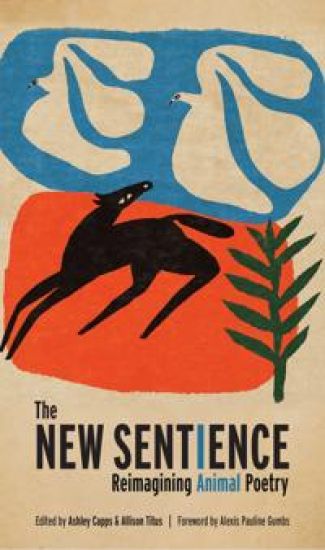
As our treatment of nonhuman animals is increasingly implicated in planetary crises—from climate change to global pandemics to unprecedented rates of biodiversity loss and species extinction—it’s clear that an urgent reconsideration of our relationship to other animals is not only necessary but overdue.How we write about animals, how we represent them in our poems and stories, doesn’t simply reflect how we relate to them in the world; it also shapes how we treat them. Any cultural shift in how we conceive of other animals requires a shift in how we read and write about them. The New Sentience seeks to help catalyze this shift by ushering in a new kind of animal poetry, what editors Ashley Capps and Allison Titus dub “kinpoetics.” Whereas animals in Western poetry have disproportionately functioned as symbols, the poems in this anthology foreground a meaningful awareness of animal sentience and subjectivity, depicting other animals as individuals with dynamic selfhood, personalities, and emotional lives.Stylistically wide-ranging, the poets featured here, among them Wendell Berry, Lucille Clifton, E. E. Cummings, Mary Oliver, Ross Gay, and Margaret Atwood, apply scrutinous lyrical attention to the animal experience in such surprising and illuminating ways that the reader can’t avoid an earnest reexamination of what humans owe our more-than-human kin. With humility, empathy, and curiosity, the work in this anthology reaffirms the vital connections between humans, animals, and the natural world. This pioneering book will impel readers to a deeper understanding of the lives of the creatures that share our planet and will inspire poets and writers to a more compassionate, meaningful engagement with animal subjects and lives.
Vintage Classics WEIRD GIRLS: Dive into the depraved, delectable depths of women’s weird fiction.'A groundbreaking work of Afrofuturism before the term was even coined' Guardian'A lush, exciting, inspiring read' Sarah WatersIn this radically reimagined vampire myth, the night hides many things...Louisiana, 1850. A young girl escapes slavery and is taken in by two mysterious women. Rumoured to be witches, the pair travel only at night, dress in men's clothing and seem to know others' innermost thoughts. But the girl sees the promise of true freedom in their dark glittering eyes: the promise to 'share the blood' and live forever. They name her Gilda.Over the next two hundred years, Gilda moves through unseen spaces: through antebellum brothels, gold-rush bars, Black women's suffrage groups, hair salons and jazz clubs, searching for a way to exist in the world. Her body, powerful against the passage of time, will know both beauty and horror through the women she desires and the blood she craves. But can Gilda truly outrun the darkness of history and face a future where the lives of everyone she loves are at stake?The VINTAGE CLASSIC WEIRD GIRLS series ventures into the dark heart of the uncanny with disturbing, and disturbed, protagonists who dare to defy the norm. Bold, disruptive, chilling and enchanting, these tales of the weird are strange enough to get lost in.
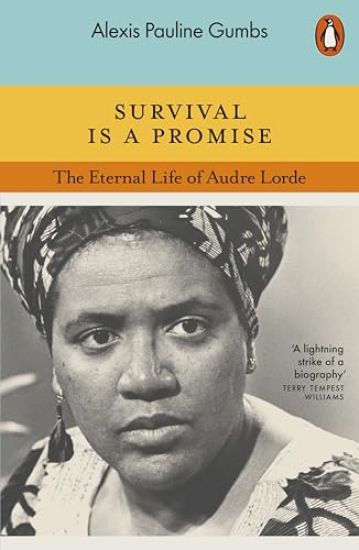
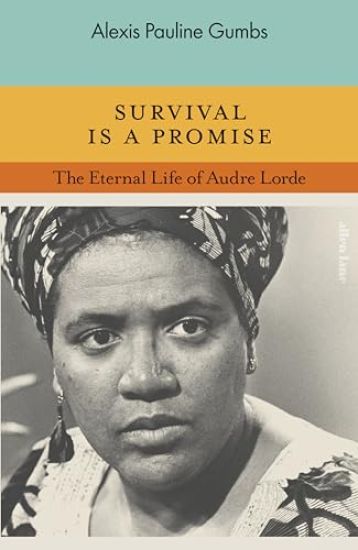
An exhilarating biography of the iconic poet, essayist and activist Audre Lorde Read these chapters like a collection of poems that speak in chorus in all directions. Understand each word as an opportunity for Audre’s fierce love, which is the same love that birthed the volcanoes and split the continents, to reach you, wherever you are.Audre Lorde was a survivor: of childhood disability injustice, of her best friend’s suicide, of the atomic age. She was a college activist against nuclear arms. A mother who knew poetry could help her children survive a racist world. And, ultimately, a cancer survivor, who understood the war going on within her cells was connected to the struggle against oppression taking place all around her.This stunning new account of Lorde’s life and work illuminates how, for Lorde, survival was not simply about getting through, or about resilience. It was about how to live on, and with, a planet in transformation. Lorde’s commitment to justice was intimately connected to her deep engagement with the natural world; with the planetary dynamics of geology, meteorology, and biology. For Lorde, ecological images are not simply metaphors but rather literal guides to how to be on earth, and how to live fully as a Black feminist lesbian warrior poet.In Survival Is a Promise, Alexis Pauline Gumbs, the first researcher to explore the full depths of Lorde’s manuscript archives, illuminates the eternal life of Audre Lorde. Her life and work swell to become a cosmic force, showing us the grand possibility of life together on earth.
A Time Must-Read Book of the YearA Publishers Weekly Top Ten Book of the Year Winner of the Judy Grahn Award for Lesbian NonfictionA bold, innovative biography that offers a new understanding of the life, work, and enduring impact of Audre Lorde. We remember Audre Lorde as an iconic writer, a quotable teacher whose words and face grace T-shirts, nonprofit annual reports, and campus diversity-center walls. But even those who are inspired by Lorde's teachings on "the creative power of difference" may be missing something fundamental about her life and work, and what they can mean for us today. Lorde's understanding of survival was not simply about getting through to the other side of oppression or being resilient in the face of cancer. It was about the total stakes of what it means to be in relationship with a planet in transformation. Possibly the focus on Lorde's quotable essays, to the neglect of her complex poems, has led us to ignore her deep engagement with the natural world, the planetary dynamics of geology, meteorology, and biology. For her, ecological images are not simply metaphors but rather literal guides to how to be of earth on earth, and how to survive--to live the ethics that a Black feminist lesbian warrior poetics demands. In Survival Is a Promise, Alexis Pauline Gumbs, the first researcher to explore the full depths of Lorde's manuscript archives, illuminates the eternal life of Lorde. Her life and work become more than a sound bite; they become a cosmic force, teaching us the grand contingency of life together on earth.
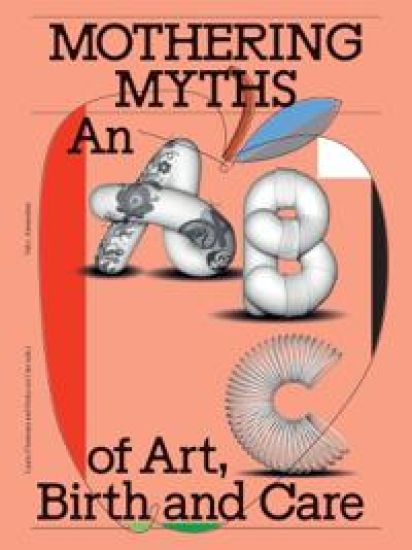
A comprehensive, intersectional and transhistorical meditation on depictions of motherhood in art, from the Middle Ages to todayRooted in the visual arts, this book gathers a multitude of voices on the theme of motherhood. Though central to the core of all life, the topic of motherhood has long been relegated to the private domain. Within the art world, depictions of motherhood have also been fraught. From the Middle Ages to the 20th century, Mary was depicted as the "primal mother." Mothers were idealized in Western art, often as women who sacrifice themselves for the good of their children. Moreover, these idealized depictions were usually made by men. In modern and contemporary art, motherhood has been considered trivial and insignificant, not a subject for great art. Artist Lise Halle Baggesen, in her extensive art project Mothernism, describes a "mother-shaped hole" a black hole in the history of art when it comes to the depiction of maternal care. To this day, that clich is still largely transmitted to female artists in art school. Young women artists often receive the message that they should not make "womb art" and that motherhood is not an interesting theme for good art. As an artist with a womb, you are often told to choose between artistry and motherhood because both require a full commitment which would make them incompatible.Following the format of the previously published On the Necessity of Gardening, Mothering Myths starts from the same base: an abecedary intersected by longer essays. The abecedarium gathers fragments of shorter texts that together offer a layered and wide-ranging perspective on the meaning of motherhood, including selections by Tracey Emin, Paul B. Preciado, Sheila Heti, Angela Davis, Simone de Beauvoir, Anne Sexton, Louise Bourgeois, Julie Phillips, Hettie Judah, Maggie Nelson, Linda Nochlin, Susan Griffin, Silvia Federici, Sin ad Gleeson, James Baldwin, Nick Cave, Audre Lorde, lisabeth Badinter, Sarah Jaffe, Ocean Vuong, Elena Ferrante, Jane Lazarre, Torrey Peters and Rachel Cusk.This book was published in conjunction with Centraal Museum, Utrecht/Nest, The Hague. This book was published in conjunction with Centraal Museum, Utrecht; Nest, The Hague
Amaris Brown; Thadious M. Davis; Alexis Pauline Gumbs; Sharon P. Holland; Ra Malika Imhotep; Deborah McDowell; Fred Moten; Kiana T. Murphy; Kevin Quashie; Anthony Reed; Shoniqua Roach; Nicole Adeyinka Spigner
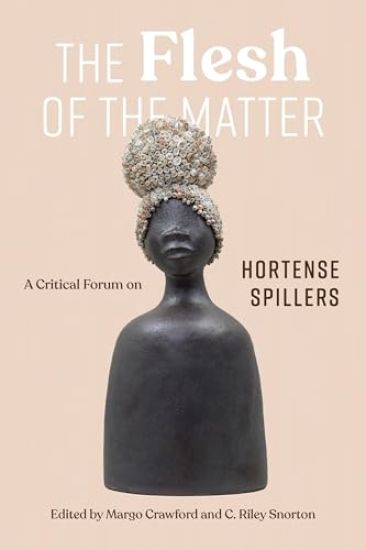
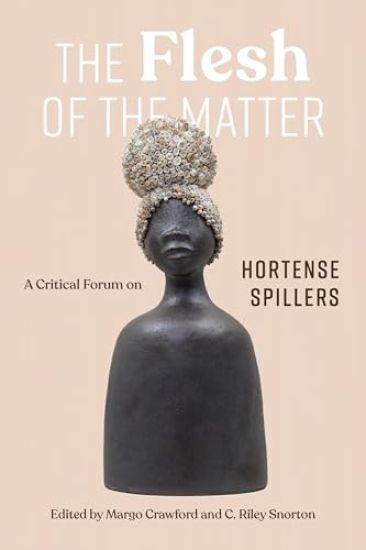
Hortense Spillers is one of the most important literary critics and Black feminist scholars of the last fifty years. Her 1987 scholarly article “Mama’s Baby, Papa’s Maybe: An American Grammar Book” is one of the most-cited essays in African American literary studies. Edited by Margo Natalie Crawford and C. Riley Snorton, The Flesh of the Matter: A Critical Forum on Hortense Spillers is the first collection to take up directly how Spillers’s writing on literature, culture, and theory have been signal posts to the varied and universal threads of Black thought, as well as countless other areas of the academy. Interspersed with archival fragments from Spillers’s papers kept at the Pembroke Center for Feminist Thought at Brown University, the fourteen essays in this collection demonstrate a fidelity to the ways of reading Spillers has taught us, the nomenclature of enslavement keyed into the American lexicon, and the ways that history permeates our cultural boundaries today.
Amaris Brown; Thadious M. Davis; Alexis Pauline Gumbs; Sharon P. Holland; Ra Malika Imhotep; Deborah McDowell; Fred Moten; Kiana T. Murphy; Kevin Quashie; Anthony Reed; Shoniqua Roach; Nicole Adeyinka Spigner
Hortense Spillers is one of the most important literary critics and Black feminist scholars of the last fifty years. Her 1987 scholarly article “Mama’s Baby, Papa’s Maybe: An American Grammar Book” is one of the most-cited essays in African American literary studies. Edited by Margo Natalie Crawford and C. Riley Snorton, The Flesh of the Matter: A Critical Forum on Hortense Spillers is the first collection to take up directly how Spillers’s writing on literature, culture, and theory have been signal posts to the varied and universal threads of Black thought, as well as countless other areas of the academy. Interspersed with archival fragments from Spillers’s papers kept at the Pembroke Center for Feminist Thought at Brown University, the fourteen essays in this collection demonstrate a fidelity to the ways of reading Spillers has taught us, the nomenclature of enslavement keyed into the American lexicon, and the ways that history permeates our cultural boundaries today.
A Guardian and Lit Hub most anticipated book of 2024An exhilarating biography of the iconic poet, essayist and activist Audre Lorde Read these chapters like a collection of poems that speak in chorus in all directions. Understand each word as an opportunity for Audre’s fierce love, which is the same love that birthed the volcanoes and split the continents, to reach you, wherever you are.Audre Lorde was a survivor: of childhood disability injustice, of her best friend’s suicide, of the atomic age. She was a college activist against nuclear arms. A mother who knew poetry could help her children survive a racist world. And, ultimately, a cancer survivor, who understood the war going on within her cells was connected to the struggle against oppression taking place all around her.This stunning new account of Lorde’s life and work illuminates how, for Lorde, survival was not simply about getting through, or about resilience. It was about how to live on, and with, a planet in transformation. Lorde’s commitment to justice was intimately connected to her deep engagement with the natural world; with the planetary dynamics of geology, meteorology, and biology. For Lorde, ecological images are not simply metaphors but rather literal guides to how to be on earth, and how to live fully as a Black feminist lesbian warrior poet.In Survival Is a Promise, Alexis Pauline Gumbs, the first researcher to explore the full depths of Lorde’s manuscript archives, illuminates the eternal life of Audre Lorde. Her life and work swell to become a cosmic force, showing us the grand possibility of life together on earth.
'A groundbreaking work of Afrofuturism before the term was even coined' Guardian'A lush, exciting, inspiring read' Sarah WatersIn this radically reimagined vampire myth, the night hides many things...Louisiana, 1850. A young girl escapes slavery and is taken in by two mysterious women. Rumoured to be witches, the pair travel only at night, dress in men's clothing and seem to know others' innermost thoughts. But the girl sees the promise of true freedom in their dark glittering eyes: the promise to 'share the blood' and live forever. They name her Gilda.Over the next two hundred years, Gilda moves through unseen spaces: through antebellum brothels, gold-rush bars, Black women's suffrage groups, hair salons and jazz clubs, searching for a way to exist in the world. Her body, powerful against the passage of time, will know both beauty and horror through the women she desires and the blood she craves. But can Gilda truly outrun the darkness of history and face a future where the lives of everyone she loves are at stake?
“Jeg ville ære dig med min huds ruhed, mine grænsers tykkelse og varmen fra mit eget fedt. Jeg ville ære dig med min stilhed og min vejrtrækning, min lytning længere og længere ud og ind. Jeg ville ære dig med langsomheden i mine eftertænksomme og yndefulde bevægelser. Jeg ville forsøge at være som dig, selvom de siger, at det er umoderne. Jeg vil huske dig. Ikke ved navnet på den, de siger “opdagede” dig, efter at oprindelige folk i generationer havde haft et forhold til dig. Jeg vil sige: Der var engang en enorm og tavs svømmer, en plantebaseret, ruhudet lytter, et tykt og yndefuldt pattedyr. Og så vil jeg være stille, så jeg kan høre dig ånde. Og så vil jeg trække vejret, og du vil minde mig om ikke at forcere det. Og tiden i mig vil dysses ned. Og så lytter vi for alvor.”Udruknet er en poetisk, alternativ guidebog medværkmeditationer, der optegner mulige forbindelseslinjer mellem Sort feminismes organisationsformer og havpattedyrs overlevelsesstrategier. Det er en bog om at lytte på en måde, der er dyb og revolutionær. Og om, at ingen er frie før alle er frie.
In a roving, shimmering conversation that took place in May 2021, scholar, poet, and activist Alexis Pauline Gumbs and playwright, songwriter, performance artist, and educator Daniel Alexander Jones discuss love as a foundational principle of artistic practice and societal change. Reflecting on Love Like Light, Daniel Alexander Jones's collection of seven plays and performance texts (published by 53rd State in July 2021), DAJ and APG illuminate the ways in which an attention to care, community, nuance, invitation, perceptual particularities, and embodied conditions can resist the profoundly extractive context in which life is lived and art is made. As they discuss the work of Audre Lorde, Billie Holiday, Beah Richards, Bayard Rustin, and Malcolm X, as well as that of DAJ's grandma Daisy Mae and APG's grandmother, aunt, and niece, DAJ and APG propose that love, like light, suffuses everything, and that love, like light, creates a field in which transformation, justice, healing, and radical beauty are not just possible—they are already, now.
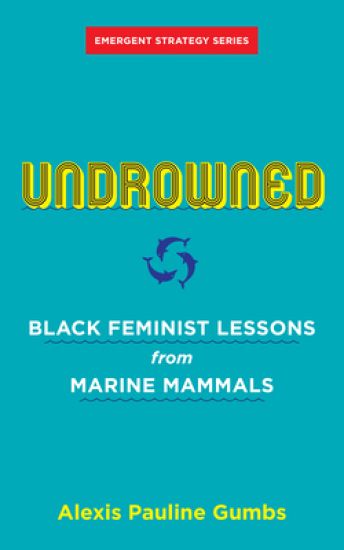
Undrowned is a book-length meditation for social movements and our whole species based on the subversive and transformative guidance of marine mammals. Our aquatic cousins are queer, fierce, protective of each other, complex, shaped by conflict, and struggling to survive the extractive and militarized conditions our species has imposed on the ocean. Gumbs employs a brilliant mix of poetic sensibility and naturalist observation to show what they might teach us, producing not a specific agenda but an unfolding space for wondering and questioning. From the relationship between the endangered North Atlantic Right Whale and Gumbs's Shinnecock and enslaved ancestors to the ways echolocation changes our understandings of "vision" and visionary action, this is a masterful use of metaphor and natural models in the service of social justice.
The concluding volume in a poetic trilogy, Alexis Pauline Gumbs's Dub: Finding Ceremony takes inspiration from theorist Sylvia Wynter, dub poetry, and ocean life to offer a catalog of possible methods for remembering, healing, listening, and living otherwise. In these prose poems, Gumbs channels the voices of her ancestors, including whales, coral, and oceanic bacteria, to tell stories of diaspora, indigeneity, migration, blackness, genius, mothering, grief, and harm. Tracing the origins of colonialism, genocide, and slavery as they converge in Black feminist practice, Gumbs explores the potential for the poetic and narrative undoing of the knowledge that underpins the concept of Western humanity. Throughout, she reminds us that dominant modes of being human and the oppression those modes create can be challenged, and that it is possible to make ourselves and our planet anew.