Kirjojen hintavertailu. Mukana 12 390 323 kirjaa ja 12 kauppaa.

Kirjailija

Alexis Weedon

Kirjat ja teokset yhdessä paikassa: 6 kirjaa, julkaisuja vuosilta 2003-2023, suosituimpien joukossa Elinor Glyn as Novelist, Moviemaker, Glamour Icon and Businesswoman. Vertaile teosten hintoja ja tarkista saatavuus suomalaisista kirjakaupoista.

6 kirjaa

Kirjojen julkaisuhaarukka 2003-2023.

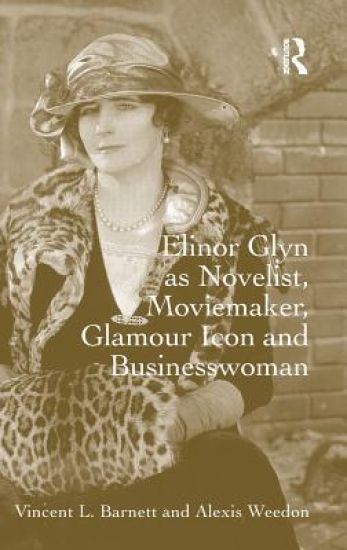
Elinor Glyn as Novelist, Moviemaker, Glamour Icon and Businesswoman
The first full-length study of the authorial and cross-media practices of the English novelist Elinor Glyn (1864-1943), Elinor Glyn as Novelist, Moviemaker, Glamour Icon and Businesswoman examines Glyn’s work as a novelist in the United Kingdom followed by her success in Hollywood where she adapted her popular romantic novels into films. Making extensive use of newly available archival materials, Vincent L. Barnett and Alexis Weedon explore Glyn’s experiences from multiple perspectives, including the artistic, legal and financial aspects of the adaptation process. At the same time, they document Glyn’s personal and professional relationships with a number of prominent individuals in the Hollywood studio system, including Louis B. Mayer and Irving Thalberg. The authors contextualize Glyn’s involvement in scenario-writing in relationship to other novelists in Hollywood, such as Edgar Wallace and Arnold Bennett, and also show how Glyn worked across Europe and America to transform her stories into other forms of media such as plays and movies. Providing a new perspective from which to understand the historical development of both British and American media industries in the first half of the twentieth century, this book will appeal to historians working in the fields of cultural and film studies, publishing and business history.
Transforming Faces for the Screen

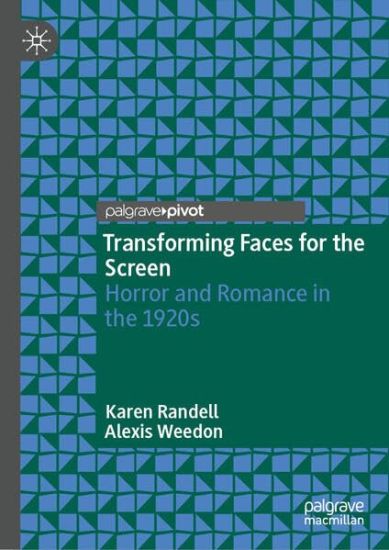
Transforming Faces for the Screen

Karen Randell; Alexis Weedon

Springer International Publishing AG
2023
sidottu
This book brings together research from medical and film archives to illustrate the cultural impact of film and literature in its relationship to the discourse of plastic surgery in the 1920s. This different take on reading the body after the First World War enables students of multiple disciplines, and readers interested in both Hollywood and post-war culture, to understand some of the complexities of medical interventions gained after the First World War and the way in which they filtered into the world of Hollywood film making. It also allows readers who may not be familiar with these two 1920s stars to access the films of Lon Chaney and the books and films of Elinor Glyn and gain new insights into 1920s visual culture. For ease of readership, the book is organised so that each of the main chapters focuses on a particular film (either Lon Chaney or Elinor Glyn). This is particularly useful for use in the classroom or for online education. Readers can refer to the film directly, aided by illustrations of frames from the films. This book tells the story of how two stars of Hollywood film transformed their character’s faces on screen through a close reading of three films in the 1920s. It reveals how they applied their embodied knowledge of surgery and surgical procedures to broaden their audience’s emotional and intellectual understanding of the treatment of deformity and disability.
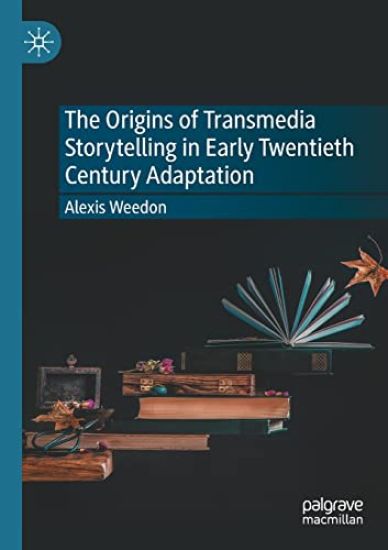
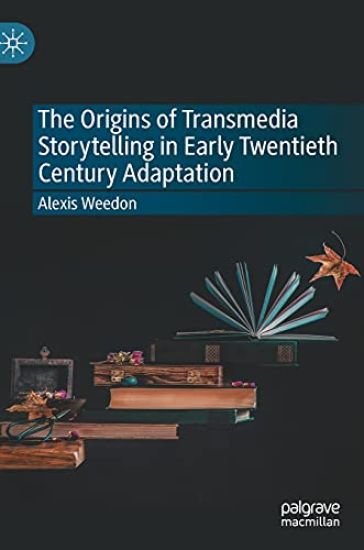
The Origins of Transmedia Storytelling in Early Twentieth Century Adaptation
This book explores the significance of professional writers and their role in developing British storytelling in the 1920s and 1930s, and their influence on the poetics of today’s transmedia storytelling. Modern techniques can be traced back to the early twentieth century when film, radio and television provided professional writers with new formats and revenue streams for their fiction. The book explores the contribution of four British authors, household names in their day, who adapted work for film, television and radio. Although celebrities between the wars, Clemence Dane, G.B. Stern, Hugh Walpole and A.E.W Mason have fallen from view. The popular playwright Dane, witty novelist Stern and raconteur Walpole have been marginalised for being German, Jewish, female or gay and Mason’s contribution to film has been overlooked also. It argues that these and other vocational authors should be reassessed for their contribution to new media forms of storytelling. The book makes a significant contribution in the fields of media studies, adaptation studies, and the literary middlebrow.
The Origins of Transmedia Storytelling in Early Twentieth Century Adaptation
This book explores the significance of professional writers and their role in developing British storytelling in the 1920s and 1930s, and their influence on the poetics of today’s transmedia storytelling. Modern techniques can be traced back to the early twentieth century when film, radio and television provided professional writers with new formats and revenue streams for their fiction. The book explores the contribution of four British authors, household names in their day, who adapted work for film, television and radio. Although celebrities between the wars, Clemence Dane, G.B. Stern, Hugh Walpole and A.E.W Mason have fallen from view. The popular playwright Dane, witty novelist Stern and raconteur Walpole have been marginalised for being German, Jewish, female or gay and Mason’s contribution to film has been overlooked also. It argues that these and other vocational authors should be reassessed for their contribution to new media forms of storytelling. The book makes a significant contribution in the fields of media studies, adaptation studies, and the literary middlebrow.
Victorian Publishing

Victorian Publishing

Alexis Weedon

Routledge
2016
nidottu
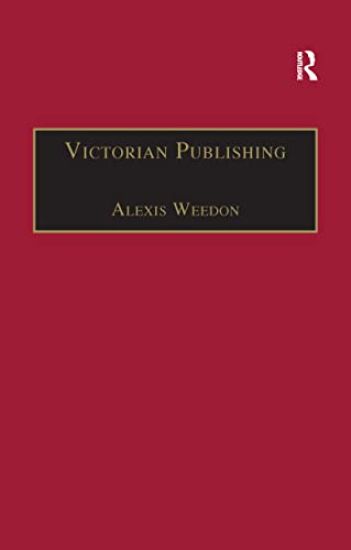
Drawing on research into the book-production records of twelve publishers-including George Bell & Son, Richard Bentley, William Blackwood, Chatto & Windus, Oliver & Boyd, Macmillan, and the book printers William Clowes and T&A Constable - taken at ten-year intervals from 1836 to 1916, this book interprets broad trends in the growth and diversity of book publishing in Victorian Britain. Chapters explore the significance of the export trade to the colonies and the rising importance of towns outside London as centres of publishing; the influence of technological change in increasing the variety and quantity of books; and how the business practice of literary publishing developed to expand the market for British and American authors. The book takes examples from the purchase and sale of popular fiction by Ouida, Mrs. Wood, Mrs. Ewing, and canonical authors such as George Eliot, Wilkie Collins, and Mark Twain. Consideration of the unique demands of the educational market complements the focus on fiction, as readers, arithmetic books, music, geography, science textbooks, and Greek and Latin classics became a staple for an increasing number of publishing houses wishing to spread the risk of novel publication.
Victorian Publishing

Victorian Publishing

Alexis Weedon

Ashgate Publishing Limited
2003
sidottu
Drawing on research into the book-production records of twelve publishers-including George Bell & Son, Richard Bentley, William Blackwood, Chatto & Windus, Oliver & Boyd, Macmillan, and the book printers William Clowes and T&A Constable - taken at ten-year intervals from 1836 to 1916, this book interprets broad trends in the growth and diversity of book publishing in Victorian Britain. Chapters explore the significance of the export trade to the colonies and the rising importance of towns outside London as centres of publishing; the influence of technological change in increasing the variety and quantity of books; and how the business practice of literary publishing developed to expand the market for British and American authors. The book takes examples from the purchase and sale of popular fiction by Ouida, Mrs. Wood, Mrs. Ewing, and canonical authors such as George Eliot, Wilkie Collins, and Mark Twain. Consideration of the unique demands of the educational market complements the focus on fiction, as readers, arithmetic books, music, geography, science textbooks, and Greek and Latin classics became a staple for an increasing number of publishing houses wishing to spread the risk of novel publication.