Kirjojen hintavertailu. Mukana 12 595 353 kirjaa ja 12 kauppaa.
Kirjailija
Alf Gunvald Nilsen
Kirjat ja teokset yhdessä paikassa: 10 kirjaa, julkaisuja vuosilta 2010-2025, suosituimpien joukossa Destroying Democracy. Vertaile teosten hintoja ja tarkista saatavuus suomalaisista kirjakaupoista.
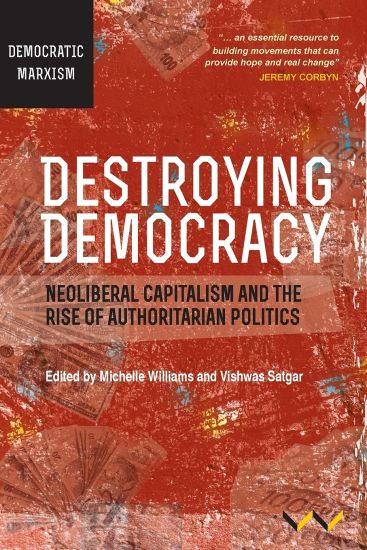
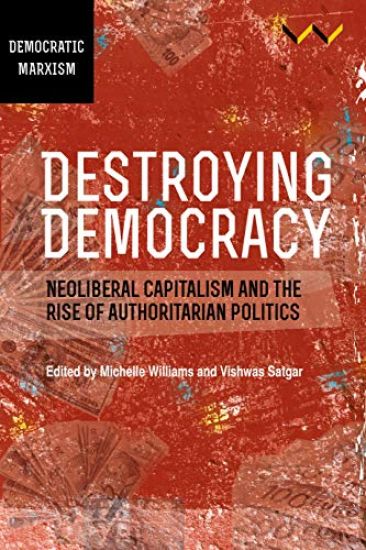
A history of the erosion of democracy across the globe Democracy is being destroyed. This is a crisis that expresses itself in the rising authoritarianism visible in divisive and exclusionary politics, populist political parties and movements, increased distrust in fact-based information and news, and the withering accountability of state institutions. Over the last four decades, democracy has radically shifted to a market democracy in which all aspects of human, non-human and planetary life are commodified, with corporations becoming more powerful than states and their citizens. This is how neoliberal capitalism functions at a systemic level and if left unchecked, is the greatest threat to democracy and a sustainable planet. Volume six of the Democratic Marxism series focuses on how decades of neoliberal capitalism have eroded the global democratic project and how, in the process, authoritarian politics are gaining ground. Scholars and activists from the political left focus on four country cases – India, Brazil, South Africa and the United States of America – in which the COVID-19 pandemic has fuelled and highlighted the pre-existing crisis. They interrogate issues of politics, ecology, state security, media, access to information and political parties, and affirm the need to reclaim and re-build an expansive and inclusive democracy. Destroying Democracy is an invaluable resource for the general public, activists, scholars and students who are interested in understanding the threats to democracy and the rising tide of authoritarianism in the global south and the global north.
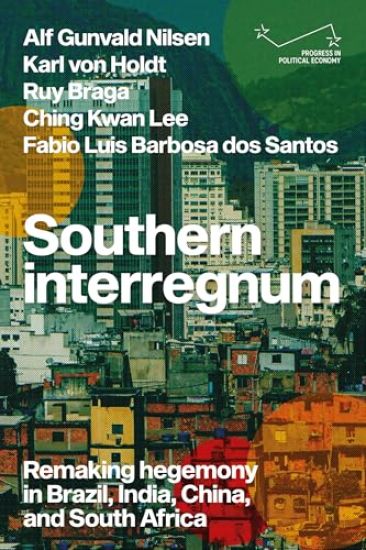
How do governing elites in the global South attempt to remake hegemony in a conjuncture of durable crisis? This is the question at the core of Southern interregnum, a comparative conjunctural analysis of hegemonic projects in Brazil, India, China, and South Africa. Working with a Gramscian notion of crisis, centred on the interregnum as an enduring period of instability and uncertainty, in which hegemonic authority erodes and competing projects for crisis resolution emerge, the book proposes a novel critical reading of the convulsions that are currently reshaping the political economy of the global South and the world-system.Mapping the variegated trajectories of elite projects to reconcile accumulation and legitimation – and probing the limits of these projects – the book breaks new ground in the study of the contemporary global South.
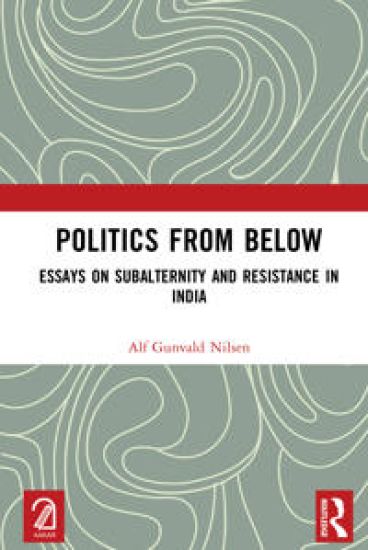
This book is a collection of essays that question how subalternity is constituted and contested in Indian society. It draws on Antonio Gramsci's work to investigate the dynamics of hegemony, subalternity and resistance in India, both past and present.Drawing on the author's extensive fieldwork, Politics from Below presents detailed ethnographic studies of the movement against dam building in the Narmada Valley and Adivasi mobilization to democratize the local state in western India. The book will be relevant to students and scholars with an interest in social movements and the political economy of development and democracy in India, as well as to activists and engaged members of the public more generally.This title is co-published with Aakar Books. Print editions not for sale in South Asia (India, Sri Lanka, Nepal, Bangladesh, Pakistan and Bhutan)
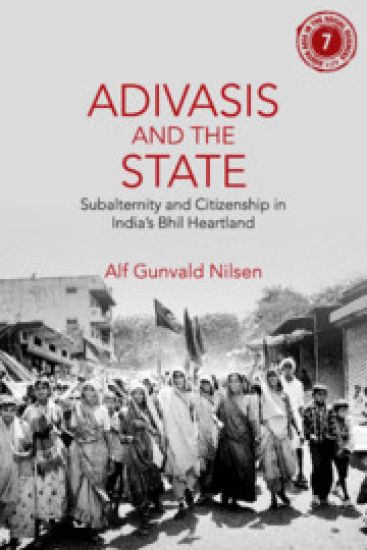
In Adivasis and the State, Alf Gunvald Nilsen presents a major study of how subalternity is both constituted and contested through state-society relations in the Bhil heartland of western India. The book unravels the historical processes that subordinated Bhil Adivasi communities to the everyday tyranny of the state and investigates how social movements have mobilised to reclaim citizenship. In doing so, the book also reveals how collective action from below transform the meanings of governmental categories, legal frameworks, and universalising vocabularies of democracy. At the core of the book lies a concern with understanding the dialectics of power and resistance that give form and direction to the political economy of democracy and development in contemporary India. Towards this end, Adivasis and the State contributes a sustained and nuanced Gramscian analysis of hegemony in order to interrogate the possibilities and limits of subaltern political engagement with state structures.
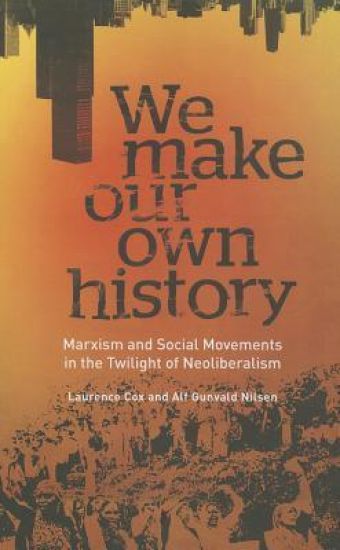
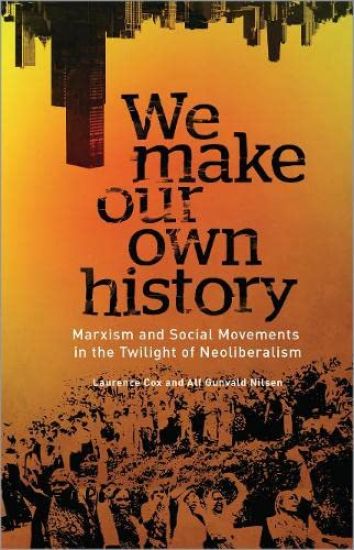
We live in the twilight of neoliberalism: the ruling classes can no longer rule as before, and ordinary people are no longer willing to be ruled in the old way. Pursued by global elites since the 1970s, neoliberalism is defined by dispossession and ever-increasing inequality. The refusal to continue to be ruled like this - 'ya basta!' - appears in an arc of resistance stretching from rural India to the cities of the global North. From this network of movements, new visions are emerging of a future beyond neoliberalism. We Make Our Own History responds to these visions by reclaiming Marxism as a theory born from activist experience and practice. This book marks a break both with established social movement theory, and with those forms of Marxism which treat the practice of social movement organising as an unproblematic process. It shows how movements can develop from local conflicts to global struggles; how neoliberalism operates as a social movement from above, and how popular struggles can create new worlds from below.
This book deals with the controversies on developmental aspects of large dams, with a particular focus on the Narmada Valley projects in India. Based on extensive ethnographic fieldwork and research, the author draws on Marxist theory to craft a detailed analysis of how local demands for resettlement and rehabilitation were transformed into a radical anti-dam campaign linked to national and transnational movement networks. The book explains the Narmada conflict and addresses how the building of the anti-dam campaign was animated by processes of collective learning, how activists extended the spatial scope of their struggle by building networks of solidarity with transnational advocacy groups, and how it is embedded in and shaped by a wider field of force of capitalist development at national and transnational scales. The analysis emphasizes how the Narmada dam project is related to national and global processes of capitalist development, and relates the Narmada Valley movement to contemporary popular struggles against dispossession in India and beyond. Conclusions drawn from the resistance to the Narmada dams can be applied to social movements in other parts of the Global South, where people are struggling against dispossession in a context of neoliberal restructuring. As such, this book will have relevance for people with an interest in South Asian studies, Indian politics and Development Studies.