Kirjojen hintavertailu. Mukana 12 595 353 kirjaa ja 12 kauppaa.
Kirjailija
Alfio Quarteroni
Kirjat ja teokset yhdessä paikassa: 34 kirjaa, julkaisuja vuosilta 1991-2026, suosituimpien joukossa Scientific Computing with MATLAB and Octave. Vertaile teosten hintoja ja tarkista saatavuus suomalaisista kirjakaupoista.
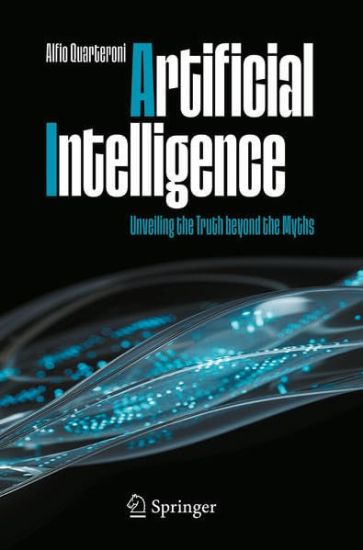
Artificial intelligence (AI) is transforming multiple aspects of human life, raising fundamental questions: Is AI truly intelligent? Can it surpass human capabilities? What are its risks and opportunities? In this book, I aim to clarify what AI really is, debunking myths while offering a rigorous, balanced perspective on its impact. Rather than chasing the latest AI trends, I will focus on the core principles that define it, tracing its evolution from early pioneers like Alan Turing to today’s advanced systems. AI remains in the realm of narrow intelligence, excelling at specific tasks but far from replicating human cognition. Yet, its ability to process vast data, predict behaviors, and generate creative content is reshaping industries, from healthcare to finance. At the heart of AI’s progress is machine learning, particularly neural networks, which rely more on data-driven training than traditional scientific theory. However, this innovation comes with challenges: environmental costs, job market disruptions, ethical dilemmas, and the black box problem—AI’s decision-making opacity, which raises concerns about trust and accountability. AI also plays a growing role in global power dynamics, influencing governance, security, and even democracy. Nations leading AI development gain strategic advantages, but without careful regulation, AI could fuel inequality, surveillance, and manipulation. Despite the fears AI evokes, it is neither an existential threat nor a magical solution. My goal is not to celebrate or demonize it but to provide a critical framework for understanding this technological revolution. By fostering awareness, we can shape AI’s integration into society in a way that aligns with human values and scientific progress.
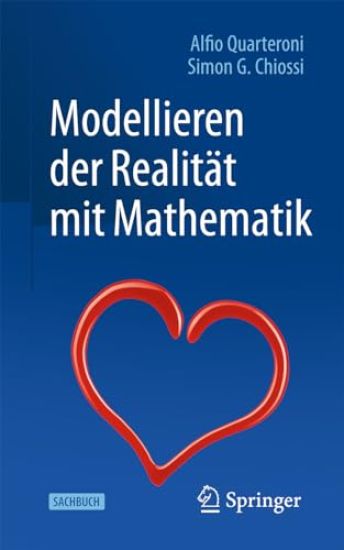
Die Simulation des menschlichen Herzens, die Vorhersage des morgigen Wetters, die Optimierung der Aerodynamik eines Segelboots, die Suche nach der idealen Garzeit für einen Hamburger: Bei der Lösung dieser Probleme können Kardiologen, Meteorologen, Sportler und Ingenieure auf mathematische Hilfe zählen. Dieses Buch führt Sie zur Entdeckung einer magischen, aus Gleichungen bestehenden Welt, die für eine Vielzahl von wichtigen Problemen unseres Lebens nützliche Antworten liefern können.Die Übersetzung wurde mit Hilfe von künstlicher Intelligenz durchgeführt. Eine anschließende menschliche Überarbeitung erfolgte vor allem in Bezug auf den Inhalt.
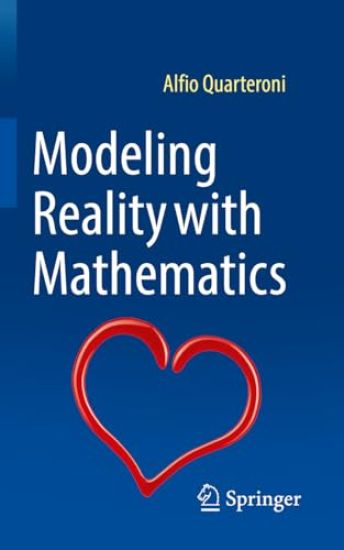
Simulating the behavior of a human heart, predicting tomorrow's weather, optimizing the aerodynamics of a sailboat, finding the ideal cooking time for a hamburger: to solve these problems, cardiologists, meteorologists, sportsmen, and engineers can count on math help. This book will lead you to the discovery of a magical world, made up of equations, in which a huge variety of important problems for our life can find useful answers.
Simulating the behavior of a human heart, predicting tomorrow's weather, optimizing the aerodynamics of a sailboat, finding the ideal cooking time for a hamburger: to solve these problems, cardiologists, meteorologists, sportsmen, and engineers can count on math help. This book will lead you to the discovery of a magical world, made up of equations, in which a huge variety of important problems for our life can find useful answers.
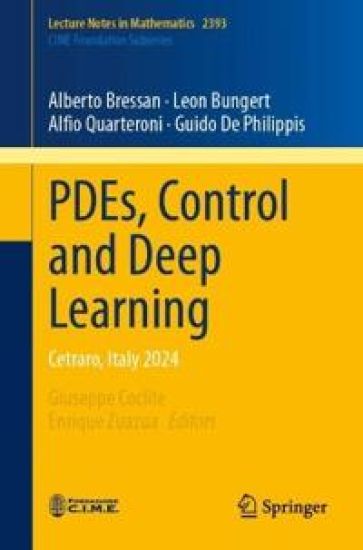
This is a book on optimal control problems (OCPs) for partial differential equations (PDEs) that evolved from a series of courses taught by the authors in the last few years at Politecnico di Milano, both at the undergraduate and graduate levels. The book covers the whole range spanning from the setup and the rigorous theoretical analysis of OCPs, the derivation of the system of optimality conditions, the proposition of suitable numerical methods, their formulation, their analysis, including their application to a broad set of problems of practical relevance.The first introductory chapter addresses a handful of representative OCPs and presents an overview of the associated mathematical issues. The rest of the book is organized into three parts: part I provides preliminary concepts of OCPs for algebraic and dynamical systems; part II addresses OCPs involving linear PDEs (mostly elliptic and parabolic type) and quadratic cost functions; part III deals with more general classes ofOCPs that stand behind the advanced applications mentioned above.Starting from simple problems that allow a “hands-on” treatment, the reader is progressively led to a general framework suitable to face a broader class of problems. Moreover, the inclusion of many pseudocodes allows the reader to easily implement the algorithms illustrated throughout the text.The three parts of the book are suitable to readers with variable mathematical backgrounds, from advanced undergraduate to Ph.D. levels and beyond. We believe that applied mathematicians, computational scientists, and engineers may find this book useful for a constructive approach toward the solution of OCPs in the context of complex applications.
Covid-19 has shown us the importance of mathematical and statistical models to interpret reality, provide forecasts, and explore future scenarios. Algorithms, artificial neural networks, and machine learning help us discover the opportunities and pitfalls of a world governed by mathematics and artificial intelligence.
This is a book on optimal control problems (OCPs) for partial differential equations (PDEs) that evolved from a series of courses taught by the authors in the last few years at Politecnico di Milano, both at the undergraduate and graduate levels. The book covers the whole range spanning from the setup and the rigorous theoretical analysis of OCPs, the derivation of the system of optimality conditions, the proposition of suitable numerical methods, their formulation, their analysis, including their application to a broad set of problems of practical relevance.The first introductory chapter addresses a handful of representative OCPs and presents an overview of the associated mathematical issues. The rest of the book is organized into three parts: part I provides preliminary concepts of OCPs for algebraic and dynamical systems; part II addresses OCPs involving linear PDEs (mostly elliptic and parabolic type) and quadratic cost functions; part III deals with more general classes ofOCPs that stand behind the advanced applications mentioned above.Starting from simple problems that allow a “hands-on” treatment, the reader is progressively led to a general framework suitable to face a broader class of problems. Moreover, the inclusion of many pseudocodes allows the reader to easily implement the algorithms illustrated throughout the text.The three parts of the book are suitable to readers with variable mathematical backgrounds, from advanced undergraduate to Ph.D. levels and beyond. We believe that applied mathematicians, computational scientists, and engineers may find this book useful for a constructive approach toward the solution of OCPs in the context of complex applications.
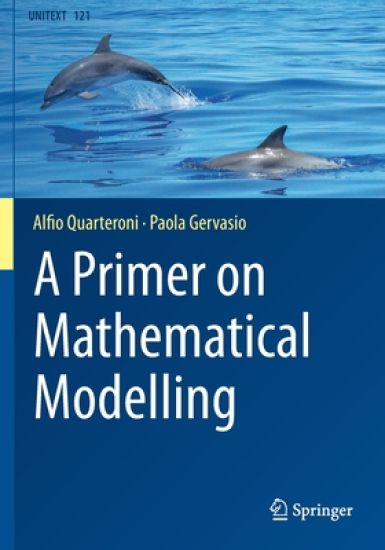
In this book we describe the magic world of mathematical models: starting from real-life problems, we formulate them in terms of equations, transform equations into algorithms and algorithms into programs to be executed on computers.A broad variety of examples and exercises illustrate that properly designed models can, e.g.: predict the way the number of dolphins in the Aeolian Sea will change as food availability and fishing activity vary; describe the blood flow in a capillary network; calculate the PageRank of websites.This book also includes a chapter with an elementary introduction to Octave, an open-source programming language widely used in the scientific community. Octave functions and scripts for dealing with the problems presented in the text can be downloaded from https://paola-gervasio.unibs.it/quarteroni-gervasioThis book is addressed to any student interested in learning how to construct and apply mathematical models.
This book presents the state of the art in mathematical research on modelling the mechanics of biological systems – a science at the intersection between biology, mechanics and mathematics known as mechanobiology. The book gathers comprehensive surveys of the most significant areas of mechanobiology: cell motility and locomotion by shape control (Antonio DeSimone); models of cell motion and tissue growth (Benoît Perthame); numerical simulation of cardiac electromechanics (Alfio Quarteroni); and power-stroke-driven muscle contraction (Lev Truskinovsky).Each section is self-contained in terms of the biomechanical background, and the content is accessible to all readers with a basic understanding of differential equations and numerical analysis. The book disentangles the phenomenological complexity of the biomechanical problems, while at the same time addressing the mathematical complexity with invaluable clarity. The book is intended for a wide audience, in particulargraduate students and applied mathematicians interested in entering this fascinating field.
Mathematical and numerical modelling of the human cardiovascular system has attracted remarkable research interest due to its intrinsic mathematical difficulty and the increasing impact of cardiovascular diseases worldwide. This book addresses the two principal components of the cardiovascular system: arterial circulation and heart function. It systematically describes all aspects of the problem, stating the basic physical principles, analysing the associated mathematical models that comprise PDE and ODE systems, reviewing sound and efficient numerical methods for their approximation, and simulating both benchmark problems and clinically inspired problems. Mathematical modelling itself imposes tremendous challenges, due to the amazing complexity of the cardiovascular system and the need for computational methods that are stable, reliable and efficient. The final part is devoted to control and inverse problems, including parameter estimation, uncertainty quanti?cation and the development of reduced-order models that are important when solving problems with high complexity, which would otherwise be out of reach.
In this text, we introduce the basic concepts for the numerical modeling of partial differential equations. We consider the classical elliptic, parabolic and hyperbolic linear equations, but also the diffusion, transport, and Navier-Stokes equations, as well as equations representing conservation laws, saddle-point problems and optimal control problems. Furthermore, we provide numerous physical examples which underline such equations. We then analyze numerical solution methods based on finite elements, finite differences, finite volumes, spectral methods and domain decomposition methods, and reduced basis methods. In particular, we discuss the algorithmic and computer implementation aspects and provide a number of easy-to-use programs. The text does not require any previous advanced mathematical knowledge of partial differential equations: the absolutely essential concepts are reported in a preliminary chapter. It is therefore suitable for students of bachelor and master courses in scientific disciplines, and recommendable to those researchers in the academic and extra-academic domain who want to approach this interesting branch of applied mathematics.
Questo testo è concepito per i corsi delle Facoltà di Ingegneria e di Scienze. Esso affronta tutti gli argomenti tipici della Matematica Numerica, spaziando dal problema di risolvere sistemi di equazioni lineari e non lineari a quello di approssimare una funzione, di calcolare i suoi minimi, le sue derivate ed il suo integrale definito fino alla risoluzione di equazioni differenziali ordinarie e alle derivate parziali con metodi alle differenze finite ed agli elementi finiti. Un capitolo iniziale conduce lo studente ad un rapido ripasso degli argomenti dell'Analisi Matematica e dell'Algebra Lineare di uso frequente nel volume e ad una introduzione ai linguaggi MATLAB e Octave. Al fine di rendere maggiormente incisiva la presentazione e fornire un riscontro quantitativo immediato alla teoria vengono implementati in linguaggio MATLAB e Octave tutti gli algoritmi che via via si introducono. Vengono inoltre proposti numerosi esercizi, tutti risolti per esteso, ed esempi, anche con riferimento ad applicazioni in vari ambiti scientifici. Questa sesta edizione si differenzia dalle precedenti per l’aggiunta di nuovi sviluppi, di nuovi esempi relativi ad applicazioni di interesse reale e di svariati esercizi con relative soluzioni.
This textbook is an introduction to Scientific Computing, in which several numerical methods for the computer-based solution of certain classes of mathematical problems are illustrated. The authors show how to compute the zeros, the extrema, and the integrals of continuous functions, solve linear systems, approximate functions using polynomials and construct accurate approximations for the solution of ordinary and partial differential equations. To make the format concrete and appealing, the programming environments Matlab and Octave are adopted as faithful companions. The book contains the solutions to several problems posed in exercises and examples, often originating from important applications. At the end of each chapter, a specific section is devoted to subjects which were not addressed in the book and contains bibliographical references for a more comprehensive treatment of the material.From the review:".... This carefully written textbook, the third English edition, contains substantial new developments on the numerical solution of differential equations. It is typeset in a two-color design and is written in a style suited for readers who have mathematics, natural sciences, computer sciences or economics as a background and who are interested in a well-organized introduction to the subject." Roberto Plato (Siegen), Zentralblatt MATH 1205.65002.
In this text, we introduce the basic concepts for the numerical modelling of partial differential equations. We consider the classical elliptic, parabolic and hyperbolic linear equations, but also the diffusion, transport, and Navier-Stokes equations, as well as equations representing conservation laws, saddle-point problems and optimal control problems. Furthermore, we provide numerous physical examples which underline such equations. We then analyze numerical solution methods based on finite elements, finite differences, finite volumes, spectral methods and domain decomposition methods, and reduced basis methods. In particular, we discuss the algorithmic and computer implementation aspects and provide a number of easy-to-use programs. The text does not require any previous advanced mathematical knowledge of partial differential equations: the absolutely essential concepts are reported in a preliminary chapter. It is therefore suitable for students of bachelor and master courses in scientific disciplines, and recommendable to those researchers in the academic and extra-academic domain who want to approach this interesting branch of applied mathematics.
In questo testo si introducono i concetti di base per la modellistica numerica di problemi differenziali alle derivate parziali. Si considerano le classiche equazioni lineari ellittiche, paraboliche ed iperboliche, ma anche altre equazioni, quali quelle di diffusione e trasporto, di Navier-Stokes e le leggi di conservazione; si forniscono inoltre numerosi esempi fisici che stanno alla base di tali equazioni. Quindi si analizzano metodi di risoluzione numerica basati su elementi finiti (continui e discontinui), differenze finite, volumi finiti, metodi spettrali (continui e discontinui), nonché strategie di approssimazione più avanzate basate sui metodi di decomposizione di domini o quelli di risoluzione di problemi di controllo ottimale. In particolare vengono discussi gli aspetti algoritmici e di implementazione al calcolatore e si forniscono diversi programmi di semplice utilizzo. Il testo non presuppone una approfondita conoscenza matematica delle equazioni alle derivate parziali: iconcetti rigorosamente indispensabili al riguardo sono riportati nell'Appendice. Esso è pertanto adatto agli studenti dei corsi di laurea di indirizzo scientifico (Ingegneria, Matematica, Fisica, Scienze dell'Informazione) e consigliabile a ricercatori del mondo accademico ed extra-accademico che vogliano avvicinarsi a questo interessante ramo della matematica applicata e delle scienze computazionali.
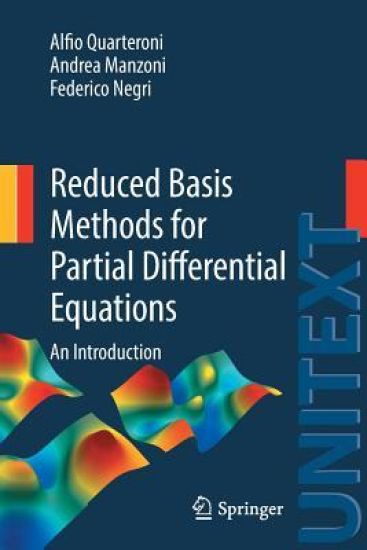
This book provides a basic introduction to reduced basis (RB) methods for problems involving the repeated solution of partial differential equations (PDEs) arising from engineering and applied sciences, such as PDEs depending on several parameters and PDE-constrained optimization. The book presents a general mathematical formulation of RB methods, analyzes their fundamental theoretical properties, discusses the related algorithmic and implementation aspects, and highlights their built-in algebraic and geometric structures. More specifically, the authors discuss alternative strategies for constructing accurate RB spaces using greedy algorithms and proper orthogonal decomposition techniques, investigate their approximation properties and analyze offline-online decomposition strategies aimed at the reduction of computational complexity. Furthermore, they carry out both a priori and a posteriori error analysis. The whole mathematical presentation is made more stimulating by the use of representative examples of applicative interest in the context of both linear and nonlinear PDEs. Moreover, the inclusion of many pseudocodes allows the reader to easily implement the algorithms illustrated throughout the text. The book will be ideal for upper undergraduate students and, more generally, people interested in scientific computing.All these pseudocodes are in fact implemented in a MATLAB package that is freely available at https://github.com/redbkit
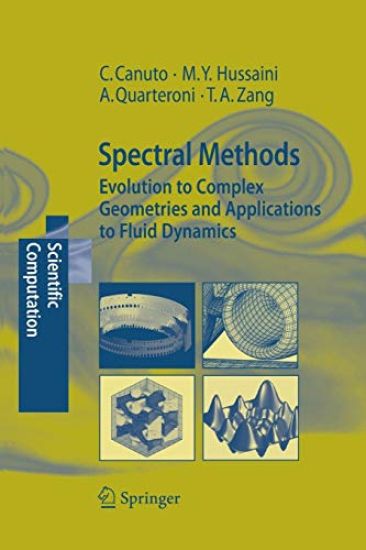
Spectral methods, particularly in their multidomain version, have become firmly established as a mainstream tool for scientific and engineering computation. While retaining the tight integration between the theoretical and practical aspects of spectral methods that was the hallmark of their 1988 book, Canuto et al. now incorporate the many improvements in the algorithms and the theory of spectral methods that have been made since then. This second new treatment, Evolution to Complex Geometries and Applications to Fluid Dynamics, provides an extensive overview of the essential algorithmic and theoretical aspects of spectral methods for complex geometries, in addition to detailed discussions of spectral algorithms for fluid dynamics in simple and complex geometries. Modern strategies for constructing spectral approximations in complex domains, such as spectral elements, mortar elements, and discontinuous Galerkin methods, as well as patching collocation, are introduced, analyzed, and demonstrated by means of numerous numerical examples. Representative simulations from continuum mechanics are also shown. Efficient domain decomposition preconditioners (of both Schwarz and Schur type) that are amenable to parallel implementation are surveyed. The discussion of spectral algorithms for fluid dynamics in single domains focuses on proven algorithms for the boundary-layer equations, linear and nonlinear stability analyses, incompressible Navier-Stokes problems, and both inviscid and viscous compressible flows. An overview of the modern approach to computing incompressible flows in general geometries using high-order, spectral discretizations is also provided. The recent companion book Fundamentals in Single Domains discusses the fundamentals of the approximation of solutions to ordinary and partial differential equations on single domains by expansions in smooth, global basis functions. The essential concepts and formulas from this book are included in thecurrent text for the reader’s convenience.
This textbook is an introduction to Scientific Computing, in which several numerical methods for the computer-based solution of certain classes of mathematical problems are illustrated.
La Matematica Numerica è elemento fondante del calcolo scientifico. Punto di contatto di diverse discipline nella matematica e nelle moderne scienze applicate, ne diventa strumento di indagine qualitativa e quantitativa. Scopo di questo testo è fornire i fondamenti metodologici della matematica numerica, richiamandone le principali proprietà, quali la stabilità, l’accuratezza e la complessità algoritmica. Nel contesto di ogni specifica classe di problemi vengono illustrati gli algoritmi più idonei, ne viene fatta l’analisi teorica e se ne verificano i risultati previsti implementandoli con l'ausilio di programmi in linguaggio MATLAB. Ogni capitolo è integrato da esercizi e temi svolti, questi ultimi corredati da programmi MATLAB. Il volume è indirizzato principalmente agli studenti delle facoltà scientifiche, con particolare attenzione ai corsi di laurea in Ingegneria, Matematica e Scienze dell’Informazione. L’enfasi posta sullo sviluppo di software lo rende interessante anche per ricercatori e utilizzatori delle tecniche del calcolo scientifico nei campi professionali più disparati.La quarta edizione contiene numerose integrazioni in quasi tutti i capitoli. Diverse sezioni sono inoltre state rivisitate con lo scopo di rendere più chiari concetti ed argomenti di considerevole complessità.