Kirjailija
Alfred De Vigny
Kirjat ja teokset yhdessä paikassa: 233 kirjaa, julkaisuja vuosilta 2004-2026, suosituimpien joukossa Oeuvres Complètes de M. Le Comte Alfred de Vigny, Stello (8e Édition). Vertaile teosten hintoja ja tarkista saatavuus suomalaisista kirjakaupoista.
233 kirjaa
Kirjojen julkaisuhaarukka 2004-2026.


CINQ-MARS ovvero una congiura sotto il regno di Luigi XIII
Scipione Volpicella; Alfred De Vigny
Antigonos Verlag
2025
sidottu

CINQ-MARS ovvero una congiura sotto il regno di Luigi XIII
Scipione Volpicella; Alfred De Vigny
Antigonos Verlag
2025
sidottu

Cinq-mars ovvero una congiura sotto il regno di Luigi XIII
Scipione Volpicella; Alfred De Vigny
Antigonos Verlag
2025
sidottu

CINQ-MARS ovvero Una Congiura Sotto il Regno di Luigi XIII. Romanzo Storico.
Alfred De Vigny; Scipione Volpicella
Antigonos Verlag
2025
nidottu

CINQ-MARS ovvero una congiura sotto il regno di Luigi XIII
Scipione Volpicella; Alfred De Vigny
Antigonos Verlag
2025
pokkari

CINQ-MARS ovvero una congiura sotto il regno di Luigi XIII
Scipione Volpicella; Alfred De Vigny
Antigonos Verlag
2025
pokkari

Cinq-mars ovvero una congiura sotto il regno di Luigi XIII
Scipione Volpicella; Alfred De Vigny
Antigonos Verlag
2025
pokkari
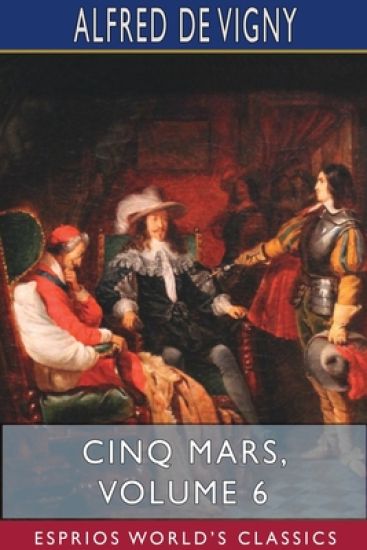
Alfred Victor, Comte de Vigny (1797-1863) was a French poet and early leader of French Romanticism. He also produced novels, plays, and translations of Shakespeare. He published his first poem Le Bal in 1820 and an ambitious narrative poem loa in 1824. He collected his recent works in January 1826 in Po mes Antiques et Modernes. Three months later he published the first important historical novel in French, Cinq-Mars, based on the life of Louis XIII's favorite Henri Coiffier de Ruz , Marquis of Cinq-Mars, who conspired against the Cardinal de Richelieu. In his later years he spent much time preparing the posthumous collection of poems now known as Les Destin es, for which his intended title was Po mes philosophiques. It concludes with Vigny's final message to the world, L'Esprit pur.

Alfred Victor, Comte de Vigny (1797-1863) was a French poet and early leader of French Romanticism. He also produced novels, plays, and translations of Shakespeare. He published his first poem Le Bal in 1820 and an ambitious narrative poem loa in 1824. He collected his recent works in January 1826 in Po mes Antiques et Modernes. Three months later he published the first important historical novel in French, Cinq-Mars, based on the life of Louis XIII's favorite Henri Coiffier de Ruz , Marquis of Cinq-Mars, who conspired against the Cardinal de Richelieu. In his later years he spent much time preparing the posthumous collection of poems now known as Les Destin es, for which his intended title was Po mes philosophiques. It concludes with Vigny's final message to the world, L'Esprit pur.

Alfred Victor, Comte de Vigny (1797-1863) was a French poet and early leader of French Romanticism. He also produced novels, plays, and translations of Shakespeare. He published his first poem Le Bal in 1820 and an ambitious narrative poem loa in 1824. He collected his recent works in January 1826 in Po mes Antiques et Modernes. Three months later he published the first important historical novel in French, Cinq-Mars, based on the life of Louis XIII's favorite Henri Coiffier de Ruz , Marquis of Cinq-Mars, who conspired against the Cardinal de Richelieu. In his later years he spent much time preparing the posthumous collection of poems now known as Les Destin es, for which his intended title was Po mes philosophiques. It concludes with Vigny's final message to the world, L'Esprit pur.


Venture into the heart of 17th-century France with Alfred de Vigny's "Cinq Mars, Vol. 6," a meticulously prepared republication from "The Immortals, Masterpieces of Fiction Crowned by the French Academy." This historical fiction classic plunges readers into a world of court intrigue, vividly depicting the era of the powerful Cardinal Richelieu. De Vigny masterfully crafts a narrative steeped in French history, exploring the complexities and drama surrounding the influential Richelieu. A timeless tale of ambition and power, "Cinq Mars" offers a captivating glimpse into a pivotal period of French history. Experience the allure of a bygone era through this enduring literary work, perfect for those fascinated by historical fiction, French history, and the intricate dynamics of courtly life.This work has been selected by scholars as being culturally important, and is part of the knowledge base of civilization as we know it.This work is in the public domain in the United States of America, and possibly other nations. Within the United States, you may freely copy and distribute this work, as no entity (individual or corporate) has a copyright on the body of the work.Scholars believe, and we concur, that this work is important enough to be preserved, reproduced, and made generally available to the public. We appreciate your support of the preservation process, and thank you for being an important part of keeping this knowledge alive and relevant.