Kirjojen hintavertailu. Mukana 12 657 676 kirjaa ja 12 kauppaa.
Kirjailija
Alfred Delp
Kirjat ja teokset yhdessä paikassa: 9 kirjaa, julkaisuja vuosilta 2006-2021, suosituimpien joukossa Aufzeichnungen Aus Dem Gefangnis. Vertaile teosten hintoja ja tarkista saatavuus suomalaisista kirjakaupoista.
This work has been selected by scholars as being culturally important and is part of the knowledge base of civilization as we know it.This work is in the public domain in the United States of America, and possibly other nations. Within the United States, you may freely copy and distribute this work, as no entity (individual or corporate) has a copyright on the body of the work.Scholars believe, and we concur, that this work is important enough to be preserved, reproduced, and made generally available to the public. To ensure a quality reading experience, this work has been proofread and republished using a format that seamlessly blends the original graphical elements with text in an easy-to-read typeface.We appreciate your support of the preservation process, and thank you for being an important part of keeping this knowledge alive and relevant.
Der Jesuitenpater Alfred Delp gehort zu den wichtigsten Widerstandskampfern gegen den Nationalsozialismus in Deutschland, die ihr Handeln aus dem Glauben und einem christlichen Menschenbild abgeleitet haben. Vom 7. August 1944 bis zu seiner Hinrichtung am 2. Februar 1945 schrieb Alfred Delp im Gefangnis in Berlin, trotz gefesselter Hande, unzahlige Briefe an die Menschen in seinem Umfeld. Sie enthalten Handlungsanweisungen zum Gerichtsprozess, Bitten um Besorgungen und Worte des Trostes und der Ermutigung. Neben den Briefen verfasste Delp spirituelle Texte, die sich tagesaktuell mit der Weihnachtszeit auseinandersetzen, sowie pragnante Abhandlungen uber die Zukunft Deutschlands. Erganzt werden die Texte durch Unterlagen zum Prozess vor dem Volksgerichtshof sowie zum Kreisauer Kreis. Die meditativen Texte, die Alfred Delp wahrend seiner Gefangenschaft in Berlin verfasst, zeugen von einem tiefen, ruhigen Gottvertrauen und dienen bis heute als Quelle der Inspiration und des Trostes. Ebenso geben die Briefe, die er an Freunde, Bekannte und Mitbruder schrieb, Zeugnis von hoffender Demut. Lasst uns dem Leben trauen, weil Gott es mit uns lebt." (Alfred Delp) .
Eugene Vodolazkin; Karen Swallow Prior; Christian Wiman; John Thornton; D. L. Mayfield; Andrew Balio; Julian Peters; Denise Uwimana; Alfred Delp; Martin Luther; Michael St. Thomas; Sally Thomas
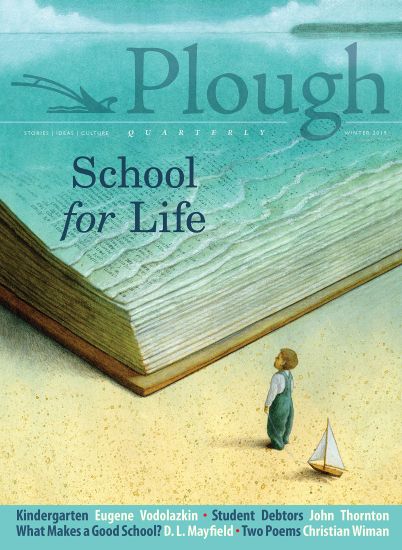
What we want for schools reveals what we value as a society. “What’s the point of school?” Parents have a stock set of responses, but the question remains unsettled, even two centuries after the Prussians invented compulsory education. The Prussian idea of what a school is for – to mold the populace to serve the state – seems unacceptable today. In vogue, instead, are slogans like “acquiring marketable skills” and “realizing your full potential.” These ideas powerfully shape our culture. Ultimately, they boil down to pursuing one supreme value: individual success in a competitive world. Schools are a mirror of our society as a whole; what we want for schools makes plain what and whom we value in our common life. In the Christian tradition, the life of discipleship is also a school. In this educational community, under the instruction of our one Teacher, we learn not to seek empowerment, but to find strength in weakness; not to out-achieve others, but to serve them; not to pursue our passion, but to obey a call. Also in this issue: poetry by Christian Wiman; reviews of new books by Robert Macfarlane, Jackie Morris, Francisco Cantú, Leif Enger, Carol Anderson, Stephanie Land, and Susan Wise Bauer; and art by Margaret McWethy, Albrecht Dürer, Raphael, Gérard David, Jackie Morris, Gustaf Tenggren, Sergey Dushkin, Anja Percival, Dmitry Samofalov, Christoph Wetzel, Sherrie York, Cathleen Rehfield, Pawel Kuczynski, and Jason Landsel. Plough Quarterly features stories, ideas, and culture for people eager to put their faith into action. Each issue brings you in-depth articles, interviews, poetry, book reviews, and art to help you put Jesus’ message into practice and find common cause with others.
Eberhard Arnold; Michael Plato; Alexi Sargeant; Susannah Black; Stephanie Bennett; Johann Christoph Arnold; Philip Britts; John Rhodes; Chico Fajardo-Heflin; Mark Bauerlein; Michael T. McRay; C. S. Lewis; Wendell Berry; Alfred Delp; Timothy Cardinal Dolan; Maureen Swinger
This issue of Plough Quarterly explores the effects of technology on human flourishing. Whether its artificial intelligence, genome editing, Big Tech monopolies, or social media–induced depression, we live in a world that is being reshaped by technology from the ground up. How do we stay human? This issue of Plough Quarterly addresses challenges ranging from the lure of transhumanism to the erosion of silence by the smartphone. Technophobia is no answer, our contributors agree, but neither is a refusal to tackle real dangers. They ask: Why not try living without a computer or a television? Why give tablets to children when Steve Jobs refused to give them to his kids? Why write using a keyboard when you could wield a fountain pen? Technological asceticism of this kind won’t solve society-wide dilemmas. But it can help us maintain the spiritual independence needed to respond to them rightly. Also in this issue: original poetry by Jacob Stratman; reviews of new books by Ian Johnson, Steve Roud, and Markus Rathey; insights from Wendell Berry, Viktor Frankl, Ivan Illich, Carl Sandburg, C. S. Lewis, Alfred Delp, and Christoph Blumhardt; and art by Pieter Bruegel the Elder, Jack Baumgartner, Nicholas Roerich, Rachel Newling, Kay Polk, Suellen McCrary, Stephen Scott Young, Jie Wei Zhou, Kiéra Malone, Torkel Pettersson, Mari Rast, Albrecht Dürer, René Magritte, and Kyle T. Webster. Plough Quarterly features stories, ideas, and culture for people eager to put their faith into action. Each issue brings you in-depth articles, interviews, poetry, book reviews, and art to help you put Jesus’ message into practice and find common cause with others.
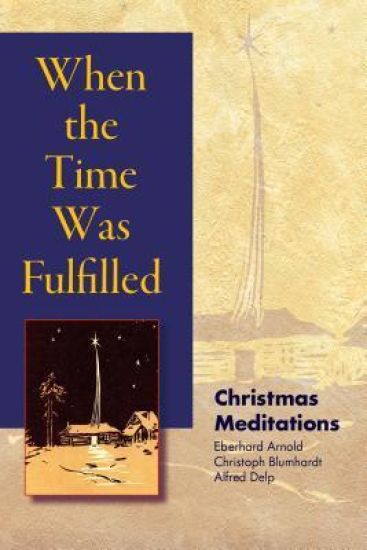
The 40 short, pithy meditations in this collection witness to the fact that the birth of Jesus is more than history for those who feel their need of him. Christmas is the season of joy for good reason: it is the news of a savior being born, of light breaking into darkness, of God’s peace and goodwill to all. But joy is more than merriment. For those who only want to have a good time or a feeling of togetherness, Christmas brings a temporary feeling of cheer. But for those who feel bankrupt, without real meaning or hope – either for themselves or for the world – Christmas can be genuinely life-changing.
"Ich hatte nicht daran gedacht, dass dies mein Weg sein könnte ... Ehrlich und gerade: ich würde gerne noch weiterleben und gern und jetzt erst recht weiterschaffen und viele neue Worte und Werte verkünden, die ich jetzt erst entdeckt habe. Es ist anders gekommen. Gott halte mich in der Kraft, ihm und seiner Fügung und Zulassung gewachsen zu sein" - Eine Auswahl von Reflexionen und Meditationen, die Delp während seiner Gestapo-Haft mit gefesselten Händen schrieb.
Fr. Alfred Delp, S.J., was a heroic German Jesuit priest who was imprisoned and martyred by the Nazis in a Nazi death camp in 1945. At the time of his arrest, he was the Rector of St. Georg Church in Munich, and had a reputation for being a gripping, dynamic preacher, and one who was an outspoken critic of the Nazi regime. He was an important figure in the Resistance movement against Nazism. Accused of conspiring against the Nazi government, he was arrested in 1944, tortured, imprisoned, and executed on Feb 2, 1945. While in prison, Fr. Delp was able to write a few meditations found in this book, which also includes his powerful reflections from prison during the Advent season about the profound spiritual meaning and lessons of Advent, as well as his sermons he gave on the season of Advent at his parish in Munich. These meditations were smuggled out of Berlin and read by friends and parishioners of St. Georg in Munich. His approach to Advent, the season that prepares us for Christmas, is what Fr. Delp called an Advent of the heart. More than just preparing us for Christmas, it is a spiritual program, a way of life. He proclaimed that our personal, social and historical circumstances, even suffering, offer us entry into the true Advent, our personal journey toward a meeting and dialogue with God. Indeed, his own life, and great sufferings, illustrated the true Advent he preached and wrote about. From his very prison cell he presented a timeless spiritual message, and in an extreme situation, his deep faith gave him the courage to draw closer to God, and to witness to the truth even at the cost of his own life. These meditations will challenge and inspire all Christians to embark upon that same spiritual journey toward union with God, a journey that will transform our lives."As one of the last witnesses who knew Fr. Alfred Delp personally, I am very pleased this book will make him better known in America. The more one reads his writings, the more one clearly recognizes the prophetic message for our times Like his contemporary, Dietrich Bonhoeffer, Delp ranks among the great prophets who endured the horror of Nazism and handed down a powerful message for our times."--Karl Kreuser, S.J., from the Foreword