Kirjojen hintavertailu. Mukana 12 595 353 kirjaa ja 12 kauppaa.

Kirjailija

Alfred Harris

Kirjat ja teokset yhdessä paikassa: 6 kirjaa, julkaisuja vuosilta 1991-2017, suosituimpien joukossa The Ritual Process. Vertaile teosten hintoja ja tarkista saatavuus suomalaisista kirjakaupoista.

6 kirjaa

Kirjojen julkaisuhaarukka 1991-2017.

The Ritual Process

The Ritual Process

Victor Turner; Roger Abrahams; Alfred Harris

Routledge
2017
sidottu
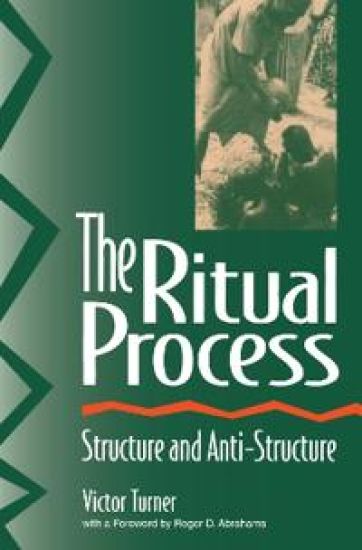
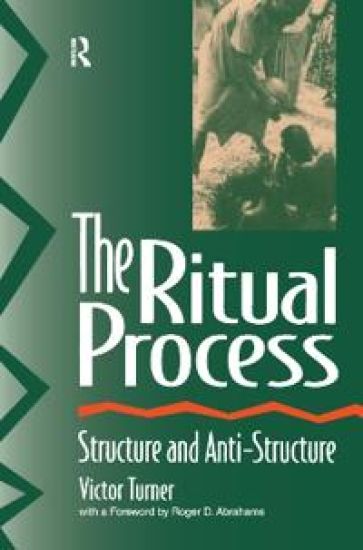
In The Ritual Process: Structure and Anti-Structure, Victor Turner examines rituals of the Ndembu in Zambia and develops his now-famous concept of "Communitas." He characterizes it as an absolute inter-human relation beyond any form of structure.The Ritual Process has acquired the status of a small classic since these lectures were first published in 1969. Turner demonstrates how the analysis of ritual behavior and symbolism may be used as a key to understanding social structure and processes. He extends Van Gennep's notion of the "liminal phase" of rites of passage to a more general level, and applies it to gain understanding of a wide range of social phenomena. Once thought to be the "vestigial" organs of social conservatism, rituals are now seen as arenas in which social change may emerge and be absorbed into social practice.As Roger Abrahams writes in his foreword to the revised edition: "Turner argued from specific field data. His special eloquence resided in his ability to lay open a sub-Saharan African system of belief and practice in terms that took the reader beyond the exotic features of the group among whom he carried out his fieldwork, translating his experience into the terms of contemporary Western perceptions. Reflecting Turner's range of intellectual interests, the book emerged as exceptional and eccentric in many ways: yet it achieved its place within the intellectual world because it so successfully synthesized continental theory with the practices of ethnographic reports."
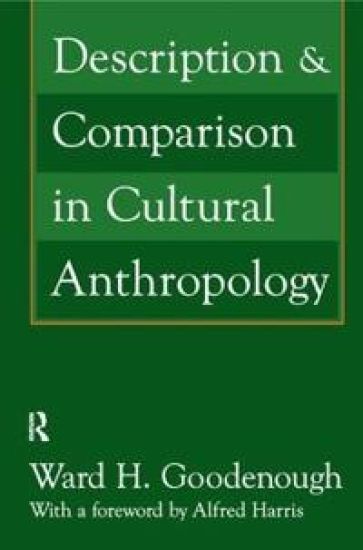
Description and Comparison in Cultural Anthropology
The Lewis Henry Morgan Lectures are intended to commemorate both the man and his work the latter being viewed as having provided an admirably broad and substantial base for anthropologists of later generations to build upon, as they have done and continue to do in diverse ways.Professor Goodenough's work, in the past and in this book particularly, emphasizes the vitality and fruitfulness of Morgan's contributions. Not only do these lectures carry forward Morgan's interests in kinship; they reflect as well his concern for comparative studies undertaken with the aim of ultimately understanding mankind. Moreover, Professor Goodenough has elucidated recent developments in the collection, analysis, and presentation of cultural data in ways that make it easier for all of us to see how his methods (in themselves specialized) can broaden and deepen our understanding of culture and of man.Morgan, himself a pioneer in method, would surely have been an attentive auditor-and discussant-at Professor Goodenough's Lectures, and in his seminars and the less formal events in which he participated while at Rochester, and to which he contributed so much. This volume is an expanded version of the Lewis Henry Morgan Lectures delivered at the University of Rochester, April 2 to 11, 1968.Alfred Harris was a professor emeritus of anthropology at the University of Rochester. He served as the chair of the anthropology from 1964-1971 and he was well known for being the editor of the Lewis Henry Morgan Lectures.
Description and Comparison in Cultural Anthropology
The Lewis Henry Morgan Lectures are intended to commemorate both the man and his work the latter being viewed as having provided an admirably broad and substantial base for anthropologists of later generations to build upon, as they have done and continue to do in diverse ways.Professor Goodenough's work, in the past and in this book particularly, emphasizes the vitality and fruitfulness of Morgan's contributions. Not only do these lectures carry forward Morgan's interests in kinship; they reflect as well his concern for comparative studies undertaken with the aim of ultimately understanding mankind. Moreover, Professor Goodenough has elucidated recent developments in the collection, analysis, and presentation of cultural data in ways that make it easier for all of us to see how his methods (in themselves specialized) can broaden and deepen our understanding of culture and of man.Morgan, himself a pioneer in method, would surely have been an attentive auditor-and discussant-at Professor Goodenough's Lectures, and in his seminars and the less formal events in which he participated while at Rochester, and to which he contributed so much. This volume is an expanded version of the Lewis Henry Morgan Lectures delivered at the University of Rochester, April 2 to 11, 1968.Alfred Harris was a professor emeritus of anthropology at the University of Rochester. He served as the chair of the anthropology from 1964-1971 and he was well known for being the editor of the Lewis Henry Morgan Lectures.
The Ritual Process

The Ritual Process

Victor Turner; Roger Abrahams; Alfred Harris

AldineTransaction
1995
nidottu
In The Ritual Process: Structure and Anti-Structure, Victor Turner examines rituals of the Ndembu in Zambia and develops his now-famous concept of "Communitas." He characterizes it as an absolute inter-human relation beyond any form of structure.The Ritual Process has acquired the status of a small classic since these lectures were first published in 1969. Turner demonstrates how the analysis of ritual behavior and symbolism may be used as a key to understanding social structure and processes. He extends Van Gennep's notion of the "liminal phase" of rites of passage to a more general level, and applies it to gain understanding of a wide range of social phenomena. Once thought to be the "vestigial" organs of social conservatism, rituals are now seen as arenas in which social change may emerge and be absorbed into social practice.As Roger Abrahams writes in his foreword to the revised edition: "Turner argued from specific field data. His special eloquence resided in his ability to lay open a sub-Saharan African system of belief and practice in terms that took the reader beyond the exotic features of the group among whom he carried out his fieldwork, translating his experience into the terms of contemporary Western perceptions. Reflecting Turner's range of intellectual interests, the book emerged as exceptional and eccentric in many ways: yet it achieved its place within the intellectual world because it so successfully synthesized continental theory with the practices of ethnographic reports."
Prey into Hunter

Prey into Hunter

Maurice Bloch; Alfred Harris

Cambridge University Press
1991
sidottu
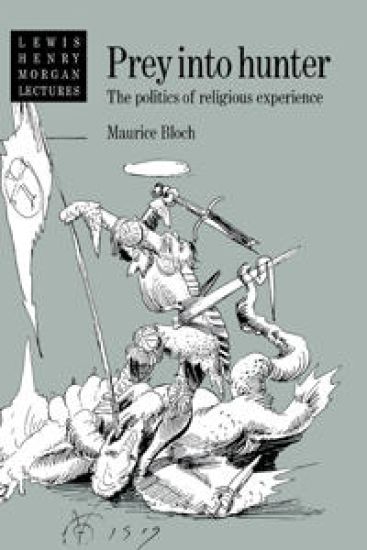
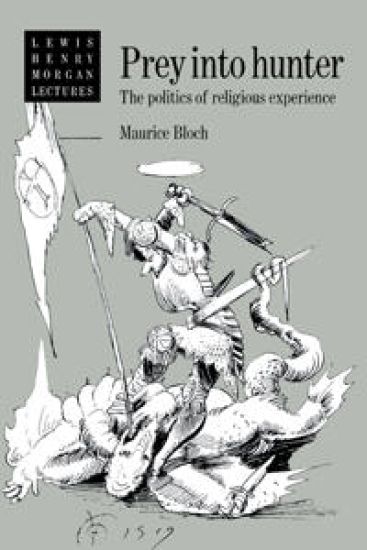
Maurice Bloch has for many years been developing an original and influential theory of ritual. In this book he synthesises a radical theory of religion. Rituals in a great many societies deny the transience of life and of human institutions. Bloch argues that they enact this denial by symbolically sacrificing the participants themselves, so allowing them to participate in the immortality of a transcendent entity. Such sacrifices are achieved through acts of symbolic violence, ranging from bodily mutilations to the killing of animals. The theme is developed with reference to rituals of many types, from a variety of ethnographic sources, and Bloch shows that even exogamous marriage rituals can be reinterpreted in the light of this thesis. He concludes by considering the indirect relation of symbolic and ritual violence to political violence.
Prey into Hunter

Prey into Hunter

Maurice Bloch; Alfred Harris

Cambridge University Press
1991
pokkari
Maurice Bloch has for many years been developing an original and influential theory of ritual. In this book he synthesises a radical theory of religion. Rituals in a great many societies deny the transience of life and of human institutions. Bloch argues that they enact this denial by symbolically sacrificing the participants themselves, so allowing them to participate in the immortality of a transcendent entity. Such sacrifices are achieved through acts of symbolic violence, ranging from bodily mutilations to the killing of animals. The theme is developed with reference to rituals of many types, from a variety of ethnographic sources, and Bloch shows that even exogamous marriage rituals can be reinterpreted in the light of this thesis. He concludes by considering the indirect relation of symbolic and ritual violence to political violence.