Kirjojen hintavertailu. Mukana 12 370 163 kirjaa ja 12 kauppaa.

Kirjailija

Alfredo Saad-Filho

Kirjat ja teokset yhdessä paikassa: 20 kirjaa, julkaisuja vuosilta 2001-2026, suosituimpien joukossa Destroying Democracy. Vertaile teosten hintoja ja tarkista saatavuus suomalaisista kirjakaupoista.

Mukana myös kirjoitusasut: Alfredo Saad Filho

20 kirjaa

Kirjojen julkaisuhaarukka 2001-2026.

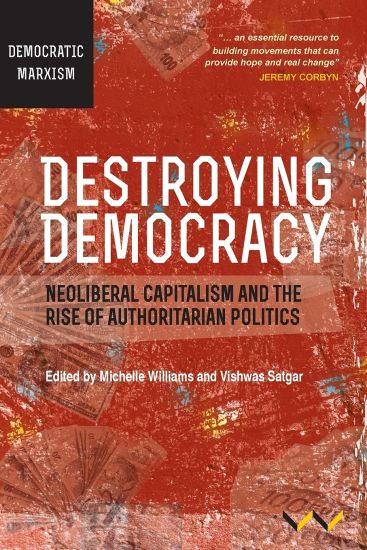
Destroying Democracy

Destroying Democracy

Jane Duncan; Linda Gordon; Gunnett Kaaf; Dale T McKinley; Alf Gunvald Nilsen; Devan Pillay; Mandla J Radebe; Alfredo Saad-Filho; Ingar Solty

Wits University Press
2021
pokkari
A history of the erosion of democracy across the globe Democracy is being destroyed. This is a crisis that expresses itself in the rising authoritarianism visible in divisive and exclusionary politics, populist political parties and movements, increased distrust in fact-based information and news, and the withering accountability of state institutions. Over the last four decades, democracy has radically shifted to a market democracy in which all aspects of human, non-human and planetary life are commodified, with corporations becoming more powerful than states and their citizens. This is how neoliberal capitalism functions at a systemic level and if left unchecked, is the greatest threat to democracy and a sustainable planet. Volume six of the Democratic Marxism series focuses on how decades of neoliberal capitalism have eroded the global democratic project and how, in the process, authoritarian politics are gaining ground. Scholars and activists from the political left focus on four country cases – India, Brazil, South Africa and the United States of America – in which the COVID-19 pandemic has fuelled and highlighted the pre-existing crisis. They interrogate issues of politics, ecology, state security, media, access to information and political parties, and affirm the need to reclaim and re-build an expansive and inclusive democracy. Destroying Democracy is an invaluable resource for the general public, activists, scholars and students who are interested in understanding the threats to democracy and the rising tide of authoritarianism in the global south and the global north.
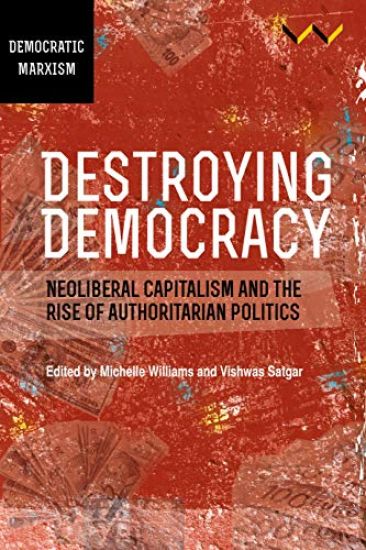
Destroying Democracy

Destroying Democracy

Jane Duncan; Linda Gordon; Gunnett Kaaf; Dale T McKinley; Alf Gunvald Nilsen; Devan Pillay; Mandla J Radebe; Alfredo Saad-Filho; Ingar Solty

WITS UNIVERSITY PRESS
2021
sidottu
A history of the erosion of democracy across the globe Democracy is being destroyed. This is a crisis that expresses itself in the rising authoritarianism visible in divisive and exclusionary politics, populist political parties and movements, increased distrust in fact-based information and news, and the withering accountability of state institutions. Over the last four decades, democracy has radically shifted to a market democracy in which all aspects of human, non-human and planetary life are commodified, with corporations becoming more powerful than states and their citizens. This is how neoliberal capitalism functions at a systemic level and if left unchecked, is the greatest threat to democracy and a sustainable planet. Volume six of the Democratic Marxism series focuses on how decades of neoliberal capitalism have eroded the global democratic project and how, in the process, authoritarian politics are gaining ground. Scholars and activists from the political left focus on four country cases – India, Brazil, South Africa and the United States of America – in which the COVID-19 pandemic has fuelled and highlighted the pre-existing crisis. They interrogate issues of politics, ecology, state security, media, access to information and political parties, and affirm the need to reclaim and re-build an expansive and inclusive democracy. Destroying Democracy is an invaluable resource for the general public, activists, scholars and students who are interested in understanding the threats to democracy and the rising tide of authoritarianism in the global south and the global north.

Neoliberal Fascism

Neoliberal Fascism

Alfredo Saad-Filho

PLUTO PRESS
2026
pokkari
From the rise of Trump and the MAGA movement to the strongman politics of Modi and Bolsonaro, a new wave of spectacular authoritarianism is sweeping the globe. Alfredo Saad-Filho argues this is no accident, but the inevitable structural outcome of fifty years of neoliberalism hollowing out democracy and intensifying inequality. This emerging political form, 'neoliberal fascism,' marries the ruthless defense of free-market interests with the exclusionary violence of classic fascism. By mobilizing mass resentment against fabricated enemies like immigrants and the so-called deep state, these regimes distract from economic devastation to build a totalitarian state far more resilient than traditional dictatorships. Neoliberal Fascism offers a path for resistance, urging a struggle for a renewed, inclusive democracy that transcends the failures of the past.
Marx's Capital

Marx's Capital

Ben Fine; Alfredo Saad-Filho

PLUTO PRESS
2026
pokkari
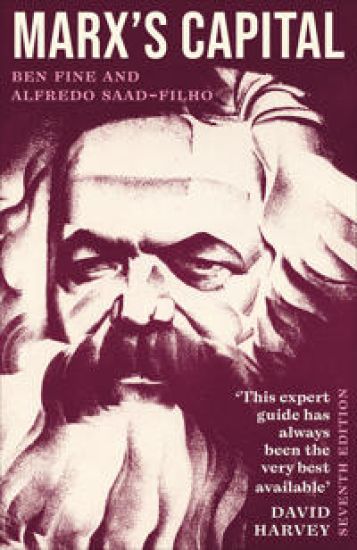
'This expert guide to the political economy of Marx's Capital has always been the very best available' – David Harvey Whether you are a student of economics, a political activist, or merely trying to make sense of a world in upheaval, Marx’s Capital is a beginner’s guide to one of the most influential and eye-opening critiques of capitalism. In today’s world of deep inequality, recurring financial meltdowns, and the climate crisis, understanding Marx’s ideas is more important than ever, but reading him alone can be daunting. In this updated seventh edition, Ben Fine and Alfredo Saad-Filho strip away the jargon, guiding readers through the essential pillars of Marxian political economy: from the Labour Theory of Value and the secret of Primitive Accumulation to the internal contradictions that trigger systemic crises and potentially lead to revolution. With new chapters on: Neoliberalism – and how it has evolved, alongside its new political forms and emerging technologies Climate Change – and how the profit imperative inevitably destabilises the planet's ecology World Economy – and how to locate nation-states within the evolving global order
From Value to Uneven Development: Selected Writings by John Weeks in the Marxist Tradition
John Weeks (1941-2020) was one of the most prominent Marxist economists of his generation. His writings inspired many activists and socialist economists around the world. This book brings together a selection of his writings engaging with and developing the Marxist tradition. These essays examine theoretical issues, directly building on Karl Marx's work, as well as practical and political issues, engaging with transformative and revolutionary activity. The essays included in this book are now made available to a new generation of critics of capitalism.
Progressive Policies for Economic Development

Progressive Policies for Economic Development

Alfredo Saad-Filho

TAYLOR FRANCIS LTD
2023
nidottu
Despite the unprecedented gravity of the challenges posed by global warming, most political systems have not given them the required priority. The oil industry has resisted, and many countries have taken only token measures to reduce emissions and mitigate the worst effects. In this context, this book examines the progressive options available to today’s developing countries as they face the limitations of neoliberalism and the existential challenge of global warming. Examining the cases of both low-income fossil fuel-dependent economies and large middle-income economies, this book argues that for all developing economies the best way forward includes ‘green’ macroeconomic policies articulated with progressive industrial and social policies, thus allowing these countries to achieve economic diversification, build alternative drivers of growth, and deliver improvements in the distribution of income, wealth and power. There is urgent need for this progressive policy agenda - grounded on heterodox economics, committed to social integration and the reduction of multiple inequalities - to improve the economic outcomes for these countries, improve the lives of citizens and meet global climate targets. The book argues that capitalism challenges the possibility of free and dignified existence while climate change challenges the possibility of life itself, and that these challenges must be confronted together. Since neoliberal capitalism will not adopt the necessary policies to reduce carbon emissions rapidly, it must be overthrown – not only for ethical or logical reasons, or to shift to better arrangements for the functioning of society, but in order to preserve the conditions for life itself.This agenda for progressive economic development is essential reading for anyone interested in heterodox economics, development studies, international politics, international relations and sustainable business.
The Age of Crisis

The Age of Crisis

Alfredo Saad-Filho

Springer Nature Switzerland AG
2022
nidottu
This book offers an analysis of the causes, development, and likely consequences of the Covid-19 pandemic for global neoliberalism. The analysis will draw upon the author’s previous work on neoliberalism, and on its twin crises: the economic crisis (the Global Financial Crisis (GFC), ongoing since 2007) and, subsequently, the crisis of political democracy that has been associated with the rise of ‘spectacular’ authoritarian leaders in several countries. The approach is grounded on Marxist political economy. The book argues that the Covid-19 pandemic emerges out of this context of deep inequalities and crises in the economy and in politics, and it is likely to reinforce the exclusionary tendencies of neoliberalism, with detrimental implications both for economic prosperity and for democracy. In turn, the pandemic has revealed the limitations of neoliberalism like never before, with implications for the legitimacy of capitalism itself, and opening unprecedented spaces for theleft. This book will be of interest to academics in economics, international relations, political science, political economy, sociology and development studies.
Growth and Change in Neoliberal Capitalism

Growth and Change in Neoliberal Capitalism

Alfredo Saad-Filho

Haymarket Books
2021
pokkari
Growth and Change in Neoliberal Capitalism brings together selected essays written by Alfredo Saad-Filho, one of the most prominent Marxist political economists today. This book offers a rich analysis of long-term economic development in the current stage of capitalism, the new relations of dependence between countries, the prospects for poor countries, and the progressive alternatives to neoliberalism. The volume also provides a detailed set of studies of the political economy of Brazil, tracking its achievements, tragedies, contradictions and limitations. An essential read for all those looking to understand the contemporary global economy.
The Age of Crisis

The Age of Crisis

Alfredo Saad-Filho

Springer Nature Switzerland AG
2021
sidottu
This book offers an analysis of the causes, development, and likely consequences of the Covid-19 pandemic for global neoliberalism. The analysis will draw upon the author’s previous work on neoliberalism, and on its twin crises: the economic crisis (the Global Financial Crisis (GFC), ongoing since 2007) and, subsequently, the crisis of political democracy that has been associated with the rise of ‘spectacular’ authoritarian leaders in several countries. The approach is grounded on Marxist political economy. The book argues that the Covid-19 pandemic emerges out of this context of deep inequalities and crises in the economy and in politics, and it is likely to reinforce the exclusionary tendencies of neoliberalism, with detrimental implications both for economic prosperity and for democracy. In turn, the pandemic has revealed the limitations of neoliberalism like never before, with implications for the legitimacy of capitalism itself, and opening unprecedented spaces for theleft. This book will be of interest to academics in economics, international relations, political science, political economy, sociology and development studies.
Progressive Policies for Economic Development
Despite the unprecedented gravity of the challenges posed by global warming, most political systems have not given them the required priority. The oil industry has resisted, and many countries have taken only token measures to reduce emissions and mitigate the worst effects. In this context, this book examines the progressive options available to today’s developing countries as they face the limitations of neoliberalism and the existential challenge of global warming. Examining the cases of both low-income fossil fuel-dependent economies and large middle-income economies, this book argues that for all developing economies the best way forward includes ‘green’ macroeconomic policies articulated with progressive industrial and social policies, thus allowing these countries to achieve economic diversification, build alternative drivers of growth, and deliver improvements in the distribution of income, wealth and power. There is urgent need for this progressive policy agenda - grounded on heterodox economics, committed to social integration and the reduction of multiple inequalities - to improve the economic outcomes for these countries, improve the lives of citizens and meet global climate targets. The book argues that capitalism challenges the possibility of free and dignified existence while climate change challenges the possibility of life itself, and that these challenges must be confronted together. Since neoliberal capitalism will not adopt the necessary policies to reduce carbon emissions rapidly, it must be overthrown – not only for ethical or logical reasons, or to shift to better arrangements for the functioning of society, but in order to preserve the conditions for life itself.This agenda for progressive economic development is essential reading for anyone interested in heterodox economics, development studies, international politics, international relations and sustainable business.
Brasil: neoliberalismo versus democracia

Brasil: neoliberalismo versus democracia

Alfredo Saad Filho

Boitempo Editorial
2021
nidottu
Em Brasil: neoliberalismo versus democracia, Alfredo Saad Filho e Lecio Morais analisam os paradoxos do Brasil moderno. J nas primeiras linhas os autores fornecem a chave de leitura que ampara sua interpreta o de como o Brasil transitou da ditadura democracia e deixou para tr s o modelo de substitui o de importa es, abra ando, sem amarras, o neoliberalismo.Com rigor e precis o, apoiados no m todo e no instrumental anal tico marxista que lhes conferem grande destaque no campo da economia pol tica, Saad Filho e Morais resgatam as ambiguidades de um Estado profundamente conservador. Nessa teia de contradi es, toma forma o que denominaram 'neoliberalismo desenvolvimentista', cuja ess ncia paradoxal se expressa no colapso do projeto pol tico do Partido dos Trabalhadores (PT).Implementado gradualmente pelas administra es federais lideradas pelo PT, o 'neoliberalismo desenvolvimentista' sustentou-se enquanto apresentou xitos sociais e econ micos incontest veis. Em uma interpreta o original, Saad Filho e Morais mostram que, quando as limita es desse modelo se tornaram evidentes, os setores que se sentiram prejudicados por ele - a chamada alian a de privil gios - articularam-se para p r fim ao impasse. Esse movimento de elites levou ao impeachment de Dilma Rousseff e ao surgimento de uma extrema direita de massas no pa s. Para os autores, 'as tens es devidas incompatibilidade entre a democracia e o neoliberalismo limitaram o espa o para a distribui o de renda e riqueza e para a integra o social baseada na cidadania'.Em tempos de resist ncia, quando a cr tica tende indulg ncia ou aos v cios inerentes s democracias neoliberais, Saad Filho e Morais nos desafiam a enfrentar o passado sem reservas e a mirar o futuro com a aud cia que a busca por mudan as estruturais exige. Por isso mesmo, a leitura deste livro fecunda, urgente e indispens vel. Trechos da orelha de Lena Lavinas]
Growth and Change in Neoliberal Capitalism
Growth and Change in Neoliberal Capitalism brings together selected essays written by Alfredo Saad-Filho, one of the most prominent Marxist political economists today. This book offers a rich analysis of long-term economic development in the current stage of capitalism, the new relations of dependence between countries, the prospects for poor countries, and the progressive alternatives to neoliberalism. The volume also provides a detailed set of studies of the political economy of Brazil, tracking its achievements, tragedies, contradictions and limitations.
Value and Crisis

Value and Crisis

Alfredo Saad-Filho

Haymarket Books
2020
pokkari
Value and Crisis brings together selected essays written by Alfredo Saad-Filho, one of the most prominent Marxist political economists writing today. Divided into two parts, "Essays on the Theory of Value" and "Essays on Contemporary Capitalism," this book examines the labour theory of value from a rich and innovative perspective from which fresh insights are derived. In this volume, Saad-Filho cogently discusses the nature of neoliberalism, financialisation, inflation, monetary policy, the contradictions, limitations and crises of contemporary capitalism, and more.
Value and Crisis: Essays on Labour, Money and Contemporary Capitalism
Value and Crisis brings together selected essays written by Alfredo Saad-Filho, one of the most prominent Marxist political economists today. This book examines the labour theory of value from a rich and innovative perspective, from which fresh insights and new perspectives are derived, with applications for the nature of neoliberalism, financialisation, inflation, monetary policy, and the contradictions, limitations and crises of contemporary capitalism.
Brazil

Brazil

Alfredo Saad-Filho; Lecio Morais

Pluto Press
2017
pokkari
Brazil is the world's sixth largest economy, has played a key role as one of the 'pink wave' administrations in Latin America, and was also responsible for wrecking the US-sponsored proposal for a Free Trade Area of the Americas. It is also one of the few large countries where social spending has risen and the distribution of income has improved in the last thirty years. However, as protests during the World Cup in 2014 have shown, the country remains highly unequal, unmet social needs are vast and its infrastructure is precarious. Alfredo Saad-Filho and Lecio Morais review the paradox that is modern-day Brazil. Focusing on the period from 1980 onwards, they analyse the tensions between the two systemic transitions to have dominated the country: the political transition from military rule to democracy, and to neoliberalism. The authors show how these transitions had contradictory logics and dynamics, yet ultimately became mutually supportive as they unfolded and intertwined.
Brazil

Brazil

Alfredo Saad-Filho; Lecio Morais

Pluto Press
2017
sidottu
Brazil is the world's sixth largest economy, has played a key role as one of the 'pink wave' administrations in Latin America, and was also responsible for wrecking the US-sponsored proposal for a Free Trade Area of the Americas. It is also one of the few large countries where social spending has risen and the distribution of income has improved in the last thirty years. However, as protests during the World Cup in 2014 have shown, the country remains highly unequal, unmet social needs are vast and its infrastructure is precarious. Alfredo Saad-Filho and Lecio Morais review the paradox that is modern-day Brazil. Focusing on the period from 1980 onwards, they analyse the tensions between the two systemic transitions to have dominated the country: the political transition from military rule to democracy, and to neoliberalism. The authors show how these transitions had contradictory logics and dynamics, yet ultimately became mutually supportive as they unfolded and intertwined.
Marx's 'Capital'

Marx's 'Capital'

Ben Fine; Alfredo Saad-Filho

Pluto Press
2016
sidottu
'This expert guide to the political economy of Marx's Capital has always been the very best available' - David Harvey This brilliantly concise book is the classic companion to Karl Marx's most well-known work, Capital. In print now for over a quarter of a century, and translated into many languages, this new edition has been fully revised and updated, making it an ideal modern introduction to one of the most important texts in political and economic thought today. The authors cover all central aspects of Marx's economics. They explain the structure of Marx's analysis and the meaning of the key categories in Capital, showing the internal coherence of Marx's approach, and their relevance today. Marx's method and terminology are explored in detail, with supporting examples. Short chapters set out the significance of Marx's main concepts and can be grasped easily, making it a practical text for anyone with an interest in understanding Marx's magnum opus. Discussing Capital's relevance today, the authors keep abstract theorising to a minimum. This readable introduction highlights the continuing relevance of Marx's ideas in the light of the problems of contemporary capitalism.
Marx's 'Capital'

Marx's 'Capital'

Ben Fine; Alfredo Saad-Filho

Pluto Press
2016
pokkari
'This expert guide to the political economy of Marx's Capital has always been the very best available' - David Harvey This brilliantly concise book is the classic companion to Karl Marx's most well-known work, Capital. In print now for over a quarter of a century, and translated into many languages, this new edition has been fully revised and updated, making it an ideal modern introduction to one of the most important texts in political and economic thought today. The authors cover all central aspects of Marx's economics. They explain the structure of Marx's analysis and the meaning of the key categories in Capital, showing the internal coherence of Marx's approach, and their relevance today. Marx's method and terminology are explored in detail, with supporting examples. Short chapters set out the significance of Marx's main concepts and can be grasped easily, making it a practical text for anyone with an interest in understanding Marx's magnum opus. Discussing Capital's relevance today, the authors keep abstract theorising to a minimum. This readable introduction highlights the continuing relevance of Marx's ideas in the light of the problems of contemporary capitalism.
The Value of Marx

The Value of Marx

Alfredo Saad Filho

Routledge
2007
nidottu
Karl Marx's writings provide a uniquely insightful explanation of the inner workings of capitalism, which other schools of thought generally have difficulty explaining. From this vantage point, Marx's works can help to explain important features and economic problems of our age, and the limits of their possible solutions. For example, the necessity and origin of money, the growth of the wage-earning class, uneven development, cycles and crises, and the relevant impoverishment of the workers, leading to debt and overwork.The Value of Marx demonstrates that:*capitalist production necessarily involves conflicts in production and in distribution*competition is an essential feature of capitalism, but it often generates instability, crises and unemployment, showing that capitalism is not only the most productive but also the most systematically destructive mode of production in history*capitalist economies are unstable because of the conflicting forces of extraction, realisation and the accumulation of surplus value under competitive conditions. The instability is structural, and even the best economic policies cannot avoid it completely.The author critically reviews the methodological principles of Marx's value analysis and the best known interpretation of his value theory. He develops an interpretation of Marx focusing primarily upon the processes and relations that regulate social and economic reproduction under capitalism. When analysed from this angle, value theory is a theory of class and exploitation. The concept of value is useful because, among other reasons, it explains capitalist exploitation in spite of the predominance of voluntary market exchanges. The most important controversies in Marxian political economy are reviewed exhaustively, and new light is thrown on the meaning and significance of Marx's analysis and its relevance for contemporary capitalism.
The Value of Marx

The Value of Marx

Alfredo Saad Filho

Routledge
2001
sidottu
Karl Marx's writings provide a uniquely insightful explanation of the inner workings of capitalism, which other schools of thought generally have difficulty explaining. From this vantage point, Marx's works can help to explain important features and economic problems of our age, and the limits of their possible solutions. For example, the necessity and origin of money, the growth of the wage-earning class, uneven development, cycles and crises, and the relevant impoverishment of the workers, leading to debt and overwork.The Value of Marx demonstrates that:*capitalist production necessarily involves conflicts in production and in distribution*competition is an essential feature of capitalism, but it often generates instability, crises and unemployment, showing that capitalism is not only the most productive but also the most systematically destructive mode of production in history*capitalist economies are unstable because of the conflicting forces of extraction, realisation and the accumulation of surplus value under competitive conditions. The instability is structural, and even the best economic policies cannot avoid it completely.The author critically reviews the methodological principles of Marx's value analysis and the best known interpretation of his value theory. He develops an interpretation of Marx focusing primarily upon the processes and relations that regulate social and economic reproduction under capitalism. When analysed from this angle, value theory is a theory of class and exploitation. The concept of value is useful because, among other reasons, it explains capitalist exploitation in spite of the predominance of voluntary market exchanges. The most important controversies in Marxian political economy are reviewed exhaustively, and new light is thrown on the meaning and significance of Marx's analysis and its relevance for contemporary capitalism.