Kirjailija
Algernon Blackwood
Kirjat ja teokset yhdessä paikassa: 596 kirjaa, julkaisuja vuosilta 1912-2026, suosituimpien joukossa Julius Levallon / The Bright Messenger. Vertaile teosten hintoja ja tarkista saatavuus suomalaisista kirjakaupoista.
596 kirjaa
Kirjojen julkaisuhaarukka 1912-2026.


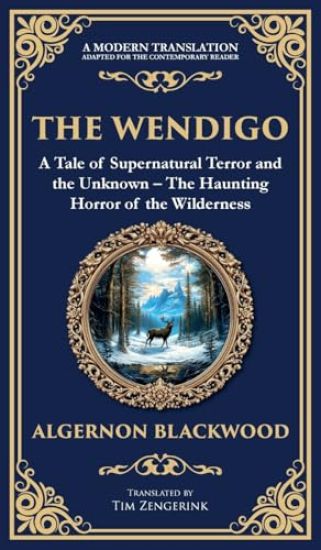

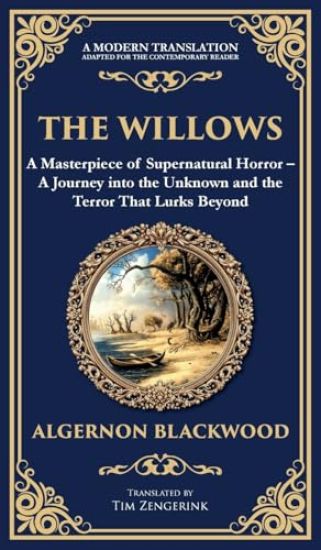

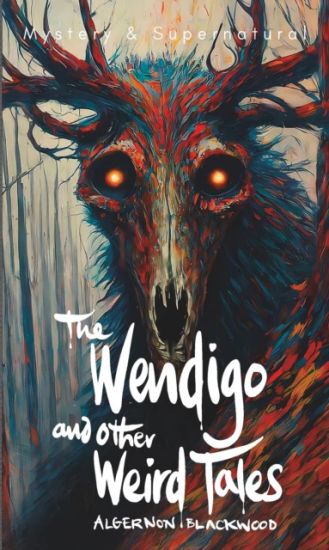
Selected and introduced by Stephen Carver ‘The beauty of the scene was strangely uplifting. Yet, ever at the back of his thoughts, lay that other aspect of the wilderness: the indifference to human life, the merciless spirit of desolation which took no note of man.’ – The Wendigo ‘Of the quality of Mr. Blackwood’s genius there can be no dispute … he is the one absolute and unquestioned master of weird atmosphere.’ – H.P. Lovecraft Algernon Blackwood (1869 – 1951) – ‘The Ghost Man’ – was a British broadcaster, journalist, traveller, mystic, and paranormal investigator, and, above all, a prolific author of weird, occult, and supernatural fiction. Often, he wrote about the untamed wilderness, from deserts to vast, primeval forests, vividly depicting a natural environment that is at once awe-inspiring, alien and hostile. Many of Blackwood’s most famous tales – such as The Wendigo and ‘The Willows’ (both included in this collection) – are set in the empty places of the world. Like his psychic detective ‘John Silence’, Blackwood was fascinated by elemental spirits, reincarnation, other dimensions, and higher states of consciousness. Wherever such things broke through, he sought them out, and now so can you in this comprehensive collection of his short fiction. As Blackwood explained himself: ‘I believe it possible for our consciousness to change and grow, and that with this change we may become aware of a new universe.’ Contents: Introduction Note on the Text Bibliography Works by Algernon Blackwood Further Reading A Haunted Island A Case of Eavesdropping The Empty House Keeping His Promise Smith: An Episode in a Lodging House The Listener Max Hensig – Bacteriologist and Murderer: A Story of New York The Willows The Insanity of Jones The Woman’s Ghost Story A Psychical Invasion The Nemesis of Fire Secret Worship Entrance and Exit The Sea Fit The Wendigo The Deferred Appointment The Damned A Descent into Egypt Transition The Decoy The Wolves of God Confession The Man Who Was Milligan The Doll Appendix: Explorers’ Ghost Stories


Algernon Henry Blackwood (1869-1951) was an English writer of tales of the supernatural. In his late thirties, Blackwood started to write horror stories. He was very successful, writing ten books of short stories and appearing on both radio and television to tell them. He also wrote fourteen novels and a number of plays, most of which were produced but not published. He was an avid lover of nature, and many of his stories reflect this. Although Blackwood wrote a number of horror stories, his most typical work seeks less to frighten than to induce a sense of awe. Good examples are the novels The Centaur (1911) and Julius LeVallon (1916) and its sequel The Bright Messenger (1921).

Algernon Henry Blackwood (1869-1951) was an English writer of tales of the supernatural. In his late thirties, Blackwood started to write horror stories. He was very successful, writing ten books of short stories and appearing on both radio and television to tell them. He also wrote fourteen novels and a number of plays, most of which were produced but not published. He was an avid lover of nature, and many of his stories reflect this. Although Blackwood wrote a number of horror stories, his most typical work seeks less to frighten than to induce a sense of awe. Good examples are the novels The Centaur (1911) and Julius LeVallon (1916) and its sequel The Bright Messenger (1921).



Algernon Henry Blackwood (1869-1951) was an English writer of tales of the supernatural. In his late thirties, Blackwood started to write horror stories. He was very successful, writing ten books of short stories and appearing on both radio and television to tell them. He also wrote fourteen novels and a number of plays, most of which were produced but not published. He was an avid lover of nature, and many of his stories reflect this. Although Blackwood wrote a number of horror stories, his most typical work seeks less to frighten than to induce a sense of awe. Good examples are the novels The Centaur (1911) and Julius LeVallon (1916) and its sequel The Bright Messenger (1921).