Kirjojen hintavertailu. Mukana 12 595 353 kirjaa ja 12 kauppaa.

Kirjailija

Algis Mickunas

Kirjat ja teokset yhdessä paikassa: 21 kirjaa, julkaisuja vuosilta 1986-2024, suosituimpien joukossa Cosmic Passion for the Aesthetics. Vertaile teosten hintoja ja tarkista saatavuus suomalaisista kirjakaupoista.

21 kirjaa

Kirjojen julkaisuhaarukka 1986-2024.

Freedom of Speech

Freedom of Speech

Tomas Kacerauskas; Algis Mickunas

PETER LANG AG
2024
sidottu
The book’s focus is on freedom of speech and what content can place it in jeopardy. The sources, discussions and limitations of free speech, the relationship between ideology, freedom of speech in the media, and public issues are analyzed. From historical point of view, the citizens of more or less democratic societies assume freedom of speech as a basic right to challenge dictatorships, totalitarianisms and authority of any kind. Freedom of speech cannot be understood without the fundamental principles of democratic society, including a tolerance of others, their right to express various and unique opinions, open to challenge by others, and requiring mutual respect. Three domains for social responsibility concerning freedom of speech are addressed: practical, ecological and creative.
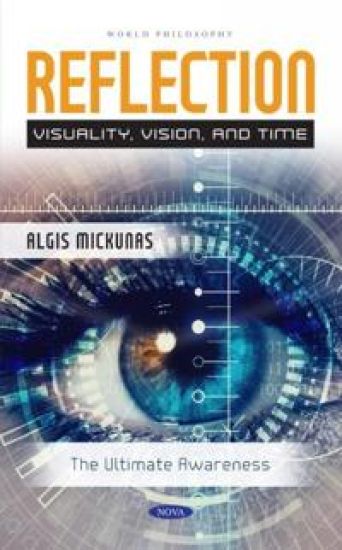
Reflection: Visuality, Vision, and Time

Reflection: Visuality, Vision, and Time

Algis Mickunas

NOVA SCIENCE PUBLISHERS INC
2022
sidottu
Events in the contemporary world are available through a great variety of media and most of them consist of images, seemingly reflecting some "reality". Yet there is no clear understanding what constitutes reflection, image, cultural symbolic designs and who is the reflecting Self. The text investigates the difference between visuality, images, vision and the different concepts of reality which are at the base of our understanding of the great varieties of means for reflection - from theological to technical.
In Between Communication Theories Through One Hundred Questions

In Between Communication Theories Through One Hundred Questions

Tomas Kacerauskas; Algis Mickunas

Springer Nature Switzerland AG
2021
nidottu
This book takes the form of a dialogue. It presents two authors, specialized in the phenomenolog?, posing questions to each other and offering complex answers for critical discussion. The book includes both presentation of different communication schools and philosophizing on the issues of communication. The authors debate numerous topics by providing the definition and etymology of communication, examining the limits of communication, and using a poli-logical base of communication. The issue which pervades all domains is that of mediation: how things, such as identities, styles, and bodies are mediated by culture, history, and tradition, and what the limits are of such mediation. This question leads to more complex issues of “mediated mediations” such that an explication of one medium is framed by another medium, leading to a question of meta-language as a fundamental, unmediated medium. This involves some fine points of mediation: perspectivity, discursivity, ethics of communication, ideology, private and public. Throughout the mutual, interrogative dialogue, the authors touch upon, but avoid the daunting commitment to, a theory of metacommunication, as well as the “transcendental” problematic of accessing the numerous theoretical, thematic, and historical aspects of communication.
In Between Communication Theories Through One Hundred Questions

In Between Communication Theories Through One Hundred Questions

Tomas Kacerauskas; Algis Mickunas

Springer Nature Switzerland AG
2020
sidottu
This book takes the form of a dialogue. It presents two authors, specialized in the phenomenolog?, posing questions to each other and offering complex answers for critical discussion. The book includes both presentation of different communication schools and philosophizing on the issues of communication. The authors debate numerous topics by providing the definition and etymology of communication, examining the limits of communication, and using a poli-logical base of communication. The issue which pervades all domains is that of mediation: how things, such as identities, styles, and bodies are mediated by culture, history, and tradition, and what the limits are of such mediation. This question leads to more complex issues of “mediated mediations” such that an explication of one medium is framed by another medium, leading to a question of meta-language as a fundamental, unmediated medium. This involves some fine points of mediation: perspectivity, discursivity, ethics of communication, ideology, private and public. Throughout the mutual, interrogative dialogue, the authors touch upon, but avoid the daunting commitment to, a theory of metacommunication, as well as the “transcendental” problematic of accessing the numerous theoretical, thematic, and historical aspects of communication.
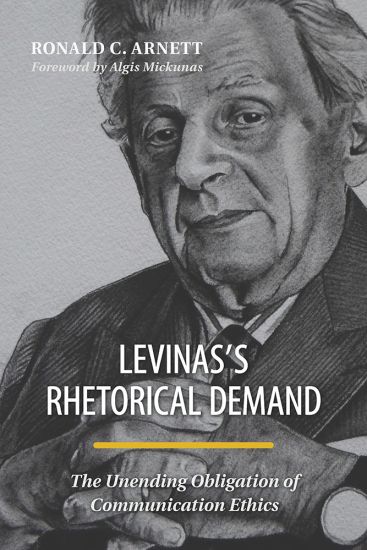
Levinas's Rhetorical Demand

Levinas's Rhetorical Demand

Ronald C. Arnett; Algis Mickunas

Southern Illinois University Press
2017
nidottu
Philosopher Emmanuel Levinas’s ethics as first philosophy explicates a human obligation and responsibility to and for the Other that is an unending and an imperfect commitment. In Levinas’s Rhetorical Demand: The Unending Obligation of Communication Ethics, Ronald C. Arnett underscores the profundity of Levinas’s insights for communication ethics.Arnett outlines communication ethics as a primordial call of responsibility central to Levinas’s writing and mission. Arnett analyzes communication ethics through a Levinasian lens with examination of social artifacts ranging from the Heidegger-Cassirer debate to Rupert Murdoch’s News of the World story concerning illicit possession of information.Levinas’s Rhetorical Demand offers an account of Levinas’s project and the pragmatic implications of attending to a call of responsibility to and for the Other. This book yields a rich and nuanced understanding of Levinas’s work, revealing the practical importance of his insights, and including a discussion of a constellation of related theorists and thinkers.
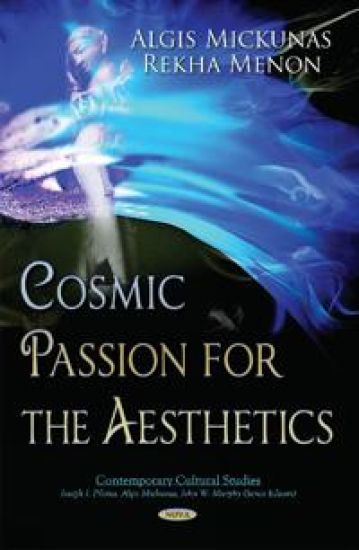
Cosmic Passion for the Aesthetics

Cosmic Passion for the Aesthetics

Algis Mickunas; Rekha Menon

Nova Science Publishers Inc
2014
sidottu
In this book, the authors present current research in the study of Cosmic Passion for the Aesthetic. It engages arts from different tradition, showing their cultural contexts and discloses dimensions of awareness that transgress the characteristics of art works. This book delves into the deeper meaning of art, and shows how various cultures attempt to suppress other cultures and their arts, and how the suppressed reappear and reassert themselves in new contexts. It travels through different conceptions, speculations, definitions and portrays how the aesthetic, the expressive, that is not identical with the characteristics of an art work, is what all art works attempt to capture. The aesthetic encompasses the passionate dimension which is not limited or reducible to anything -- it is cosmic. The latter is disclosed by the aesthetic passion that is most apparent in comparative studies of arts, above all through examining the art of India, the text visually captures the aesthetic, cosmic passion. In addition, it questions what is aesthetic value, judgements on art, the authors draw on how the depictions of the cosmic in art can assume a way of understanding specific interpretation of space, time and movement prior to any theological, mythical, theoretical or even scientific explanations and portray a flow of sensuous envelopment which resonates with cosmic passion. This book would interest not only artists, but students of cultures and comparative civilisations, and indeed for those who are interested in the ways that cosmic awareness has been and is being explicated in civilisations.
Exploring Phenomenology

Exploring Phenomenology

David Stewart; Algis Mickunas

Ohio University Press
1990
pokkari
Existential philosophy has perhaps captured the public imagination more completely than any other philosophical movement in the twentieth century. But less is known about the phenomenological method lying behind existentialism. In this solid introduction to phenomenological philosophy, authors David Stewart and Algis Mickunas show that phenomenology is neither new nor bizarre but is a contemporary way of raising afresh the major problems of philosophy that have dominated the traditions of Western thought. The authors carefully lead the reader trough the maze of terminology, explaining the major problems phenomenology has treated and showing how these are a consistent extension of the traditional concerns of philosophy. In concise, uncluttered, and straightforward terms, the history, development, and contemporary status of phenomenology is explained with a copiously annotated bibliography following each chapter. Nothing in print combines the extensive introductory materials with a guide to the massive literature that has been produced by phenomenological and existential studies.