Kirjojen hintavertailu. Mukana 12 390 323 kirjaa ja 12 kauppaa.

Kirjailija

Ali A. Allawi

Kirjat ja teokset yhdessä paikassa: 3 kirjaa, julkaisuja vuosilta 2010-2024, suosituimpien joukossa The Crisis of Islamic Civilization. Vertaile teosten hintoja ja tarkista saatavuus suomalaisista kirjakaupoista.

Mukana myös kirjoitusasut: Ali A Allawi

3 kirjaa

Kirjojen julkaisuhaarukka 2010-2024.

Rich World, Poor World

Rich World, Poor World

Ali A. Allawi

YALE UNIVERSITY PRESS
2024
sidottu
A landmark history of the world economic order, exploring how developing countries have fought to escape impoverishment Over the past two decades, experiments in neoliberal economics have opened up a chasm of inequality between the Global South and the West. Development advice from richer nations has led to social upheaval, political unrest, environmental degradation—and even the creation of a new underclass. Brutal extremes of wealth and poverty are now commonplace. Ali A. Allawi traces the evolution of the world economic order from the late imperial era to the present day. Shedding light on continuing controversies, Allawi shows how the process of development has been hindered at every turn, from poor leadership and lost opportunities to widespread corruption. In doing so, he argues that the current neoliberal consensus is only the most recent of a series of failed policy imperatives. Covering issues in the Global South as well as failures in the West, this definitive account offers an impassioned and authoritative call for change.
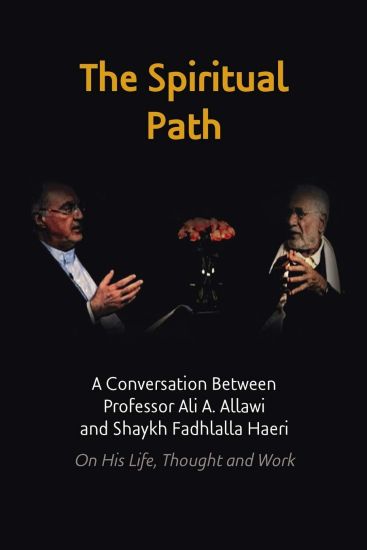
The Spiritual Path

The Spiritual Path

Shaykh Fadhlalla Haeri; Ali A Allawi

Zahra Publications
2019
pokkari
This book is a transcription of extensive interviews between Professor Ali A. Allawi and Shaykh Fadhlalla Haeri, conducted in South Africa during January-February of 2014.In them, Shaykh Fadhlalla Haeri discusses his life story, the spiritual journey and the path he has been on ever since. Professor Allawi's questions highlight Shaykh Haeri's life-changing encounters with Sufi Masters and other spiritual teachers and his travels and teaching with Sufi communities.Drawing out Shaykh Haeri's far-reaching views on the future of religion, Sufi orders and global spirituality, the conversations probe deeply into how one attains enlightenment and what it means to live in the light of the Absolute in a relative world. Deeply engaging and inspiring for any serious seeker.These interviews were transcribed by Julia Khadija Lafene and edited by Anjum Jaleel.In order to publish it as a book, chapter headings, subheadings and footnotes have been added, many gaps within the conversations have been filled, and footnotes and a glossary have been added.Zahra Publications' other KDP Print on Demand books and eBooks are listed at http: //www.zahrapublications.pub.
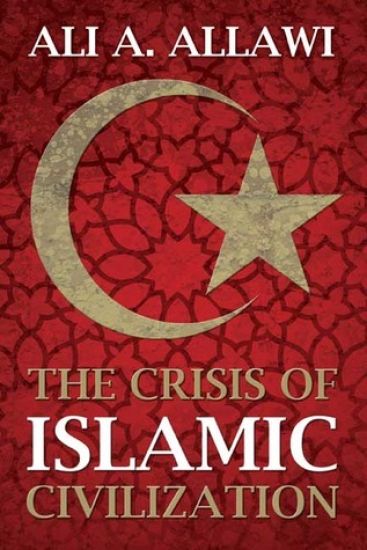
The Crisis of Islamic Civilization

The Crisis of Islamic Civilization

Ali A. Allawi

Yale University Press
2010
pokkari
A bold analysis of the sources of the crisis in today’s Islamic world, from a public intellectual and statesman at its heart Islam as a religion is central to the lives of over a billion people, but its outer expression as a distinctive civilization has been undergoing a monumental crisis. Buffeted by powerful adverse currents, Islamic civilization today is a shadow of its former self. The most disturbing and possibly fatal of these currents—the imperial expansion of the West into Muslim lands and the blast of modernity that accompanied it—are now compounded by a third giant wave, globalization.These forces have increasingly tested Islam and Islamic civilization for validity, adaptability, and the ability to hold on to the loyalty of Muslims, says Ali A. Allawi in his provocative new book. While the faith has proved resilient in the face of these challenges, other aspects of Islamic civilization have atrophied or died, Allawi contends, and Islamic civilization is now undergoing its last crisis.The book explores how Islamic civilization began to unravel under colonial rule, as its institutions, laws, and economies were often replaced by inadequate modern equivalents. Allawi also examines the backlash expressed through the increasing religiosity of Muslim societies and the spectacular rise of political Islam and its terrorist offshoots. Assessing the status of each of the building blocks of Islamic civilization, the author concludes that Islamic civilization cannot survive without the vital spirituality that underpinned it in the past. He identifies a key set of principles for moving forward, principles that will surprise some and anger others, yet clearly must be considered.