Kirjojen hintavertailu. Mukana 12 464 520 kirjaa ja 12 kauppaa.

Kirjailija

Ali Cheshmehzangi

Kirjat ja teokset yhdessä paikassa: 46 kirjaa, julkaisuja vuosilta 2018-2026, suosituimpien joukossa Harnessing Urban Innovation to Unlock the Sustainable Development Goals. Vertaile teosten hintoja ja tarkista saatavuus suomalaisista kirjakaupoista.

46 kirjaa

Kirjojen julkaisuhaarukka 2018-2026.

Harnessing Urban Innovation to Unlock the Sustainable Development Goals

Harnessing Urban Innovation to Unlock the Sustainable Development Goals

Ali Cheshmehzangi; Nicholas You; José Siri; Eugénie Birch

SPRINGER VERLAG, SINGAPORE
2025
nidottu
This book first attempts to explore the nexus between urban innovation and sustainable development goals (SDGs). It puts together global examples of urban innovation initiatives, highlighting practical, policy-oriented, social, and technological interventions. The case studies are divided into four clusters of ‘green cities’, ‘inclusive cities’, ‘resilient cities’, and ‘healthy cities’. In doing so, the book maps various global examples of urban innovation for sustainable pathways and directions. It also highlights means of implementation of tool and technologies, data, financing, and governance. The overarching aim is to provide a holistic overview of urban innovation sustainable development nexus, which would help future policy development, paradigm shifts, and technological applications.By summarising a selection of successful initiatives, interventions, and projects, this book highlights how urban innovation could accelerate achieving SDGs. The lessons learned from each case studycluster are narrated as knowledge transfer platforms for future city development and achieving sustainable development. These lessons will be beneficial to practitioners and governments, as well as researchers and academics who are interested in urban innovation research. City case studies included in the book are based on their success stories as role models for other cities in developed and developing nations. This collection helps us portray a more holistic image of urban innovation aligned with the SDGs and pathways to achieving them.
Harnessing Urban Innovation to Unlock the Sustainable Development Goals

Harnessing Urban Innovation to Unlock the Sustainable Development Goals

Ali Cheshmehzangi; Nicholas You; José Siri; Eugénie Birch

SPRINGER VERLAG, SINGAPORE
2024
sidottu
This book first attempts to explore the nexus between urban innovation and sustainable development goals (SDGs). It puts together global examples of urban innovation initiatives, highlighting practical, policy-oriented, social, and technological interventions. The case studies are divided into four clusters of ‘green cities’, ‘inclusive cities’, ‘resilient cities’, and ‘healthy cities’. In doing so, the book maps various global examples of urban innovation for sustainable pathways and directions. It also highlights means of implementation of tool and technologies, data, financing, and governance. The overarching aim is to provide a holistic overview of urban innovation sustainable development nexus, which would help future policy development, paradigm shifts, and technological applications.By summarising a selection of successful initiatives, interventions, and projects, this book highlights how urban innovation could accelerate achieving SDGs. The lessons learned from each case studycluster are narrated as knowledge transfer platforms for future city development and achieving sustainable development. These lessons will be beneficial to practitioners and governments, as well as researchers and academics who are interested in urban innovation research. City case studies included in the book are based on their success stories as role models for other cities in developed and developing nations. This collection helps us portray a more holistic image of urban innovation aligned with the SDGs and pathways to achieving them.

Sustainable Futures and Green New Deals

Sustainable Futures and Green New Deals

Zaheer Allam; Ali Cheshmehzangi

Springer International Publishing AG
2025
nidottu
This academic book critically examines the concept of sustainable futures and its interdependence with the policy framework of Green New Deals. We emphasize the inherent link between the two concepts by highlighting how Green New Deals can pave the way for a sustainable and just future in key areas such as environmental policy, economic development, and social equity. Taking a multidisciplinary approach, the book draws on insights from fields such as environmental studies, sustainable development, political ecology, and climate policy to explore the intricacies of these interconnections. The revised description underscores the importance of understanding the Green New Deal's historical and political contexts, as well as its implications for sustainable futures. The book delves into the theoretical perspectives that shape our comprehension of sustainable futures, the diverse strategies employed by countries and regions in implementing Green New Deals, the role of technological innovation and social movements in fostering sustainable transitions, and the political dynamics surrounding the Green New Deal. Through an analysis of the Green New Deal's role in sustainable development, climate policy, and environmental justice, the book provides a necessary and timely contribution to ongoing debates. The chapters offer detailed explorations of the interrelationships between these key areas, emphasizing how the Green New Deal can serve as a transformative policy framework for achieving sustainable and equitable futures. "Sustainable Futures and Green New Deals" is intended for scholars, policymakers, activists, and students interested in understanding the complex and interconnected issues surrounding sustainable development, climate policy, and environmental justice.
City Walks in Chongqing

City Walks in Chongqing

Ali Cheshmehzangi

Springer Nature Switzerland AG
2025
sidottu
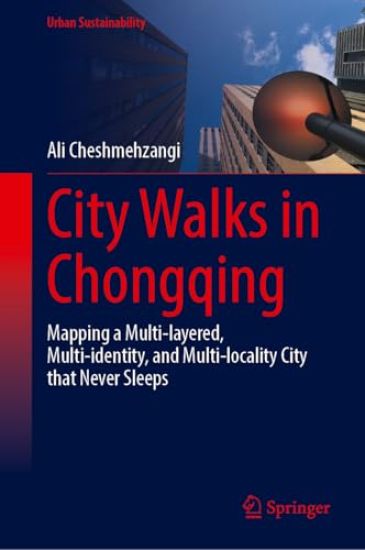
City walks enable us to think and feel more intricately, and by living through them – hopefully less ostentatiously - through experiences and relations that genuinely matter. This sort of spatial syntagma is made of many correlations based on knowing what happens in cities, feeling what attributes are important, and articulating a set of relations to develop socio-spatial inter-relations and, ultimately, identities. In a way, “city walks” should empower cities to talk penetratingly while we hear, feel, and observe through experiences and thinking. Hence, city walks help the city talk. The City of Chongqing means a lot to me. It is a city that allows you to fall in love with a sense of urbanity for city life and experiences. It is a city that creates a distinguishable set of relations, both transient and abiding in many ways. It is a city with a different tone of heartbeat during the day and the night, a sort of vibration that lives through many arteries at different nodes, settings, and connections. It is a city of multiple networks - different from many other cities - that never sleeps. Most importantly, Chongqing has a unique magnitude of everything that a city can offer. It is a city that can be experienced differently every time you visit it, and you can live through those diminutive experiences via greater connections and expounded senses that exist but have to be experienced first. In this book, Chongqing is studied based on its sophistication of having multiple layers, multiple identities, and multiple localities. Hence, it is structured based on these three crucial aspects, including (urban) values, attributes, experiences, and livelihoods of Chongqing. This book is the first of its kind for a Chinese city and is aimed to reveal a genuine gem while accentuating with pride a city that never sleeps. This should be read and understood by scholars, urban researchers, and urban specialists seeking to develop better cities and communities. “Just Brilliant! Chongqing has never been portrayed any better than this book does so miraculously”. - Tian Tang, Independent Researcher, China “Another unique mapping study by the author; and this time, through sensory and perceptible city walks of a global city – the beautiful city of Chongqing”. - Aaron Golden, Independent Researcher, UK
Urban Innovation and Sustainability

Urban Innovation and Sustainability

Ali Cheshmehzangi

Springer Nature Switzerland AG
2025
sidottu
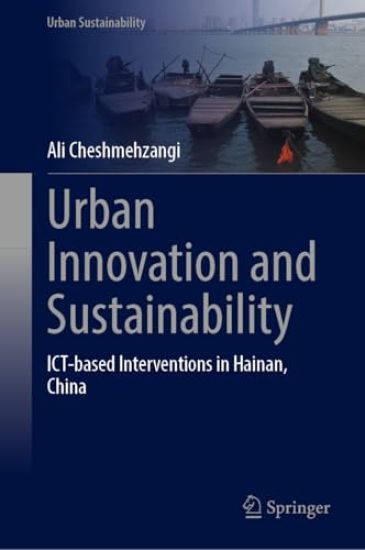
This book is a collection of context-specific ICT-based interventions to achieve sustainability from various perspectives or dimensions. The book is based on case study examples in the strategic context of Hainan, South China. Five ICT-based pilot studies were conducted, surveyed, and analysed in 2021 and 2022. The studies explore impacts on four main sustainability dimensions of environmental, social, economic, and institutional. Several ICT-based interventions are suggested to enhance environmental protection, promote health and support in elderly communities, augment social media for place promotion, create online opportunities for local markets, and help boost local tourism industries. Urban Innovation and Sustainability is an attempt to highlight the positive side of ICT-based interventions in cities and communities. We also need to note the negative side of ICTs, which are partly covered in the case study examples. However, this book focuses on case study pilot examples to promote the nexus between innovation and sustainability. It is essential to explore opportunities that could later be scaled up, transform practices, and help develop context-specific policies. In essence, paradigm shifts, infrastructural development, and human-centric development are necessary. This book’s findings interest scholars/researchers, practitioners, and authorities in various disciplines of urbanism, urban/human geography, urban studies, planning, innovation, and sustainability.
People-Centered Innovation

People-Centered Innovation

Ali Cheshmehzangi; Nicholas You; Zaheer Allam; Bao-Jie He

Springer Nature Switzerland AG
2025
sidottu
As a follow-up to the book titled “Harnessing Urban Innovation to Unlock the Sustainable Development Goals”, this collection examines transformative urban solutions through 15 internationally recognized case studies submitted to the 6th Guangzhou International Award for Urban Innovation in 2023. It provides valuable insights into the driving forces behind sustainable urban development, aligning closely with the United Nations' Sustainable Development Goals (SDGs). The main focus of the book is on people-centered approaches to urban innovation, demonstrating how grassroots initiatives can tackle complex urban challenges and contribute to global sustainability targets. Each case study presents innovative strategies implemented by communities worldwide, showcasing how local actions can greatly impact sustainability and resilience. The varied examples highlight a spectrum of urban issues, including affordable housing, sustainable transportation, climate adaptation, and social inclusion, reflecting the diverse nature of urban innovation. Key Features and Benefits: Varied Global Case Studies: The book includes fifteen case studies from different regions, each presenting unique solutions to urban challenges. These examples illustrate how various cultures and contexts address common problems, providing a rich array of ideas and practices. This makes it an essential resource for urban planners, policymakers, and community leaders seeking inspiration and guidance.Emphasis on People-Centered Approaches: The book emphasizes the importance of people-centered innovation, which prioritizes community involvement and local knowledge. By focusing on how local populations engage with and drive urban initiatives, the book highlights the significance of inclusivity and participatory processes in achieving sustainable outcomes. Alignment with the SDGs: Each case study is connected to specific Sustainable Development Goals, demonstrating how local actions contribute to global sustainability objectives. The book illustrates how grassroots initiatives address key areas such as poverty reduction, climate action, and sustainable cities and communities, highlighting the critical role of local efforts in achieving the broader SDG agenda.
Big Data Analytics for Smart Transport and Healthcare Systems

Big Data Analytics for Smart Transport and Healthcare Systems

Saeid Pourroostaei Ardakani; Ali Cheshmehzangi

SPRINGER VERLAG, SINGAPORE
2024
nidottu
This book aims to introduce big data solutions in urban sustainability applications—mainly smart transportation and healthcare systems. It focuses on machine learning techniques and data processing approaches which have the capacity to handle/process huge, live, and complex datasets in real-time transportation and healthcare applications. For this, several state-of-the-art data processing approaches including data pre-processing, classification, regression, and clustering are introduced, tested, and evaluated to highlight their benefits and constraints where data is sensitive, real-time, and/or semi-structured.
China Under Construction

China Under Construction

Ali Cheshmehzangi; Tian Tang

SPRINGER VERLAG, SINGAPORE
2024
sidottu
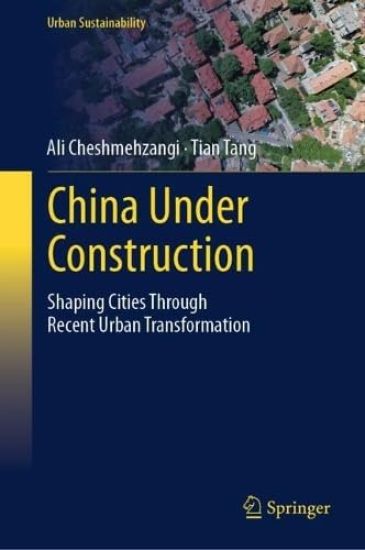
As a continuation of our award-winning book, ‘China's City Cluster Development in the Race to Carbon Neutrality’ and our recent book, ‘30 Years of Urban Change in China’s 10 Core Cities’, this book delves into China's recent progress in reshaping its cities through holistic urban transformation strategies. Building on our previous work, we expand our focus to explore the latest developments in urbanization, examining how recent strategies and policies have influenced cities and cityscapes across China and beyond. It is evident that China is reshaping its cities through a dynamic interplay of policy reforms, technological advancements, and creative planning. The late 20th and early 21st centuries have seen a sharp increase in urbanization, with a particular focus on the development of smart, resilient, and sustainable cities. Through a thorough examination of case study examples that have undergone significant recent change, this book investigates how these goals are being achieved. ‘China Under Construction: Shaping Cities through Recent Urban Transformation’ offers a thorough overview of China's current urban transformation efforts, highlighting both the achievements and the ongoing challenges, through case studies and in-depth evaluations. We hope to provide insightful information about the real-world applications of urban strategies and their wider implications for China's future urban landscape by concentrating on ten selected cities. This extension of our earlier research emphasizes how critical it is to view urban transformation as a complex process influencing social dynamics, technology, infrastructure, and environmental sustainability, among other facets of city life and urbanization.
30 Years of Urban Change in China’s 10 Core Cities

30 Years of Urban Change in China’s 10 Core Cities

Ali Cheshmehzangi; Tian Tang

SPRINGER VERLAG, SINGAPORE
2024
sidottu
As a continuation of our award-winning book ‘China's City Cluster Development in the Race to Carbon Neutrality’, this book covers China's major urban changes over the last 30 years. Unlike the previous book, where we highlighted regional development issues, this book explicitly explores the city cases, particularly those that are considered core cities in China. Based on the micro-historical analysis of China's urbanization trend and urban development patterns, we see that cities in China have played a significant role in driving the country's sustainable development agenda. In a way, they have had both positive and negative impacts on achieving sustainable development. We look at these last three decades mainly because, during this period, China's urbanization became unprecedented, the central government made several pledges and signed many international agreements related to sustainable development, and China grew rapidly to become the second global economic power. Aligned with the overarching Belt and Road Initiative (BRI) and the more recent Carbon Neutrality Plan (CNP), Chinese core cities played a significant part in regional development, urban-rural relations, industrial clustering, the development of free trade zones and special economic zones, etc. All these recent developments are due to China's ongoing urbanization and urban development. ‘30 Years of Urban Change in China’s 10 Core Cities’ is a mapping study of China's core cities and their changes over three decades of rapid urbanization, urban growth, and economic development. We explicitly highlight each selected city’s development trends, sustainable development plans, and major strategies. In this Volume (out of our two ‘connected’ volumes), we summarise lessons learnt from all 10 case study examples, and we hope they can be utilized for other developing and rapidly urbanizing nations. We expect this book to be a valuable resource for local governments, authorities, urban planners, urbanists, practitioners, developers, and urban researchers. We trust China is no longer a developing country, and much of these recent progressions are owed to its structured urban development strategies, robust governmental structure, and progressive attitude to growth and development. Hence, this topic coverage at the point where China's urbanization is shifting to high-quality urbanization is essential and beneficial to multiple stakeholders.
Climate and Social Justice

Climate and Social Justice

Zaheer Allam; Ali Cheshmehzangi; David S. Jones

SPRINGER VERLAG, SINGAPORE
2024
nidottu
This book offers a fresh perspective on the historical, economic, and cultural foundations of capitalism, cities, and climate change. By exploring the intersection of urbanization, consumerism, and colonialism, the book sheds new light on the origins and development of the economic system that has shaped our world today. What sets this book apart is its unique approach, which challenges conventional wisdom and offers new insights into the complex relationships between culture, politics, and economics. The book is intended for readers interested in the history and evolution of capitalism and its impact on society, as well as those interested in climate change and urbanization. The content level is accessible for general readers, yet sophisticated enough to appeal to scholars and researchers. The two most important features of the book are its fresh perspective on the history of mercantilism and its examination of the economic landscape of cities and climate change. By reading this book, readers gain a deeper understanding of the complex relationships between urbanization, colonialism, and economic policies, and their impact on contemporary society.