Kirjojen hintavertailu. Mukana 12 595 353 kirjaa ja 12 kauppaa.

Kirjailija

Ali Kaveh

Kirjat ja teokset yhdessä paikassa: 21 kirjaa, julkaisuja vuosilta 2013-2025, suosituimpien joukossa Swift Analysis of Civil Engineering Structures Using Graph Theory Methods. Vertaile teosten hintoja ja tarkista saatavuus suomalaisista kirjakaupoista.

21 kirjaa

Kirjojen julkaisuhaarukka 2013-2025.

Swift Analysis of Civil Engineering Structures Using Graph Theory Methods

Swift Analysis of Civil Engineering Structures Using Graph Theory Methods

Ali Kaveh; Hossein Rahami; Iman Shojaei

Springer Nature Switzerland AG
2021
nidottu
This book proposes and validates a number of methods and shortcuts for frugal engineers, which will allow them to significantly reduce the computational costs for analysis and reanalysis and, as a result, for structural design processes. The need for accuracy and speed in analyzing structural systems with ever-tighter design tolerances and larger numbers of elements has been relentlessly driving forward research into methods that are capable of analyzing structures at a reasonable computational cost. The methods presented are of particular value in situations where the analysis needs to be repeated hundreds or even thousands of times, as is the case with the optimal design of structures using different metaheuristic algorithms. Featuring methods that are not only applicable to skeletal structures, but by extension also to continuum models, this book will appeal to researchers and engineers involved in the computer-aided analysis and design of structures, and to software developers in this field. It also serves as a complement to previous books on the optimal analysis of large-scale structures utilizing concepts of symmetry and regularity. Further, its novel application of graph-theoretical methods is of interest to mathematicians.
Swift Analysis of Civil Engineering Structures Using Graph Theory Methods

Swift Analysis of Civil Engineering Structures Using Graph Theory Methods

Ali Kaveh; Hossein Rahami; Iman Shojaei

Springer Nature Switzerland AG
2020
sidottu
This book proposes and validates a number of methods and shortcuts for frugal engineers, which will allow them to significantly reduce the computational costs for analysis and reanalysis and, as a result, for structural design processes. The need for accuracy and speed in analyzing structural systems with ever-tighter design tolerances and larger numbers of elements has been relentlessly driving forward research into methods that are capable of analyzing structures at a reasonable computational cost. The methods presented are of particular value in situations where the analysis needs to be repeated hundreds or even thousands of times, as is the case with the optimal design of structures using different metaheuristic algorithms. Featuring methods that are not only applicable to skeletal structures, but by extension also to continuum models, this book will appeal to researchers and engineers involved in the computer-aided analysis and design of structures, and to software developers in this field. It also serves as a complement to previous books on the optimal analysis of large-scale structures utilizing concepts of symmetry and regularity. Further, its novel application of graph-theoretical methods is of interest to mathematicians.
Chaotic Meta-heuristic Algorithms for Optimal Design of Structures

Chaotic Meta-heuristic Algorithms for Optimal Design of Structures

Ali Kaveh; Hossein Yousefpoor

Springer International Publishing AG
2025
nidottu
In this book, various chaos maps are embedded in eleven efficient and well-known metaheuristics and a significant improvement in the optimization results is achieved. The two basic steps of metaheuristic algorithms consist of exploration and exploitation. The imbalance between these stages causes serious problems for metaheuristic algorithms, which are immature convergence and stopping in local optima. Chaos maps with chaotic jumps can save algorithms from being trapped in local optima and lead to convergence toward global optima. Embedding these maps in the exploration phase, exploitation phase, or both simultaneously corresponds to three efficient and useful scenarios. By creating competition between different modes and increasing diversity in the search space and creating sudden jumps in the search phase, improvements are achieved for chaotic algorithms. Four Chaotic Algorithms, including Chaotic Cyclical Parthenogenesis Algorithm, Chaotic Water Evaporation Optimization, Chaotic Tug-of-War Optimization, and Chaotic Thermal Exchange Optimization are developed.
Applications of Artificial Neural Networks and Machine Learning in Civil Engineering
This book provides different applications of artificial neural networks (ANN) and machine learning (ML) in various problems of material science, structural optimization, and optimal analysis of structures in twenty two chapters. Nowadays, the world has witnessed unprecedented advances in technology and computer science. Artificial intelligence has emerged as a top field captivating global attention. Often referred to as AI, this technology stands apart from other disciplines as it aims to design machines and systems that exhibit intelligence, learn autonomously, and make decisions akin to humans. In order to comprehend the impact of this innovation, one must delve into the workings of artificial intelligence, trace its historical evolution from inception to the present day, and explore its diverse applications in domains like medicine, transportation, broadcasting, and marketing. Artificial intelligence introduces a transformative element to our reality, fostering significant breakthroughs and innovations. The book is used in any AI course, in particular, in Civil Engineering. It is also utilized in various fields of Industrial Civil Engineering.
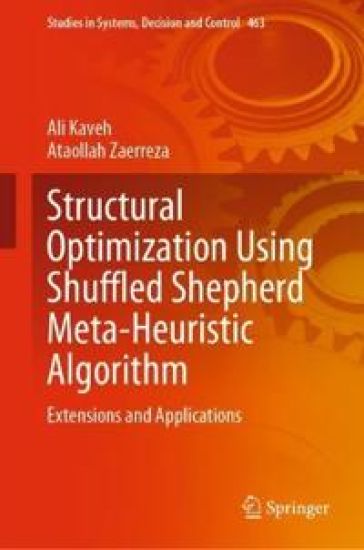
Structural Optimization Using Shuffled Shepherd Meta-Heuristic Algorithm

Structural Optimization Using Shuffled Shepherd Meta-Heuristic Algorithm

Ali Kaveh; Ataollah Zaerreza

Springer International Publishing AG
2024
nidottu
This book presents the so-called Shuffled Shepherd Optimization Algorithm (SSOA), a recently developed meta-heuristic algorithm by authors. There is always limitations on the resources to be used in the construction. Some of the resources used in the buildings are also detrimental to the environment. For example, the cement utilized in making concrete emits carbon dioxide, which contributes to the global warming. Hence, the engineers should employ resources efficiently and avoid the waste. In the traditional optimal design methods, the number of trials and errors used by the designer is limited, so there is no guarantee that the optimal design can be found for structures. Hence, the deigning method should be changed, and the computational algorithms should be employed in the optimum design problems. The gradient-based method and meta-heuristic algorithms are the two different types of methods used to find the optimal solution. The gradient-based methods require gradientinformation. Also, these can easily be trapped in the local optima in the nonlinear and complex problems. Therefore, to overcome these issues, meta-heuristic algorithms are developed. These algorithms are simple and can get out of the local optimum by easy means. However, a single meta-heuristic algorithm cannot find the optimum results in all types of optimization problems. Thus, civil engineers develop different meta-heuristic algorithms for their optimization problems. Different applications of the SSOA are provided. The simplified and enhanced versions of the SSOA are also developed and efficiently applied to various optimization problems in structures. Another special feature of this book consists of the use of graph theoretical force method as analysis tool, in place of traditional displacement approach. This has reduced the computational time to a great extent, especially for those structures having smaller DSI compared to the DKI. New framework is also developed for reliability-based design of frame structures. The algorithms are clearly stated such that they can simply be implemented and utilized in practice and research.
Chaotic Meta-heuristic Algorithms for Optimal Design of Structures

Chaotic Meta-heuristic Algorithms for Optimal Design of Structures

Ali Kaveh; Hossein Yousefpoor

Springer International Publishing AG
2024
sidottu
In this book, various chaos maps are embedded in eleven efficient and well-known metaheuristics and a significant improvement in the optimization results is achieved. The two basic steps of metaheuristic algorithms consist of exploration and exploitation. The imbalance between these stages causes serious problems for metaheuristic algorithms, which are immature convergence and stopping in local optima. Chaos maps with chaotic jumps can save algorithms from being trapped in local optima and lead to convergence toward global optima. Embedding these maps in the exploration phase, exploitation phase, or both simultaneously corresponds to three efficient and useful scenarios. By creating competition between different modes and increasing diversity in the search space and creating sudden jumps in the search phase, improvements are achieved for chaotic algorithms. Four Chaotic Algorithms, including Chaotic Cyclical Parthenogenesis Algorithm, Chaotic Water Evaporation Optimization, Chaotic Tug-of-War Optimization, and Chaotic Thermal Exchange Optimization are developed.
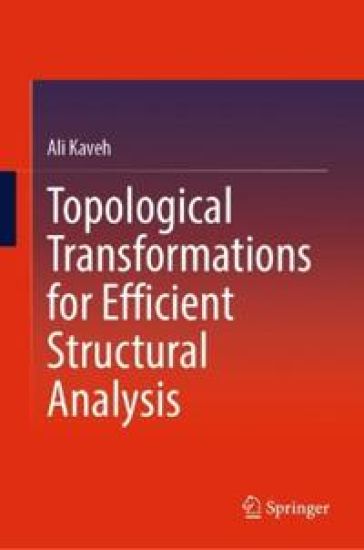
Topological Transformations for Efficient Structural Analysis

Topological Transformations for Efficient Structural Analysis

Ali Kaveh

Springer International Publishing AG
2023
nidottu
The author has published many papers and books on topological transformations for optimal analysis of structures, where many methods and algorithms are developed. However, the framework of this book generalizes many concepts and makes the previously developed methods conceptually more attractive. The aim of the present work is two folds. On the one hand, it shows to mathematicians how the apparently pure mathematical concepts can be applied to the efficient solution of problems in structural mechanics. On the other hand, it illustrates to engineers the important role of mathematical concepts for the solution of engineering problems. The present framework provides efficient means for looking at problems and developing ideas by transforming the models (structures, networks, systems) to other spaces (higher dimension, lower dimension, or identical dimension) to simplify the problems.This book is attractive for those who look at the deeper aspects of concepts and helps the readerto develop his/her own ideas. In general, it opens a new horizon for improving the existing methods in civil, mechanical, and electrical engineering.
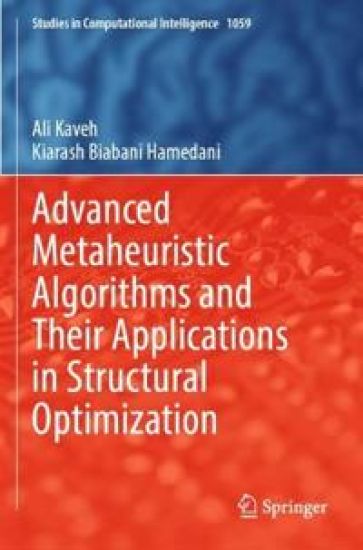
Advanced Metaheuristic Algorithms and Their Applications in Structural Optimization

Advanced Metaheuristic Algorithms and Their Applications in Structural Optimization

Ali Kaveh; Kiarash Biabani Hamedani

Springer International Publishing AG
2023
nidottu
The main purpose of the present book is to develop a general framework for population-based metaheuristics based on some basic concepts of set theory. The idea of the framework is to divide the population of individuals into subpopulations of identical sizes. Therefore, in each iteration of the search process, different subpopulations explore the search space independently but simultaneously. The framework aims to provide a suitable balance between exploration and exploitation during the search process. A few chapters containing algorithm-specific modifications of some state-of-the-art metaheuristics are also included to further enrich the book. The present book is addressed to those scientists, engineers, and students who wish to explore the potentials of newly developed metaheuristics. The proposed metaheuristics are not only applicable to structural optimization problems but can also be used for other engineering optimization applications. The book is likely to be of interest to a wide range of engineers and students who deal with engineering optimization problems.
Structural Optimization Using Shuffled Shepherd Meta-Heuristic Algorithm

Structural Optimization Using Shuffled Shepherd Meta-Heuristic Algorithm

Ali Kaveh; Ataollah Zaerreza

Springer International Publishing AG
2023
sidottu
This book presents the so-called Shuffled Shepherd Optimization Algorithm (SSOA), a recently developed meta-heuristic algorithm by authors. There is always limitations on the resources to be used in the construction. Some of the resources used in the buildings are also detrimental to the environment. For example, the cement utilized in making concrete emits carbon dioxide, which contributes to the global warming. Hence, the engineers should employ resources efficiently and avoid the waste. In the traditional optimal design methods, the number of trials and errors used by the designer is limited, so there is no guarantee that the optimal design can be found for structures. Hence, the deigning method should be changed, and the computational algorithms should be employed in the optimum design problems. The gradient-based method and meta-heuristic algorithms are the two different types of methods used to find the optimal solution. The gradient-based methods require gradientinformation. Also, these can easily be trapped in the local optima in the nonlinear and complex problems. Therefore, to overcome these issues, meta-heuristic algorithms are developed. These algorithms are simple and can get out of the local optimum by easy means. However, a single meta-heuristic algorithm cannot find the optimum results in all types of optimization problems. Thus, civil engineers develop different meta-heuristic algorithms for their optimization problems. Different applications of the SSOA are provided. The simplified and enhanced versions of the SSOA are also developed and efficiently applied to various optimization problems in structures. Another special feature of this book consists of the use of graph theoretical force method as analysis tool, in place of traditional displacement approach. This has reduced the computational time to a great extent, especially for those structures having smaller DSI compared to the DKI. New framework is also developed for reliability-based design of frame structures. The algorithms are clearly stated such that they can simply be implemented and utilized in practice and research.
Topological Transformations for Efficient Structural Analysis

Topological Transformations for Efficient Structural Analysis

Ali Kaveh

Springer International Publishing AG
2022
sidottu
The author has published many papers and books on topological transformations for optimal analysis of structures, where many methods and algorithms are developed. However, the framework of this book generalizes many concepts and makes the previously developed methods conceptually more attractive. The aim of the present work is two folds. On the one hand, it shows to mathematicians how the apparently pure mathematical concepts can be applied to the efficient solution of problems in structural mechanics. On the other hand, it illustrates to engineers the important role of mathematical concepts for the solution of engineering problems. The present framework provides efficient means for looking at problems and developing ideas by transforming the models (structures, networks, systems) to other spaces (higher dimension, lower dimension, or identical dimension) to simplify the problems.This book is attractive for those who look at the deeper aspects of concepts and helps the readerto develop his/her own ideas. In general, it opens a new horizon for improving the existing methods in civil, mechanical, and electrical engineering.
Advanced Metaheuristic Algorithms and Their Applications in Structural Optimization

Advanced Metaheuristic Algorithms and Their Applications in Structural Optimization

Ali Kaveh; Kiarash Biabani Hamedani

Springer International Publishing AG
2022
sidottu
The main purpose of the present book is to develop a general framework for population-based metaheuristics based on some basic concepts of set theory. The idea of the framework is to divide the population of individuals into subpopulations of identical sizes. Therefore, in each iteration of the search process, different subpopulations explore the search space independently but simultaneously. The framework aims to provide a suitable balance between exploration and exploitation during the search process. A few chapters containing algorithm-specific modifications of some state-of-the-art metaheuristics are also included to further enrich the book. The present book is addressed to those scientists, engineers, and students who wish to explore the potentials of newly developed metaheuristics. The proposed metaheuristics are not only applicable to structural optimization problems but can also be used for other engineering optimization applications. The book is likely to be of interest to a wide range of engineers and students who deal with engineering optimization problems.
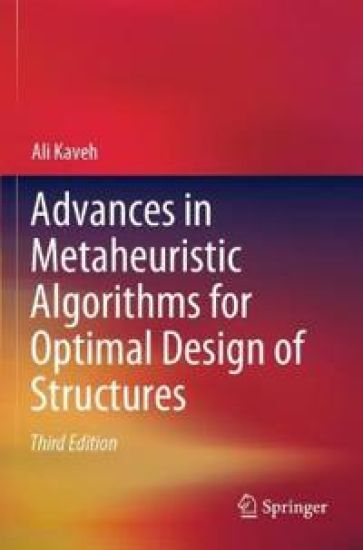
Advances in Metaheuristic Algorithms for Optimal Design of Structures
This book presents efficient metaheuristic algorithms for optimal design of structures. Many of these algorithms are developed by the author and his graduate students, consisting of Particle Swarm Optimization, Charged System Search, Magnetic Charged System Search, Field of Forces Optimization, Democratic Particle Swarm Optimization, Dolphin Echolocation Optimization, Colliding Bodies Optimization, Ray Optimization. These are presented together with algorithms which are developed by other authors and have been successfully applied to various optimization problems. These consist of Partical Swarm Optimization, Big Band Big Crunch algorithm, Cuckoo Search Optimization, Imperialist Competitive Algorithm and Chaos Embedded Metaheuristic Algorithm. Finally a multi-objective Optimization is presented to Solve large scale structural problems based on the Charged System Search algorithm, In the second edition seven new chapters are added consisting of Enhance colliding bodies optimization, Global sensitivity analysis, Tug of War Optimization, Water evaporation optimization, Vibrating System Optimization and Cyclical Parthenogenesis Optimization algorithm. In the third edition, five new chapters are included consisting of the recently developed algorithms. These are Shuffled Shepherd Optimization Algorithm, Set Theoretical Shuffled Shepherd Optimization Algorithm, Set Theoretical Teaching-Learning-Based Optimization Algorithm, Thermal Exchange Metaheuristic Optimization Algorithm, and Water Strider Optimization Algorithm and Its Enhancement. The concepts and algorithm presented in this book are not only applicable to optimization of skeletal structure, finite element models, but can equally be utilized for optimal design of other systems such as hydraulic and electrical networks.
Metaheuristic Optimization Algorithms in Civil Engineering: New Applications

Metaheuristic Optimization Algorithms in Civil Engineering: New Applications

Ali Kaveh; Armin Dadras Eslamlou

Springer Nature Switzerland AG
2021
nidottu
This book discusses the application of metaheuristic algorithms in a number of important optimization problems in civil engineering. Advances in civil engineering technologies require greater accuracy, efficiency and speed in terms of the analysis and design of the corresponding systems. As such, it is not surprising that novel methods have been developed for the optimal design of real-world systems and models with complex configurations and large numbers of elements. This book is intended for scientists, engineers and students wishing to explore the potential of newly developed metaheuristics in practical problems. It presents concepts that are not only applicable to civil engineering problems, but can also used for optimizing problems related to mechanical, electrical, and industrial engineering. It is an essential resource for civil, mechanical and electrical engineers who use optimization methods for design, aswell as for students and researchers interested in structural optimization.
Advances in Metaheuristic Algorithms for Optimal Design of Structures
This book presents efficient metaheuristic algorithms for optimal design of structures. Many of these algorithms are developed by the author and his graduate students, consisting of Particle Swarm Optimization, Charged System Search, Magnetic Charged System Search, Field of Forces Optimization, Democratic Particle Swarm Optimization, Dolphin Echolocation Optimization, Colliding Bodies Optimization, Ray Optimization. These are presented together with algorithms which are developed by other authors and have been successfully applied to various optimization problems. These consist of Partical Swarm Optimization, Big Band Big Crunch algorithm, Cuckoo Search Optimization, Imperialist Competitive Algorithm and Chaos Embedded Metaheuristic Algorithm. Finally a multi-objective Optimization is presented to Solve large scale structural problems based on the Charged System Search algorithm, In the second edition seven new chapters are added consisting of Enhance colliding bodies optimization, Global sensitivity analysis, Tug of War Optimization, Water evaporation optimization, Vibrating System Optimization and Cyclical Parthenogenesis Optimization algorithm. In the third edition, five new chapters are included consisting of the recently developed algorithms. These are Shuffled Shepherd Optimization Algorithm, Set Theoretical Shuffled Shepherd Optimization Algorithm, Set Theoretical Teaching-Learning-Based Optimization Algorithm, Thermal Exchange Metaheuristic Optimization Algorithm, and Water Strider Optimization Algorithm and Its Enhancement. The concepts and algorithm presented in this book are not only applicable to optimization of skeletal structure, finite element models, but can equally be utilized for optimal design of other systems such as hydraulic and electrical networks.
Metaheuristic Optimization Algorithms in Civil Engineering: New Applications

Metaheuristic Optimization Algorithms in Civil Engineering: New Applications

Ali Kaveh; Armin Dadras Eslamlou

Springer Nature Switzerland AG
2020
sidottu
This book discusses the application of metaheuristic algorithms in a number of important optimization problems in civil engineering. Advances in civil engineering technologies require greater accuracy, efficiency and speed in terms of the analysis and design of the corresponding systems. As such, it is not surprising that novel methods have been developed for the optimal design of real-world systems and models with complex configurations and large numbers of elements. This book is intended for scientists, engineers and students wishing to explore the potential of newly developed metaheuristics in practical problems. It presents concepts that are not only applicable to civil engineering problems, but can also used for optimizing problems related to mechanical, electrical, and industrial engineering. It is an essential resource for civil, mechanical and electrical engineers who use optimization methods for design, aswell as for students and researchers interested in structural optimization.
Metaheuristics: Outlines, MATLAB Codes and Examples

Metaheuristics: Outlines, MATLAB Codes and Examples

Ali Kaveh; Taha Bakhshpoori

Springer Nature Switzerland AG
2019
sidottu
The book presents eight well-known and often used algorithms besides nine newly developed algorithms by the first author and his students in a practical implementation framework. Matlab codes and some benchmark structural optimization problems are provided. The aim is to provide an efficient context for experienced researchers or readers not familiar with theory, applications and computational developments of the considered metaheuristics. The information will also be of interest to readers interested in application of metaheuristics for hard optimization, comparing conceptually different metaheuristics and designing new metaheuristics.
Meta-heuristic Algorithms for Optimal Design of Real-Size Structures

Meta-heuristic Algorithms for Optimal Design of Real-Size Structures

Ali Kaveh; Majid Ilchi Ghazaan

Springer Nature Switzerland AG
2019
nidottu
The contributions in this book discuss large-scale problems like the optimal design of domes, antennas, transmission line towers, barrel vaults and steel frames with different types of limitations such as strength, buckling, displacement and natural frequencies. The authors use a set of definite algorithms for the optimization of all types of structures. They also add a new enhanced version of VPS and information about configuration processes to all chapters. Domes are of special interest to engineers as they enclose a maximum amount of space with a minimum surface and have proven to be very economical in terms of consumption of constructional materials. Antennas and transmission line towers are the one of the most popular structure since these steel lattice towers are inexpensive, strong, light and wind resistant. Architects and engineers choose barrel vaults as viable and often highly suitable forms for covering not only low-cost industrial buildings, warehouses, large-span hangars,indoor sports stadiums, but also large cultural and leisure centers. Steel buildings are preferred in residential as well as commercial buildings due to their high strength and ductility particularly in regions which are prone to earthquakes.
Meta-heuristic Algorithms for Optimal Design of Real-Size Structures

Meta-heuristic Algorithms for Optimal Design of Real-Size Structures

Ali Kaveh; Majid Ilchi Ghazaan

Springer International Publishing AG
2018
sidottu
The contributions in this book discuss large-scale problems like the optimal design of domes, antennas, transmission line towers, barrel vaults and steel frames with different types of limitations such as strength, buckling, displacement and natural frequencies. The authors use a set of definite algorithms for the optimization of all types of structures. They also add a new enhanced version of VPS and information about configuration processes to all chapters. Domes are of special interest to engineers as they enclose a maximum amount of space with a minimum surface and have proven to be very economical in terms of consumption of constructional materials. Antennas and transmission line towers are the one of the most popular structure since these steel lattice towers are inexpensive, strong, light and wind resistant. Architects and engineers choose barrel vaults as viable and often highly suitable forms for covering not only low-cost industrial buildings, warehouses, large-span hangars,indoor sports stadiums, but also large cultural and leisure centers. Steel buildings are preferred in residential as well as commercial buildings due to their high strength and ductility particularly in regions which are prone to earthquakes.
Optimal Analysis of Structures by Concepts of Symmetry and Regularity
Optimal analysis is defined as an analysis that creates and uses sparse, well-structured and well-conditioned matrices. The focus is on efficient methods for eigensolution of matrices involved in static, dynamic and stability analyses of symmetric and regular structures, or those general structures containing such components. Powerful tools are also developed for configuration processing, which is an important issue in the analysis and design of space structures and finite element models. Different mathematical concepts are combined to make the optimal analysis of structures feasible. Canonical forms from matrix algebra, product graphs from graph theory and symmetry groups from group theory are some of the concepts involved in the variety of efficient methods and algorithms presented. The algorithms elucidated in this book enable analysts to handle large-scale structural systems by lowering their computational cost, thus fulfilling the requirement for faster analysis and design of future complex systems. The value of the presented methods becomes all the more evident in cases where the analysis needs to be repeated hundreds or even thousands of times, as for the optimal design of structures by different metaheuristic algorithms. The book is of interest to anyone engaged in computer-aided analysis and design and software developers in this field. Though the methods are demonstrated mainly through skeletal structures, continuum models have also been added to show the generality of the methods. The concepts presented are not only applicable to different types of structures but can also be used for the analysis of other systems such as hydraulic and electrical networks.