Kirjojen hintavertailu. Mukana 12 556 998 kirjaa ja 12 kauppaa.
Kirjailija
Alice Dunbar Nelson
Kirjat ja teokset yhdessä paikassa: 23 kirjaa, julkaisuja vuosilta 1916-2026, suosituimpien joukossa Graphic Classics Volume 22: African-American Classics. Vertaile teosten hintoja ja tarkista saatavuus suomalaisista kirjakaupoista.
Mukana myös kirjoitusasut: Alice Dunbar-Nelson, Alice Dunbar -Nelson
Langston Hughes; Zora Neale Hurston; W.E.B. Du Bois; Jean Toomer; Paul Laurence Dunbar; Alice Dunbar Nelson; Charles W. Chesnutt; Claude McKay; Florence Lewis Bentley; Frances E.W. Harper
African-American Classics presents great stories and poems from America"s earliest Black writers, illustrated by contemporary African-American artists. Featured are "Two Americans" by Florence Lewis Bentley, "The Goophered Grapevine" by Charles W. Chesnutt, "Becky" by Jean Toomer, two short plays by Zora Neale Hurston, and six more tales of humor and tragedy. Also featured are eleven poems, including Langston Hughes" "Danse Africaine" and "The Negro", plus Paul Laurence Dunbar"s "Sympathy" ("I know why the caged bird sings...")
From the landmark writer and activist of the Harlem Renaissance, Alice Dunbar Nelson, A Carnival Jangle is a powerful and unflinching collection of stories inspired by her early life in New Orleans. These are stories of love, betrayal and fortitude, peopled by an array of vivid characters whose dramas bring alive Creole life in the late nineteenth century. Women must walk a tightrope between respectability and desire in stories such as 'A Carnival Jangle'. Poverty is tackled head-on in the moving stories 'M'sieu Fortier’s Violin' and 'Little Miss Sophie', whilst Catholic faith mixed with Creole spirituality looms large in 'The Goodness of St. Rocque and Odalie'. This series of pocket-sized paperbacks celebrates the art of the short story and marks Macmillan Collector's Library's 10th anniversary. Each contains a curated selection of short stories from a literary giant: Katherine Mansfield, Arthur Conan Doyle, Edgar Allen Poe, Oscar Wilde, Jane Austen, James, Joyce, Virginia Woolf, Alice Dunbar Nelson, F. Scott Fitzgerald and Rabindranath Tagore.
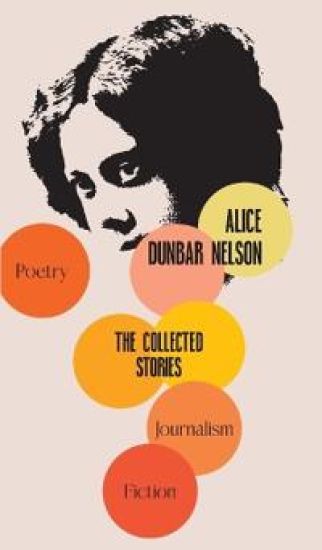
The Collected Stories by Alice Dunbar-Nelson presents a powerful collection of the acclaimed writer's most compelling and thought-provoking short stories. Known for her keen insights into race, gender, and identity, Dunbar-Nelson's work captures the complexities of the African American experience with grace and depth. This collection showcases her masterful storytelling, exploring themes of love, struggle, and resilience, making it an essential read for those seeking to understand the rich layers of American literature.
The Collected Stories by Alice Dunbar-Nelson presents a powerful collection of the acclaimed writer's most compelling and thought-provoking short stories. Known for her keen insights into race, gender, and identity, Dunbar-Nelson's work captures the complexities of the African American experience with grace and depth. This collection showcases her masterful storytelling, exploring themes of love, struggle, and resilience, making it an essential read for those seeking to understand the rich layers of American literature.
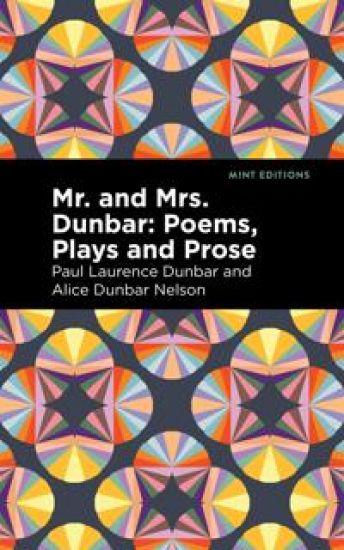
Mr. and Mrs. Dunbar: Poems, Plays and Prose (2021) is a selection of the literary works of Paul Laurence Dunbar and Alice Dunbar Nelson. With such collections Oak and Ivy (1892) and Majors and Minors (1896), Paul Laurence Dunbar earned a reputation as an artist with a powerful vision of faith and perseverance who sought to capture and examine the diversity of the African American experience. In her poems, plays, and stories, Alice Dunbar Nelson explores themes of class, prejudice, faith, and romance while paying particular attention to the phenomenon of racial passing. Mr. and Mrs. Dunbar: Poems, Plays and Prose includes dozen of their individual literary works in a compact, carefully curated volume. Throughout his oeuvre, Dunbar explores the role of the poet in society, grounding each poem within his identity as a Black man in America. In “Frederick Douglass,” an elegy written for the occasion of the great man’s passing, Dunbar makes clear the consequences of pride and defiance in a nation built by slaves: “He dared the lightning in the lightning’s track, / And answered thunder with his thunder back.” In “The Place Where the Rainbow Ends,” Dunbar, perhaps reflecting on his proximity to death, provides a simple song with a cautionary, utopian vision of hope and happiness: “Oh, many have sought it, / And all would have bought it, / With the blood we so recklessly spend; / But none has uncovered, / The gold, nor discovered / The spot at the rainbow’s end.” Meditative and bittersweet, Dunbar rejects wealth and power as a means of achieving fulfillment, looking instead to establish an inner peace for himself that he might “find without motion, / The place where the rainbow ends,” a place “[w]here care shall be quiet, / And love shall run riot, / And [he] shall find wealth in [his] friends.” Whether a vision of heaven or of the possibility of peace on earth, this poem finds echoes across Dunbar’s penultimate volume. Nearing death at such a young age, he prepares himself to lose the life he had fought so hard to achieve, a life devoted to reaching the hearts and minds of others. Mine Eyes Have Seen (1918) is a one-act play by Alice Dunbar Nelson. Published in The Crisis, the influential journal of the NAACP, Mine Eyes Have Seen is a brutal portrait of race and identity in twentieth century America. Exploring themes of violence, faith, patriotism, and economic struggle, Dunbar Nelson crafts a poignant and unforgettable work of fiction. In the short story “The Goodness of St. Rocque,” Manuela is a popular young woman of status in New Orleans’ thriving Creole community. Like many women her age, she hopes to marry a handsome and successful man. Setting her sights on Theophile, she prepares to be courted in the traditional manner of her people. When rumor gets out that he has been spending time with Claralie, a beautiful blonde, Manuela is forced to seek supernatural assistance. With a beautifully designed cover and professionally typeset manuscript, this edition of Mr. and Mrs. Dunbar: Poems, Plays and Prose is a classic of African American literature reimagined for modern readers.
Mr. and Mrs. Dunbar: Poems, Plays and Prose (2021) is a selection of the literary works of Paul Laurence Dunbar and Alice Dunbar Nelson. With such collections Oak and Ivy (1892) and Majors and Minors (1896), Paul Laurence Dunbar earned a reputation as an artist with a powerful vision of faith and perseverance who sought to capture and examine the diversity of the African American experience. In her poems, plays, and stories, Alice Dunbar Nelson explores themes of class, prejudice, faith, and romance while paying particular attention to the phenomenon of racial passing. Mr. and Mrs. Dunbar: Poems, Plays and Prose includes dozen of their individual literary works in a compact, carefully curated volume. Throughout his oeuvre, Dunbar explores the role of the poet in society, grounding each poem within his identity as a Black man in America. In “Frederick Douglass,” an elegy written for the occasion of the great man’s passing, Dunbar makes clear the consequences of pride and defiance in a nation built by slaves: “He dared the lightning in the lightning’s track, / And answered thunder with his thunder back.” In “The Place Where the Rainbow Ends,” Dunbar, perhaps reflecting on his proximity to death, provides a simple song with a cautionary, utopian vision of hope and happiness: “Oh, many have sought it, / And all would have bought it, / With the blood we so recklessly spend; / But none has uncovered, / The gold, nor discovered / The spot at the rainbow’s end.” Meditative and bittersweet, Dunbar rejects wealth and power as a means of achieving fulfillment, looking instead to establish an inner peace for himself that he might “find without motion, / The place where the rainbow ends,” a place “[w]here care shall be quiet, / And love shall run riot, / And [he] shall find wealth in [his] friends.” Whether a vision of heaven or of the possibility of peace on earth, this poem finds echoes across Dunbar’s penultimate volume. Nearing death at such a young age, he prepares himself to lose the life he had fought so hard to achieve, a life devoted to reaching the hearts and minds of others. Mine Eyes Have Seen (1918) is a one-act play by Alice Dunbar Nelson. Published in The Crisis, the influential journal of the NAACP, Mine Eyes Have Seen is a brutal portrait of race and identity in twentieth century America. Exploring themes of violence, faith, patriotism, and economic struggle, Dunbar Nelson crafts a poignant and unforgettable work of fiction. In the short story “The Goodness of St. Rocque,” Manuela is a popular young woman of status in New Orleans’ thriving Creole community. Like many women her age, she hopes to marry a handsome and successful man. Setting her sights on Theophile, she prepares to be courted in the traditional manner of her people. When rumor gets out that he has been spending time with Claralie, a beautiful blonde, Manuela is forced to seek supernatural assistance. With a beautifully designed cover and professionally typeset manuscript, this edition of Mr. and Mrs. Dunbar: Poems, Plays and Prose is a classic of African American literature reimagined for modern readers.
Alice Dunbar Nelson (1875-1935) was an American journalist, political activist, and poet. She belonged to the first generation of black southerners born into freedom following the Civil War and gained acclaim for her poetry, columns, dramas, and stories. This fantastic book contains a brand new collection of Nelson's best and most famous short stories. Contents include: "Alice Dunbar Nelson", "Introduction", "Violets", "The Woman", "Ten Minutes' Musing", "In Unconsciousness", "Titee", "Anarchy Alley", "A Carnival Jangle", "The Maiden's Dream", "A Story of Vengeance", "The Unknown Life of Jesus Christ", "In our Neighborhood", "Little Miss Sophie", "At Eventide", "The Bee-Man", etc. They are highly recommended for those with an interest in American history and literature. Read & Co. Classics are proudly publishing this brand new collection of classic short stories now complete with a specially-commissioned new biography of the author.
A stunning short story collection that takes the reader into the heart of the Creole community in late-nineteenth-century New Orleans, from a key poet and journalist of the Harlem Renaissance. This vivid collection transports readers to New Orleans, from the delights of Mardi Gras on Bourbon Street, to the quiet Bayou where lovers meet, and to fish fries on the shore of the Mississippi Sound. Alice Dunbar-Nelson focuses the struggles and joys of Creole community in these intimate stories featuring unforgettable characters. In the title story, Manuela goes to the Wizened One for a charm when her lover strays; in Little Miss Sophie, a young woman goes to extreme lengths to get back a ring she pawned; in M'sieu Fortier's Violin, a talented musician finds himself at a loss when his greatest passion is taken away; and in The Fisherman of Pass Christian, Annette, an aspiring opera singer, falls in love with a beautiful fisherman who has a secret. Together these stories provide a unique window into the world of everyday Creole Louisians in the late nineteenth century. This edition also features a selection of stories from Dunbar-Nelson's first collection, Violets and Other Tales, which beautifully compliment The Goodness of St. Rocque and give the reader a deeper understanding of Nelson's career.
Paul Laurence Dunbar: Poet Laureate of the Negro Race (1914) is a pamphlet on American poet Paul Laurence Dunbar. Published nearly a decade after Dunbar’s untimely death, Paul Laurence Dunbar: Poet Laureate of the Negro Race contains three essays on his life, his legacy, and his importance to American literature. Born in Dayton, Ohio, Dunbar was the son of parents who were emancipated from slavery in Kentucky during the American Civil War. In 1893, he published Oak and Ivy, a debut collection of poetry blending traditional verse and poems written in dialect. Over the next decade, Dunbar wrote ten more books of poetry, four collections of short stories, four novels, a musical, and a play. In his brief career, Dunbar became a respected advocate for civil rights, participating in meetings and helping to found the American Negro Academy. His lyrics for In Dahomey (1903) formed the centerpiece to the first musical written and performed by African Americans on Broadway, and many of his essays and poems appeared in the nation’s leading publications, including Harper’s Weekly and the Saturday Evening Post. Diagnosed with tuberculosis in 1900, however, Dunbar’s health steadily declined in his final years, leading to his death at the age of thirty-three while at the height of his career. Alice Dunbar-Nelson, in her essay, reflects on the man her husband was, a “true poet” who “reached out and groped for the bigness of the out-of-doors, divining all that he was afterwards to see.” In his piece, classical scholar William S. Scarborough argues for Dunbar’s importance to African American history as “the first among ten million,” as a man who “did not inherit, [but] originated.” To close the collection, Reverdy C. Ransom briefly eulogizes a poet whose loss was a blow to a people and a nation, whose name must be spoken in the same breath as Wheatley, Browning, Shelley, Burns, Keats, and Poe. More than anything, Paul Laurence Dunbar: Poet Laureate of the Negro Race cements his reputation as an artist with a powerful vision of faith and perseverance who sought to capture and examine the diversity of the African American experience. With a beautifully designed cover and professionally typeset manuscript, this edition of Paul Laurence Dunbar: Poet Laureate of the Negro Race is a classic of African American literature reimagined for modern readers.
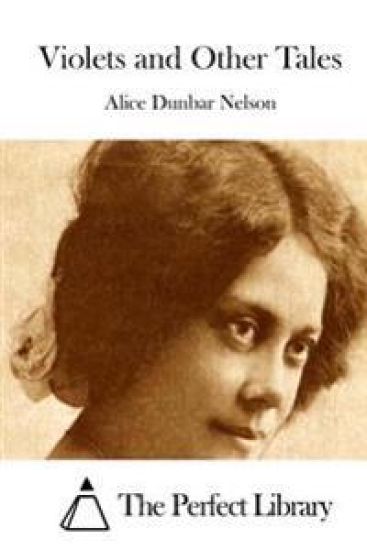
Violets and Other Tales (1895) is a collection of stories and poems by Alice Dunbar Nelson. While working as a teacher in New Orleans, Dunbar Nelson published Violets and Other Tales through The Monthly Review, embarking on a career as a leading black writer of the early twentieth century. “If perchance this collection of idle thoughts may serve to while away an hour or two, or lift for a brief space the load of care from someone's mind, their purpose has been served—the author is satisfied.” With this entreaty, Alice Dunbar Nelson introduces her first published work with a humility and caution rather unfitting an author of such immense talent. In this collection of reflections, vignettes, short stories, and poems, Dunbar Nelson proves herself as a writer immersed in the classics, yet capable of illuminating the events and concerns of her own generation. In “A Carnival Jangle,” she provides a vibrant description of New Orleans during its legendary season of celebration. “The Unknown Life of Jesus Christ” presents itself as a newly discovered manuscript revealing Jesus’ travels in India. Dunbar Nelson’s brilliant prose style is nicely juxtaposed with her expertise in poetic form as she moves fluidly from love poems to religious verses, narrative poems to heartbreaking elegies. Only twenty years old when this collection was published, Dunbar Nelson executes a brilliant debut to a long and distinguished career in literature. With a beautifully designed cover and professionally typeset manuscript, this edition of Alice Dunbar Nelson’s Violets and Other Tales is a classic of African American literature reimagined for modern readers.
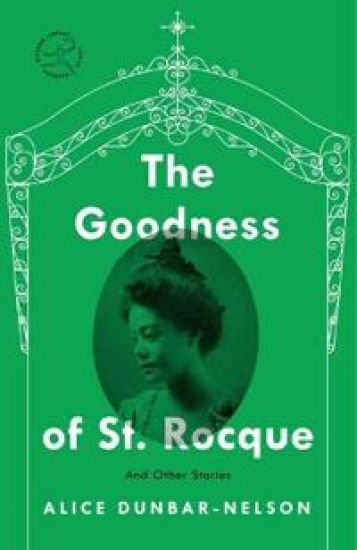
The Goodness of St. Rocque and Other Stories (1899) is a short story collection by Alice Dunbar Nelson. Dedicated to her husband at the time, the poet Paul Laurence Dunbar, The Goodness of St. Rocque and Other Stories is a collection of brief vignettes of Creole society in nineteenth century New Orleans. Exploring themes of prejudice, faith, and romance, Dunbar Nelson crafts a poignant and unforgettable work of fiction. Manuela is a popular young woman of status in New Orleans’ thriving Creole community. Like many women her age, she hopes to marry a handsome and successful man. Setting her sights on Theophile, she prepares to be courted in the traditional manner of her people. When rumor gets out that he has been spending time with Claralie, a beautiful blonde, Manuela is forced to seek supernatural assistance. She visits a seer known as the Wizened One, who advises her to pray at the altar of St. Rocque. Determined and unwilling to give up what she believes will be her destiny, she makes her way to the church to begin her first novena. The Goodness of St. Rocque and Other Stories collects fourteen stories of life in New Orleans’ Creole community by Alice Dunbar Nelson, a leading figure of the Harlem Renaissance. With a beautifully designed cover and professionally typeset manuscript, this edition of Alice Dunbar Nelson’s The Goodness of St. Rocque and Other Stories is a classic of African American literature reimagined for modern readers.
Mine Eyes Have Seen (1918) is a one-act play by Alice Dunbar Nelson. Published in The Crisis, the influential journal of the NAACP, Mine Eyes Have Seen is a brutal portrait of race and identity in twentieth century America. Exploring themes of violence, faith, patriotism, and economic struggle, Dunbar Nelson crafts a poignant and unforgettable work of fiction. When their father, a successful black man, is lynched by vengeful white neighbors, Dan, Chris, and Lucy flee north with their mother. They reach the city safely, but their mother soon dies from heartbreak and exhaustion, leaving her children to fend for themselves. Dan, the eldest, manages to support his siblings until an accident at the factory leaves him crippled. This forces Chris, a bitter young man, to take financial responsibility for the family. When the United States enters the First World War, authorizing the Selective Service Act of 1917, Chris is drafted into the military. Despite his hesitation and distrust of a government that allowed his father to be murdered with impunity, he soon comes under the influence of patriotic white neighbors who encourage him to sacrifice his life for the nation. With a beautifully designed cover and professionally typeset manuscript, this edition of Alice Dunbar Nelson’s Mine Eyes Have Seen is a classic of African American literature reimagined for modern readers.
Alice Dunbar Nelson (1875-1935) was an American journalist, political activist, and poet. She belonged to the first generation of black southerners born into freedom following the Civil War and gained acclaim for her poetry, columns, dramas, and stories. This fantastic book contains a brand new collection of Nelson's best and most famous poetry, highly recommended for poetry lovers with an interest in the history of slavery in the United States. Contents include: "Three Thoughts", "A Plaint", "Impressions", "You Inez ", "Legend of the Newspaper", "Amid the Roses", "Paul to Virginia - Fin De Siecle", "In Memoriam", "At Bay St. Louis", "I Sit and Sew", "New Year's Day", "Farewell", "If I had Known", "Chalmetle", "The Idler", etc. Other notable works by this author include: "As in a Looking Glass" (1926-1930), "The Colored United States" (1924), and "People of Color in Louisiana" (1917). Ragged Hand is proudly publishing this brand new collection of classic poetry with a specially-commissioned biography of the author.
These works are as multi-faceted as their writer, who was a teacher, editor, public speaker, and campaign manager of mixed white, black, and Indian descent, born in New Orleans in 1875. Her pieces span the full range of literary genres - from short stories, fluffy romances, mystical novelettes, poetry, and autobiographical pieces to realistic racial drama, astute political commentary and essays, and lively newspaper columns - all bearing the stamp of her own cultural ambivalence and complex personality.