Kirjojen hintavertailu. Mukana 12 152 606 kirjaa ja 12 kauppaa.

Kirjailija

Alice Strang

Kirjat ja teokset yhdessä paikassa: 6 kirjaa, julkaisuja vuosilta 2012-2026, suosituimpien joukossa S. J. Peploe. Vertaile teosten hintoja ja tarkista saatavuus suomalaisista kirjakaupoista.

6 kirjaa

Kirjojen julkaisuhaarukka 2012-2026.

Modern Scottish Women: Painters and Sculptures 1885-1965

Modern Scottish Women: Painters and Sculptures 1885-1965

Alice Strang

National Galleries of Scotland
2018
nidottu
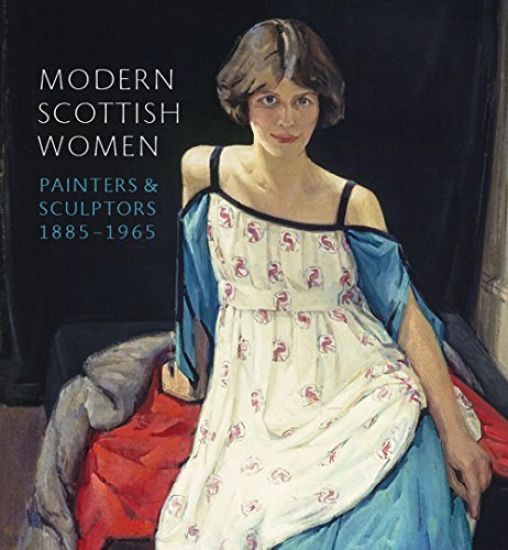
This revelatory book concentrates on Scottish women painters and sculptors from 1885, when Fra Newbery became Director of the Glasgow School of Art, until 1965, the year of Anne Redpath's death. It explores the experience and context of the artists and their place in Scottish art history, in terms of training, professional opportunities and personal links within the Scottish art world. Celebrated painters including Joan Eardley, Margaret Macdonald Mackintosh and Phoebe Anna Traquair are examined alongside lesser-known figures such as Phyllis Bone, Dorothy Johnstone and Norah Neilson Gray, in order to look afresh at the achievements of Scottish women artists of the modern period. The book accompanies a show which will be held at the Scottish National Gallery of Modern Art Two in Edinburgh from 7 November 2015 to 26 June 2016.
A New Era

A New Era

Alice Strang

National Galleries of Scotland
2017
nidottu
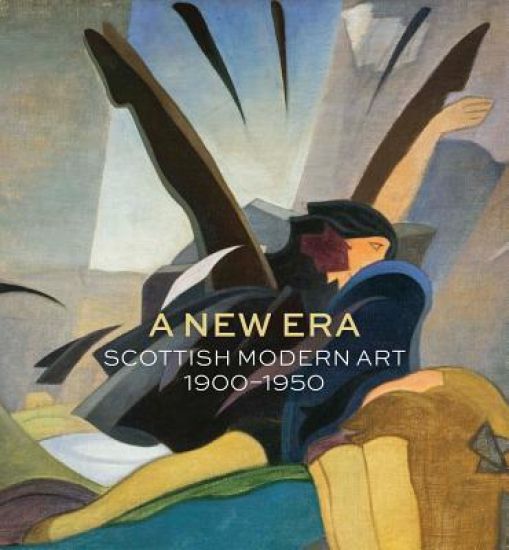
Revealing an alternative story of modern Scottish art, A New Era examines the most experimental work of Scottish artists during the first half of the 20th century. It challenges the accepted view of the dominance of the Scottish Colourists and uncovers the hitherto little-known progressive Scottish art world. Through these works, we can see the commitment of Scottish artists to the progress of art through their engagement and interpretation of the great movements of European modern art, from Fauvism and Expressionism, to Cubism, Art Deco, abstraction and Surrealism, among others. Looking at the most advanced work of high-profile artists such as William Gillies and Stanley Cursiter, and lesser-known talents, like Tom Pow and Edwin G. Lucas, A New Era takes its name from the group established in Edinburgh in 1939 to show surreal and abstract work by its members.
F.C.B. Cadell

F.C.B. Cadell

Alice Strang

National Galleries of Scotland
2017
pokkari
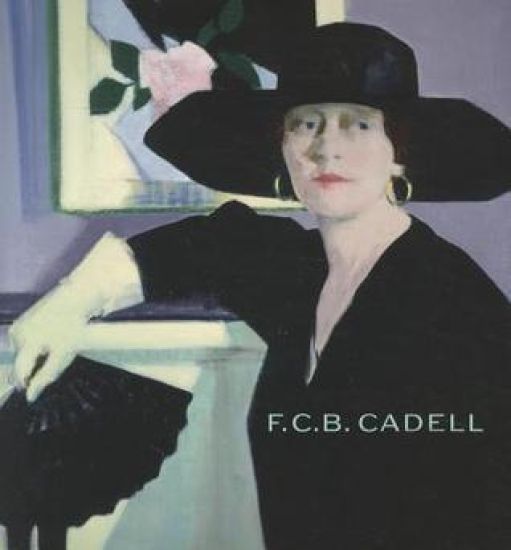
F.C.B. Cadell was born in Edinburgh, where he lived for most of his life, and studied in Paris and Munich. This book illustrates many of the works for which Cadell is celebrated, including stylish portrayals of Edinburgh New Town interiors, vibrantly coloured, daringly simplified still lives of the 1920s, and evocative landscapes of the Scottish west coast and the south of France. Based on new research, a special section concentrates on Cadell's relationship with Iona, where he painted nearly every year from 1912 until 1935. The book accompanies a major exhibition at the Scottish National Gallery of Modern Art, the first retrospective exhibition of Cadell's work held at a public gallery since 1942.
J.D. Fergusson

J.D. Fergusson

Alice Strang; Elizabeth Cumming; Sheila McGregor

National Galleries of Scotland
2013
nidottu
J. D. Fergusson (1874-1961) is one of the four artists known as the Scottish Colourists, the others being F. C. B. Cadell, G. L. Hunter and S. J. Peploe. Fergusson was born in Leith, and was essentially a self-taught artist. In Paris 1907 he became involved with the avant-garde scene and exhibited at the progressive Salon d'Automne. More than any of his Scottish contemporaries, Fergusson assimilated and developed the latest developments in French painting. In 1913 Fergusson met the dance pioneer Margaret Morris (1891-1980). Morris's creative dance movements and her students continued to be one of Fergusson's main sources of inspiration and models. In 1929 Fergusson returned to Paris where he was involved with the Anglo-American art circles. Most summers were spent in the south of France where Morris held her celebrated Summer Schools. The couple moved to Glasgow in 1939 being founder members of the New Art Club and of its off-shoot the New Scottish Group. This book reasserts the artist's place at the forefront of British modernism.
S. J. Peploe

S. J. Peploe

Alice Strang; Frances Fowle; Elizabeth Cumming

Yale University Press
2012
sidottu
Samuel John Peploe (1871-1935) was the eldest of the four artists popularly known as "The Scottish Colourists." Born in Edinburgh, he was drawn to France and returned to paint there frequently, moving in 1910 to Paris, where he moved in artistic avant-garde circles. His painting style gave way to a more contemporary and expressive approach, and he used rich colors applied with more structured brushstrokes. In 1912 Peploe returned to Edinburgh and slowly began to build a successful career as an exhibiting artist. From around 1914 until his death, he sought to paint the perfect still life. A modest selection of props, including roses or tulips, fans, books, fruits, and Chinese vases, were carefully placed in infinite varieties on patterned drapery. In 1929 he explained: "There is so much in mere objects, flowers, leaves, jugs, what not—colors, forms, relation—I can never see mystery coming to an end." This beautifully illustrated book accompanies a major exhibition devoted to the artist in his home town of Edinburgh, and throws fascinating new light on Peploe's life, on the influence of France on his work, and on his posthumous reputation.Published in association with The National Galleries of ScotlandExhibition Schedule:Scottish National Gallery of Modern Art, Edinburgh(11/03/12-06/23/13)
The Scottish Colourists

The Scottish Colourists

Alice Strang

NATIONAL GALLERIES OF SCOTLAND
2026
nidottu
Samuel John Peploe, John Duncan Fergusson, George Leslie Hunter and Francis Campbell Boileau Cadell - a set of radical artists who enlivened the Scottish art scene with the fresh vibrancy of French Fauvist colours. Despite only exhibiting together on three occasions in their lifetimes, and the term ‘The Scottish Colourists’ being coined retrospectively, the four shared much common ground. They were all born in Scotland in the 1870s, and at various different times each visited France to experience the burgeoning avant-garde scene, returning to Scotland brimming with new ideas. The influence of French painting - from Manet to the Impressionists, Matisse to Cezanne – stayed with them all. Each of the Scottish Colourists achieved recognition during their lifetimes but fell out of favour by the Second World War, before being rediscovered in the 1950s. By the 1980s, they were widely recognised for their contribution to Scottish art, breathing new life into the scene, and leading the way for the next generation of artists. This book brings together both popular and rarely seen imagery along with new research to take a fresh look at the fascinating and international lives of the four artists.