Kirjojen hintavertailu. Mukana 12 163 703 kirjaa ja 12 kauppaa.

Kirjailija

Alireza Nader

Kirjat ja teokset yhdessä paikassa: 12 kirjaa, julkaisuja vuosilta 2010-2019, suosituimpien joukossa The Next Supreme Leader. Vertaile teosten hintoja ja tarkista saatavuus suomalaisista kirjakaupoista.

12 kirjaa

Kirjojen julkaisuhaarukka 2010-2019.

Modern Political Warfare

Modern Political Warfare

Linda Robinson; Todd C Helmus; Raphael S Cohen; Alireza Nader; Andrew Radin; Madeline Magnuson; Katya Migacheva

RAND
2018
nidottu
This report analyzes political warfare as it is practiced today by both state and nonstate actors, and provides detailed recommendations regarding the most effective ways that the U.S. government, along with its allies and partners, can respond to or engage in this type of conflict to achieve U.S. ends and protect U.S. interests.
The Next Supreme Leader

The Next Supreme Leader

Alireza Nader; David E. Thaler; S. R. Bohandy

RAND
2011
pokkari
As the commander in chief and highest political authority in Iran, the current Supreme Leader, Ayatollah Ali Khamenei, has played a critical role in the direction of the Islamic Republic of Iran. This monograph identifies three key factors that will shape succession of the next Supreme Leader and outlines five alternative scenarios for the post-Khamenei era. It situates all of this within the context of the June 2009 election.
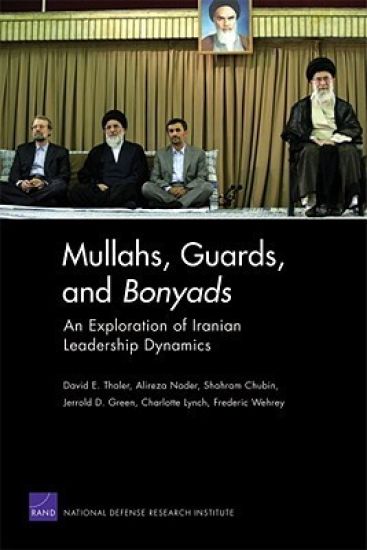
Mullahs, Guards, and Bonyads: an Exploration of Iranian Leadership Dynamics

Mullahs, Guards, and Bonyads: an Exploration of Iranian Leadership Dynamics

David E. Thaler; Alireza Nader; Shahram Chubin; Jerrold D. Green; Charlotte Lynch

RAND
2010
pokkari
The U.S. ability to "read" the Iranian regime and formulate appropriate policies has been weakened by lack of access to the country and by the opacity of decisionmaking in Tehran. To improve understanding of Iran's political system, the authors describe Iranian strategic culture; investigate Iran's informal networks, formal government institutions, and personalities; assess the impact of elite behavior on Iranian policy; and summarize key trends.
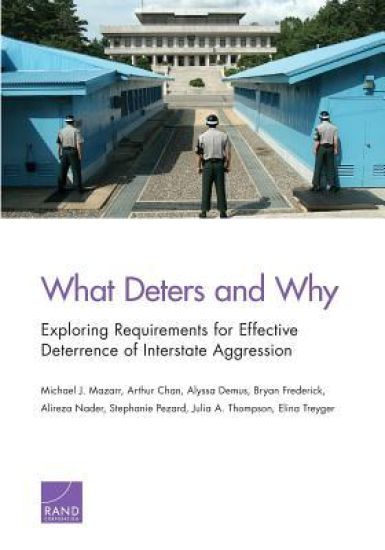
What Deters and Why

What Deters and Why

Michael J Mazarr; Arthur Chan; Alyssa Demus; Bryan Frederick; Alireza Nader; Stephanie Pezard; Julia A Thompson; Elina Treyger

RAND
2019
nidottu
The challenge of deterring territorial aggression is taking on renewed importance, yet discussion of it has lagged in U.S. military and strategy circles. The authors aim to provide a fresh look, with two primary purposes: to review established concepts about deterrence, and to provide a framework for evaluating the strength of deterrent relationships. They focus on a specific type of deterrence: extended deterrence of interstate aggression.
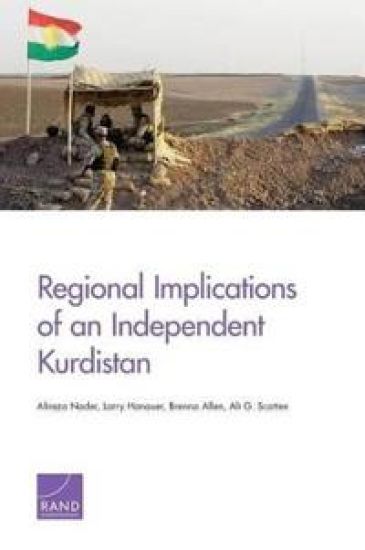
Regional Implications of an Independent Kurdistan

Regional Implications of an Independent Kurdistan

Alireza Nader; Larry Hanauer; Brenna Allen; Ali G. Scotten

RAND
2016
pokkari
This report examines the potential implications of an independent Kurdistan in northern Iraq. Specifically, the authors analyze the interests of three key regional neighbors the Iraqi central government, Turkey, and Iran and explore policies each actor may pursue in response to possible Kurdish independence under different scenarios."
China in the Middle East

China in the Middle East

Andrew Scobell; Alireza Nader

RAND
2016
pokkari
This study examines China s interests in the Middle East and assesses China s economic, political, and security activities there to determine whether China has a strategy toward the region and what such a strategy means for the United States. The study focuses on China s relations with two of its key partners in the Middle East: Saudi Arabia and Iran."
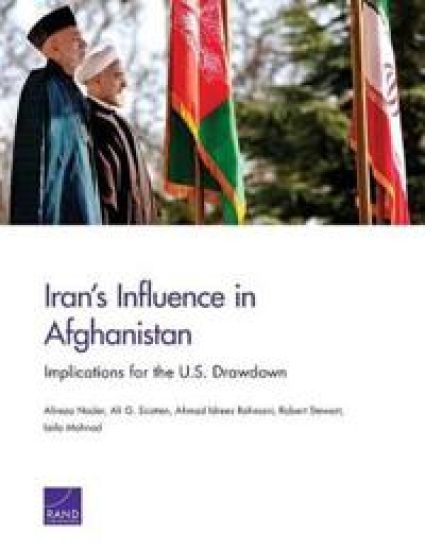
Iran's Influence in Afghanistan

Iran's Influence in Afghanistan

Alireza Nader; Ali G. Scotten; Ahmad Idrees Rahmani; Robert Stewart; Leila Mahnad

RAND
2014
pokkari
This study explores Iranian influence in Afghanistan and the implications for the United States after most U.S. forces depart Afghanistan in 2014. Iran has substantial economic, political, cultural, and religious leverage in Afghanistan. Although Iran will attempt to shape a post-2014 Afghanistan, Iran and the United States share core interests: to prevent the country from again becoming dominated by the Taliban and a safe haven for al Qaeda.
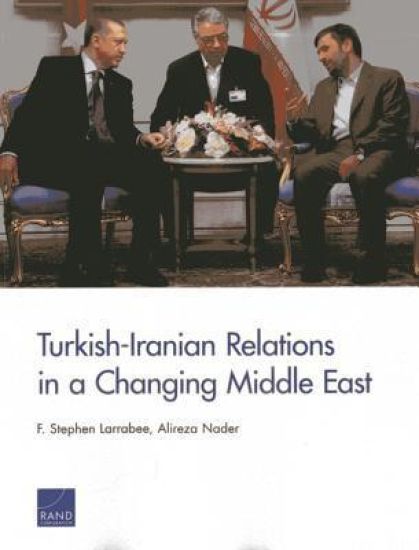
Turkish-Iranian Relations in a Changing Middle East

Turkish-Iranian Relations in a Changing Middle East

F. Stephen Larrabee; Alireza Nader

RAND
2013
pokkari
Turkey and Iran tend to be rivals rather than close partners, despite sharing certain economic and security interests. For instance, Turkey supports the opposition in Syria, while Iran supports the regime. Turkey is further concerned about a possible nuclear arms race in the Middle East. U.S. and Turkish interests in the region closely overlap, but the United States should not expect Turkey to follow its policy toward Iran unconditionally.
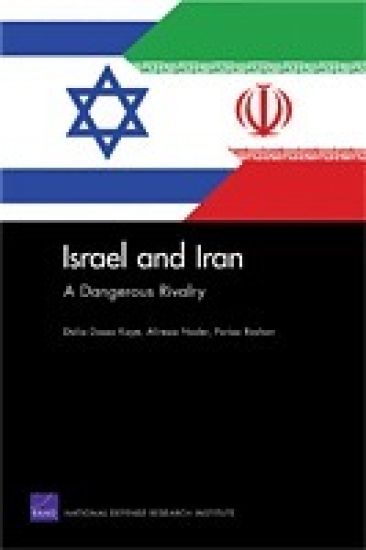
Israel and Iran

Israel and Iran

Dalia Dassa Kaye; Alireza Nader; Parisa Roshan

RAND
2012
pokkari
Israel and Iran have come to view each other as direct regional rivals. The two countries are not natural rivals; they have shared geopolitical interests, which led to years of cooperation both before and after the 1979 Islamic revolution. But their rivalry has intensified recently, particularly with the rise of fundamentalist leaders in Iran and the prospect of a nuclear-armed Iran posing grave strategic and ideological challenges to Israel.
Using Social Media to Gauge Iranian Public Opinion and Mood After the 2009 Election

Using Social Media to Gauge Iranian Public Opinion and Mood After the 2009 Election

Sara Beth Elson; Douglas Yeung; Parisa Roshan; S. R. Bohandy; Alireza Nader

RAND
2012
pokkari
In the months after the contested Iranian presidential election in June 2009, Iranians spoke out about the election using Twitter--a social media service that allows users to send short text messages, called tweets, with relative anonymity. This research analyzed more than 2.5 million tweets discussing the Iran election that were sent in the nine months following it, drawing insights into Iranian public and mood in the post-election period.
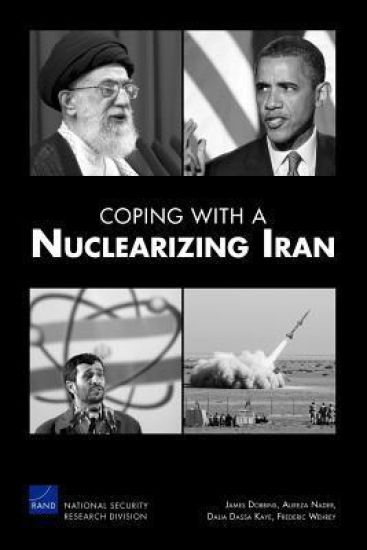
Coping with a Nuclearizing Iran

Coping with a Nuclearizing Iran

James Dobbins; Alireza Nader; Dalia Dassa Kaye; Frederic M. Wehrey

RAND
2011
pokkari
It is not inevitable that Iran will acquire nuclear weapons or even that it will gain the capacity to quickly produce them. U.S. and even Israeli analysts continually push their estimates for such an event further into the future. Nevertheless, absent a change in Iranian policy, it is reasonable to assume that, some time in the coming decade, Iran will acquire such a capability. Most recent scholarly studies have also focused on how to prevent Iran from acquiring nuclear weapons. Other, less voluminous writing looks at what to do after Iran becomes a nuclear power. What has so far been lacking is a policy framework for dealing with Iran before, after, and, indeed, during its crossing of the nuclear threshold. This monograph attempts to fill that gap by providing a midterm strategy for dealing with Iran that neither begins nor ends at the point at which Tehran acquires a nuclear weapon capability. It proposes an approach that neither acquiesces to a nuclear-armed Iran nor refuses to admit the possibility - indeed, the likelihood - of this occurring.
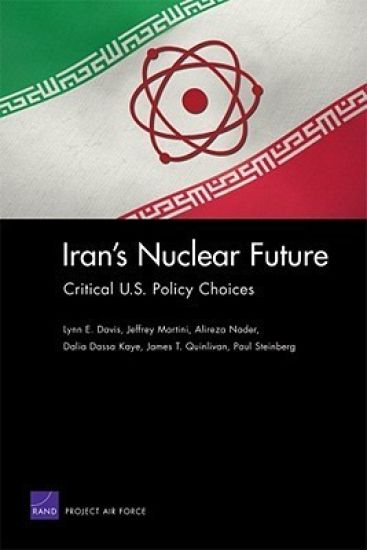
Iran's Nuclear Future: Critical U.S. Policy Choices

Iran's Nuclear Future: Critical U.S. Policy Choices

Lynn E. Davis; Jeffrey Martini; Alireza Nader; Dalia Dassa Kaye; James T. Quinlivan; Paul Steinberg

RAND
2011
pokkari
As Iran's nuclear program evolves, U.S. decisionmakers will confront a series of critical policy choices involving complex considerations and policy trade-offs. These policy choices could involve dissuading Iran from developing nuclear weapons; deterring Iran from using its nuclear weapons, if it were to acquire them; and, reassuring U.S. regional partners. The U.S. Air Force will need to prepare to carry out whatever policies are chosen.