Kirjojen hintavertailu. Mukana 12 595 353 kirjaa ja 12 kauppaa.

Kirjailija

Alison Bailey

Kirjat ja teokset yhdessä paikassa: 5 kirjaa, julkaisuja vuosilta 1989-2023, suosituimpien joukossa Posterity and Strategic Policy. Vertaile teosten hintoja ja tarkista saatavuus suomalaisista kirjakaupoista.

5 kirjaa

Kirjojen julkaisuhaarukka 1989-2023.

The Weight of Whiteness

The Weight of Whiteness

Alison Bailey

BLOOMSBURY PUBLISHING PLC
2023
nidottu
“Check your privilege” is not a request for a simple favor. It asks white people to consider the painful dimensions of what they have been socialized to ignore. Alison Bailey’s The Weight of Whiteness: A Feminist Engagement with Privilege, Race, and Ignorance examines how whiteness misshapes our humanity, measuring the weight of whiteness in terms of its costs and losses to collective humanity. People of color feel the weight of whiteness daily. The resistant habits of whiteness and its attendant privileges, however, make it difficult for white people to feel the damage. White people are more comfortable thinking about white supremacy in terms of what privilege does for them, rather than feeling what it does to them. The first half of the book focuses on the overexposed side of white privilege, the side that works to make the invisible and intangible structures of power more visible and tangible. Bailey discusses the importance of understanding privileges intersectionally, the ignorance-preserving habits of “white talk,” and how privilege and ignorance circulate in educational settings. The second part invites white readers to explore the underexposed side of white dominance, the weightless side that they would rather not feel. The final chapters are powerfully autobiographical. Bailey engages readers with a deeply personal account of what it means to hold space with the painful weight of whiteness in her own life. She also offers a moving account of medicinal genealogies, which helps to engage the weight she inherits from her settler colonial ancestors. The book illustrates how the gravitational pull of white ignorance and comfort are stronger than the clean pain required for collective liberation. The stakes are high: Failure to hold the weight of whiteness ensures that white people will continue to blow the weight of historical trauma through communities of color.
The Weight of Whiteness

The Weight of Whiteness

Alison Bailey

Lexington Books
2021
sidottu
“Check your privilege” is not a request for a simple favor. It asks white people to consider the painful dimensions of what they have been socialized to ignore. Alison Bailey’s The Weight of Whiteness: A Feminist Engagement with Privilege, Race, and Ignorance examines how whiteness misshapes our humanity, measuring the weight of whiteness in terms of its costs and losses to collective humanity. People of color feel the weight of whiteness daily. The resistant habits of whiteness and its attendant privileges, however, make it difficult for white people to feel the damage. White people are more comfortable thinking about white supremacy in terms of what privilege does for them, rather than feeling what it does to them. The first half of the book focuses on the overexposed side of white privilege, the side that works to make the invisible and intangible structures of power more visible and tangible. Bailey discusses the importance of understanding privileges intersectionally, the ignorance-preserving habits of “white talk,” and how privilege and ignorance circulate in educational settings. The second part invites white readers to explore the underexposed side of white dominance, the weightless side that they would rather not feel. The final chapters are powerfully autobiographical. Bailey engages readers with a deeply personal account of what it means to hold space with the painful weight of whiteness in her own life. She also offers a moving account of medicinal genealogies, which helps to engage the weight she inherits from her settler colonial ancestors. The book illustrates how the gravitational pull of white ignorance and comfort are stronger than the clean pain required for collective liberation. The stakes are high: Failure to hold the weight of whiteness ensures that white people will continue to blow the weight of historical trauma through communities of color.
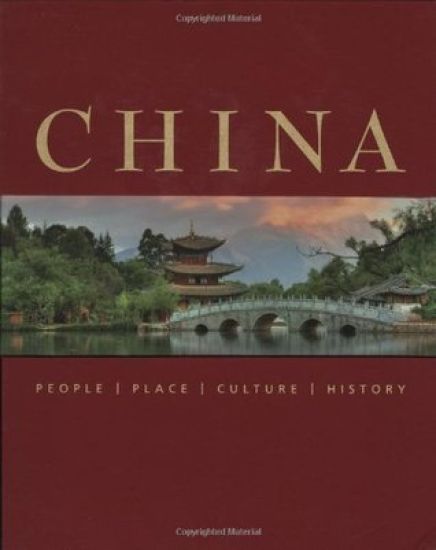
Kina; folk, landskap, kultur, historie

Kina; folk, landskap, kultur, historie

Alison Bailey; Ronald G. Knapp; Peter Neville-Hadley; J.A.G. Roberts; Nancy S. Steinhardt

Pegasus
2008
sidottu
Boken byr på en visuell reise gjennom en av verdens store nasjoner. 1000 illustrasjoner dekker land og folk, kultur og historie. Sammen med teksten gis en fremstilling av et gammelt rike og en moderne stormakt. Boken inneholder blant annet en oversikt over fremveksten og undergangen til store dynastier, via Mao Zedongs æra til dagens Kina; utsnitt fra hverdagslivet ved hjelp av fotografier og intervjuer med dagens kinesere, informasjon om eldre tradisjoner og ideer som danner grunnlaget for det moderne Kina, og et kapittel som omhandler gammel og moderne arkitektur, offentlig og privat; som gir landet dets særpreg. Med register
Positive Strategies for Students with Behavior Problems

Positive Strategies for Students with Behavior Problems

Daniel B. Crimmins; Anne F. Farrell; Philip W. Smith; Alison Bailey

Brookes Publishing Co
2007
nidottu
This book is a guide to behavior management for students (both typically developing and special needs) with behavior problems that cannot be resolved through usual methods or are not affected by school-wide Positive Behavior Support (PBS). This manual helps school teams develop appropriate and effective individualized solutions for students with persistent behavior problems. It presents a systematic method called Positive Strategies, which centers on two major activities, conducting Functional Behavioral Assessments (FBAs) and developing Behavior Intervention Plans (BIPs). ""Positive Strategies"" is grounded in the literature on PBS, central to which is the notion than understanding the function of problem behavior (i.e., how it meets a child's needs in some way) is fundamental to successfully addressing it.
Posterity and Strategic Policy

Posterity and Strategic Policy

Alison Bailey

University Press of America
1989
nidottu
In Posterity and Strategic Policy, a moral evaluation of current nuclear policy options, the author argues that policymakers have not paid enough attention to the moral questions that surround debate on the use of nuclear weapons. If we are to succeed in balancing our moral interest and our national interest, we must encourage the evaluation of nuclear issues from a humanitarian perspective. The author surveys three popular policy options and identifies the moral flaws of each. Contents: The Role of the Philosopher-as-Humanist in the Nuclear Debate; The Offensive Orientation of American Nuclear Weapons Policy; Morality, Risk, and Assured Destruction; The Foundations for a Strategic Policy in the Future; and Deterrence without Provocation: Implementing a Plan for Posterity.