Kirjojen hintavertailu. Mukana 12 595 353 kirjaa ja 12 kauppaa.

Kirjailija

Alison E. Cooley

Kirjat ja teokset yhdessä paikassa: 8 kirjaa, julkaisuja vuosilta 2009-2023, suosituimpien joukossa Pompeii. Vertaile teosten hintoja ja tarkista saatavuus suomalaisista kirjakaupoista.

8 kirjaa

Kirjojen julkaisuhaarukka 2009-2023.

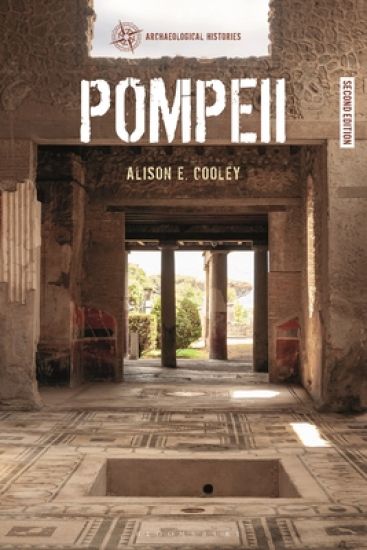
Pompeii

Pompeii

Alison E. Cooley

BLOOMSBURY PUBLISHING PLC
2023
sidottu
This second edition of Alison E. Cooley's accessible introduction to Pompeii takes into account the major new theories and discoveries that have emerged since the first edition was published 20 years ago. Italy's third most popular tourist destination, Pompeii attracts millions of visitors each year, and images of the town are familiar all around the world. However, even today our picture of the site is being impacted by new archaeological discoveries. This book focuses particularly on the date of the eruption, the natural environment of Pompeii, the recovery of skeletal remains and plaster casts, and Pompeii in the popular imagination. In addition, three new chapters look at the popularization of Pompeii, archaeological reconstruction of the Roman town, and how we know what we know about the people who lived there. The technological advances of the 20th and 21st centuries have transformed our understanding of the urban environment of Pompeii, raising new questions even as they dig ever deeper into the surviving material evidence. This volume offers a succinct and insightful exploration of the impact of these scientific and archaeological innovations, as well as that of contemporary politics, upon interpretations of Pompeii over the last 250 years, including the ways in which advances in volcanology have transformed our picture of its last moments.
Pompeii

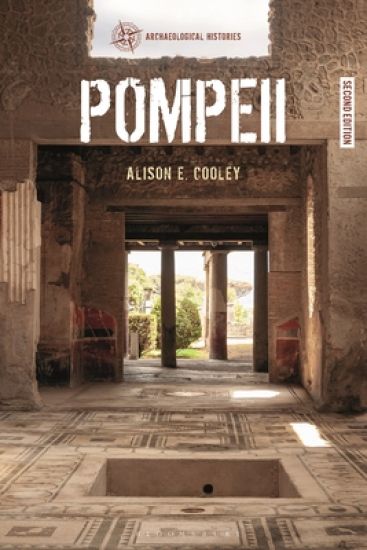
Pompeii

Alison E. Cooley

BLOOMSBURY PUBLISHING PLC
2023
nidottu
This second edition of Alison E. Cooley's accessible introduction to Pompeii takes into account the major new theories and discoveries that have emerged since the first edition was published 20 years ago. Italy's third most popular tourist destination, Pompeii attracts millions of visitors each year, and images of the town are familiar all around the world. However, even today our picture of the site is being impacted by new archaeological discoveries. This book focuses particularly on the date of the eruption, the natural environment of Pompeii, the recovery of skeletal remains and plaster casts, and Pompeii in the popular imagination. In addition, three new chapters look at the popularization of Pompeii, archaeological reconstruction of the Roman town, and how we know what we know about the people who lived there. The technological advances of the 20th and 21st centuries have transformed our understanding of the urban environment of Pompeii, raising new questions even as they dig ever deeper into the surviving material evidence. This volume offers a succinct and insightful exploration of the impact of these scientific and archaeological innovations, as well as that of contemporary politics, upon interpretations of Pompeii over the last 250 years, including the ways in which advances in volcanology have transformed our picture of its last moments.
Pompeii and Herculaneum

Pompeii and Herculaneum

Alison E. Cooley; M. G. L. Cooley

Routledge
2013
sidottu
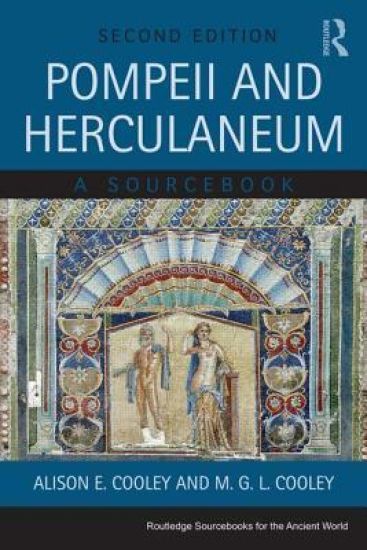
The original edition of Pompeii: A Sourcebook was a crucial resource for students of the site. Now updated to include material from Herculaneum, the neighbouring town also buried in the eruption of Vesuvius, Pompeii and Herculaneum: A Sourcebook allows readers to form a richer and more diverse picture of urban life on the Bay of Naples. Focusing upon inscriptions and ancient texts, it translates and sets into context a representative sample of the huge range of source material uncovered in these towns. From the labels on wine jars to scribbled insults, and from advertisements for gladiatorial contests to love poetry, the individual chapters explore the early history of Pompeii and Herculaneum, their destruction, leisure pursuits, politics, commerce, religion, the family and society. Information about Pompeii and Herculaneum from authors based in Rome is included, but the great majority of sources come from the cities themselves, written by their ordinary inhabitants – men and women, citizens and slaves. Encorporating the latest research and finds from the two cities and enhanced with more photographs, maps, and plans, Pompeii and Herculaneum: A Sourcebook offers an invaluable resource for anyone studying or visiting the sites.
Pompeii and Herculaneum

Pompeii and Herculaneum

Alison E. Cooley; M. G. L. Cooley

Routledge
2013
nidottu
The original edition of Pompeii: A Sourcebook was a crucial resource for students of the site. Now updated to include material from Herculaneum, the neighbouring town also buried in the eruption of Vesuvius, Pompeii and Herculaneum: A Sourcebook allows readers to form a richer and more diverse picture of urban life on the Bay of Naples. Focusing upon inscriptions and ancient texts, it translates and sets into context a representative sample of the huge range of source material uncovered in these towns. From the labels on wine jars to scribbled insults, and from advertisements for gladiatorial contests to love poetry, the individual chapters explore the early history of Pompeii and Herculaneum, their destruction, leisure pursuits, politics, commerce, religion, the family and society. Information about Pompeii and Herculaneum from authors based in Rome is included, but the great majority of sources come from the cities themselves, written by their ordinary inhabitants – men and women, citizens and slaves. Encorporating the latest research and finds from the two cities and enhanced with more photographs, maps, and plans, Pompeii and Herculaneum: A Sourcebook offers an invaluable resource for anyone studying or visiting the sites.
The Cambridge Manual of Latin Epigraphy

The Cambridge Manual of Latin Epigraphy

Alison E. Cooley

Cambridge University Press
2012
sidottu
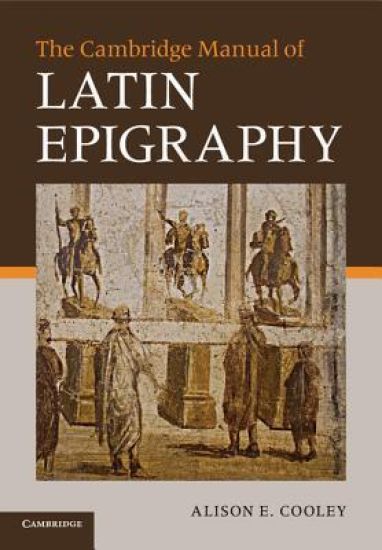
This book advances our understanding of the place of Latin inscriptions in the Roman world. It enables readers, especially those new to the subject, to appreciate both the potential and the limitations of inscriptions as historical source material, by considering the diversity of epigraphic culture in the Roman world and how it has been transmitted to the twenty-first century. The first chapter offers an epigraphic sample drawn from the Bay of Naples, illustrating the dynamic epigraphic culture of that region. The second explores in detail the nature of epigraphic culture in the Roman world, probing the limitations of traditional ways of dividing up inscriptions into different categories, and offering examples of how epigraphic culture developed in different geographical, social and religious contexts. It examines the 'life-cycle' of inscriptions - how they were produced, viewed, reused and destroyed. Finally, the third provides guidance on deciphering inscriptions face-to-face and handling specialist epigraphic publications.
The Cambridge Manual of Latin Epigraphy

The Cambridge Manual of Latin Epigraphy

Alison E. Cooley

Cambridge University Press
2012
pokkari
This book advances our understanding of the place of Latin inscriptions in the Roman world. It enables readers, especially those new to the subject, to appreciate both the potential and the limitations of inscriptions as historical source material, by considering the diversity of epigraphic culture in the Roman world and how it has been transmitted to the twenty-first century. The first chapter offers an epigraphic sample drawn from the Bay of Naples, illustrating the dynamic epigraphic culture of that region. The second explores in detail the nature of epigraphic culture in the Roman world, probing the limitations of traditional ways of dividing up inscriptions into different categories, and offering examples of how epigraphic culture developed in different geographical, social and religious contexts. It examines the 'life-cycle' of inscriptions - how they were produced, viewed, reused and destroyed. Finally, the third provides guidance on deciphering inscriptions face-to-face and handling specialist epigraphic publications.
Res Gestae Divi Augusti

Res Gestae Divi Augusti

Augustus; Alison E. Cooley

Cambridge University Press
2009
sidottu
At the end of his life the emperor Augustus wrote an account of his achievements in which he reviewed his rise to power, his conquest of the world and his unparalleled generosity towards his subjects. This edition provides a text, translation and detailed commentary - the first substantial one in English for more than four decades - which is suitable for use with students of all levels. The commentary deals with linguistic, stylistic and historical matters. It elucidates how Augustus understood his role in Roman society, and how he wished to be remembered by posterity; and it sets this picture that emerges from the Res Gestae into the context of the emergence both of a new visual language and of an official set of expressions. The book also includes illustrations in order to demonstrate how the Augustan era witnessed the rise of a whole new visual language.
Res Gestae Divi Augusti

Res Gestae Divi Augusti

Augustus; Alison E. Cooley

Cambridge University Press
2009
pokkari
At the end of his life the emperor Augustus wrote an account of his achievements in which he reviewed his rise to power, his conquest of the world and his unparalleled generosity towards his subjects. This edition provides a text, translation and detailed commentary - the first substantial one in English for more than four decades - which is suitable for use with students of all levels. The commentary deals with linguistic, stylistic and historical matters. It elucidates how Augustus understood his role in Roman society, and how he wished to be remembered by posterity; and it sets this picture that emerges from the Res Gestae into the context of the emergence both of a new visual language and of an official set of expressions. The book also includes illustrations in order to demonstrate how the Augustan era witnessed the rise of a whole new visual language.