Kirjojen hintavertailu. Mukana 12 390 323 kirjaa ja 12 kauppaa.

Kirjailija

Alison Findlay

Kirjat ja teokset yhdessä paikassa: 11 kirjaa, julkaisuja vuosilta 1998-2025, suosituimpien joukossa Women in Shakespeare. Vertaile teosten hintoja ja tarkista saatavuus suomalaisista kirjakaupoista.

11 kirjaa

Kirjojen julkaisuhaarukka 1998-2025.

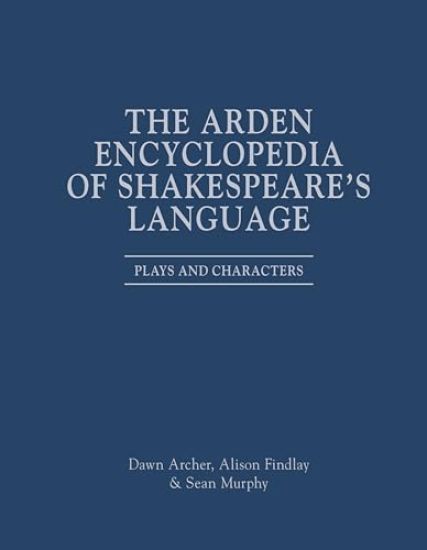
The Arden Encyclopedia of Shakespeare’s Language

The Arden Encyclopedia of Shakespeare’s Language

Dawn Archer; Alison Findlay; Sean Murphy

BLOOMSBURY PUBLISHING PLC
2025
sidottu
The Arden Encyclopedia of Shakespeare’s Language is the first comprehensive account of Shakespeare’s language to use computational methods derived from corpus linguistics – methods of choice for today's historical linguist. This third volume focuses on keywords in Shakespeare's plays. Play keywords are derived by conducting a statistical comparison between the words in one play with those in all the other plays. For characters, the statistical comparison is made between the vocabulary of one character and that of all the other characters in the same play. These keywords are then used to create 'linguistic profiles' of each play and main character. The profiles show how patterns of words around keywords contribute to themes in plays and characterization of the protagonists. For example, we reveal how the simple word ‘Goodnight’ contributes to dramatic tension in Julius Caesar, or how in Romeo and Juliet, Juliet's most distinctive yet apparently innocuous words, ‘if’, ‘yet’ and ‘but’, create an important aspect of her character.
Women and Dramatic Production 1550 - 1700

Women and Dramatic Production 1550 - 1700

Alison Findlay; Gweno Williams; Stephanie Wright

Routledge
2017
sidottu
There is a traditional view that women were absent from the field of dramatic production in the early modern period because of their exclusion from professional theatre. Women and Dramatic Production 1550-1700 challenges this view and breaks new ground in arguing that, far from writing in closeted retreat, a select number of women took an active part in directing and controlling dramatic self-representations.Examining texts from the mid-sixteenth century through to the end of the seventeenth, the chapters trace the development of a women-centred aesthetic in a variety of dramatic forms. Plays by noblewomen such as Mary Sidney, Elizabeth Cary, Mary Wroth, Rachel Fane and the women of the Cavendish family, form an alternative dramatic tradition centred on the household. The powerful directorial and performative roles played by queens in royal progresses and masques are explored as examples of women's dramatic production in the royal court.The book also highlights women's performances in alternative venues, such as the courtroom and the pulpit, arguing that the practices of martyrs like Margaret Clitherow or visionaries like Anna Trapnel call into question traditional definitions of theatre. The challenges faced by women who were admitted to the professional theatre companies after 1660 are explored in two chapters which deal with the plays of Katherine Philips, Elizabeth Polwhele, Aphra Behn, and Mary Pix, among others.By considering the theatrical dimensions of a wide range of early modern women's writing, this book reveals the breathtaking panorama of women's dramatic production and will be essential reading for students of women's writing and renaissance drama.
Women in Shakespeare

Women in Shakespeare

Alison Findlay

The Arden Shakespeare
2014
nidottu
This is a comprehensive reference guide examining the language employed by Shakespeare to represent women in the full range of his poetry and plays. Including over 350 entries, Alison Findlay shows the role of women within Shakespearean drama, their representations on the Shakespearean stage, and their place in Shakespeare’s personal and professional lives.
Much Ado About Nothing

Much Ado About Nothing

Alison Findlay

Red Globe Press
2011
nidottu
This Handbook provides an introductory guide to the play offering a scene-by-scene theatrically aware commentary, contextual documents, a brief history of the text and first performances, case studies of key performances and productions, a survey of film and TV adaptation, a wide sampling of critical opinion and annotated further reading.
Women in Shakespeare

Women in Shakespeare

Alison Findlay

Continuum International Publishing Group Ltd.
2010
sidottu
Women in Shakespeare: A Dictionary is a comprehensive reference guide to Shakespeare and women. An A-Z of over 350 entries explores the role of women within Shakespearean drama, how women were represented on the Shakespearean stage, and the role of women in Shakespeare's personal and professional lives. Women in Shakespeare examines in detail the language employed by Shakespeare in his representation of women in the full range of his poetry and plays and the implications these representations have for the position of women in Elizabethan and Jacobean society. Women in Shakespeare is an ideal guide to Shakespeare's women for all students and scholars of Shakespeare.
Illegitimate Power

Illegitimate Power

Alison Findlay

Manchester University Press
2009
nidottu
In Renaissance Drama, the bastard is an extraordinarily powerful and disruptive figure. We have only to think of Caliban or of Edmund to realise the challenge presented by the illegitimate child.Drawing on a wide rage of play texts, Alison Findlay shows how illegitimacy encoded and threatened to deconstruct some of the basic tenets of patriarchal rule. She considers bastards as indicators and instigators of crises in early modern England, reading them in relation to witch craft, spiritual insecurities and social unrest in family and State. The characters discussed range from demi-devils, unnatural villains and clowns to outstanding heroic or virtuous types who challenge officially sanctioned ideas of illegitimacy. The final chapter of the book considers bastards in performance; their relationship with theatre spaces and audiences. Illegitimate voices, Findlay argues, can bring about the death of the author/father and open the text as a piece of theatre, challenging accepted notions of authority.
Playing Spaces in Early Women's Drama

Playing Spaces in Early Women's Drama

Alison Findlay

Cambridge University Press
2009
pokkari
From the Abbess of Barking to Aphra Behn, women manipulated dramatic venues and settings to re-negotiate their place in society. This study examines the playing spaces for early modern women's drama and how women played with space in scripts and performances. Using selected texts from 1376 to 1705, Findlay shows how their drama operated in five key sites: homes, gardens, courts, convents and cities. Aristocratic houses, country estates and city streets are theatrically reconfigured as homes, empty shells and arenas of possibility. Courtly venues reveal queens as adept producers in the royal theatres of power, while convents and academies are playing spaces to explore the possibilities of female company. This book sketches theatre histories on to what is often a blank space, investigating the rich inter-textuality of spatial practices to provide a richer understanding of how early women's drama works.
Playing Spaces in Early Women's Drama

Playing Spaces in Early Women's Drama

Alison Findlay

Cambridge University Press
2006
sidottu
From the Abbess of Barking to Aphra Behn, women manipulated dramatic venues and settings to re-negotiate their place in society. This study examines the playing spaces for early modern women's drama and how women played with space in scripts and performances. Using selected texts from 1376 to 1705, Findlay shows how their drama operated in five key sites: homes, gardens, courts, convents and cities. Aristocratic houses, country estates and city streets are theatrically reconfigured as homes, empty shells and arenas of possibility. Courtly venues reveal queens as adept producers in the royal theatres of power, while convents and academies are playing spaces to explore the possibilities of female company. This book sketches theatre histories on to what is often a blank space, investigating the rich inter-textuality of spatial practices to provide a richer understanding of how early women's drama works.
Women and Dramatic Production 1550 - 1700

Women and Dramatic Production 1550 - 1700

Alison Findlay; Gweno (University Of Ripon And York St John) Williams; Stephanie (University Of Sunderland) Wright

Longman
2000
nidottu
There is a traditional view that women were absent from the field of dramatic production in the early modern period because of their exclusion from professional theatre. Women and Dramatic Production 1550-1700 challenges this view and breaks new ground in arguing that, far from writing in closeted retreat, a select number of women took an active part in directing and controlling dramatic self-representations. Examining texts from the mid-sixteenth century through to the end of the seventeenth, the chapters trace the development of a women-centred aesthetic in a variety of dramatic forms. Plays by noblewomen such as Mary Sidney, Elizabeth Cary, Mary Wroth, Rachel Fane and the women of the Cavendish family, form an alternative dramatic tradition centred on the household. The powerful directorial and performative roles played by queens in royal progresses and masques are explored as examples of women's dramatic production in the royal court. The book also highlights women's performances in alternative venues, such as the courtroom and the pulpit, arguing that the practices of martyrs like Margaret Clitherow or visionaries like Anna Trapnel call into question traditional definitions of theatre. The challenges faced by women who were admitted to the professional theatre companies after 1660 are explored in two chapters which deal with the plays of Katherine Philips, Elizabeth Polwhele, Aphra Behn, and Mary Pix, among others. By considering the theatrical dimensions of a wide range of early modern women's writing, this book reveals the breathtaking panorama of women's dramatic production and will be essential reading for students of women's writing and renaissance drama.