Kirjojen hintavertailu. Mukana 12 507 937 kirjaa ja 12 kauppaa.

Kirjailija

Alison K. Hoagland

Kirjat ja teokset yhdessä paikassa: 7 kirjaa, julkaisuja vuosilta 2003-2025, suosituimpien joukossa Constructing Image, Identity, And Place. Vertaile teosten hintoja ja tarkista saatavuus suomalaisista kirjakaupoista.

7 kirjaa

Kirjojen julkaisuhaarukka 2003-2025.

The Row House in Washington, DC

The Row House in Washington, DC

Alison K. Hoagland

UNIVERSITY OF VIRGINIA PRESS
2025
pokkari
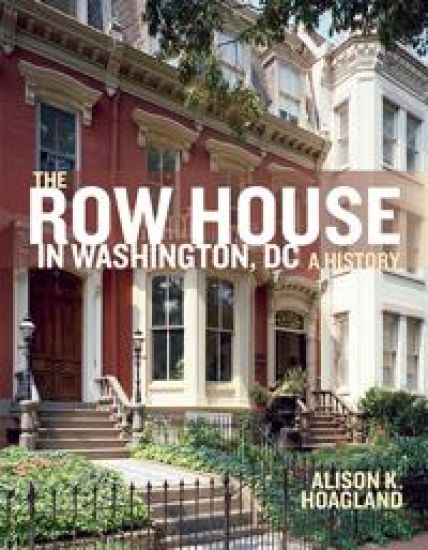
With The Row House in Washington, DC, the architectural historian and preservationist Alison Hoagland turns the lucid prose style and keen analytical skill that characterize all her scholarship to the subject of the Washington row house. Row houses have long been an important component of the housing stock of many major American cities, predominantly sheltering the middle classes comprising clerks, tradespeople, and artisans. In Washington, with its plethora of government workers, they are the dominant typology of the historical city. Hoagland identifies six principal row house types—two-room, L-shaped, three-room, English-basement, quadrant, and kitchen-forward—and documents their wide-ranging impact, as sources of income and statements of attainment as well as domiciles for nuclear families or boarders, homeowners or renters, long tenancy or short stays. Through restrictive covenants on some house sales, they also illustrate the pervasive racism that has haunted the city. This topical study demonstrates at once the distinctive character of the Washington row house and the many similarities it shares with row houses in other mid-Atlantic cities. In a broader sense, it also shows how urban dwellers responded to a challenging concatenation of spatial, regulatory, financial, and demographic limitations, providing a historical model for new, innovative designs. Publication of this volume was assisted by a grant from Furthermore: a program of the J. M. Kaplan Fund.
The Row House in Washington, DC

The Row House in Washington, DC

Alison K. Hoagland

UNIVERSITY OF VIRGINIA PRESS
2023
sidottu
With The Row House in Washington, DC, the architectural historian and preservationist Alison Hoagland turns the lucid prose style and keen analytical skill that characterize all her scholarship to the subject of the Washington row house. Row houses have long been an important component of the housing stock of many major American cities, predominantly sheltering the middle classes comprising clerks, tradespeople, and artisans. In Washington, with its plethora of government workers, they are the dominant typology of the historical city. Hoagland identifies six principal row house types--two-room, L-shaped, three-room, English-basement, quadrant, and kitchen-forward--and documents their wide-ranging impact, as sources of income and statements of attainment as well as domiciles for nuclear families or boarders, homeowners or renters, long tenancy or short stays. Through restrictive covenants on some house sales, they also illustrate the pervasive racism that has haunted the city. This topical study demonstrates at once the distinctive character of the Washington row house and the many similarities it shares with row houses in other mid-Atlantic cities. In a broader sense, it also shows how urban dwellers responded to a challenging concatenation of spatial, regulatory, financial, and demographic limitations, providing a historical model for new, innovative designs.
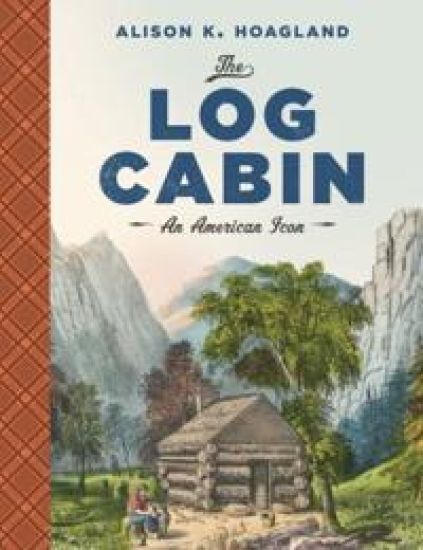
The Log Cabin

The Log Cabin

Alison K. Hoagland

University of Virginia Press
2019
nidottu
For roughly a century, the log cabin occupied a central and indispensable role in the rapidly growing United States. Although it largely disappeared as a living space, it lived on as a symbol of the settling of the nation. In her thought-provoking and generously illustrated new book, Alison Hoagland looks at this once-common dwelling as a practical shelter solution-easy to construct, built on the frontier's abundance of trees, and not necessarily meant to be permanent-and its evolving place in the public memory.Hoagland shows how the log cabin was a uniquely adaptable symbol, responsive to the needs of the cultural moment. It served as the noble birthplace of presidents, but it was also seen as the basest form of housing, accommodating the lowly poor. It functioned as a paragon of domesticity, but it was also a basic element in the life of striving and wandering. Held up as a triumph of westward expansion, it was also perceived as a building type to be discarded in favor of more civilized forms.In the twentieth century, the log cabin became ingrained in popular culture, serving as second homes and motels, as well as restaurants and shops striking a rustic note. The romantic view of the past, combined with the log cabin's simplicity, solidity, and compatibility with nature, has made it an enduring architectural and cultural icon.Preparation of this volume has been supported by Furthermore: a program of the J. M. Kaplan Fund
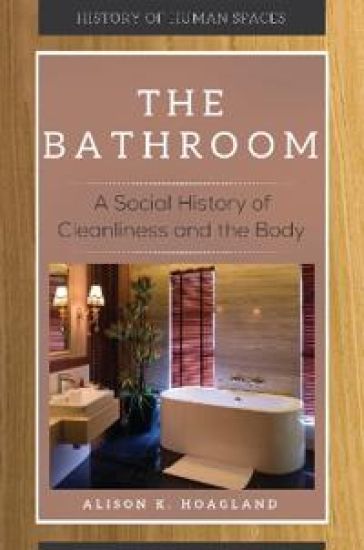
The Bathroom

The Bathroom

Alison K. Hoagland

Greenwood Publishing Group Inc
2018
sidottu
This book gives a complete history of the American bathroom and describes how the smallest yet most complex room in the American house is at the nexus of personal behavior and public investment.The Bathroom: A Social History of Cleanliness and the Body is the first scholarly treatment of the American bathroom—as a space in the house, through nearly two centuries. After a brief nod to precedents set by other countries and to elements of the bathroom that may be placed in different parts of the house, this book traces the development of the bathroom in the American house since the Civil War, when the bathroom began to take shape.The bathroom is considered in light of many socially relevant themes, such as cleanliness, sanitation, technology, and consumerism. Taken as a whole, the book bridges the gap between the public and private infrastructure of the bathroom and reveals the ways in which the space transforms its occupants into consumers. Its language is jargon-free, making it ideal for students, general readers, and researchers.
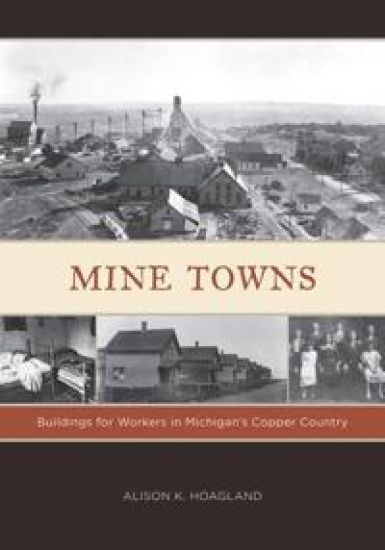
Mine Towns

Mine Towns

Alison K. Hoagland

University of Minnesota Press
2010
nidottu
During the nineteenth century, the Keweenaw Peninsula of Northern Michigan was the site of America’s first mineral land rush as companies hastened to profit from the region’s vast copper deposits. In order to lure workers to such a remote location-and work long hours in dangerous conditions-companies offered not just competitive wages but also helped provide the very infrastructure of town life in the form of affordable housing, schools, health-care facilities, and churches. The first working-class history of domestic life in Copper Country company towns during the boom years of 1890 to 1918, Alison K. Hoagland’s Mine Towns investigates how the architecture of a company town revealed the paternal relationship that existed between company managers and workers-a relationship that both parties turned to their own advantage. The story of Joseph and Antonia Putrich, immigrants from Croatia, punctuates and illustrates the realities of life in a booming company town. While company managers provided housing as a way to develop and control a stable workforce, workers often rejected this domestic ideal and used homes as an economic resource, taking in boarders to help generate further income. Focusing on how the exchange between company managers and a largely immigrant workforce took the form of negotiation rather than a top-down system, Hoagland examines surviving buildings and uses Copper Country’s built environment to map this remarkable connection between a company and its workers at the height of Michigan’s largest land rush.
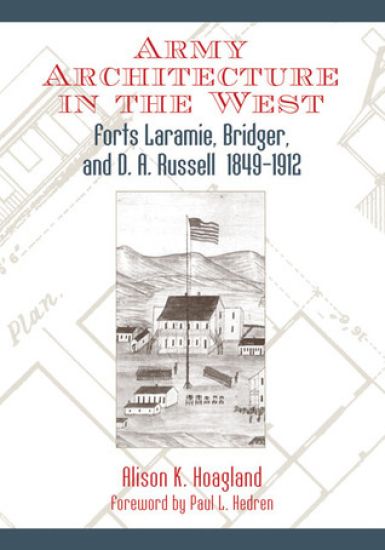
Army Architecture in the West

Army Architecture in the West

Alison K. Hoagland; Paul L. Hedren

University of Oklahoma Press
2004
sidottu
During the nineteenth century, the U.S. military built numerous forts across the country as it stationed more and more troops west of the Mississippi. When most people think about military forts in the American West, they imagine imposing strongholds, meccas of defense enclosed by high, palisaded walls. This popular view, however, is far from reality.In Army Architecture in the West, Alison K. Hoagland dispels the myth that all western forts were uniform structures of military might churned out according to a master set of plans authorized by army officials in Washington, D.C. Instead, by examining three exemplary Wyoming forts, Hoagland reveals that widely varying architectural designs were used to construct western forts.With more than 120 illustrations, Army Architecture in the West offers a new way of using architecture to gain insight into the role of the army in the American West. By focusing on the tangible remains of the army's presence in the West, Hoagland presents a new vision of American military history.
Constructing Image, Identity, And Place

Constructing Image, Identity, And Place

Alison K. Hoagland

University of Tennessee Press
2003
nidottu
Although vernacular architecture scholarship has expanded beyond its core fascination with common buildings and places, its attention remains fixed on the social function of building. Consistent with this expansion of interests, Constructing Image, Identity, and Place includes essays on a wide variety of American building types and landscapes drawn from a broad geographic and chronological spectrum. Subjects range from examinations of the houses, hotels and churches of America’s colonial and Republican elite to analyses of the humble cottages of Southern sharecroppers and mill workers, Mississippi juke joints, and the ephemeral rustic arbors and bowers erected by Civil War soldiers. Other contributors examine or reexamine the form of early synagogues in Georgia, colonial construction technologies in the Chesapeake, the appropriation and use of storefront windows by San Francisco suffragists, and the evolution of the modern factory tour. Other decidedly twentieth-century topics include the impact of the automobile on American building forms and landscapes, including parkways, drive-in movie theaters, and shopping malls. Drawn from the Vernacular Architecture Forum conferences of 1998 and 1999, these seventeen essays represent the broad range of topics and methodologies current in the field today. The volume will introduce newcomers to the breadth and depth of vernacular architecture while also bringing established scholars up to date on the field’s continued growth and maturation.The Editors: Alison K. Hoagland is associate professor of history and historic preservation at Michigan Technological University. Kenneth A. Breisch is director of Programs in Historic Preservation at the University of Southern California. He is author of Henry Hobson Richardson and the Small Public Library in America.The Contributors: Shannon Bell, Robert W. Blythe, Timothy Davis, Stephanie Dyer, Willie Graham, Kathleen LaFrank, William Littmann, Carl Lounsbury, Al Luckenbach, Sherri M. Marsh, Maurie McInnis, Steven H. Moffson, Jason D. Moser, Jennifer Nardone, Martin C. Perdue, Mark Reinberger, Andrew K. Sandoval-Strausz, Jessica Sewell, Donna Ware, and Camille Wells.