Kirjojen hintavertailu. Mukana 12 390 323 kirjaa ja 12 kauppaa.

Kirjailija

Alison Wray

Kirjat ja teokset yhdessä paikassa: 10 kirjaa, julkaisuja vuosilta 2002-2026, suosituimpien joukossa Critical Reading and Writing for Postgraduates. Vertaile teosten hintoja ja tarkista saatavuus suomalaisista kirjakaupoista.

10 kirjaa

Kirjojen julkaisuhaarukka 2002-2026.

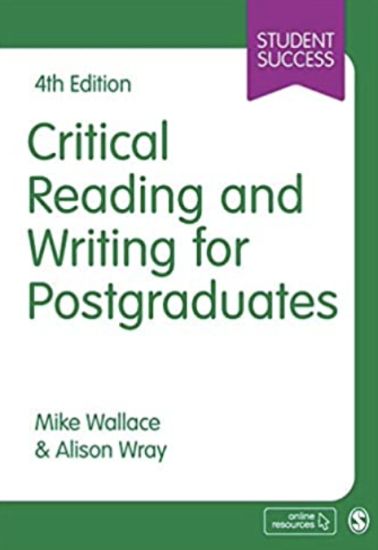
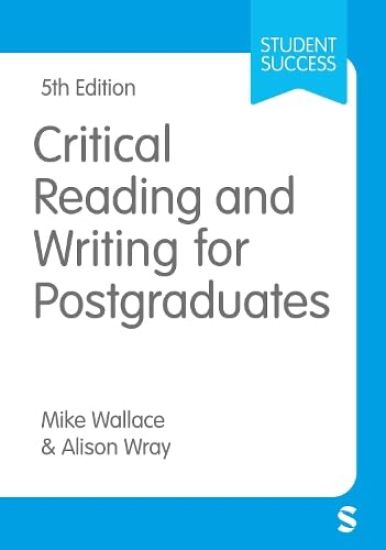
Critical Reading and Writing for Postgraduates

Critical Reading and Writing for Postgraduates

Mike Wallace; Alison Wray

SAGE PUBLICATIONS LTD
2026
sidottu
Step into academic success with Critical Reading and Writing for Postgraduates, your trusted companion for reviewing and writing convincingly about the research literature. This detailed guide takes you through the essentials: deciding what to read, developing techniques for evaluating the claims in texts, building strong arguments through structured literature reviews and dissertations, and writing convincingly for your readers and assessors. With practical tools, advice on using AI, and worked examples, this book provides everything you need for approaching academic work with a critical eye and a clear voice. You will learn: • Strategies for critically reading and analysing academic texts. • Step-by-step methods for developing convincing written arguments. • Strategies for planning, structuring, and writing your literature reviews and dissertation. • Ways of responding effectively to your supervisor’s feedback. Supplemented by online self-study materials, this book is ideal for postgraduates in the social sciences and beyond, keen to develop their skills and academic confidence. Student Success is a series of essential guides for students of all levels. From how to think critically and write great essays to boosting your employability and managing your wellbeing, the Student Success series helps you study smarter and get the best from your time at university.
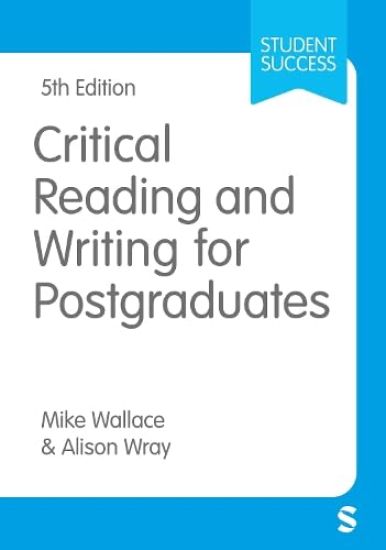
Critical Reading and Writing for Postgraduates

Critical Reading and Writing for Postgraduates

Mike Wallace; Alison Wray

SAGE PUBLICATIONS LTD
2026
nidottu
Step into academic success with Critical Reading and Writing for Postgraduates, your trusted companion for reviewing and writing convincingly about the research literature. This detailed guide takes you through the essentials: deciding what to read, developing techniques for evaluating the claims in texts, building strong arguments through structured literature reviews and dissertations, and writing convincingly for your readers and assessors. With practical tools, advice on using AI, and worked examples, this book provides everything you need for approaching academic work with a critical eye and a clear voice. You will learn: • Strategies for critically reading and analysing academic texts. • Step-by-step methods for developing convincing written arguments. • Strategies for planning, structuring, and writing your literature reviews and dissertation. • Ways of responding effectively to your supervisor’s feedback. Supplemented by online self-study materials, this book is ideal for postgraduates in the social sciences and beyond, keen to develop their skills and academic confidence. Student Success is a series of essential guides for students of all levels. From how to think critically and write great essays to boosting your employability and managing your wellbeing, the Student Success series helps you study smarter and get the best from your time at university.
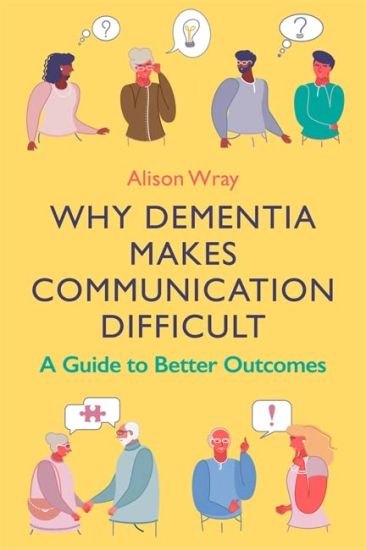
Why Dementia Makes Communication Difficult

Why Dementia Makes Communication Difficult

Alison Wray

Jessica Kingsley Publishers
2021
pokkari
Selected for Reading Well for Dementia 2024: endorsed by health experts, charities and people affected by dementia.Dementia brings many challenges, not least its ability to disrupt effective communication. The quality of communication plays a major role in how well people living with a dementia manage. When communication doesn't work well, the complications of dementia are compounded.Rather than only offering tips on what to say and how to say it, this book explores the underlying motivations of communication, so we can better understand why we say what we do, why we say it the way we do, what can go wrong, and how attempts to fix things can go awry.As well as considering why communication goes wrong in day-to-day conversations, the chapters offer advice on dealing with awkward moments, the question of deception, and the things we can and can't control in dementia. Readers are asked to reflect on their own role, and how they can manage their own behaviours to avoid unintentionally blocking routes to productive communication.Including clear action points for carers, bystanders and people with a dementia diagnosis, this book shows how to approach communication to improve outcomes.
Critical Reading and Writing for Postgraduates

Critical Reading and Writing for Postgraduates

Mike Wallace; Alison Wray

SAGE Publications Ltd
2021
sidottu
Reading critically, and writing using critical techniques, are crucial skills you need to apply to your academic work. If you need to engage with published (or unpublished) literature such as essays, dissertations or theses, research papers or oral presentations, this proven guide helps you develop a reflective and advanced critical approach to your research and writing. New to this edition: Two new chapters on basic and advanced writing skillsMore advice on self-bias and perceptionUpdates and additional examples throughoutUpdated online resources providing additional support. A Companion Website provides additional resources to help you apply the critical techniques you learn. From templates and checklists, access to SAGE journal articles and additional case studies, these free resources will make sure you successfully master advanced critical skills.
Critical Reading and Writing for Postgraduates

Critical Reading and Writing for Postgraduates

Mike Wallace; Alison Wray

SAGE Publications Ltd
2021
nidottu
Reading critically, and writing using critical techniques, are crucial skills you need to apply to your academic work. If you need to engage with published (or unpublished) literature such as essays, dissertations or theses, research papers or oral presentations, this proven guide helps you develop a reflective and advanced critical approach to your research and writing. New to this edition: Two new chapters on basic and advanced writing skillsMore advice on self-bias and perceptionUpdates and additional examples throughoutUpdated online resources providing additional support. A Companion Website provides additional resources to help you apply the critical techniques you learn. From templates and checklists, access to SAGE journal articles and additional case studies, these free resources will make sure you successfully master advanced critical skills.
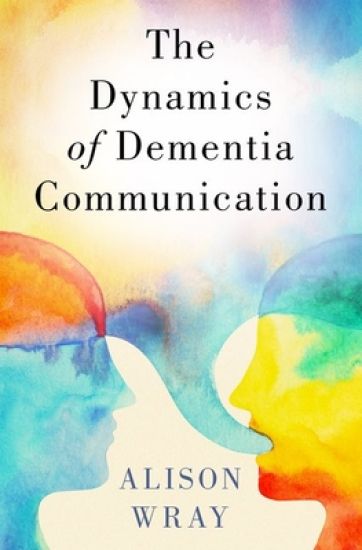
The Dynamics of Dementia Communication

The Dynamics of Dementia Communication

Alison Wray

Oxford University Press Inc
2020
sidottu
WINNER of the 2021 British Association for Applied Linguistics Book prize It is well recognized that when people are living with a dementia, effective communication can be a challenge for both them and those they interact with. Despite a plethora of good advice, it can be surprisingly hard to sustain constructive communicative behaviours and to integrate them successfully into routine daily care and interaction. The Dynamics of Dementia Communication asks why that is. What is it about communication, as a human social and cognitive practice, that makes it so difficult to manage the disruptions caused by dementia? Why is it so common to feel awkward, confused or irritated when talking with a person living with a dementia? Why is the experience of living with a dementia so personally and socially devastating? What approaches to communication would work best, and why? To answer these questions, the book integrates information from a wide range of different sources, covering the biological, social, and emotional factors associated with the dementia experience. New concepts and theoretical perspectives offer novel ways of thinking about the challenges of communication generally, and in the context of dementia. Topics explored include whether it is acceptable to deceive people living with a dementia and why society's failure to support people living with a dementia and their carers is so devastating. The final chapter suggests what people living with a dementia need if communication is to promote and protect everyone's well-being. By providing a deeper understanding of what topples the best-intentioned attempts at interaction, and by explaining why poor communication affects everyone involved, this book sets new agendas for improving the welfare of people living with a dementia, their families, and professional carers.
Projects in Linguistics and Language Studies

Projects in Linguistics and Language Studies

Alison Wray; Aileen Bloomer

Routledge
2017
sidottu
Projects in Linguistics and Language Studies, Third Edition, is your essential guide when embarking on a research project in linguistics or English language.It is clearly divided into the subject areas that most appeal to you as a student: psycholinguistics; first- and second-language acquisition; structure and meaning; sociolinguistics; language and gender; accents and dialects; and the history of English. New chapters on researching computer-mediated communication (CMC) and on preparing and delivering oral presentations are also included.It offers practical advice on - identifying a topic - making background reading more effective - planning and designing a project - collecting and analysing data - writing up and presenting findings.With over 350 project ideas that you can use directly or adapt to suit different contexts and interests, and with chapters on how to reference effectively and how to avoid plagiarism, this third edition of Projects in Linguistics and Language Studies is a reference guide that you will use again and again during your studies.
Projects in Linguistics and Language Studies

Projects in Linguistics and Language Studies

Alison Wray; Aileen Bloomer

Routledge
2012
nidottu
Projects in Linguistics and Language Studies, Third Edition, is your essential guide when embarking on a research project in linguistics or English language.It is clearly divided into the subject areas that most appeal to you as a student: psycholinguistics; first- and second-language acquisition; structure and meaning; sociolinguistics; language and gender; accents and dialects; and the history of English. New chapters on researching computer-mediated communication (CMC) and on preparing and delivering oral presentations are also included.It offers practical advice on - identifying a topic - making background reading more effective - planning and designing a project - collecting and analysing data - writing up and presenting findings.With over 350 project ideas that you can use directly or adapt to suit different contexts and interests, and with chapters on how to reference effectively and how to avoid plagiarism, this third edition of Projects in Linguistics and Language Studies is a reference guide that you will use again and again during your studies.
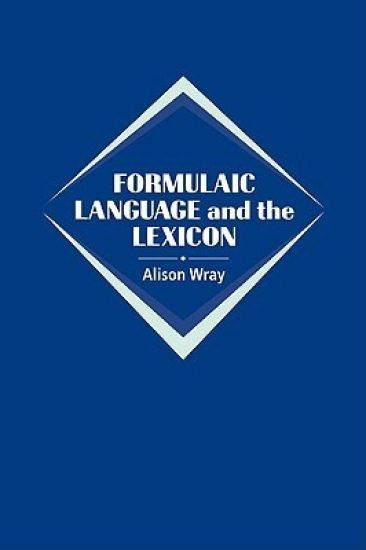
Formulaic Language and the Lexicon

Formulaic Language and the Lexicon

Alison Wray

Cambridge University Press
2005
pokkari
A considerable proportion of our everyday language is 'formulaic'. It is predictable in form, idiomatic, and seems to be stored in fixed, or semi-fixed, chunks. This book explores the nature and purposes of formulaic language, and looks for patterns across the research findings from the fields of discourse analysis, first language acquisition, language pathology and applied linguistics. It gradually builds up a unified description and explanation of formulaic language as a linguistic solution to a larger, non-linguistic, problem, the promotion of self. The book culminates in a new model of lexical storage, which accommodates the curiosities of non-native and aphasic speech. Parallel analytic and holistic processing strategies are the proposed mechanism which reconciles, on the one hand, our capacity for understanding and producing novel constructions using grammatical knowledge and small lexical units, and on the other, our use of prefabricated material which, though less flexible, also requires less processing.
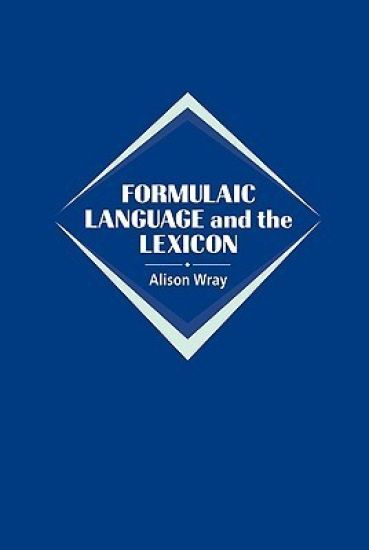
Formulaic Language and the Lexicon

Formulaic Language and the Lexicon

Alison Wray

Cambridge University Press
2002
sidottu
A considerable proportion of our everyday language is 'formulaic'. It is predictable in form, idiomatic, and seems to be stored in fixed, or semi-fixed, chunks. This book explores the nature and purposes of formulaic language, and looks for patterns across the research findings from the fields of discourse analysis, first language acquisition, language pathology and applied linguistics. It gradually builds up a unified description and explanation of formulaic language as a linguistic solution to a larger, non-linguistic, problem, the promotion of self. The book culminates in a new model of lexical storage, which accommodates the curiosities of non-native and aphasic speech. Parallel analytic and holistic processing strategies are the proposed mechanism which reconciles, on the one hand, our capacity for understanding and producing novel constructions using grammatical knowledge and small lexical units, and on the other, our use of prefabricated material which, though less flexible, also requires less processing.