Kirjojen hintavertailu. Mukana 12 390 323 kirjaa ja 12 kauppaa.

Kirjailija

Alistair Horne

Kirjat ja teokset yhdessä paikassa: 15 kirjaa, julkaisuja vuosilta 1993-2021, suosituimpien joukossa The Price of Glory. Vertaile teosten hintoja ja tarkista saatavuus suomalaisista kirjakaupoista.

15 kirjaa

Kirjojen julkaisuhaarukka 1993-2021.

Canada and the Canadians

Canada and the Canadians

Alistair Horne

Hassell Street Press
2021
nidottu
This work has been selected by scholars as being culturally important and is part of the knowledge base of civilization as we know it.This work is in the public domain in the United States of America, and possibly other nations. Within the United States, you may freely copy and distribute this work, as no entity (individual or corporate) has a copyright on the body of the work.Scholars believe, and we concur, that this work is important enough to be preserved, reproduced, and made generally available to the public. To ensure a quality reading experience, this work has been proofread and republished using a format that seamlessly blends the original graphical elements with text in an easy-to-read typeface.We appreciate your support of the preservation process, and thank you for being an important part of keeping this knowledge alive and relevant.
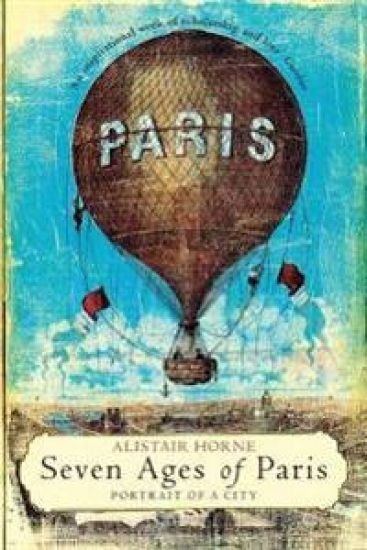
Seven Ages of Paris

Seven Ages of Paris

Alistair Horne

Pan Books
2018
pokkari
In this wonderfully readable book, Alistair Horne tells the huge and romantic story of Paris through seven ages of turmoil and change: the Middle Ages, the 100 years war, the Paris of Louis XIV, the age of Napoleon, the Commune, the Empire days of Louis-Napoleon and Eugenie, and the First World War and De Gaulle. Interweaving historical narrative with telling detail, this is a fluent and definitive work of social and cultural history. 'The best book I have read on Paris in a long time' Gregor Dallas, BBC History Books of the Year 'Reading Seven Ages of Paris is like taking an exciting trip in a French balloon' Antonia Fraser, New Statesman Books of the Year 'Provides not only a panorama of the capital, but also a well-crafted history of France with a nice balance between broad overviews and engaging episodes and details' Jonathan Fenby, The Times
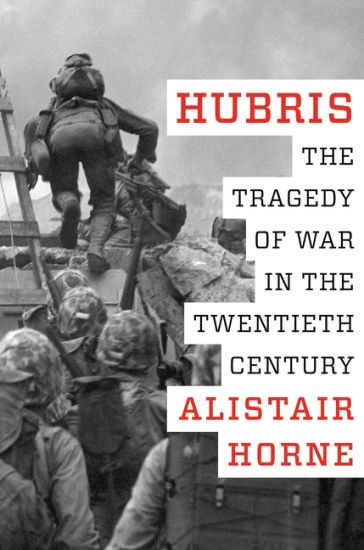
Hubris: The Tragedy of War in the Twentieth Century
"EMINENTLY PROVOCATIVE AND READABLE."--THE WALL STREET JOURNALSir Alistair Horne has been a close observer of war and history for more than fifty years and in this wise and masterly work, he revisits six battles of the past century and examines the strategies, leadership, preparation, and geopolitical goals of aggressors and defenders to reveal the one trait that links them all: hubris.In Greek tragedy, hubris is excessive human pride that challenges the gods and ultimately leads to total destruction of the offender. From the 1905 Battle of Tsushima in the Russo-Japanese War, to Hitler's 1941 bid to capture Moscow, to MacArthur's disastrous advance in Korea, to the French downfall at Dien Bien Phu, Horne shows how each of these battles was won or lost due to excessive hubris on one side or the other. In a sweeping narrative written with his trademark erudition and wit, Horne provides a meticulously detailed analysis of the ground maneuvers employed by the opposing armies in each battle. He also explores the strategic and psychological mindset of the military leaders involved to demonstrate how devastating combinations of human ambition and arrogance led to overreach. Making clear the danger of hubris in warfare, his insights hold resonant lessons for civilian and military leaders navigating today's complex global landscape.A dramatic, colorful, stylishly-written history, Hubris is a much-needed reflection on war from a master of his field.
Hubris: The Tragedy of War in the Twentieth Century
"EMINENTLY PROVOCATIVE AND READABLE."--THE WALL STREET JOURNALSir Alistair Horne has been a close observer of war and history for more than fifty years and in this wise and masterly work, he revisits six battles of the past century and examines the strategies, leadership, preparation, and geopolitical goals of aggressors and defenders to reveal the one trait that links them all: hubris.In Greek tragedy, hubris is excessive human pride that challenges the gods and ultimately leads to total destruction of the offender. From the 1905 Battle of Tsushima in the Russo-Japanese War, to Hitler's 1941 bid to capture Moscow, to MacArthur's disastrous advance in Korea, to the French downfall at Dien Bien Phu, Horne shows how each of these battles was won or lost due to excessive hubris on one side or the other. In a sweeping narrative written with his trademark erudition and wit, Horne provides a meticulously detailed analysis of the ground maneuvers employed by the opposing armies in each battle. He also explores the strategic and psychological mindset of the military leaders involved to demonstrate how devastating combinations of human ambition and arrogance led to overreach. Making clear the danger of hubris in warfare, his insights hold resonant lessons for civilian and military leaders navigating today's complex global landscape.A dramatic, colorful, stylishly-written history, Hubris is a much-needed reflection on war from a master of his field.
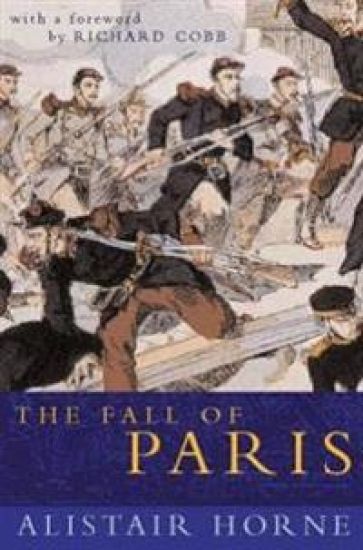
The Fall of Paris

The Fall of Paris

Alistair Horne

Pan Books
2015
pokkari
Opening with the military preparations before Paris was besieged by the invading German army in September 1870, Alistair Horne's compelling account of this dramatic episode takes the reader through the fall of Paris and German victory to the last days of the Paris Commune in May Week 1871.
The Lonely Leader

The Lonely Leader

Alistair Horne; David Montgomery

Macmillan
2014
pokkari
General Montgomery lead the 8th Army to victory at El Alamein in 1942, and as Chief of Land Forces in the Allied invasion of Normandy in 1944 he received Germany's surrender in 1945. Concentrating on the momentous events of Operation Overlord from June 1944, The Lonely Leader follws Monty's leadership of the Allied offensive to Luneburg Heath the following May. Monty is a figure renowned for his military professionalism, but Alistair Horne, in association with montgomery's only son, also look at the human face of a man regarded as rather Cromwellian, considering his style of command in the context of the tactics and politics of the period, not least his controversial dealings with Eisenhower. This is a compelling account of the public and private influences of a remarkable military leader.
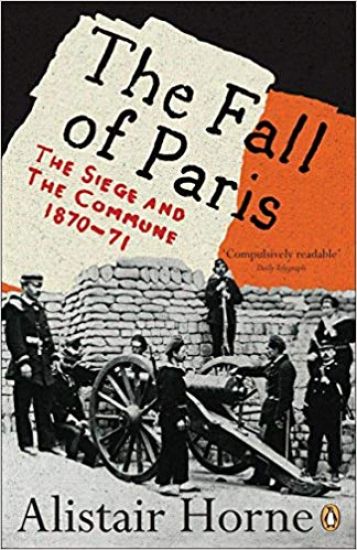
The Fall of Paris

The Fall of Paris

Alistair Horne

Penguin Books Ltd
2007
pokkari
Alistair Horne's The Fall of Paris: The Siege and the Commune, 1870-71 is the first book of Alistair Horne's trilogy, which includes The Price of Glory and To Lose a Battle and tells the story of the great crises of the rivalry between France and Germany. The collapse of France in 1870 had an overwhelming impact - on Paris, on France and on the rest of the world. People everywhere saw Paris as the centre of Europe and the hub of culture, fashion and invention. But suddenly France, not least to the disbelief of her own citizens, was gripped in the vice of the Prussian armies and forced to surrender on humiliating terms. Almost immediately Paris was convulsed by the savage self-destruction of the newly formed Socialist government, the Commune. In this brilliant study of the Siege of Paris and its aftermath, Alistair Horne researches first-hand accounts left by official observers, private diarists and letter-writers to evoke the high drama of those ten tumultuous months and the spiritual and physical agony that Paris and the Parisians suffered as they lost the Franco-Prussian war. 'Compulsively readable' The Times 'The most enthralling historical work' Daily Telegraph 'Essential reading for anyone who wants to understand the civil war that still stirs the soul of France' Evening Standard One of Britain's greatest historians, Sir Alistair Horne, CBE, is the author of a trilogy on the rivalry between France and Germany, The Price of Glory, The Fall of Paris and To Lose a Battle, as well as a two-volume life of Harold Macmillan.
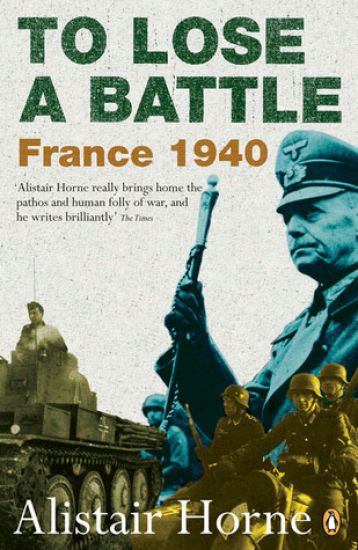
To Lose a Battle

To Lose a Battle

Alistair Horne

Penguin Books Ltd
2007
pokkari
To Lose a Battle: France 1940 is the final book of Alistair Horne's trilogy, which includes The Fall of Paris and The Price of Glory and tells the story of the great crises of the rivalry between France and Germany. In 1940 Hitler sent his troops to execute the Fall of France. A six-week battle with lightning 'blitzkrieg' warfare and combined operations techniques, the offensive ended the Phony War and sent the French forces reeling as their government fled from occupied Paris. For the Axis, it was a dramatic victory. But how was this spectacular result possible? In To Lose a Battle Alistair Horne tells the day-by-day, moment-by-moment story of the battle, sifted from the vast Nazi archives and the fragmentary records of the beaten Allies. Using eye-witness accounts of battle operations and personal memoirs of leading figures on both sides, this book steps far beyond the confines of military accounts to form a major contribution to our understanding of this important period in European history. 'Alistair Horne really brings home the pathos and human folly of war, and he writes brilliantly' The Times 'Horne follows his line unfalteringly. All the details are there: the small, fleeting triumphs, the greater disasters, the bravery, the cowardice, the stupidity and the intelligence ... that make war so fascinating and so terrible' Economist 'Horne completes his masterly trilogy ... the definitive account of one of the most efficient and astonishing campaigns of all time' The Times Literary Supplement One of Britain's greatest historians, Sir Alistair Horne, CBE, is the author of a trilogy on the rivalry between France and Germany, The Price of Glory, The Fall of Paris and To Lose a Battle, as well as a two-volume life of Harold Macmillan.

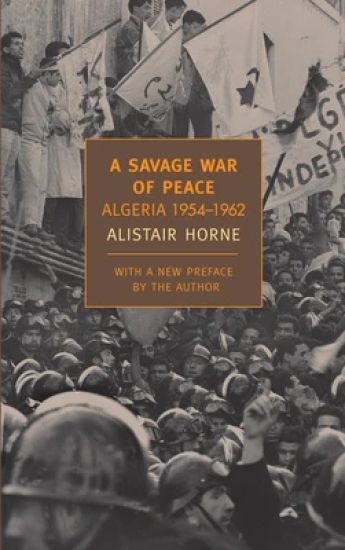
A Savage War Of Peace

A Savage War Of Peace

Alistair Horne

NYRB Classics
2006
nidottu
The Algerian War lasted from 1954 to 1962. It brought down six French governments, led to the collapse of the Fourth Republic, returned de Gaulle to power, and came close to provoking a civil war on French soil. More than a million Muslim Algerians died in the conflict and as many European settlers were driven into exile. Above all, the war was marked by an unholy marriage of revolutionary terror and repressive torture. Nearly a half century has passed since this savagely fought war ended in Algeria's independence, and yet--as Alistair Horne argues in his new preface to his now-classic work of history--its repercussions continue to be felt not only in Algeria and France, but throughout the world. Indeed from today's vantage point the Algerian War looks like a full-dress rehearsal for the sort of amorphous struggle that convulsed the Balkans in the 1990s and that now ravages the Middle East, from Beirut to Baghdad--struggles in which questions of religion, nationalism, imperialism, and terrorism take on a new and increasingly lethal intensity. A Savage War of Peace is the definitive history of the Algerian War, a book that brings that terrible and complicated struggle to life with intelligence, assurance, and unflagging momentum. It is essential reading for our own violent times as well as a lasting monument to the historian's art.
La Belle France: A Short History

La Belle France: A Short History

Alistair Horne

VINTAGE
2006
nidottu
A concise history of France ranges from the invasion of Gaul by Julius Caesar to the events of the twentieth century, profiling the lives of the great political leaders, artists, philosophers, writers, musicians, and others who helped shape Western culture and thought, and examining the impact of important events, social movements, military campaigns, and more. Reprint. 12,500 first printing.
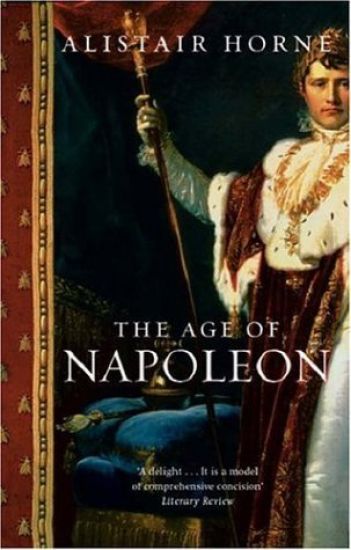
The Age of Napoleon

The Age of Napoleon

Alistair Horne

Modern Library
2006
nidottu
An account of the reign and legacy of Napoleon covers his birth into poverty, rise to prominence after the French Revolution, military prowess, and twenty-year rule, during which he made significant changes in such areas as the social hierarchy, censorship, and culture. Reprint. 15,000 first printing.
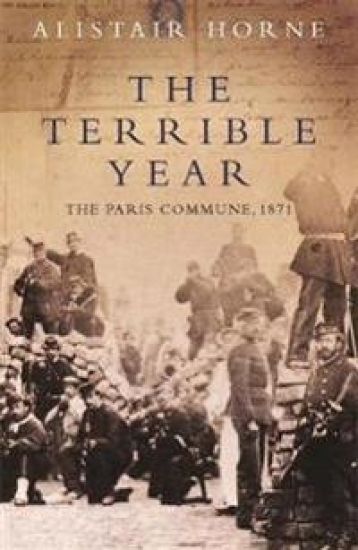
The Terrible Year

The Terrible Year

Alistair Horne

Weidenfeld Nicolson
2004
pokkari
A bestselling historian on a crucial episode in French history.Beneath the glittering façade of Louis-Napoleon's Second Empire there were forces of seething social and political unrest. When France succumbed to the Prussian invaders these forces came to the surface and the Commune took over. It ruled for only a brief seventy days before it died in a holocaust of fire and bloodshed that was far worse than anything perpetrated during France's Great Revolution of 1789, but it left behind an indelible mark which spread far beyond the boundaries of France.'A brilliant writer' New York Times Book Review
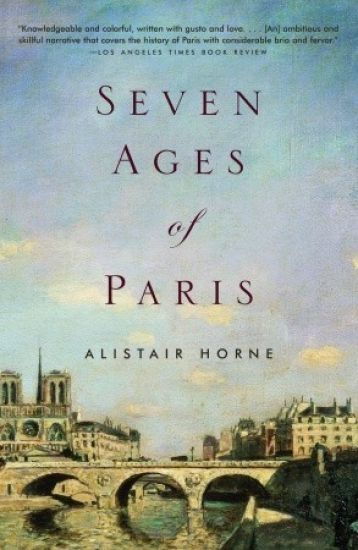
Seven Ages of Paris

Seven Ages of Paris

Alistair Horne

VINTAGE
2004
nidottu
In this luminous portrait of Paris, the celebrated historian gives us the history, culture, disasters, and triumphs of one of the world's truly great cities. While Paris may be many things, it is never boring. From the rise of Philippe Auguste through the reigns of Henry IV and Louis XIV (who abandoned Paris for Versailles); Napoleon's rise and fall; Baron Haussmann's rebuilding of Paris (at the cost of much of the medieval city); the Belle Epoque and the Great War that brought it to an end; the Nazi Occupation, the Liberation, and the postwar period dominated by de Gaulle--Horne brings the city's highs and lows, savagery and sophistication, and heroes and villains splendidly to life. With a keen eye for the telling anecdote and pivotal moment, he portrays an array of vivid incidents to show us how Paris endures through each age, is altered but always emerges more brilliant and beautiful than ever. The Seven Ages of Paris is a great historian's tribute to a city he loves and has spent a lifetime learning to know. "Knowledgeable and colorful, written with gusto and love.... An] ambitious and skillful narrative that covers the history of Paris with considerable brio and fervor."--LOS ANGELES TIMES BOOK REVIEW
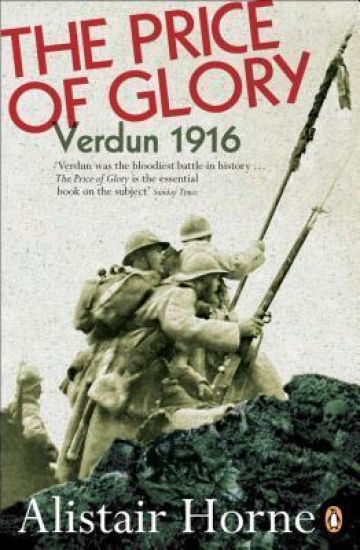
The Price of Glory

The Price of Glory

Alistair Horne

Penguin Books Ltd
1993
pokkari
The Price of Glory: Verdun 1916 is the second book of Alistair Horne's trilogy, which includes The Fall of Paris and To Lose a Battle and tells the story of the great crises of the rivalry between France and Germany. The battle of Verdun lasted ten months. It was a battle in which at least 700,000 men fell, along a front of fifteen miles. Its aim was less to defeat the enemy than bleed him to death and a battleground whose once fertile terrain is even now a haunted wilderness. Alistair Horne's classic work, continuously in print for over fifty years, is a profoundly moving, sympathetic study of the battle and the men who fought there. It shows that Verdun is a key to understanding the First World War to the minds of those who waged it, the traditions that bound them and the world that gave them the opportunity. 'Verdun was the bloodiest battle in history ... The Price of Glory is the essential book on the subject' Sunday Times 'It has almost every merit ... Horne sorts out complicating issues with the greatest clarity. He has a splendid gift for depicting individuals' A.J.P. Taylor, Observer 'A masterpiece' The New York Times 'Compellingly told ... Alastair Horne uses contemporary accounts from both sides to build up a picture of heroism, mistakes, even farce' Sunday Telegraph 'Brilliantly written ... very readable; almost like a historical novel - except that it is true' Field Marshal Viscount Montgomery One of Britain's greatest historians, Sir Alistair Horne, CBE, is the author of a trilogy on the rivalry between France and Germany, The Price of Glory, The Fall of Paris and To Lose a Battle, as well as a two-volume life of Harold Macmillan.