Kirjojen hintavertailu. Mukana 12 316 714 kirjaa ja 12 kauppaa.

Kirjailija

Allan Chapman

Kirjat ja teokset yhdessä paikassa: 15 kirjaa, julkaisuja vuosilta 1999-2025, suosituimpien joukossa The Victorian Amateur Astronomer. Vertaile teosten hintoja ja tarkista saatavuus suomalaisista kirjakaupoista.

15 kirjaa

Kirjojen julkaisuhaarukka 1999-2025.

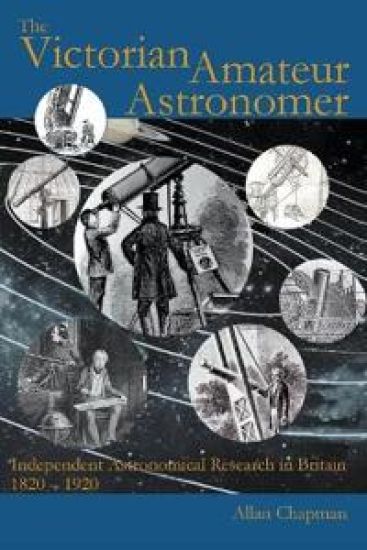
The Victorian Amateur Astronomer

The Victorian Amateur Astronomer

Allan Chapman

Gracewing
2017
nidottu
This is the first book to look in detail at amateur astronomy in Victorian Britain. It deals with the technical issues that were active in Victorian astronomy, and reviews the problems of finance, patronage and the dissemination of scientific ideas, including the relationship between the amateur and the professional in Britain. It contains a wealth of previously unpublished biographical and anecdotal material, and an extended bibliography with notes incorporating much new scholarship.This long-awaited new edition of the Victorian Amateur Astronomer brings Allan Chapman's ground-breaking research on the role of the amateur in the development of astronomy to a new generation. He shows that while on the Continent astronomical research was lavishly supported by the state, in Britain such research was paid for out of the pockets of highly educated, wealthy gentlemen - the so-called 'Grand Amateurs'. It was these powerful individuals who commissioned the telescopes, built the observatories, ran the learned societies, and often stole discoveries from their state-employed colleagues abroad.In addition to the 'Grand Amateurs', Victorian Britain also contained many self-taught amateurs. Although they belonged to no learned societies, these people provide a barometer of the popularity of astronomy in that age. In the late 19th century, the comfortable middle classes - clergymen, lawyers, physicians and retired military officers - took to astronomy as a serious hobby. They formed societies which focused on observation, lectures and discussion, and it was through this medium that women first came to play a significant role in British astronomy.Readership: Undergraduate and postgraduate students studying the history of science or humanities, professional historians of science, engineering and technology, particularly those with an interest in astronomy, the development of astronomical ideas, and scientific instrument-makers, and amateur astronomers.Allan Chapman is a graduate of the University of Lancaster, and he received his D.Phil. from the University of Oxford. He holds three honorary doctorates from British universities, and was the 2015 Jackson-Gwilt Medallist of the Royal Astronomical Society. He is the author of eleven other books on the history of science and around 200 articles in international academic journals. He teaches in the Faculty of History at Oxford University, is a Member of

The Victorians and the Holy Land: Adventurers, Tourists, and Archaeologists in the Lands of the Bible
Why were people in the Victorian age fascinated with the archaeological mysteries of the Holy Land? In this engaging study, Allan Chapman shows how the Holy Land took on new meaning for Europeans during the Victorian era. Previously, most Europeans had viewed the area between the Mediterranean Sea and the eastern bank of the Jordan River as a literary backdrop for biblical narratives. During the nineteenth century, however, they began to take interest in this region as a literal, physical place. Technological inventions such as steam-powered travel, telegraphy, and photography made the Holy Land more accessible. In public museums, ordinary people could view artifacts ranging from Egyptian mummies to statues from Nimrud and Nineveh. In linguistics, translations of Egyptian hieroglyphs and Assyrian cuneiform broadened Europeans' awareness of myths, legends, and history. These discoveries in archaeology and linguistics brought new energy to nineteenth-century debates about whether the Scriptures were based on factual history. In addition to explaining how Holy Land studies changed during the Victorian era, Allan Chapman identifies key people who facilitated those changes. He introduces readers to a diverse demographic that includes adventurers, astronomers, missionaries, ministers, learned women of independent means, and Queen Victoria's eldest son. Driven by a wide range of professional and personal motives, these individuals had a powerful impact on the Victorian public's understanding of the Holy Land.
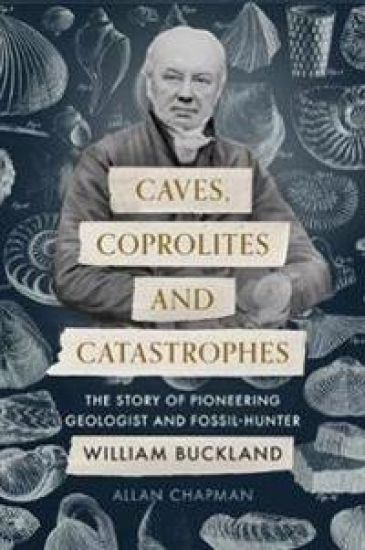
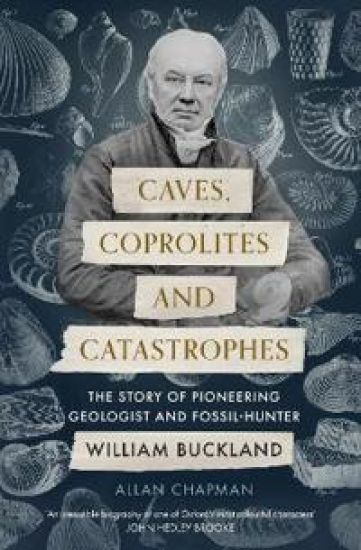
Caves, Coprolites and Catastrophes

Caves, Coprolites and Catastrophes

Allan Chapman

SPCK PUBLISHING
2022
nidottu
'An irresistible biography of one of Oxford's most colourful characters.' John Hedley Brooke In 1824, William Buckland stood in front of the Royal Geological Society and told them about the bones he had been studying - the bones of an enormous, lizard-like creature, that he called Megalosaurus. This was the first full account of a dinosaur. During his life, Buckland would also demonstrate changes in the earth's climate, champion health reform, wage war on slum landlords, and become infamous for eating everything he could, even a mummified human heart. Yet his name has been largely, and unjustly, forgotten. In this brilliantly entertaining, colourful biography - the first to be written for over a century - Allan Chapman brings William Buckland back into the light and explores his fascinating life in full. From his pioneering of geology and agricultural science to becoming Dean of Westminster, Caves, Coprolites and Catastrophes reveals a giant of intellect whose achievements helped revolutionise the British scientific community. Carefully balancing Buckland's more eccentric escapades with his scientific prowess and the clash between science and religion in the 19th Century, Caves, Coprolites and Catastrophes is vivid, informative and thoroughly compelling. A captivating story packed full of compelling insights into the world of Victorian science and its relationship with the Christian faith, Caves, Coprolites and Catastrophes is an unmissable biography of an exceptional scientist whose legacy extends down to this day.
Caves, Coprolites and Catastrophes

Caves, Coprolites and Catastrophes

Allan Chapman

SPCK Publishing
2020
sidottu
‘An irresistible biography of one of Oxford’s most colourful characters.’ John Hedley Brooke In 1824, William Buckland stood in front of the Royal Geological Society and told them about the bones he had been studying – the bones of an enormous, lizard-like creature, that he called Megalosaurus. This was the first full account of a dinosaur. During his life, Buckland would also demonstrate changes in the earth’s climate, champion health reform, wage war on slum landlords, and become infamous for eating everything he could, even a mummified human heart. Yet his name has been largely, and unjustly, forgotten. In this brilliantly entertaining, colourful biography – the first to be written for over a century – Allan Chapman brings William Buckland back into the light and explores his fascinating life in full. From his pioneering of geology and agricultural science to becoming Dean of Westminster, Caves, Coprolites and Catastrophes reveals a giant of intellect whose achievements helped revolutionise the British scientific community. Carefully balancing Buckland’s more eccentric escapades with his scientific prowess and the clash between science and religion in the 19th Century, Caves, Coprolites and Catastrophes is vivid, informative and thoroughly compelling. A captivating story packed full of compelling insights into the world of Victorian science and its relationship with the Christian faith, Caves, Coprolites and Catastrophes is an unmissable biography of an exceptional scientist whose legacy extends down to this day.
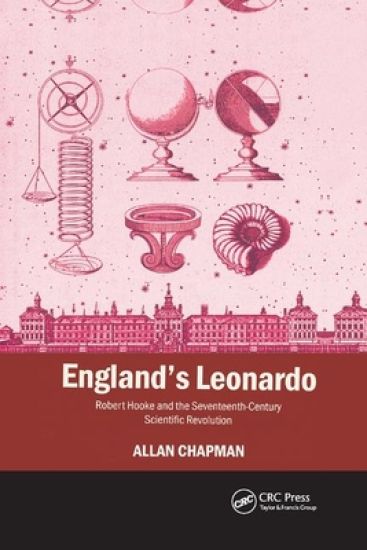
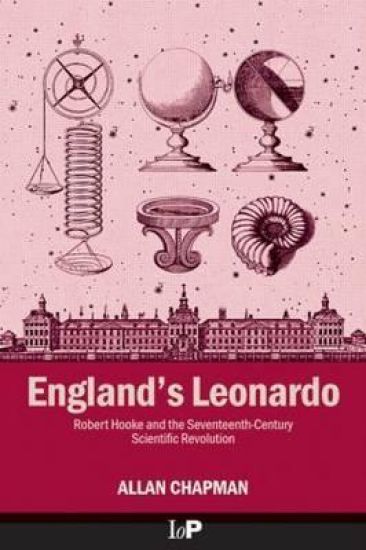
England's Leonardo

England's Leonardo

Allan Chapman

CRC Press
2019
nidottu
All physicists are familiar with Hooke's law of springs, but few will know of his theory of combustion, that his Micrographia was the first book on microscopy, that his astronomical observations were some of the best seen at the time, that he contributed to the knowledge of respiration, insect flight and the properties of gases, that his work on gravitation preceded that of Newton's, that he invented the universal joint, and that he was an architect of distinction and a surveyor for the City of London after the Great Fire. England's Leonardo is a biography of Hooke covering all aspects of his work, from his early life on the Isle of Wight through his time at Oxford University, where he became part of a group who would form the original Fellowship of the Royal Society. The author adopts a novel approach at this stage, dividing the book by chapter according to the fields of research-Physiology, Engineering, Microscopy, Astronomy, Geology, and Optics-in which Hooke applied himself. The book concludes with a chapter considering the legacy of Hooke and his impact on science.
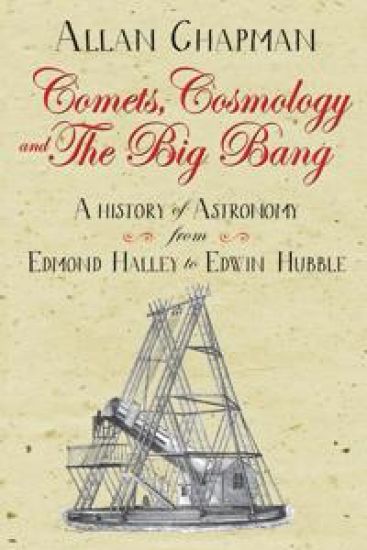
Comets, Cosmology and the Big Bang

Comets, Cosmology and the Big Bang

Allan Chapman

Lion Books
2018
nidottu
This book will take the story of astronomy on from where Allan Chapman left it in Stargazers, and bring it almost up to date, with the developments and discoveries of the last three centuries. He covers the big names - Halley, Hooke, Herschel, Hubble and Hoyle; and includes the women who pushed astronomy forward, from Caroline Herschel to the Victorian women astronomers. He includes the big discoveries and the huge ideas, from the Milky War, to the Big Bang, the mighty atom, and the question of life on other planets. And he brings in the contributions made in the US, culminating in their race with the USSR to get a man on the moon, before turning to the explosion of interest in astronomy that was pioneered by Sir Patrick Moore and The Sky at Night.
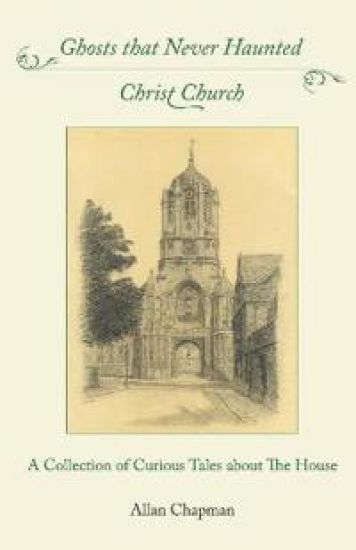
Ghosts that Never Haunted Christ Church
Allan Chapman has had a life-long fascination for ghost stories, with an imagination fired from a childhood spent in a tiny, initially gas-lit cottage in Lancashire. This imagination lies at the heart of Ghosts that Never Haunted Christ Church. With the exception of the story of the revival of Anne Greene, a welldocumented true story from 1650, and the recent 'Ghosts that might well haunt Christ Church', all the tales in this book are a curious mixture of genuine historical fact, legend, and fiction. For while many of the ghosts in these tales may not have haunted Christ Church--or at least not in the way described-- the historical setting which they haunted is largely true. The names of real historical figures and Christ Church buildings which either still exist or were later demolished to be replaced by more recent ones all intermix to form an entertaining combination of fact and fiction. Over the centuries, Christ Church has displayed three notable features: the Cathedral Church, with its Canons and clerical dons; a rich and glorious musical tradition; and great distinction in scientific and medical research. They all appear, in various guises, in these ghost stories. Clergymen, choristers, organists, chemists, scientists, heroic College porters, inventors, animals, and anatomists are all there. Yet whether a tale be heart-warming, grisly, or downright horrific, each resolves into its own positive ending. For Christ Church has never been a bleak or negative place, preferring good fellowship to angst and misery; and so with its ghosts. For at the end of the day, peace comes to all. So read on, and prepare to be affrighted, amused, and delighted
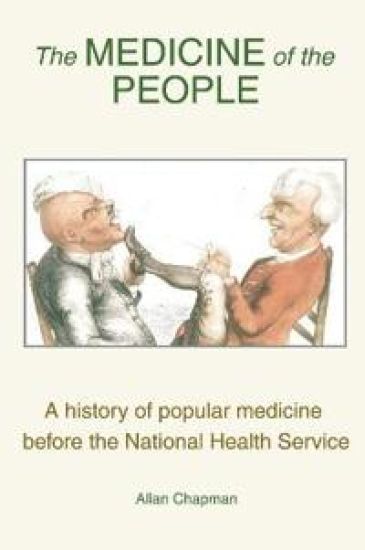
Medicine of the People

Medicine of the People

Allan Chapman

Gracewing
2018
nidottu
So much research in the history of medicine has been devoted to the development of medicine as a progressive science. The Medicine of the People, however, looks at the medical perceptions of lay people over the last four centuries. Lying at the heart of these perceptions is a set of ideas first formulated by Hippocrates, Aristotle and other ancient Greek physicians, which tried to understand illness in terms of vital properties. These included the four Humours of Yellow Bile, Black Bile, Blood and Phlegm, the centrality of the heart as a 'sensitive' organ, the brain as a cooling plant for the blood, and health as a state of balance between hot, cold, moist and dry forces. Such a notion of disease runs through Chaucer, Shakespeare and the early academic physicians, though it lost scientific credibility in the eighteenth century.Seventy years after the institution of the National Health Service in Great Britain, The Medicine of the People traces the persistence of the old traditions before its foundation - through popular writers, preachers like John Wesley, Victorian quack advertising and even music hall songs. Based on extensive archival research and interviews with elderly people and doctors, The Medicine of the People looks at an approach to medicine originating in the ancient world, widespread in mediaeval times, familiar to Shakespeare's groundlings, part of the culture of Victorian factory-workers and which came to be re-invented as alternative medicine.
Physicians, Plagues and Progress

Physicians, Plagues and Progress

Allan Chapman

Lion Books
2018
pokkari
Since the dawn of time, man has sought to improve his health and that of his neighbour. The human race, around the world, has been on a long and complex journey, seeking to find out how our bodies work, and what heals them. Embarking on a four-thousand-year odyssey, science historian Allan Chapman brings to life the origin and development of medicine and surgery. Writing with pace and rigorous accuracy, he investigates how we have battled against injury and disease, and provides a gripping and highly readable account of the various victories and discoveries along the way. Drawing on sources from across Europe and beyond, Chapman discusses the huge contributions to medicine made by the Greeks, the Romans, the early medieval Arabs, and above all by Western Christendom, looking at how experiment, discovery, and improving technology impact upon one another to produce progress. This is a fascinating, insightful read, enlivened with many colourful characters and memorable stories of inspired experimenters, theatrical surgeons, student pranks, body-snatchers, 'mad-doctors', quacks, and charitable benefactors.
The Victorian Amateur Astronomer

The Victorian Amateur Astronomer

Allan Chapman

Gracewing
2017
sidottu
This is the first book to look in detail at amateur astronomy in Victorian Britain. It deals with the technical issues that were active in Victorian astronomy, and reviews the problems of finance, patronage and the dissemination of scientific ideas, including the relationship between the amateur and the professional in Britain. It contains a wealth of previously unpublished biographical and anecdotal material, and an extended bibliography with notes incorporating much new scholarship.This long-awaited new edition of the Victorian Amateur Astronomer brings Allan Chapman's ground-breaking research on the role of the amateur in the development of astronomy to a new generation. He shows that while on the Continent astronomical research was lavishly supported by the state, in Britain such research was paid for out of the pockets of highly educated, wealthy gentlemen - the so-called 'Grand Amateurs'. It was these powerful individuals who commissioned the telescopes, built the observatories, ran the learned societies, and often stole discoveries from their state-employed colleagues abroad.In addition to the 'Grand Amateurs', Victorian Britain also contained many self-taught amateurs. Although they belonged to no learned societies, these people provide a barometer of the popularity of astronomy in that age. In the late 19th century, the comfortable middle classes - clergymen, lawyers, physicians and retired military officers - took to astronomy as a serious hobby. They formed societies which focused on observation, lectures and discussion, and it was through this medium that women first came to play a significant role in British astronomy.Readership: Undergraduate and postgraduate students studying the history of science or humanities, professional historians of science, engineering and technology, particularly those with an interest in astronomy, the development of astronomical ideas, and scientific instrument-makers, and amateur astronomers.Allan Chapman is a graduate of the University of Lancaster, and he received his D.Phil. from the University of Oxford. He holds three honorary doctorates from British universities, and was the 2015 Jackson-Gwilt Medallist of the Royal Astronomical Society. He is the author of eleven other books on the history of science and around 200 articles in international academic journals. He teaches in the Faculty of History at Oxford University, is a Member of
Physicians, Plagues and Progress

Physicians, Plagues and Progress

Allan Chapman

Lion Books
2016
sidottu
From earliest times, man has struggled to control his environment and his fate, and a big part of that has always been his health. From the ancients onwards, the study of medicine, including surgery, has exercised some of the greatest minds - and brought profits to some of the less great. Drawing on sources across Europe and beyond, including the huge contributions to medicine made in medieval Arabia and India, Chapman takes us on a whirlwind tour of what was known when, and what impact it had.
Mary Somerville and the World of Science

Mary Somerville and the World of Science

Allan Chapman

Springer International Publishing AG
2014
nidottu
Mary Somerville (1780-1872), after whom Somerville College Oxford was named, was the first woman scientist to win an international reputation entirely in her own right, rather than through association with a scientific brother or father.She was active in astronomy, one of the most demanding areas of science of the day, and flourished in the unique British tradition of Grand Amateurs, who paid their own way and were not affiliated with any academic institution.Mary Somerville was to science what Jane Austen was to literature and Frances Trollope to travel writing. Allan Chapman’s vivid account brings to light the story of an exceptional woman, whose achievements in a field dominated by men deserve to be very widely known.
Slaying the Dragons

Slaying the Dragons

Allan Chapman

Lion Books
2013
pokkari
In 'Slaying the Dragons', professor and member of the Faculty of History at Wadham College, Oxford, Allan Chapman examines the claims of the 'New Atheists that: religion really belongs to an earlier phase of human development, and that nowadays science has taken its place as the yardstick of authority. But are science and religion friends or foes? There are a great many scientists of the highest intellectual distinction - ranging from cosmology to medical research, who make no bones about their faith and cannot understand what the 'New Atheists' are getting so worked up about. Chapman explores whether anything has changed in the nature of scientific discovery to allow for the modern atheistic interpretations of science that did not exist in the past. He also examines whether or not modern discoveries in biology, brain science, cosmology and physics seriously undermine religious belief. In this study, Allan Chapman examines popular misunderstandings about key events in the history of science-faith relations. He covers the major episodes such as Galileo's trial, the Wilberforce-Huxley debate and the Scopes trial of 1925, but also looks further back through the medieval period to the Classical age, revealing how these events have acquired mythical and misleading status. Asking if religious modern scientists just the fools that new atheists paint them to be, or are the latter just so blind in their dogmatic brain-washing that they cannot see the bigger world beyond their test-tubes, 'Slaying the Dragons' exposes the atheists' worn-out tale which itself goes back centuries, and which they are trying to spice up with big helpings of rhetoric and ridicule.
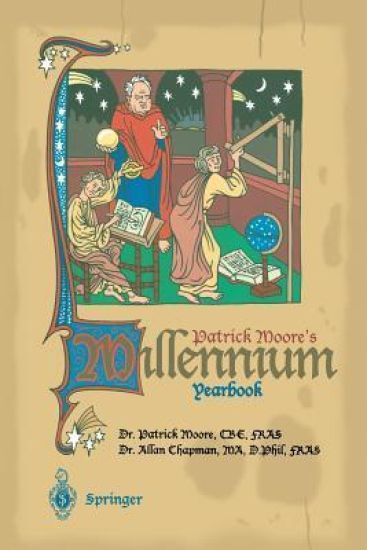
Patrick Moore’s Millennium Yearbook

Patrick Moore’s Millennium Yearbook

Patrick Moore; Allan Chapman

Springer London Ltd
1999
nidottu
In a year that will probably be remembered almost as much for books about the millennium as for the turn of 2000 A.D itself, Patrick Moore's Millennium Yearbook celebrates.....well, the wrong millennium! This thoroughly entertaining book - which is for everyone, not just astronomers - contains articles on King Alfred's chronological work, reviews of the new Star Catalogue by the Arab Al-Sufi and the latest edition of Ptolemy's Almagast. And foreshadowing the change to metric units by 1000 years, the book uses arabic numbers instead of Roman - but there is a conversion table if you have trouble with the idea of "zero" and prefer the older system.