

Kirjailija
Allan Mitchell
Kirjat ja teokset yhdessä paikassa: 31 kirjaa, julkaisuja vuosilta 1979-2023, suosituimpien joukossa A Stranger in Paris. Vertaile teosten hintoja ja tarkista saatavuus suomalaisista kirjakaupoista.
31 kirjaa
Kirjojen julkaisuhaarukka 1979-2023.

An insider history of the Edmonton Oilers at the NHL draft A singular, transcendent talent can change the fortunes of a hockey team instantly. Each year, NHL teams approach the draft with this knowledge, hoping that luck will be on their side and that their extensive scouting and analysis will pay off. In On the Clock: Edmonton Oilers, Allan Mitchell explores the fascinating, rollercoaster history of the Oilers at the draft, from first pick Kevin Lowe through Connor McDavid and beyond. Readers will go behind the scenes with top decision-makers as they evaluate, deliberate, and ultimately make the picks they hope will tip the fate of their franchise toward success.From seemingly surefire first-rounders to surprising late selections, this is a must-read for Oilers faithful and hockey fans eager for a glimpse at how teams are built.

Author of Nazi Paris, a Choice Academic Book of the Year, Allan Mitchell has researched a companion volume concerning the acclaimed and controversial German author Ernst Jünger who, if not the greatest German writer of the twentieth century, certainly was the most controversial. His service as a military officer during the occupation of Paris, where his principal duty was to mingle with French intellectuals such as Jean Cocteau and with visiting German celebrities like Martin Heidegger, was at the center of disputes concerning his career. Spending more than three years in the French capital, he regularly recorded in a journal revealing impressions of Parisian life and also managed to establish various meaningful social contacts, with the intriguing Sophie Ravoux for one. By focusing on this episode, the most important of Jünger’s adult life, the author brings to bear a wide reading of journals and correspondence to reveal Jünger’s professional and personal experience in wartime and thereafter. This new perspective on the war years adds significantly to our understanding of France's darkest hour.

Emotion-filled memories come cascading from the mind of Britain's foremost investigator as a troubled Glastonbury sends its emissaries to beg help in solving a series of poisonings besetting a region Holmes had experienced and explored as a young lad.Somerset, battleground of successive invaders over the centuries, has a secret which forms a bond between all those born under the mantle of Britannia, a secret trying to break free but which, in doing so, might destroy the very fabric of Britain's hard-won but still tenuous unity.Sherlock Holmes, summoned to solve a murder threatening ruin to greater Glastonbury's commercial prosperity, finds that there are deeper motives behind his summons and that one secret hides a great many more and forces the Great Sleuth to make a decidedly deadly decision to taunt the grim and ghastly Ghoul of Glastonbury.




The tangled affairs in Bavaria at the close of World War I constitute a unique and important part of the early Weimar Republic. This study of the 1918 revolution, based on archival sources such as cabinet protocols and bureaucratic records, traces in detail the overthrow of the Wittelsbach dynasty and the foundation of the Bavarian Republic under Kurt Eisner. It also broadens and balances current understanding of the first Communist attempts to penetrate the heartland of Europe. Originally published in 1965. The Princeton Legacy Library uses the latest print-on-demand technology to again make available previously out-of-print books from the distinguished backlist of Princeton University Press. These editions preserve the original texts of these important books while presenting them in durable paperback and hardcover editions. The goal of the Princeton Legacy Library is to vastly increase access to the rich scholarly heritage found in the thousands of books published by Princeton University Press since its founding in 1905.




The tangled affairs in Bavaria at the close of World War I constitute a unique and important part of the early Weimar Republic. This study of the 1918 revolution, based on archival sources such as cabinet protocols and bureaucratic records, traces in detail the overthrow of the Wittelsbach dynasty and the foundation of the Bavarian Republic under Kurt Eisner. It also broadens and balances current understanding of the first Communist attempts to penetrate the heartland of Europe. Originally published in 1965. The Princeton Legacy Library uses the latest print-on-demand technology to again make available previously out-of-print books from the distinguished backlist of Princeton University Press. These editions preserve the original texts of these important books while presenting them in durable paperback and hardcover editions. The goal of the Princeton Legacy Library is to vastly increase access to the rich scholarly heritage found in the thousands of books published by Princeton University Press since its founding in 1905.

BEST KNOWN AS THE LEADING HISTORIAN OF FRENCH RAILWAYS, François Caron has also conducted significant research on other aspects of economic development in the nineteenth and twentieth centuries, such as electricity, water and steam power, the theory of innovation, and the structure of enterprise. In this volume, he brings together different facets of his expertise to present a broad panorama of modern technological history. Caron shows how artisanal know-how was adapted, expanded, and formalized during the three industrial revolutions that swept over Great Britain, France, Germany, and the United States, resulting in a comprehensive analysis of this long, complex, and continuous historical process, leading up to the twenty-first century. He thereby illustrates the increasingly fruitful interaction between technological and scientific knowledge in modern times.

A call from an old comrade has Holmes chasing a reported agent of Satan between the towering tors and bottomless bogs of Dartmoor only to find the limits of his own confidence and his Public's esteem. Only Watson stands his friend but even his patience is stretched. Sherlock's retreat to the bees of Sussex serves only to show him that his skills are unique and are desperately needed elsewhere. On returning to London, Holmes finds malign forces have been bringing ridicule to his doorstep. In this tale, the Great Sleuth is brought to life, uniquely, in expressive verse, a favourite form of the author who loves the language of Sherlock Holmes and the Menacing Moors.

BEST KNOWN AS THE LEADING HISTORIAN OF FRENCH RAILWAYS, François Caron has also conducted significant research on other aspects of economic development in the nineteenth and twentieth centuries, such as electricity, water and steam power, the theory of innovation, and the structure of enterprise. In this volume, he brings together different facets of his expertise to present a broad panorama of modern technological history. Caron shows how artisanal know-how was adapted, expanded, and formalized during the three industrial revolutions that swept over Great Britain, France, Germany, and the United States, resulting in a comprehensive analysis of this long, complex, and continuous historical process, leading up to the twenty-first century. He thereby illustrates the increasingly fruitful interaction between technological and scientific knowledge in modern times.




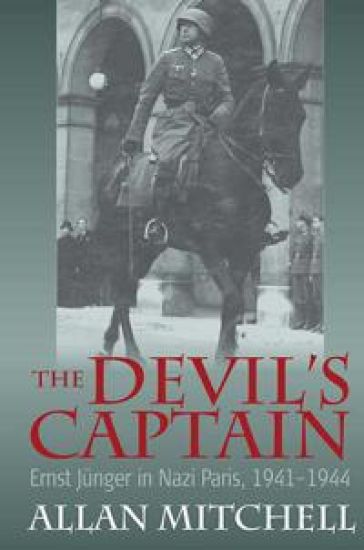
Author of Nazi Paris, a Choice Academic Book of the Year, Allan Mitchell has researched a companion volume concerning the acclaimed and controversial German author Ernst Jünger who, if not the greatest German writer of the twentieth century, certainly was the most controversial. His service as a military officer during the occupation of Paris, where his principal duty was to mingle with French intellectuals such as Jean Cocteau and with visiting German celebrities like Martin Heidegger, was at the center of disputes concerning his career. Spending more than three years in the French capital, he regularly recorded in a journal revealing impressions of Parisian life and also managed to establish various meaningful social contacts, with the intriguing Sophie Ravoux for one. By focusing on this episode, the most important of Jünger’s adult life, the author brings to bear a wide reading of journals and correspondence to reveal Jünger’s professional and personal experience in wartime and thereafter. This new perspective on the war years adds significantly to our understanding of France's darkest hour.