Kirjojen hintavertailu. Mukana 12 595 353 kirjaa ja 12 kauppaa.

Kirjailija

Allen M. Dewey

Kirjat ja teokset yhdessä paikassa: 2 kirjaa, julkaisuja vuosilta 1990-2011, suosituimpien joukossa Principles of VLSI System Planning. Vertaile teosten hintoja ja tarkista saatavuus suomalaisista kirjakaupoista.

2 kirjaa

Kirjojen julkaisuhaarukka 1990-2011.

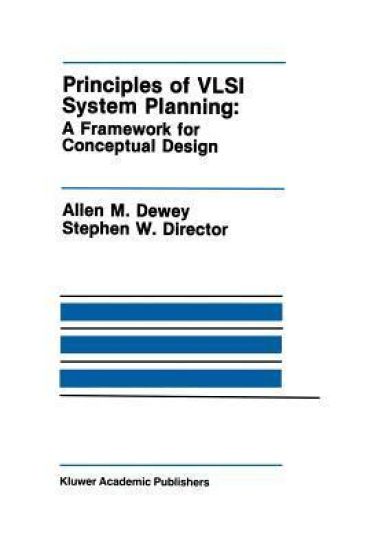
Principles of VLSI System Planning

Principles of VLSI System Planning

Allen M. Dewey; Stephen W. Director

Springer-Verlag New York Inc.
2011
nidottu
This book describes a new type of computer aided VLSI design tool, called a VLSI System Planning, that is meant to aid designers dur­ ing the early, or conceptual, state of design. During this stage of design, the objective is to define a general design plan, or approach, that is likely to result in an efficient implementation satisfying the initial specifications, or to determine that the initial specifications are not realizable. A design plan is a collection of high level design decisions. As an example, the conceptual design of digital filters involves choosing the type of algorithm to implement (e. g. , finite impulse response or infinite impulse response), the type of polyno­ mial approximation (e. g. , Equiripple or Chebyshev), the fabrication technology (e. g. , CMOS or BiCMOS), and so on. Once a particu­ lar design plan is chosen, the detailed design phase can begin. It is during this phase that various synthesis, simulation, layout, and test activities occur to refine the conceptual design, gradually filling more detail until the design is finally realized. The principal advantage of VLSI System Planning is that the increasingly expensive resources of the detailed design process are more efficiently managed. Costly redesigns are minimized because the detailed design process is guided by a more credible, consistent, and correct design plan.
Principles of VLSI System Planning

Principles of VLSI System Planning

Allen M. Dewey; Stephen W. Director

Springer
1990
sidottu
This book describes a new type of computer aided VLSI design tool, called a VLSI System Planning, that is meant to aid designers dur­ ing the early, or conceptual, state of design. During this stage of design, the objective is to define a general design plan, or approach, that is likely to result in an efficient implementation satisfying the initial specifications, or to determine that the initial specifications are not realizable. A design plan is a collection of high level design decisions. As an example, the conceptual design of digital filters involves choosing the type of algorithm to implement (e. g. , finite impulse response or infinite impulse response), the type of polyno­ mial approximation (e. g. , Equiripple or Chebyshev), the fabrication technology (e. g. , CMOS or BiCMOS), and so on. Once a particu­ lar design plan is chosen, the detailed design phase can begin. It is during this phase that various synthesis, simulation, layout, and test activities occur to refine the conceptual design, gradually filling more detail until the design is finally realized. The principal advantage of VLSI System Planning is that the increasingly expensive resources of the detailed design process are more efficiently managed. Costly redesigns are minimized because the detailed design process is guided by a more credible, consistent, and correct design plan.