Kirjojen hintavertailu. Mukana 12 390 323 kirjaa ja 12 kauppaa.

Kirjailija

Allen S. Weiss

Kirjat ja teokset yhdessä paikassa: 10 kirjaa, julkaisuja vuosilta 1995-2024, suosituimpien joukossa French Food. Vertaile teosten hintoja ja tarkista saatavuus suomalaisista kirjakaupoista.

10 kirjaa

Kirjojen julkaisuhaarukka 1995-2024.

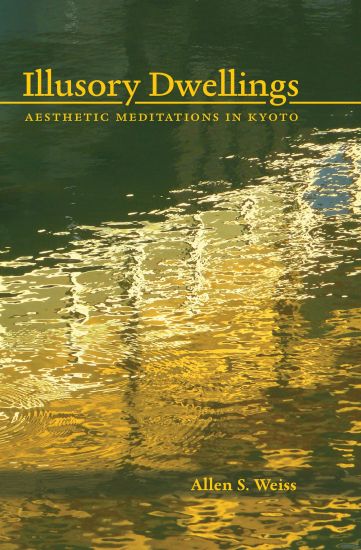
Illusory Dwellings

Illusory Dwellings

Allen S. Weiss

Stone Bridge Press
2024
pokkari
Essays on the nature, production, and presentation of art, craft, and architecture in Japan, inspired by the author’s experiences in Kyoto. Illusory Dwellings is not a guide concerning what to see in Kyoto, but a philosophical meditation on how to travel and observe in this capital of traditional Japanese art. Both intimate and scholarly, the book accompanies the reader on visits to famed gardens like Ryoan-ji, investigates the complex symbolism of the tea ceremony and the important role of the tea room, reveals the beauty of Japanese cuisine, and delves into the world of contemporary ceramics. It also provides context for the tensions and harmony between traditional and modern forms of art and craft in Kyoto and throughout Japan, and contrasts these with how they are received at home versus their treatment by Western museums in modernist contexts. Altogether this is an erudite and provocative analysis of artist and observer, a book to shape the reader’s aesthetic worldview and provide numerous occasions for discussion and debate. With over 50 black and white photographs.
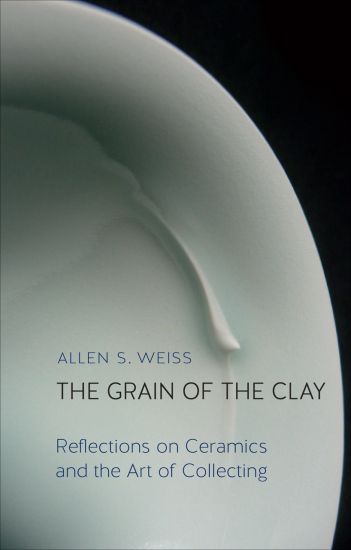
The Grain of the Clay

The Grain of the Clay

Allen S. Weiss

Reaktion Books
2016
sidottu
People collect to connect with the past, personal and historic, to exercise some small and perfect degree of control over a carefully chosen portion of the world. The Grain of the Clay is Allen S. Weiss’s engaging exploration of the meaning and practice of collecting through his relationship with Japanese ceramics. Weiss unfolds their world of materiality and pleasure and the culture and knowledge that extends out of their forms and uses.Japanese ceramics are celebrated for their profound material poetry, especially in relation to the natural world, and they maintain a unique place in the history of the arts and in the lives of those who collect and use them. The Grain of the Clay deepens our appreciation of ceramics while providing a critical meditation on collecting. Weiss examines the vast stylistic range of ceramics, investigating the reasons for viewing, using and collecting them. He explores ceramic objects’ relationship with cuisine as an art and as a part of everyday life. Ceramics are increasingly finding their rightful place in museums and Weiss shows how this newfound engagement with finely wrought natural materials might foster an increased ecological sensitivity. The Grain of the Clay will appeal to the collector in every one of us.
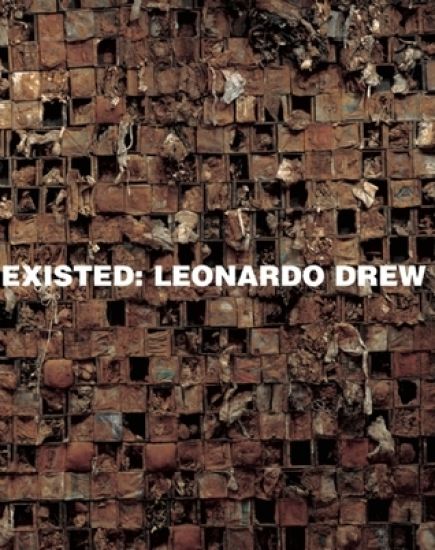
Leonardo Drew: Existed

Leonardo Drew: Existed

Claudia Schmuckli; Allen S. Weiss

D Giles Ltd
2009
sidottu
Throughout his career, Drew's formally abstract but emotionally charged compositions, made to resemble the detritus of everyday life, have combined qualities of painting and sculpture. Transcending any specific historic and ethnic reference his work has a unique aesthetic authority that is deeply embedded in the theory and practice of mid-20th-century abstraction. In 2004 Drew began to create sculptures using paper replicas of his collection of cast-off items to create a new visual poetry of lightness and simplicity, culminating most recently in his installation Number 123 (2006). This brand new volume, and accompanying exhibition, studies these recent developments, and presents a new installation conceived for the exhibition, Drew's grandest and most ambitious piece to date. Over 90 selected paintings realized between 1991 and 2005, and recent works on paper made between 2005 and 2008, offer a representative survey of Drew's artistic development and the new direction of his work.
The Wind and the Source

The Wind and the Source

Allen S. Weiss

State University of New York Press
2006
pokkari
What does it mean to love a landscape? Why do certain authors have a predilection for specific landscapes? Why might one be fascinated by a landscape in which one would never wish to live? How does the lay of the land fashion the form of the poem? How does the wind infuse the breath? In The Wind and the Source, Allen S. Weiss explores the role of a significant yet elusive feature of the French landscape in literature, philosophy, and art: the legendary, mysterious, monolithic Mont Ventoux. This is not a book about picturesque, touristic Provence, but about the manifestation of an extreme limit of the imagination that happens to have Provence as its site, as its fantasyland. Weiss is concerned with the vicissitudes of the desire to write about a landscape, the desire to write in a landscape, and perhaps most curiously, the desire to write against a landscape. This is a book about love of the landscape, and abstraction from it; it is an account of how a mountain became a myth, and how an aesthetic and literary study became a metaphysical quest.
The Wind and the Source

The Wind and the Source

Allen S. Weiss

State University of New York Press
2005
sidottu
What does it mean to love a landscape? Why do certain authors have a predilection for specific landscapes? Why might one be fascinated by a landscape in which one would never wish to live? How does the lay of the land fashion the form of the poem? How does the wind infuse the breath? In The Wind and the Source, Allen S. Weiss explores the role of a significant yet elusive feature of the French landscape in literature, philosophy, and art: the legendary, mysterious, monolithic Mont Ventoux. This is not a book about picturesque, touristic Provence, but about the manifestation of an extreme limit of the imagination that happens to have Provence as its site, as its fantasyland. Weiss is concerned with the vicissitudes of the desire to write about a landscape, the desire to write in a landscape, and perhaps most curiously, the desire to write against a landscape. This is a book about love of the landscape, and abstraction from it; it is an account of how a mountain became a myth, and how an aesthetic and literary study became a metaphysical quest.
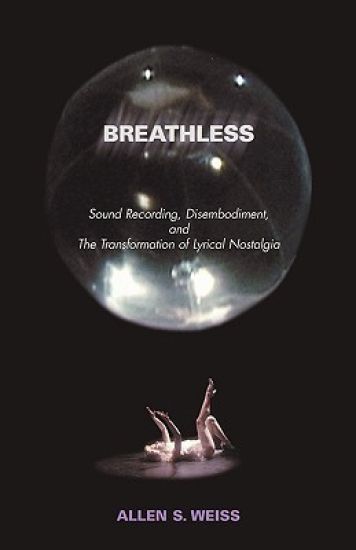
Breathless

Breathless

Allen S. Weiss

Wesleyan University Press
2002
nidottu
Breathless explores early sound recording and the literature that both foreshadowed its invention and was contemporaneous with its early years, revealing the broad influence of this new technology at the very origins of Modernism. Through close readings of works by Edgar Allan Poe, Stéphane Mallarmé, Charles Cros, Paul Valéry, Villiers de L'Isle-Adam, Jules Verne, and Antonin Artaud, Allen S. Weiss shows how sound recording's uncanny confluence of human and machine would transform our expectations of mourning and melancholia, transfiguring our intimate relation to death. Interdisciplinary, the book bridges poetry and literature, theology and metaphysics. As Breathless shows, the symbolic and practical roles of poetry and technology were transformed as new forms of nostalgia and eroticism arose.
French Food

French Food

Lawrence R. Schehr; Allen S. Weiss

Routledge
2001
sidottu
More than a book about food alone, French Food uses diet as a window into issues of nationality, literature, and culture in France and abroad. Outstanding contributors from cultural studies, literary criticism, performance studies, and the emerging field of food studies explore a wide range of food matters.
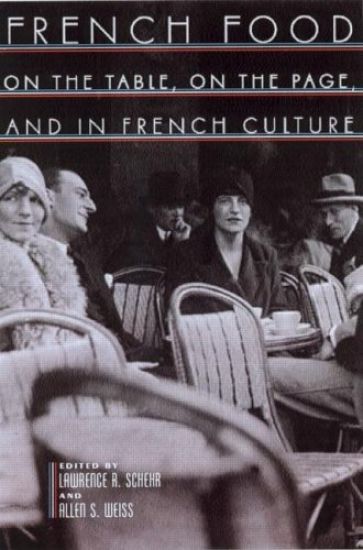
French Food

French Food

Lawrence R. Schehr; Allen S. Weiss

Routledge
2001
nidottu
More than a book about food alone, French Food uses diet as a window into issues of nationality, literature, and culture in France and abroad. Outstanding contributors from cultural studies, literary criticism, performance studies, and the emerging field of food studies explore a wide range of food matters.
Phantasmic Radio

Phantasmic Radio

Allen S. Weiss

Duke University Press
1995
pokkari
The alienation of the self, the annihilation of the body, the fracturing, dispersal, and reconstruction of the disembodied voice: the themes of modernism, even of modern consciousness, occur as a matter of course in the phantasmic realm of radio. In this original work of cultural criticism, Allen S. Weiss explores the meaning of radio to the modern imagination. Weaving together cultural and technological history, aesthetic analysis, and epistemological reflection, his investigation reveals how radiophony transforms expression and, in doing so, calls into question assumptions about language and being, body and voice.Phantasmic Radio presents a new perspective on the avant-garde radio experiments of Antonin Artaud and John Cage, and brings to light fascinating, lesser-known work by, among others, Valère Novarina, Gregory Whitehead, and Christof Migone. Weiss shows how Artaud’s "body without organs" establishes the closure of the flesh after the death of God; how Cage’s "imaginary landscapes" proffer the indissociability of techne and psyche; how Novarina reinvents the body through the word in his "theater of the ears." Going beyond the art historical context of these experiments, Weiss describes how, with their emphasis on montage and networks of transmission, they marked out the coordinates of modernism and prefigured what we now recognize as the postmodern.
Phantasmic Radio

Phantasmic Radio

Allen S. Weiss

Duke University Press
1995
sidottu
The alienation of the self, the annihilation of the body, the fracturing, dispersal, and reconstruction of the disembodied voice: the themes of modernism, even of modern consciousness, occur as a matter of course in the phantasmic realm of radio. In this original work of cultural criticism, Allen S. Weiss explores the meaning of radio to the modern imagination. Weaving together cultural and technological history, aesthetic analysis, and epistemological reflection, his investigation reveals how radiophony transforms expression and, in doing so, calls into question assumptions about language and being, body and voice.Phantasmic Radio presents a new perspective on the avant-garde radio experiments of Antonin Artaud and John Cage, and brings to light fascinating, lesser-known work by, among others, Valère Novarina, Gregory Whitehead, and Christof Migone. Weiss shows how Artaud’s "body without organs" establishes the closure of the flesh after the death of God; how Cage’s "imaginary landscapes" proffer the indissociability of techne and psyche; how Novarina reinvents the body through the word in his "theater of the ears." Going beyond the art historical context of these experiments, Weiss describes how, with their emphasis on montage and networks of transmission, they marked out the coordinates of modernism and prefigured what we now recognize as the postmodern.