Kirjailija
Allen Verhey
Kirjat ja teokset yhdessä paikassa: 8 kirjaa, julkaisuja vuosilta 1986-2013, suosituimpien joukossa A Voice for Justice. Vertaile teosten hintoja ja tarkista saatavuus suomalaisista kirjakaupoista.
8 kirjaa
Kirjojen julkaisuhaarukka 1986-2013.
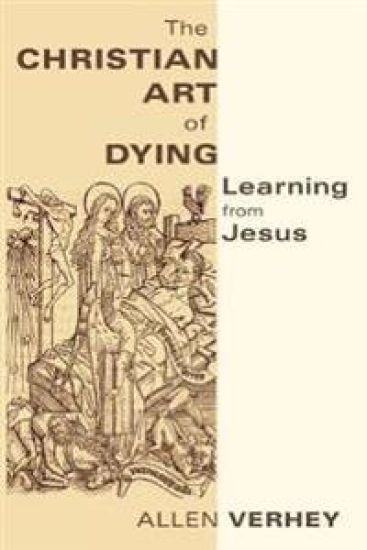
A renowned ethicist who himself faced death during a recent life-threatening illness, Allen Verhey in The Christian Art of Dying sets out to recapture dying from the medical world. Seeking to counter the medicalization of death that is so prevalent today, Verhey revisits the fifteenth-century Ars Moriendi, an illustrated spiritual self-help manual on -the art of dying.- Finding much wisdom in that little book but rejecting its Stoic and Platonic worldview, Verhey uncovers in the biblical accounts of Jesus' death a truly helpful paradigm for dying well and faithfully.
Historical-critical approaches to Scripture rule out some readings and commend others, but they rarely offer much help to either theological reflection or the preaching of the Word. They do not point the church forward in the life of discipleship.These commentaries have learned from tradition, but they are most importantly commentaries for today. The authors share the conviction that their work will be more contemporary, more faithful, and more radical, to the extent that it is more biblical, honestly wrestling with the texts of the Scriptures.--from the series introductionThe volumes in Belief: A Theological Commentary on the Bible from Westminster John Knox Press offer a fresh and invigorating approach to all the books of the Bible. Building on a wide range of sources from biblical studies, the history of theology, the church's liturgical and musical traditions, contemporary culture, and the Christian tradition, noted scholars focus less on traditional historical and literary angles in favor of a theologically focused commentary that considers the contemporary relevance of the texts. This series is an invaluable resource for those who want to probe beyond the backgrounds and words of biblical texts to their deep theological and ethical meanings for the church today.
It is true -- and troubling -- that we humans are able to control and manipulate nature in many ways, and this ability seems to be growing exponentially. In this book Allen Verhey addresses this reality and seeks to show the importance of bringing a Christian voice into the debate. Verhey identifies the various narratives under which people view the term -nature- and then questions these narratives or -myths- at work in our culture. He presents the biblical narrative as an alternative story capable of providing a different understanding of nature and altering it. Finally Verhey shows the relevance of the Christian story to many forms of discourse in our society, including contemporary ecological wisdom and analytical and political discourse. Nature and Altering It is Verhey's effort to nurture minds formed and informed by the Christian story that are capable of challenging the minds that shape our culture's attitudes toward nature and our use of it.
In the wake of the -What Would Jesus Do?- movement, Allen Verhey's Remembering Jesus takes a serious look at what Jesus really did and what he might do in the strange world of contemporary ethics. Verhey asserts that following Jesus requires remembering him, and this entails immersing ourselves in Scripture and Christian community, where the memory of Jesus is found. This book, which promises to be Verhy's magnum opus, explores how Christians can practice medical, sexual, economic, and political ethics with integrity. An ideal text for courses in Christian ethics, Remembering Jesus is also a valuable resource for pastors and general readers in search of readable, biblically based guidance for living in today's complex world.
Reading the Bible in the Strange World of Medicine
Allen Verhey
William B Eerdmans Publishing Co
2003
nidottu
With this new book Verhey brings the biblical tradition to bear on contemporary bioethical concerns. Drawing on an unmatched depth of insight in these two realms, Verhey explores how the Bible can illuminate and guide medical ethics. He argues that churches are called to think and speak clearly about bioethical concerns, and he lays out here the scriptural tools for them to do so. After firmly grounding Christian ethical discourse in Scripture, Verhey shows how the Bible can be applied to such pressing questions as suffering, genetic intervention, abortion, reproductive technologies, end-of-life care, physician-assisted suicide, and more. Filled with faith-based wisdom and apt illustrations of the moral dilemmas discussed, this book is a must-read for Christians grappling with the ethical dimensions of medicine today.