Kirjojen hintavertailu. Mukana 12 595 353 kirjaa ja 12 kauppaa.
Kirjailija
Alma Harris
Kirjat ja teokset yhdessä paikassa: 29 kirjaa, julkaisuja vuosilta 1997-2020, suosituimpien joukossa School Improvement. Vertaile teosten hintoja ja tarkista saatavuus suomalaisista kirjakaupoista.
First published in 1999, this volume attempts to draw the literature on school effectiveness and teacher effectiveness together in one volume. Its central tenet is that classroom effectiveness is central to school effectiveness and that there is much to be gained from integrating the literature on effective schooling and effective teaching. Issues discussed include departments, classroom communication and teacher expectation, motivation and feedback.
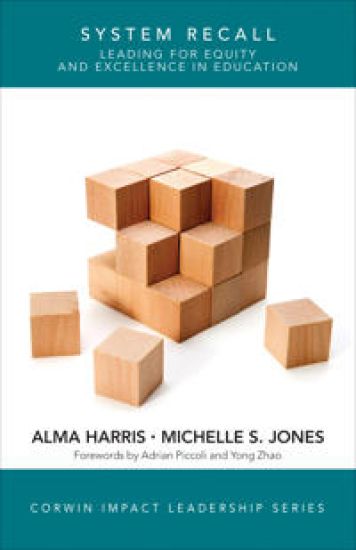
This book argues that much of what passes as contemporary educational reform in education is faulty and damaging. It argues that it is time for a ‘system recall’ and a need to look at what matters most in the pursuit of educational goals. The book focuses on what we know about contemporary educational improvement, transformation, and change. It will provide insights into what strategies work, long term, to build the capacity for principled change at the school and system level. The book will consider what leaders can do to secure principled school and system improvement which fully embraces diversity, equity, and equality. It will also dispel some myths about reform at scale and challenge some prevailing ideas about educational change that, it will be posited, are not helping many young people to reach their potential. The main argument of the book is that too many school and system improvement initiatives have not paid sufficient attention to equity issues in their pursuit of ever higher achievement and that the net effect of large-scale, international assessments have been to distract policy makers in ways that have not always benefitted young people. The book will use system examples to underpin and exemplify six core ways of re-botting the system and generating progress for all, It will highlight the implications for school and system leaders.
First published in 1999, this volume attempts to draw the literature on school effectiveness and teacher effectiveness together in one volume. Its central tenet is that classroom effectiveness is central to school effectiveness and that there is much to be gained from integrating the literature on effective schooling and effective teaching. Issues discussed include departments, classroom communication and teacher expectation, motivation and feedback.
Idén om distribuerat ledarskap uppmanar oss att titta närmare på interaktionen och dynamiken i utövandet av ledarskap – i stället för att ensidigt fokusera på de som formellt leder verksamheten. Ytterst handlar distribuerat ledarskap om att utveckla och stödja professionellt samarbete i syfte att förbättra undervisningen och elevernas lärande.I sin helhet beskriver boken beståndsdelarna i en forskningsbaserad förändringsprocess. Vad innebär det att bedriva reformarbete och vilka kravs ställs på ledarskapet i en organisation? Här förs en diskussion om det distribuerade ledarskapets potential, men också dess mörka sidor. Rätt utformat överväger de positiva aspekterna och en särskild styrka ligger i det distribuerade ledarskapets möjlighet att bygga socialt kapital och bana väg för professionella lärandegemenskaper. Det handlar om gemensamt ansvarstagande för att lära kollektivt i syfte att förändra skolans kärna – undervisningen och lärandet. Distribuerat ledarskap riktar sig till verksamma lärare och skolledare och andra aktörer som deltar i skolförbättringsarbetet.
First Published in 1999. Expectations placed on middle management have risen sharply in the last few years and their increased importance in the role of managing and developing others have been reflected in the new Teacher Training Authority (TTA) Subject Leader Standards. Consequently, the role of subject leader is one which necessitates careful preparation and development. Written in line with these Standards in an accessible style and format, this book supports INSET courses and days designed to develop the essential management skills required by secondary subject leaders; provides support for the Head of Department in developing an mor systematic approach to the management of an effective department; provides useful information for aspiring Heads of Department and Senior Managers who are endeavouring to improve the performance of middle management in their schools.
First Published in 2001. This handbook, arising out of IQEA project (Improving the Quality of Education for All), focuses on a basic repertoire of teaching and learning strategies and a series of activities designed to help teachers extend and deepen their range of teaching skills. The authors set out for CPD tutors ways of bringing research evidence and critical self-reflection to bear on practice, in the pursuit of confident teaching and effective learning. The goal is to locate and unleash the full potential of individual teachers through evidence, selection and variety, rather than to impose pre-determined notions or models of teaching and learning, regardless of the relevance to particular groups of students and their teachers.
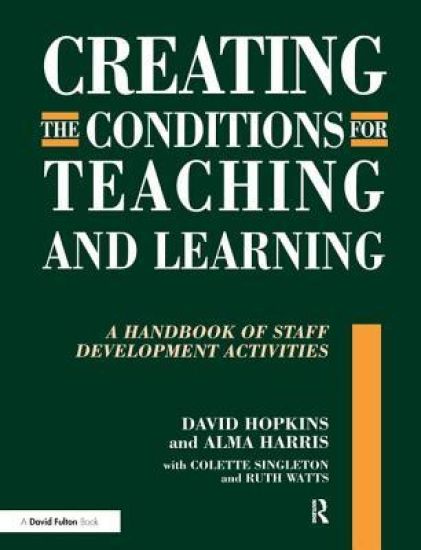
First Published in 2001. This is the second edition of this school’s improvement handbook of staff development activities by the IQEA (Improving Education for All) project. This book is not about what changes should be introduced into a school but rather about creating the conditions for supporting those changes which schools or individuals believe should be introduced. To be effective at managing change schools and teachers need to modify the internal conditions of the school at the same time as introducing changes in teaching or curriculum. The book therefore provides ideas and materials to help colleagues in school to create such conditions and suggests a strategic approach.
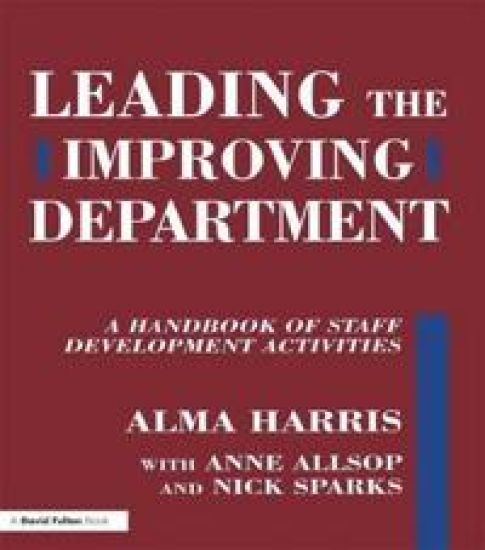
Departmental improvement is the key to whole school improvement. This book complements existing programs of professional development and training on both national and local levels. Heads of department and subject leaders in secondary schools will find this professional handbook essential for planning in-service training, improving the effectiveness of the department, and developing personal leadership abilities.This book combines well-founded professional development theory with practical suggestions. It has been written in an open and accessible way with photocopiable inset activities that have been tried and tested in training situations.
What does it take to do more with less? How can you do better than before, or better than others? How do you turn losses into wins, or near-bankruptcy into strong profitability, or abject failure into stellar success? The power of uplift enables any organization to do more with less, beat the competition, and perform better than ever. Leaders who uplift their employees' passions, intellects, and commitments produce remarkable results. Based on original research from a seven-year global study, Uplifting Leadership reveals how leaders from diverse organizations inspired and uplifted their teams' performance. Distilling the six common characteristics of leaders at high-performing organizations across business, sports, and education, authors Andy Hargreaves, Alan Boyle, and Alma Harris explore the nature of uplift, its impact on performance, and the ways to achieve it within and beyond an organization's walls, revealing how leaders: Identify and articulate an inspiring dream that is coherently connected to the best of what the organization has been beforePursue that dream at a sustainable pace without squandering resources, incurring excessive debt, or burning people outForge paths of innovation and improvement that others have overlooked or rejectedMonitor progress by using metrics and indicators in a mindful and meaningful wayBuild teams that naturally pull people into change rather than pushing them through it Featuring case studies of organizations as diverse as Shoebuy.com, Fiat, Dogfish Head Craft Brewery, Marks & Spencer, Cricket Australia, Burnley Football Club, and the Vancouver Giants, as well as world-leading educational systems, Uplifting Leadership provides tools for leaders to incorporate these performance-driving strategies into their own. For leaders who want their people to try harder, transform what they do, reach for a higher purpose, and stay resolute and resilient when opposing forces threaten to defeat them, Uplifting Leadership provides a path to better performance across any organization.
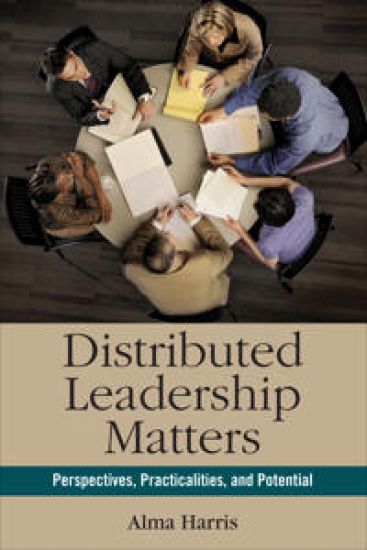
Distributed leadership-engaging the many rather than the few in school improvement-has long been a promising theory. But it must be implemented effectively before educators and students can reap the rewards, including improved learner outcomes and stronger organizational performance. Distributed Leadership Matters offers pragmatic approaches for realizing these benefits. First, Alma Harris shows why harnessing educators' collective expertise is an improvement strategy worth adopting. Then she details the collaborative processes that make it happen. Insights include:How to translate the research on distributed leadership into tangible results for schoolsMethods for building the social capital necessary for sustainable institutional change How to distribute leadership widely and wisely through professional collaboration This book is the educator's guide to improving the learning outcomes of young people, whatever their context and whatever it takes, supporting teachers to be the very best they can be and ensuring that collaborative learning with impact is achievable and sustainable.
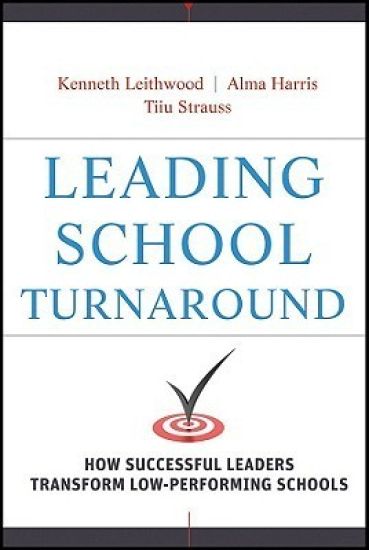
LEADING SCHOOL TURNAROUND Leading School Turnaround offers new perspectives and concrete, evidence-based guidelines for the educational leaders and administrators faced with the challenge of turning our low-performing schools around. Using the tools outlined in this groundbreaking book, school leaders can guide their schools to higher levels of achievement and sustained academic success. Based on research conducted in the United States, Canada, and England, Leading School Turnaround addresses in three parts the dynamic context of the turnaround environment, what turnaround leaders do, and the incredible challenges of moving from turnaround to "stay around." Filled with illustrative examples, the book outlines the best practices and behaviors successful turnaround leaders exercise. The authors include detailed information for applying the four main categories of turnaround leadership: direction setting, developing people, redesigning the school, and managing the instructional program. This important resource can help any school leader get their school back on the track to academic success.
This is a powerful resource for teachers about the benefits of parental engagement along with methods foster and develop good practice. It is commonly agreed that engaging parents with their child's learning is positive with wide reaching benefits. This book articulates why parental engagement is of value and how it can be achieved with positive results. Beyond the why and how, the book explores what effective parental engagement is and makes explicit the link between this and impact on the learning of the child - to support this, practical, workable solutions and strategies are provided through case studies.The book provides a powerful combination of academic theory supported with quantifiable and qualitative evidence from students, parents and schools, alongside answers provided by those who work with the challenges of this agenda on a daily basis. It will challenge, motivate and inspire understanding through the political agenda, and empower and enable schools to develop their practice.
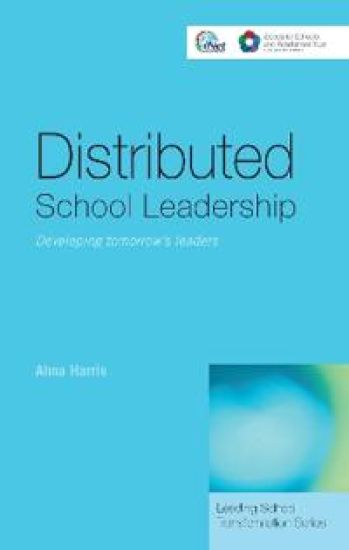
Tomorrow’s schools will need new forms of leadership. The old hierarchical models of leadership simply do not fit any longer. We need to develop new leaders at all levels of the system if we are serious about sustaining improvement and change. But, how do we go about this?The book focuses on the why, how and what of distributed leadership by offering a practical insight into what it looks like in schools. It argues that our new system leaders are already in schools and that the main challenge is to develop them and maximise their collective capacity to make a difference. Drawing on the ‘Developing Leaders Programme’, which aimed to develop young leaders in schools, it provides practical examples and case-study evidence of distributed leadership in action. The main aims of the book are to: provide a clear account of more widely distributed leadership offer evidence about its positive impact on organisational and individual learning give case-study exemplars and practical illustrations of how it works in practice. The book also considers the leadership of networks and the new forms of partnership schools are engaged in. It looks at how lateral capacity is built and the part distributed leadership plays in generating leadership capacity between schools. It will be of interest to headteachers, aspiring school leaders, teachers and educational professionals.
Tomorrow’s schools will need new forms of leadership. The old hierarchical models of leadership simply do not fit any longer. We need to develop new leaders at all levels of the system if we are serious about sustaining improvement and change. But, how do we go about this?The book focuses on the why, how and what of distributed leadership by offering a practical insight into what it looks like in schools. It argues that our new system leaders are already in schools and that the main challenge is to develop them and maximise their collective capacity to make a difference. Drawing on the ‘Developing Leaders Programme’, which aimed to develop young leaders in schools, it provides practical examples and case-study evidence of distributed leadership in action. The main aims of the book are to: provide a clear account of more widely distributed leadership offer evidence about its positive impact on organisational and individual learning give case-study exemplars and practical illustrations of how it works in practice. The book also considers the leadership of networks and the new forms of partnership schools are engaged in. It looks at how lateral capacity is built and the part distributed leadership plays in generating leadership capacity between schools. It will be of interest to headteachers, aspiring school leaders, teachers and educational professionals.
Working in the challenging context of inner city areas on accelerated school improvement does not allow time for reflection. Learning occurs experientially but it is not easily consolidated or refined. School improvement is currently opportunistic and expedient, but schools and authority are gradually edging towards a more durable theory of tackling underachievement and building success. This book offers the reader the opportunity to understand the process of school improvement better and establishes local models.
Working in the challenging context of inner city areas on accelerated school improvement does not allow time for reflection. Learning occurs experientially but it is not easily consolidated or refined. School improvement is currently opportunistic and expedient, but schools and authority are gradually edging towards a more durable theory of tackling underachievement and building success. This book offers the reader the opportunity to understand the process of school improvement better and establishes local models.
It is now widely accepted that improving schools invest in teacher leadership and build the capacity for improvement by distributing leadership responsibilities to teachers. In primary, secondary and special schools, teachers are uniquely placed to influence the quality of teaching and learning and they are important gatekeepers to development and change. This book explores how teacher leadership is an intrinsic and important part of school and classroom improvement. It investigates teacher leadership in action and considers the roles, responsibilities and influence of teachers who lead. It considers the implications of teacher leadership for teachers’ professional development and focuses on ways in which this important form of leadership can be fostered and enhanced. The central message in this book is that teachers play a critical role in leading improvement in the classroom and school level and that this form of leadership contributes directly to raising achievement among learners. This book is crucial reading for all those who are concerned with teacher and school development, school leadership and school improvement.
* What form of leadership promotes school improvement?* How do schools build leadership capacity?* How do schools sustain improvement in changing times?This book offers a new perspective on the relationship between leadership and school improvement. It emphasises the importance of maximising the leadership capabilities of all those within the organization and offers guidance about the way in which this is achieved. Whilst drawing upon the latest research evidence concerning schools improvement, it is intended to be a practical guide to building leadership capacity and is written primarily for those working in schools. Through case study illustrations Alma Harris and Linda Lambert demonstrate how leadership capacity can be built in schools in very different contexts. Practical material is provided to assist schools in generating the internal capacity for change and development. The central message of this book is one of investing in leadership at all levels within the organization to maintain and sustain school improvement.
In a complex and multi-layered world, the conventional idea of great leadership being the result of the efforts of a single individual is rapidly becoming redundant. This book takes up the challenge of finding an alternative method of leadership in educational contexts, and looks at how this can help achieve sustained improvement in schools. The authors acknowledge that there are no simple solutions to school improvement. They argue that the effective leaders of the future will be those who are able to share responsibility, build positive relationships and offer stakeholders - teachers, parents and students - an opportunity to work together to improve their schools. The book is based around four key areas of concern: the changing context of leadership, leadership and school improvement, building leadership capacity, and future direction and implications. In each section, the authors discuss current theories and issues, and put forward alternative ideas and perspectives. This important book will make valuable reading for headteachers, principles, deputies and other senior teachers, particularly those undertaking leadership qualifications and training. It will also be of interest to postgraduate students and school governors.
In a complex and multi-layered world, the conventional idea of great leadership being the result of the efforts of a single individual is rapidly becoming redundant. This book takes up the challenge of finding an alternative method of leadership in educational contexts, and looks at how this can help achieve sustained improvement in schools. The authors acknowledge that there are no simple solutions to school improvement. They argue that the effective leaders of the future will be those who are able to share responsibility, build positive relationships and offer stakeholders - teachers, parents and students - an opportunity to work together to improve their schools. The book is based around four key areas of concern: the changing context of leadership, leadership and school improvement, building leadership capacity, and future direction and implications. In each section, the authors discuss current theories and issues, and put forward alternative ideas and perspectives. This important book will make valuable reading for headteachers, principles, deputies and other senior teachers, particularly those undertaking leadership qualifications and training. It will also be of interest to postgraduate students and school governors.