Kirjojen hintavertailu. Mukana 12 595 353 kirjaa ja 12 kauppaa.

Kirjailija

Almo Farina

Kirjat ja teokset yhdessä paikassa: 10 kirjaa, julkaisuja vuosilta 2007-2023, suosituimpien joukossa Ecology, Cognition and Landscape. Vertaile teosten hintoja ja tarkista saatavuus suomalaisista kirjakaupoista.

10 kirjaa

Kirjojen julkaisuhaarukka 2007-2023.

Principles and Methods in Landscape Ecology

Principles and Methods in Landscape Ecology

Almo Farina

Springer Nature Switzerland AG
2023
nidottu
This third, thoroughly updated edition of a well received book, presents the most complete collection of theories, paradigms and methods utilized by the landscape sciences. With the introduction of new ecosemiotic concepts and innovative managing procedures, it offers a broad list of ecological, ecosemiotical and cultural tools to investigate, interpret and manage the environmental complexity according to a species-specific individual-based approach. Readers will discover the importance of a landscape perspective to create strategic bridges between science and humanities favored by the holistic sight of sensorial (visual, acoustic, olfactory, tactile, and thermal) “scapes”.Distributed in 10 chapters, the content covers many aspects of the landscape sciences ranging from the description of fundamental theories, principles and models originated by ecological approaches like source-sink models, island biogeography, hierarchical theory and scale. The ecosemioticalapproaches like the eco-field model, the ecoscape paradigm, and the general theory of resources are widely described and discussed. A cultural approach to landscape is utilized to focus on the heritage values of territories and their environmental identity. This book, written in an accessible and didactic style, is particularly dedicated to undergraduate and graduate students but also scholars in ecology, agroforestry, urban planning, nature design, conservation and remediation. Land practitioners, farmers and policymakers can use this book as an authoritative guide to better understand the function and role of environmental systems according to a social-economic integrated perspective.
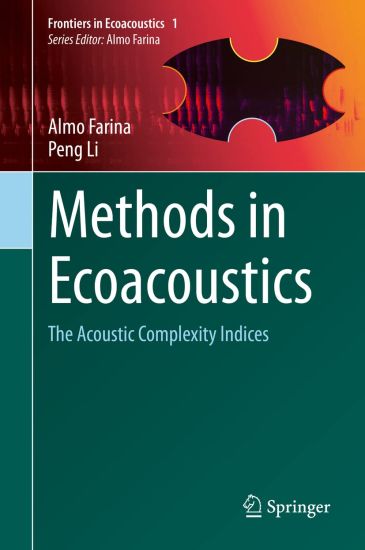
Methods in Ecoacoustics

Methods in Ecoacoustics

Almo Farina; Peng Li

Springer Nature Switzerland AG
2023
nidottu
This book represents an introduction to ecoacoustics theory, to the application of the Acoustic Complexity Indices (ACIs) to acoustic survey, and to the use of an innovative software to process acoustic data. It enables readers to comprehend the main principles that guide the recent development of ecoacoustics and offers a synthesis about the role of sound in the ecological research.Readers will be introduced to the use of the ACIs by a detailed description of the main algorithms recently formulated and on their correct application in the acoustic processing concurring to the creation of sonic information systems. Readers will also find a new dedicated software application, namely SonoScape, that is described in detail with its codes attached in the supplementary material in a completely visible format. The SonoScape is a performing software application operating in MatLab® and is enriched of several options to manage single and large collection of acoustics files. It vides the feasibility to process data at different temporal scale, using different combination of parameters, and to extract novel complexity measures such as entropy and fractal dimension of ecoacoustic events. It also offers functions to visualize the results using customized 3-D plots or ternary plots, intuitively demonstrating the patterns of ACIs based on the vast number of numerical results.Finally, this book provides several examples of case studies with the aim of better understanding the potentiality of ACIs and the power of SonoScape as multitasking software to approaching the complexity of the ecoacoustic investigation.Students and scholars in ecology, land managers and technicians may find an important tool to interpret the complex relationship between humans and natural processes when sounds are adopted as proxy.
Principles and Methods in Landscape Ecology

Principles and Methods in Landscape Ecology

Almo Farina

Springer Nature Switzerland AG
2022
sidottu
This third, thoroughly updated edition of a well received book, presents the most complete collection of theories, paradigms and methods utilized by the landscape sciences. With the introduction of new ecosemiotic concepts and innovative managing procedures, it offers a broad list of ecological, ecosemiotical and cultural tools to investigate, interpret and manage the environmental complexity according to a species-specific individual-based approach. Readers will discover the importance of a landscape perspective to create strategic bridges between science and humanities favored by the holistic sight of sensorial (visual, acoustic, olfactory, tactile, and thermal) “scapes”.Distributed in 10 chapters, the content covers many aspects of the landscape sciences ranging from the description of fundamental theories, principles and models originated by ecological approaches like source-sink models, island biogeography, hierarchical theory and scale. The ecosemioticalapproaches like the eco-field model, the ecoscape paradigm, and the general theory of resources are widely described and discussed. A cultural approach to landscape is utilized to focus on the heritage values of territories and their environmental identity. This book, written in an accessible and didactic style, is particularly dedicated to undergraduate and graduate students but also scholars in ecology, agroforestry, urban planning, nature design, conservation and remediation. Land practitioners, farmers and policymakers can use this book as an authoritative guide to better understand the function and role of environmental systems according to a social-economic integrated perspective.
Methods in Ecoacoustics

Methods in Ecoacoustics

Almo Farina; Peng Li

Springer Nature Switzerland AG
2022
sidottu
This book represents an introduction to ecoacoustics theory, to the application of the Acoustic Complexity Indices (ACIs) to acoustic survey, and to the use of an innovative software to process acoustic data. It enables readers to comprehend the main principles that guide the recent development of ecoacoustics and offers a synthesis about the role of sound in the ecological research.Readers will be introduced to the use of the ACIs by a detailed description of the main algorithms recently formulated and on their correct application in the acoustic processing concurring to the creation of sonic information systems. Readers will also find a new dedicated software application, namely SonoScape, that is described in detail with its codes attached in the supplementary material in a completely visible format. The SonoScape is a performing software application operating in MatLab® and is enriched of several options to manage single and large collection of acoustics files. It vides the feasibility to process data at different temporal scale, using different combination of parameters, and to extract novel complexity measures such as entropy and fractal dimension of ecoacoustic events. It also offers functions to visualize the results using customized 3-D plots or ternary plots, intuitively demonstrating the patterns of ACIs based on the vast number of numerical results.Finally, this book provides several examples of case studies with the aim of better understanding the potentiality of ACIs and the power of SonoScape as multitasking software to approaching the complexity of the ecoacoustic investigation.Students and scholars in ecology, land managers and technicians may find an important tool to interpret the complex relationship between humans and natural processes when sounds are adopted as proxy.
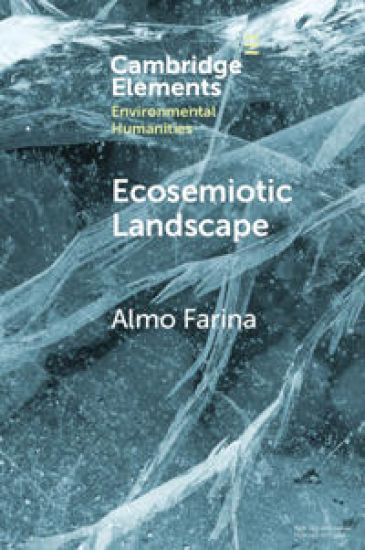
Ecosemiotic Landscape

Ecosemiotic Landscape

Almo Farina

Cambridge University Press
2021
pokkari
The distinction between humans and the natural world is an artefact and more a matter of linguistic communication than a conceptual separation. This Element proposes ecosemiotics as an epistemological tool to better understand the relationship between human and natural processes. Ecosemiotics with its affinity to the humanities, is presented here as the best disciplinary approach for interpreting complex environmental conditions for a broad audience, across a multitude of temporal and spatial scales. It is proposed as an intellectual bridge between divergent sciences to incorporate within a unique framework different paradigms. The ecosemiotic paradigm helps to explain how organisms interact with their external environments using mechanisms common to all living beings that capture external information and matter for internal usage. This paradigm can be applied in all the circumstances where a living being (man, animal, plant, fungi, etc.) performs processes to stay alive.
Soundscape Ecology

Soundscape Ecology

Almo Farina

Springer
2016
nidottu
Soundscape Ecology represents a new branch of ecology and it is the result of the integration of different disciplines like Landscape ecology, Bioacoustics, Acoustic ecology, Biosemiotics, etc. The soundscape that is the object of this discipline, is defined as the acoustic context resulting from natural and human originated sounds and it is considered a relevant environmental proxy for animal and human life.With Soundscape Ecology Almo Farina means to offer a new cultural tool to investigate a partially explored component of the environmental complexity. For this he intends to set the principles of this new discipline, to delineate the epistemic domain in which to develop new ideas and theories and to describe the necessary integration with all the other ecological/environmental disciplines.The book is organized in ten chapters. The first two chapters delineate principles and theory of soundscape ecology. Chapters three and four describe the bioacoustic and communication theories. Chapter five is devoted to the human dimension of soundscape. Chapters six to eight regard the major sonic patterns like noise, choruses and vibrations. Chapter nine is devoted to the methods in soundscape ecology and finally chapter ten describes the application of the soundscape analysis.
Soundscape Ecology

Soundscape Ecology

Almo Farina

Springer
2013
sidottu
Soundscape Ecology represents a new branch of ecology and it is the result of the integration of different disciplines like Landscape ecology, Bioacoustics, Acoustic ecology, Biosemiotics, etc. The soundscape that is the object of this discipline, is defined as the acoustic context resulting from natural and human originated sounds and it is considered a relevant environmental proxy for animal and human life.With Soundscape Ecology Almo Farina means to offer a new cultural tool to investigate a partially explored component of the environmental complexity. For this he intends to set the principles of this new discipline, to delineate the epistemic domain in which to develop new ideas and theories and to describe the necessary integration with all the other ecological/environmental disciplines.The book is organized in ten chapters. The first two chapters delineate principles and theory of soundscape ecology. Chapters three and four describe the bioacoustic and communication theories. Chapter five is devoted to the human dimension of soundscape. Chapters six to eight regard the major sonic patterns like noise, choruses and vibrations. Chapter nine is devoted to the methods in soundscape ecology and finally chapter ten describes the application of the soundscape analysis.
Ecology, Cognition and Landscape
It is more and more evident that our living system is completely disturbed by human intrusion. Such intrusion affects the functioning of entire systems in ways we do not yet fully understand. We use paradigms such as the disturbance to cover large and deep gaps in our scienti?c knowledge. Human ecology is an uncertain terrain for anthropologists, geographers, and ecologists and rarely is expanded to include the social and economic realms. The integration of different disciplines and the application of their many paradigms to problems of environmental complexity remains a distant goal despite the many efforts that have been made to achieve it. Philosophical and semantic barriers are erected when such integration is pursued by pioneering scientists. Recently, evolutionary ecology has shown great interest in the spatial processes well described by the emerging discipline of landscape ecology. But this interest takes the form of pure curiosity or at worst, of skepticism toward the real capacity of landscape ecology to contribute to the advancement of ecological science. The past two centuries have been characterized by huge changes occurring in the entire ecosphere. Global changes are the effects of human intervention at a planetary scale, with consequent degradation of the environment creating an e- logical debt for future generations. On the other side of the issue, new technologies have improved the welfare of billions of people and have given hope to many other billions that they may also see such improvement in the near future.
Ecology, Cognition and Landscape
It is more and more evident that our living system is completely disturbed by human intrusion. Such intrusion affects the functioning of entire systems in ways we do not yet fully understand. We use paradigms such as the disturbance to cover large and deep gaps in our scienti?c knowledge. Human ecology is an uncertain terrain for anthropologists, geographers, and ecologists and rarely is expanded to include the social and economic realms. The integration of different disciplines and the application of their many paradigms to problems of environmental complexity remains a distant goal despite the many efforts that have been made to achieve it. Philosophical and semantic barriers are erected when such integration is pursued by pioneering scientists. Recently, evolutionary ecology has shown great interest in the spatial processes well described by the emerging discipline of landscape ecology. But this interest takes the form of pure curiosity or at worst, of skepticism toward the real capacity of landscape ecology to contribute to the advancement of ecological science. The past two centuries have been characterized by huge changes occurring in the entire ecosphere. Global changes are the effects of human intervention at a planetary scale, with consequent degradation of the environment creating an e- logical debt for future generations. On the other side of the issue, new technologies have improved the welfare of billions of people and have given hope to many other billions that they may also see such improvement in the near future.
Principles and Methods in Landscape Ecology

Principles and Methods in Landscape Ecology

Almo Farina

Springer-Verlag New York Inc.
2007
nidottu
Landscape ecology is an integrative and multi-disciplinary science and Principles and Methods in Landscape Ecology reconciles the geological, botanical, zoological and human perspectives. In particular ,new paradigms and theories such as percolation, metapopulation, hierarchies, source-sink models have been integrated in this last edition with the recent theories on bio-complexity, information and cognitive sciences. Methods for studying landscape ecology are covered including spatial geometry models and remote sensing in order to create confidence toward techniques and approaches that require a high experience and long-time dedication. Principles and Methods in Landscape Ecology is a textbook useful to present the landscape in a multi-vision perspective for undergraduate and graduate students of biology, ecology, geography, forestry, agronomy, landscape architecture and planning. Sociology, economics, history, archaeology,anthropology, ecological psychology are some sciences that can benefit of the holistic vision offered by this texbook.