Kirjojen hintavertailu. Mukana 12 657 676 kirjaa ja 12 kauppaa.

Kirjailija

Alok Kumar

Kirjat ja teokset yhdessä paikassa: 40 kirjaa, julkaisuja vuosilta 2010-2024, suosituimpien joukossa Papel del Peetvaratika bhasma en la fractura de Asthibhagna Colles. Vertaile teosten hintoja ja tarkista saatavuus suomalaisista kirjakaupoista.

40 kirjaa

Kirjojen julkaisuhaarukka 2010-2024.

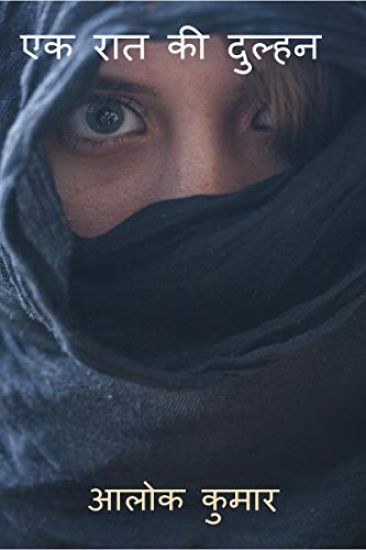
Ek Raat Ki Dulhan / ?? ??? ?? ??????
This story collection of five stories is composed of five different elements, like Panchatatva or, say, Panchamrit. Each story underlines different aspects of life. Some events or characters become so real that a particular aspect of it does not divert the reader's attention quickly. Each story in this collection will repeatedly break the myth of your mind. Every story gives something different, something new.
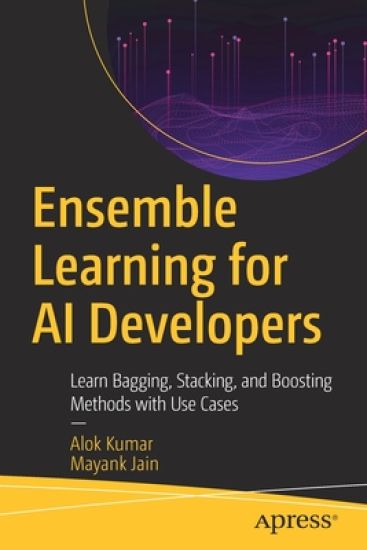
Ensemble Learning for AI Developers

Ensemble Learning for AI Developers

Alok Kumar; Mayank Jain

APress
2020
nidottu
Use ensemble learning techniques and models to improve your machine learning results.Ensemble Learning for AI Developers starts you at the beginning with an historical overview and explains key ensemble techniques and why they are needed. You then will learn how to change training data using bagging, bootstrap aggregating, random forest models, and cross-validation methods. Authors Kumar and Jain provide best practices to guide you in combining models and using tools to boost performance of your machine learning projects. They teach you how to effectively implement ensemble concepts such as stacking and boosting and to utilize popular libraries such as Keras, Scikit Learn, TensorFlow, PyTorch, and Microsoft LightGBM. Tips are presented to apply ensemble learning in different data science problems, including time series data, imaging data, and NLP. Recent advances in ensemble learning are discussed. Sample code is provided in the form of scripts and the IPython notebook.What You Will LearnUnderstand the techniques and methods utilized in ensemble learningUse bagging, stacking, and boosting to improve performance of your machine learning projects by combining models to decrease variance, improve predictions, and reduce biasEnhance your machine learning architecture with ensemble learningWho This Book Is ForData scientists and machine learning engineers keen on exploring ensemble learning
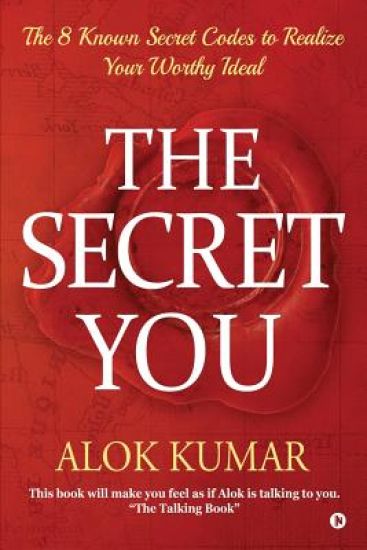
The Secret You: The 8 Known Secret Codes to Realize Your Worthy Ideal
In this book, Alok will take you to a self-decoding journey where you will not only understand who you are and what you want but also start progressively realizing them with simple but impactful actions.This book is neither a self-help book nor a book of great ideas to get what you want. This book is a ticket to your long journey towards a successful (I will call it meaningful) life. As the famed Earl Nightingale once said, "Success is the progressive realization of a worthy ideal, I am calling this book the pathway to that progressive realization."Alok lives by the philosophy that the world is full of good people, and they will come to help you if you dream and dare to ask. This book will help in opening you up for that big mind change."This is not just a self-help book but a Talking Book towards your goals. I like the simplicity of the language used by Alok."-Anuja Deshpande (IIM, Lucknow)
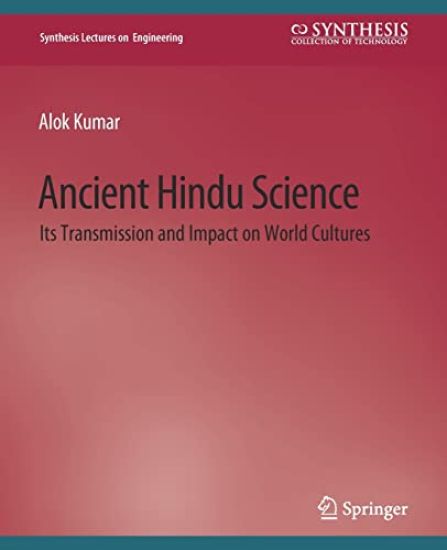
Ancient Hindu Science

Ancient Hindu Science

Alok Kumar

Springer International Publishing AG
2019
nidottu
To understand modern science as a coherent story, it is essential to recognize the accomplishments of the ancient Hindus. They invented our base-ten number system and zero that are now used globally, carefully mapped the sky and assigned motion to the Earth in their astronomy, developed a sophisticated system of medicine with its mind-body approach known as Ayurveda, mastered metallurgical methods of extraction and purification of metals, including the so-called Damascus blade and the Iron Pillar of New Delhi, and developed the science of self-improvement that is popularly known as yoga. Their scientific contributions made impact on noted scholars globally: Aristotle, Megasthenes, and Apollonius of Tyana among the Greeks; Al-Biruni, Al-Khwarizmi, Ibn Labban, and Al-Uqlidisi, Al-Ja?iz among the Islamic scholars; Fa-Hien, Hiuen Tsang, and I-tsing among the Chinese; and Leonardo Fibbonacci, Pope Sylvester II, Roger Bacon, Voltaire and Copernicus from Europe. In the modern era, thinkers and scientists as diverse as Ralph Waldo Emerson, Johann Wolfgang von Goethe, Johann Gottfried Herder, Carl Jung, Max Müller, Robert Oppenheimer, Erwin Schrödinger, Arthur Schopenhauer, and Henry David Thoreau have acknowledged their debt to ancient Hindu achievements in science, technology, and philosophy. The American Association for the Advancement of Science (AAAS), one of the largest scientific organizations in the world, in 2000, published a timeline of 100 most important scientific finding in history to celebrate the new millennium. There were only two mentions from the non-Western world: (1) invention of zero and (2) the Hindu and Mayan skywatchers astronomical observations for agricultural and religious purposes. Both findings involved the works of the ancient Hindus. The Ancient Hindu Science is well documented with remarkable objectivity, proper citations, and a substantial bibliography. It highlights the achievements of this remarkable civilization through painstaking research of historical and scientific sources. The style of writing is lucid and elegant, making the book easy to read. This book is the perfect text for all students and others interested in the developments of science throughout history and among the ancient Hindus, in particular.
A History of Science in World Cultures

A History of Science in World Cultures

Scott L. Montgomery; Alok Kumar

Routledge
2015
nidottu
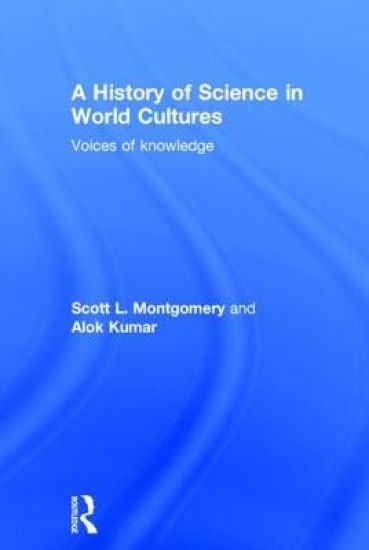
To understand modern science, it is essential to recognize that many of the most fundamental scientific principles are drawn from the knowledge of ancient civilizations. Taking a global yet comprehensive approach to this complex topic, A History of Science in World Cultures uses a broad range of case studies and examples to demonstrate that the scientific thought and method of the present day is deeply rooted in a pluricultural past. Covering ancient Egypt, Mesopotamia, India, Greece, China, Islam, and the New World, this volume discusses the scope of scientific and technological achievements in each civilization and how the knowledge it developed came to impact the European Renaissance. Themes covered include the influence these scientific cultures had upon one another, the power of writing and its technologies, visions of mathematical order in the universe and how it can be represented, and what elements of the distant scientific past we continue to depend upon today. Topics often left unexamined in histories of science are treated in fascinating detail, such as the chemistry of mummification and the Great Library in Alexandria in Egypt, jewellery and urban planning of the Indus Valley, hydraulic engineering and the compass in China, the sustainable agriculture and dental surgery of the Mayas, and algebra and optics in Islam.This book shows that scientific thought has never been confined to any one era, culture, or geographic region. Clearly presented and highly illustrated, A History of Science in World Cultures is the perfect text for all students and others interested in the development of science throughout history.
A History of Science in World Cultures

A History of Science in World Cultures

Scott L. Montgomery; Alok Kumar

Routledge
2015
sidottu
To understand modern science, it is essential to recognize that many of the most fundamental scientific principles are drawn from the knowledge of ancient civilizations. Taking a global yet comprehensive approach to this complex topic, A History of Science in World Cultures uses a broad range of case studies and examples to demonstrate that the scientific thought and method of the present day is deeply rooted in a pluricultural past. Covering ancient Egypt, Mesopotamia, India, Greece, China, Islam, and the New World, this volume discusses the scope of scientific and technological achievements in each civilization and how the knowledge it developed came to impact the European Renaissance. Themes covered include the influence these scientific cultures had upon one another, the power of writing and its technologies, visions of mathematical order in the universe and how it can be represented, and what elements of the distant scientific past we continue to depend upon today. Topics often left unexamined in histories of science are treated in fascinating detail, such as the chemistry of mummification and the Great Library in Alexandria in Egypt, jewellery and urban planning of the Indus Valley, hydraulic engineering and the compass in China, the sustainable agriculture and dental surgery of the Mayas, and algebra and optics in Islam.This book shows that scientific thought has never been confined to any one era, culture, or geographic region. Clearly presented and highly illustrated, A History of Science in World Cultures is the perfect text for all students and others interested in the development of science throughout history.
Spy from Unaula

Spy from Unaula

Alok Kumar

Frog in Well
2015
nidottu
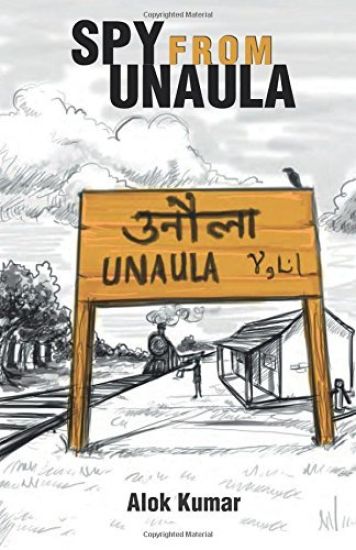
"Spy from Unaula takes us to a small sleepy village of Unaula and shows the simple joys, trials and tribulations of Ramchandra's life.Coming from meager means, Ramchandra overcomes unimaginable odds and his dexterous attitude lets him elevate himself from a lowly life. Having lost his mother early, and father averse to the idea of education, he seeks help from his rebellious brother to be able to pursue his dream of being well educated and a career of an officer in the armed forces. This dream did not come easy as the social obligations and customs of those times compelled him to take drastic decisions to fulfill his dreams. In search of a livelihood and bagful of dreams he travels to the ""City of Dreams"" of his time in search of opportunities that would fulfill his dreams.From the famous Mills of Mumbai to being a cycle rickshaw driver in Agra, he consistently moves slowly and steadily towards his goals without complaining of any hardships he bore. Luck favours the brave, and once opportunity struck he seized the opportunity to train himself in the skills needed to land a government job. Starting from the lowest civilian ranks he moves up with an exciting job in Military Intelligence, eventually becoming a spy.The three wars of 1962 with China and 1965 and 1971 with Pakistan were action packed for Ramchandra. Breaking codes, analyzing information over radio to interrogating the war prisoners and eventually participating in the liberation of Bangladesh in 1971 opens up the secret world of intelligence and spying in those times.From war duties to political unrest and busting espionage rings in the country, Ramchandra never failed to find excitement on his job, while his struggle to ensure that his children found the best education, which he himself struggled to get, never ceased inspite of all odds. This book will appeal to readers with its sharp-drawn perspective of life and the journey of a man with a dream and a lot of action from the secret quarters of covert intelligence agencies."
Value Sourcing: Future of IT Outsourcing

Value Sourcing: Future of IT Outsourcing

Keith Sherwell; Alok Kumar

Createspace Independent Publishing Platform
2013
nidottu
History has shown several times and established the fact that the underlying factor for outsourcing is to lower cost and provide better value of the services and goods to the buyers to what they can achieve themselves. There can be reasons of outsourcing done by organizations at a higher cost than what they themselves can achieve, however this will always remain a temporary form of outsourcing because the buyer will eventually either develop the skill in-house or find a better source which can give him cost advantage and higher value. Any service which was cost effective earlier but loses its cost advantage due to whatever reason gives way to another form of service which can do this task at a lower overall cost and higher value to the end consumer, thereby re-establishing the low cost and high value basis of outsourcing. More than two decades back, when outsourcing in manufacturing was highly established, it was difficult to understand how we could outsource anything that cannot be seen, checked and counted. Manufacturing was all about the physical piece being counted and checked and was very straightforward. Once I visited a vendor myself in Chennai who was making pins and brushes for the trucks my company was producing. These items were small and insignificant in nature as compared to the overall cost of the vehicle. The same component when imported was costing almost double to the cost of local manufacture by this vendor. In my discussion with the vendor, I figured out that the vendor was saving almost fifty percent of the cost he was billing us. I came back to my manager and asked him the reason for this outsourcing when we could save yet another fifty percent of the cost. He replied back that it was value sourcing and not outsourcing. My company would end up spending more on the manufacture of the component as much more higher value added work needs focus than these small ones. He also pointed out that the vendor I met did not have such a large complex, so many high paid managers nor such great office space too. These overheads which were not with the vendor helped him save this money for himself and even helped us to save money on the imported component. Since then, I always looked at outsourcing as value sourcing and questioned the validity of the outsourcing if it failed to generate the desired value. I moved from manufacturing to services and saw the outsourcing model between USA and Indian IT companies mature. Two decades back, it was only cost arbitrage that made this model work. Skills were very basic and engineers learned on the job. Over period of next two decades, the demand matured to higher skills and experience than just bodies. We clearly see that the paradigm of value have been shifting in IT outsourcing and the definition of value is no more just cost but an outcome which will help the customer provide better value to their end customer. We discovered that although claimed by several outsourcing companies, most of them still are struggling to change themselves into a true value source. Keith and I are working to get true value sourcing with the partners and helping this to generate an outcome, which will provide higher value of our goods and services to our end customer.