Kirjojen hintavertailu. Mukana 12 595 353 kirjaa ja 12 kauppaa.

Kirjailija

Alva Noë

Kirjat ja teokset yhdessä paikassa: 11 kirjaa, julkaisuja vuosilta 2006-2026, suosituimpien joukossa Yhteenkietoutuneet. Vertaile teosten hintoja ja tarkista saatavuus suomalaisista kirjakaupoista.

Mukana myös kirjoitusasut: Alva Noe, Alva Nöe

11 kirjaa

Kirjojen julkaisuhaarukka 2006-2026.

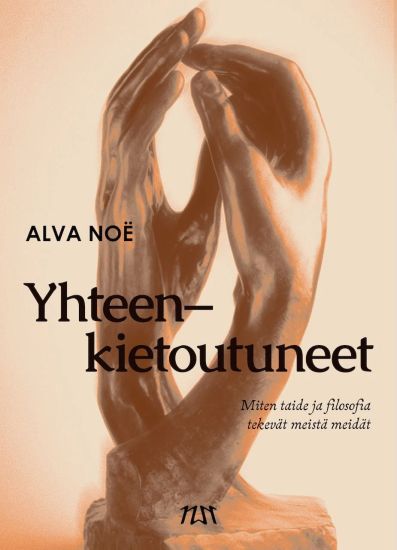
Yhteenkietoutuneet

Yhteenkietoutuneet

Alva Noë

Eurooppalaisen filosofian seura
2026
nidottu
Taide pysäyttää tottumuksen. Se saa meidät epäilemään näkemäämme ja kompastumaan kesken tutun liikeradan. Taide ohjaa sitä, miten maailman koemme, ja se on aina ollut osa ihmisten elämää. Filosofi Alva Noën Yhteenkietoutuneet jatkaa ja syventää vuonna 2019 suomennetun Omituisia työkaluja -teoksen teemoja.
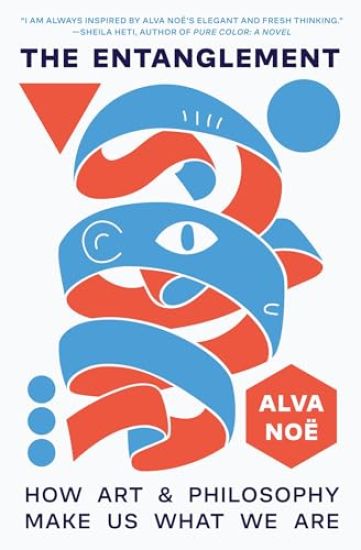
The Entanglement

The Entanglement

Alva Noë

PRINCETON UNIVERSITY PRESS
2025
pokkari
Why human nature is an aesthetic phenomenon—and why we need art and philosophy to understand ourselvesIn The Entanglement, philosopher Alva Noë explores the inseparability of life, art, and philosophy, arguing that we have greatly underestimated what this entangled reality means for understanding human nature.Life supplies art with its raw materials, but art, Noë argues, remakes life by giving us resources to live differently. Our lives are permeated with the aesthetic. Indeed, human nature is an aesthetic phenomenon, and art—our most direct and authentic way of engaging the aesthetic—is the truest way of understanding ourselves. All this suggests that human nature is not a natural phenomenon. Neither biology, cognitive science, nor AI can tell a complete story of us, and we can no more pin ourselves down than we can fix or settle on the meaning of an artwork. Even more, art and philosophy are the means to set ourselves free, at least to some degree, from convention, habit, technology, culture, and even biology. In making these provocative claims, Noë explores examples of entanglement—in artworks and seeing, writing and speech, and choreography and dancing—and examines a range of scientific efforts to explain the human.Challenging the notions that art is a mere cultural curiosity and that philosophy has been outmoded by science, The Entanglement offers a new way of thinking about human nature, the limits of natural science in understanding the human, and the essential role of art and philosophy in trying to know ourselves.
Vsjo perepleteno. Kak iskusstvo i filosofija delajut nas takimi, kakie my est
"Vsjo perepleteno" - utonchennoe mezhdistsiplinarnoe issledovanie, zadacha kotorogo pokazat, pochemu chelovecheskaja priroda javljaetsja esteticheskim fenomenom i pochemu nam nuzhny iskusstvo i filosofija, chtoby ponjat samikh sebja.Vozmozhno, eto samaja priblizhennaja k realnosti kniga po filosofii, v kotoroj chto-to tsennoe dlja sebja najdut kak filosofy i iskusstvovedy, tak i khudozhniki, pisateli i tantsory.Filosof Alva Noe v poroj provokatsionnykh tezisakh pokazyvaet, pochemu imenno cherez filosofiju i iskusstvo my dolzhny pisat, opredeljat i analizirovat istoriju chelovechestva.Perevodchik: Fedjushin Vladislav Valerevich
The Entanglement

The Entanglement

Alva Noë

PRINCETON UNIVERSITY PRESS
2023
sidottu
Why human nature is an aesthetic phenomenon—and why we need art and philosophy to understand ourselvesIn The Entanglement, philosopher Alva Noë explores the inseparability of life, art, and philosophy, arguing that we have greatly underestimated what this entangled reality means for understanding human nature.Life supplies art with its raw materials, but art, Noë argues, remakes life by giving us resources to live differently. Our lives are permeated with the aesthetic. Indeed, human nature is an aesthetic phenomenon, and art—our most direct and authentic way of engaging the aesthetic—is the truest way of understanding ourselves. All this suggests that human nature is not a natural phenomenon. Neither biology, cognitive science, nor AI can tell a complete story of us, and we can no more pin ourselves down than we can fix or settle on the meaning of an artwork. Even more, art and philosophy are the means to set ourselves free, at least to some degree, from convention, habit, technology, culture, and even biology. In making these provocative claims, Noë explores examples of entanglement—in artworks and seeing, writing and speech, and choreography and dancing—and examines a range of scientific efforts to explain the human.Challenging the notions that art is a mere cultural curiosity and that philosophy has been outmoded by science, The Entanglement offers a new way of thinking about human nature, the limits of natural science in understanding the human, and the essential role of art and philosophy in trying to know ourselves.
Learning to Look

Learning to Look

Alva Noë

Oxford University Press Inc
2022
sidottu
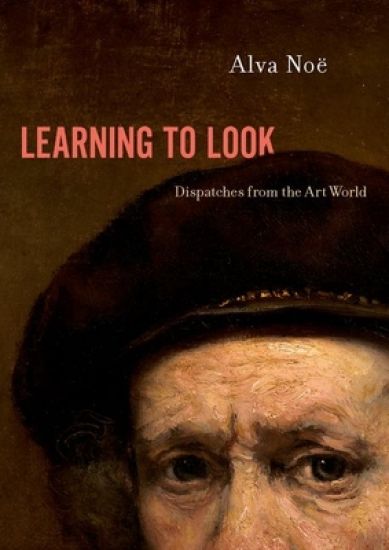
Learning to Look is a wandering journey through the nature of art - and the ways it can transform us, if we let it. Author of Infinite Baseball, Alva Noë, presents a collection of short, stimulating essays that explore how we experience art and what it means to be an "observer." Experiencing art - letting it do its work on us - takes thought, attention, and focus. It requires creation, even from the beholder. And it is in this process of confrontation and reorganization that artworks can lead us to remake ourselves. Ranging far and wide, from Pina Bausch to Robocop, from Bob Dylan to Vermeer, Noë uses encounters with specific artworks to gain entry into a world of fascinating issues - like how philosophy and science are represented in film; what evolutionary biology says about art; or the role of relics, fakes, and copies in our experience of a work. The essays in Learning to Look are short, accessible, and personal. Each one arises out of an art encounter - in a museum, listening to records, or going to a concert. Each essay stands on its own, but taken together, they form an intimate picture of our relationship with art. Carefully articulating the experience of each of these encounters, Noë proposes that, like philosophy, art is a sort of technology for understanding ourselves. Put simply, art is an opportunity for us to enact ourselves anew.
Infinite Baseball

Infinite Baseball

Alva Noe

Oxford University Press Inc
2019
sidottu
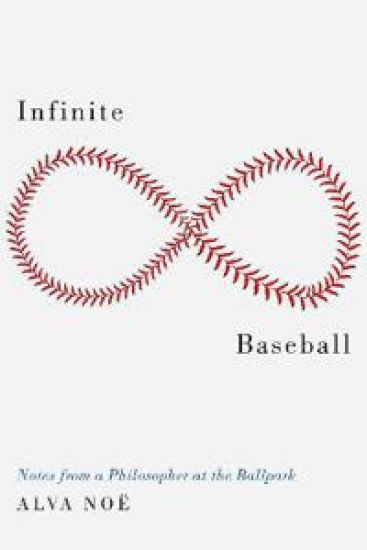
Baseball is a strange sport: it consists of long periods in which little seems to be happening, punctuated by high-energy outbursts of rapid fire activity. Because of this, despite ever greater profits, Major League Baseball is bent on finding ways to shorten games, and to tailor baseball to today's shorter attention spans. But for the true fan, baseball is always compelling to watch--and intellectually fascinating. It's superficially slow-pace is an opportunity to participate in the distinctive thinking practice that defines the game. If baseball is boring, it's boring the way philosophy is boring: not because there isn't a lot going on, but because the challenge baseball poses is making sense of it all. In this deeply entertaining book, philosopher and baseball fan Alva Noë explores the many unexpected ways in which baseball is truly a philosophical kind of game. He ponders how, for example, observers of baseball are less interested in what happens, than in who is responsible for what happens; every action receives praise or blame. To put it another way, in baseball--as in the law--we decide what happened based on who is responsible for what happened. Noë also explains the curious activity of keeping score. A score card is not merely a record of the game, like a video recording; it is an account of the game. Baseball requires that true fans try to tell the story of the game, in real time, as it unfolds, and thus actively participate in its creation. Some argue that baseball is fundamentally a game about numbers. Noë's wide-ranging, thoughtful observations show that, to the contrary, baseball is not only a window on language, culture, and the nature of human action, but is intertwined with deep and fundamental human truths. The book ranges over different baseball topics, from the nature of umpiring and the role of instant replay, to the nature of the strike zone, from the rampant use of surgery to controversy surrounding performance enhancing drugs.
Omituisia työkaluja

Omituisia työkaluja

Alva Noë

Eurooppalaisen filosofian seura
2019
nidottu
Taide on kauneutta. Taide on lohdutusta. Taide on kokemusta. Taide on sitä, mitä taideyhteisö taiteeksi sanoo.Väärin kaikki. Kun taidetta tarkastellaan teoksina tai elämyksinä, lähdetään liikkeelle väärästä suunnasta. Filosofi ja kognitiotieteilijä Alva Noe (s. 1964) väittää, että taide on työkalu, jolla ihminen voi tutkia itseään. Tämän se tekee silkalla omituisuudellaan. Taidetta ei noin vain oteta käyttöön tai hyödynnetä määrätarkoitukseen: taiteelle on ominaista, että se pakottaa aina miettimään, mitä se on ja mitä se vastaanottajalleen tekee.Omituisia työkaluja on ensimmäinen Alva Noen laajasta tuotannosta suomennettu teos. Se kertoo, mikä taiteesta tekee taidetta, muttei suinkaan kiellä käyttämästä sitä julisteena tai paperipainona. Vaikka taide onkin taidetta, se on muutakin kuin taidetta.
Strange Tools: Art and Human Nature

Strange Tools: Art and Human Nature

Alva Noë

Farrar, Strauss Giroux-3pl
2016
nidottu
A philosopher makes the case for thinking of works of art as tools for investigating ourselves In Strange Tools: Art and Human Nature, the philosopher and cognitive scientist Alva No argues that our obsession with works of art has gotten in the way of understanding how art works on us. For No , art isn't a phenomenon in need of an explanation but a mode of research, a method of investigating what makes us human--a strange tool. Art isn't just something to look at or listen to--it is a challenge, a dare to try to make sense of what it is all about. Art aims not for satisfaction but for confrontation, intervention, and subversion. Through diverse and provocative examples from the history of art-making, No reveals the transformative power of artistic production. By staging a dance, choreographers cast light on the way bodily movement organizes us. Painting goes beyond depiction and representation to call into question the role of pictures in our lives. Accordingly, we cannot reduce art to some natural aesthetic sense or trigger; recent efforts to frame questions of art in terms of neurobiology and evolutionary theory alone are doomed to fail. By engaging with art, we are able to study ourselves in profoundly novel ways. In fact, art and philosophy have much more in common than we might think. Reframing the conversation around artists and their craft, Strange Tools is a daring and stimulating intervention in contemporary thought.
Strange Pilgrims

Strange Pilgrims

The Contemporary Austin; Heather Pesanti; Ann Reynolds; Lawrence Weschler; Alva Noë

University of Texas Press
2015
sidottu
In the past fifty years, contemporary artistic practice has witnessed a surge in phenomenological types of artistic intent and methodology, represented by divergent impulses sharing a desire to channel ephemeral elements, resist categorization, and defy the rarified museum experience. Time-based work is now widely accepted as primary exhibition matter, and in the past ten years, performance art has risen to the mainstream. Defining “experiential art” as work that is immersive, participatory, performative, and kinetic, Strange Pilgrims is an exhibition and accompanying catalogue organized by The Contemporary Austin, weaving fourteen artists into a loose collection of propositions occupying unconventional spaces and formats. The title comes from Gabriel García Márquez’s collection of twelve short stories of the same name, riffing on the wandering protagonist as a metaphor for an open-ended journey through strange and unfamiliar spaces.Created in tandem with the exhibition on view in fall 2015 and winter 2016 at The Contemporary Austin’s two sites, as well as a third venue, the Visual Arts Center at the University of Texas at Austin, this catalogue presents a parallel but stand-alone assemblage of ideas and concepts that respond to and resonate with one another under the broad umbrella of experience and perception. The book features an essay by the curator Heather Pesanti, a guest essay by the scholar Ann Reynolds, and an interview between author and critic Lawrence Weschler and the philosopher Alva Noë. All fourteen artists are represented through individual sections with color plates and explicatory text. In addition, Artist’s Voice sections have been contributed by Roger Hiorns, Trisha Baga and Jessie Stead, and Lakes Were Rivers.
Varieties of Presence

Varieties of Presence

Alva Noë

Harvard University Press
2012
sidottu
The world shows up for us—it is present in our thought and perception. But, as Alva Noë contends in his latest exploration of the problem of consciousness, it doesn’t show up for free. The world is not simply available; it is achieved rather than given. As with a painting in a gallery, the world has no meaning—no presence to be experienced—apart from our able engagement with it. We must show up, too, and bring along what knowledge and skills we’ve cultivated. This means that education, skills acquisition, and technology can expand the world’s availability to us and transform our consciousness. Although deeply philosophical, Varieties of Presence is nurtured by collaboration with scientists and artists. Cognitive science, dance, and performance art as well as Kant and Wittgenstein inform this literary and personal work of scholarship intended no less for artists and art theorists, psychologists, cognitive scientists, and anthropologists than for philosophers. Noë rejects the traditional representational theory of mind and its companion internalism, dismissing outright the notion that conceptual knowledge is radically distinct from other forms of practical ability or know-how. For him, perceptual presence and thought presence are species of the same genus. Both are varieties of exploration through which we achieve contact with the world. Forceful reflections on the nature of understanding, as well as substantial examination of the perceptual experience of pictures and what they depict or model are included in this far-ranging discussion.
Action in Perception

Action in Perception

Alva Nöe

Bradford Books
2006
pokkari
"Perception is not something that happens to us, or in us," writes Alva Noe. "It is something we do." In Action in Perception, Noe argues that perception and perceptual consciousness depend on capacities for action and thought-that perception is a kind of thoughtful activity. Touch, not vision, should be our model for perception. Perception is not a process in the brain, but a kind of skillful activity of the body as a whole. We enact our perceptual experience.To perceive, according to this enactive approach to perception, is not merely to have sensations; it is to have sensations that we understand. In Action in Perception, Noe investigates the forms this understanding can take. He begins by arguing, on both phenomenological and empirical grounds, that the content of perception is not like the content of a picture; the world is not given to consciousness all at once but is gained gradually by active inquiry and exploration. Noe then argues that perceptual experience acquires content thanks to our possession and exercise of practical bodily knowledge, and examines, among other topics, the problems posed by spatial content and the experience of color. He considers the perspectival aspect of the representational content of experience and assesses the place of thought and understanding in experience. Finally, he explores the implications of the enactive approach for our understanding of the neuroscience of perception.