Kirjojen hintavertailu. Mukana 12 595 353 kirjaa ja 12 kauppaa.

Kirjailija

Alyson Hallett

Kirjat ja teokset yhdessä paikassa: 3 kirjaa, julkaisuja vuosilta 2017-2021, suosituimpien joukossa Walking Stumbling Limping Falling. Vertaile teosten hintoja ja tarkista saatavuus suomalaisista kirjakaupoista.

3 kirjaa

Kirjojen julkaisuhaarukka 2017-2021.

Covid / Corvid

Covid / Corvid

Alyson Hallett; Penelope Shuttle

Broken Sleep Books
2021
pokkari
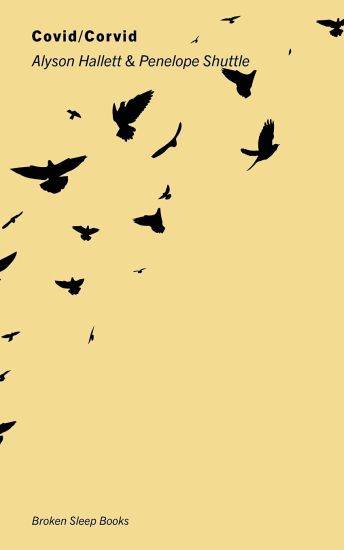
Covid / Corvid by Alyson Hallett & Penelope Shuttle is an uplifting pamphlet of sonnets written in response to the pandemic. Hallett & Shuttle both allude to the natural world, using its vibrancy to contrast to the boredom and rigmarole of lockdown life. Their use of form is playful, tocking and tucking sonnets into various shapes and sizes. Covid / Corvid is an accessible pamphlet full of profound and clear-eyed poetry, unafraid to say "fuck lockdown blues".
Stone Talks

Stone Talks

Alyson Hallett

Triarchy Press
2019
nidottu
Stone Talks brings together poems and four talks/essays by noted poet Alyson Hallett on the subject of stones, rocks, somatics and our relationship with our environment. The book invites us to listen again to the world around us - the world of rocks and trees and sky and stars and sea that we participate in and that participates in us. It reawakens a childlike curiosity in us, makes connections that we had forgotten, and gives us permission to experience the world in an embodied and vibrant way that was drummed out of the rest of us long ago. The book starts with an essay on KInship inspired by Donna Haraway's ideas about how we must make relationships of kin with all things, including what she refers to as `critters’. In it, Alyson explores the twin ideas of embodied reading and embodied walking. How, exactly, can we embody the ideas in a book? Here, the author "dives into kinship with the decomposed bodies of plankton, plants and animals whose liquidation created that beautiful, black viscous gold we call oil". In the title essay, Stone Talks, Alyson revisits the keynote lecture she gave at the `In Other Tongues’ symposium at Dartington. In it she explores her lived experience of being talked to and guided in her life by stones. She examines the ideas of obedience and yielding, the body as a wilderness, and unfolds a walked artwork with stones that she undertook soon after her father died. In Haunted Landscapes, Alyson explores the marks and traces of our own and others' lives that inhabit our bodies and experience. Wandering into quantum physics, she asks questions that "set me afloat on a fathomless sea". Finally, in The Stone Monologues, Alyson embarks on a quest to "understand myself not as a single thing, a single point, but rather a constellation, a layered interruption in time comprising everyone and everything I encounter". Alyson Hallett has received Arts Council awards for her work. She is a Hawthornden Fellow, works part-time for the Royal Literary Fund and loves collaborating with other artists and scientists. She has a doctorate in poetry with research into geographical intimacy. In Stone Talks, she shares some of what she is learning from stones. She talks “from the mud. From the earth. From the place we haunt and are haunted by.” The talking is exquisite.
Walking Stumbling Limping Falling

Walking Stumbling Limping Falling

Alyson Hallett; Phil Smith

Triarchy Press
2017
nidottu
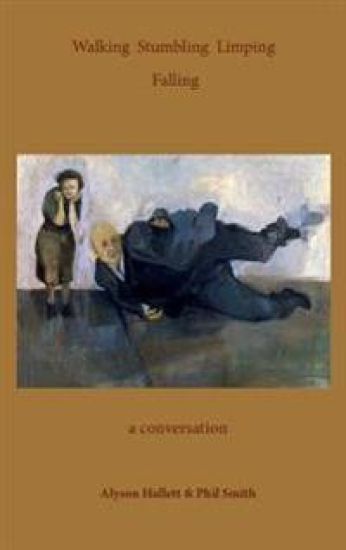
In a 1934 lecture, Marcel Mauss said: "A kind of revelation came to me in hospital. I was ill in New York. I wondered where previously I had seen girls walking as my nurses walked. I had the time to think about it. At last I realised that it was at the cinema. Returning to France, I noticed how common this gait was, especially in Paris; the girls were French and they too were walking in this way. In fact, American walking fashions had begun to arrive over here, thanks to the cinema." Here are the roots of contemporary views of daily-life movement (including walking). We notice people who don't walk normally. We notice ourselves when we don't walk normally. There is, it seems, an intense, invisible pressure to walk normally. Straight is the gait. Call it ambulonormativity. For about 9 months, two walking-authors/artists - Alyson Hallett and Phil Smith - found themselves wrestling with not being able to walk normally. They wrote to one another about it and, amongst other things, reflected on: prostheses waddling Butoh built-up shoes walking in pain bad legs vertigo falling (and fallen) places hubris bad walks scores for falling down walking carefully disappointment. This is their conversation. From it, there emerges an 'Alphabet of Falling', a sustained reflection on the loss of normal capabilities, anecdotes and autobiographical stories, and the beginnings of a larger discussion about srumbling and falling: the pedestrian equivalent of blowing an uncertain trumpet. As the book concludes: "When you next fall, stay down for a while, see what comes. Then, when you get to your feet again, rather than relying on your body's natural approximations of space, choose your steps, not anxiously but in an excited kind of wariness; and, with each pace, a little more undo the 'grounds' that tripped you up."