Kirjojen hintavertailu. Mukana 12 141 506 kirjaa ja 12 kauppaa.

Kirjailija

Alyssa Ayres

Kirjat ja teokset yhdessä paikassa: 4 kirjaa, julkaisuja vuosilta 2012-2020, suosituimpien joukossa Our Time Has Come. Vertaile teosten hintoja ja tarkista saatavuus suomalaisista kirjakaupoista.

4 kirjaa

Kirjojen julkaisuhaarukka 2012-2020.

Our Time Has Come

Our Time Has Come

Alyssa Ayres

Oxford University Press Inc
2020
nidottu
Over the last 25 years, India's explosive economic growth has vaulted it into the ranks of the world's emerging major powers. India's middle class has grown by leaps and bounds, and the country's sheer scale-possessing what will very soon be the world's largest population and an economy of more than $2 trillion-means its actions will have a major global impact. While it is clearly on the path to becoming a great power, India has not abandoned all of its past policies: its economy remains relatively protectionist, and it still struggles with the legacy of its longstanding foreign policy doctrine of non-alignment. India's vibrant democracy encompasses a vast array of parties who champion dizzyingly disparate policies. And India isn't easily swayed by foreign influence; the country carefully guards its autonomy, in part because of its colonial past. For all of these reasons, India tends to move cautiously and deliberately in the international sphere. In Our Time Has Come, Alyssa Ayres looks at how the tension between India's past and its ongoing integration into the global economy will shape its trajectory. By focusing on how India's unique perspective shapes its approach to global affairs, this new, updated paperback edition of Our Time Has Come helps the world make sense of India's rise.
Our Time Has Come

Our Time Has Come

Alyssa Ayres

Oxford University Press Inc
2018
sidottu
Over the last 25 years, India's explosive economic growth has vaulted it into the ranks of the world's emerging major powers. Long plagued by endemic poverty, until the 1990s the Indian economy was also hamstrung by a burdensome regulatory regime that limited its ability to compete on a global scale. Since then, however, the Indian government has gradually opened up the economy and the results have been stunning. India's middle class has grown by leaps and bounds, and the country's sheer scale-its huge population and $2 trillion economy-means its actions will have a major global impact. From world trade to climate change to democratization, India now matters. While it is clearly on the path to becoming a great power, India has not abandoned all of its past policies: its economy remains relatively protectionist, and it still struggles with the legacy of its longstanding foreign policy doctrine of non-alignment. India's vibrant democracy encompasses a vast array of parties who champion dizzyingly disparate policies. And India isn't easily swayed by foreign influence; the country carefully guards its autonomy, in part because of its colonial past. For all of these reasons, India tends to move cautiously and deliberately in the international sphere. In Our Time Has Come Alyssa Ayres looks at how the tension between India's inward-focused past and its ongoing integration into the global economy will shape its trajectory. Today, Indian leaders increasingly want to see their country feature in the ranks of the world's great powers-in fact, as a "leading power," to use the words of Prime Minister Narendra Modi. Ayres considers the role India is likely to play as its prominence grows, taking stock of the implications and opportunities for the US and other nations as the world's largest democracy defines its place in the world. As she shows, India breaks the mold of the typical "ally," and its vastness, history, and diversity render it incomparable to any other major democratic power. By focusing on how India's unique perspective shapes its approach to global affairs, Our Time Has Come will help the world make sense of India's rise.
Speaking Like a State

Speaking Like a State

Alyssa Ayres

Cambridge University Press
2012
pokkari
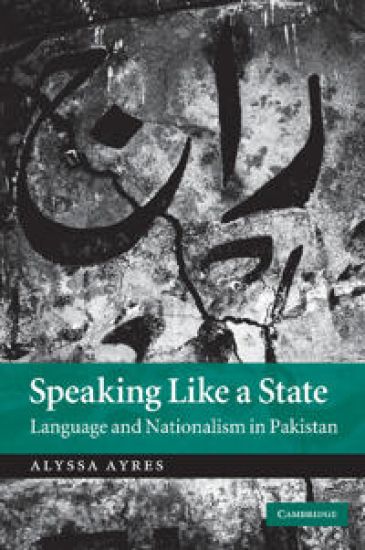
Alyssa Ayres' fascinating study examines Pakistan's troubled history by exploring the importance of culture to political legitimacy. Early leaders selected Urdu as the natural symbol of the nation's great cultural past, but due to its limited base great efforts would be required to make it truly national. This paradox underscores the importance of cultural policies for national identity formation. By comparing Pakistan's experience with those of India and Indonesia, the author analyzes how their national language policies led to very different outcomes. The lessons of these large multiethnic states offer insights for the understanding of culture, identity, and nationalism throughout the world. The book is aimed at scholars in the fields of history, political theory and South Asian studies, as well as those interested in the history of culture and nationalism in one of the world's most complex, and challenging, countries.