Kirjojen hintavertailu. Mukana 12 166 121 kirjaa ja 12 kauppaa.

Kirjailija

Amanda Anderson

Kirjat ja teokset yhdessä paikassa: 15 kirjaa, julkaisuja vuosilta 2001-2025, suosituimpien joukossa All My Friends Have Issues. Vertaile teosten hintoja ja tarkista saatavuus suomalaisista kirjakaupoista.

15 kirjaa

Kirjojen julkaisuhaarukka 2001-2025.

Humanities Theory

Humanities Theory

Amanda Anderson; Simon During

Oxford University Press
2025
nidottu
Humanities Theory pioneers a new topic: the theory of the humanities. It is an urgent topic right now because the humanities face a suite of forceful new challenges and are in a period of significant change. For these reasons, it has become important to analyse and understand what the humanities are as a whole, beyond disciplinary divisions and yet without resorting to simplistic notions of their worth. Remarkably little attention has been paid to this topic. Most discussions of the humanities have been polemical if not defensive. This book argues that there exists a global humanities world which not only transcends disciplinary divisions but joins the professional academic humanities to a thriving amateur public humanities. This world has no essence, it is plural. Nevertheless, powerful, if contested, ethical orientations run through it and help shape it, including a will to truthfulness, a will to openness and generosity, a will to examine values. In their essays Simon During and Amanda Anderson each bring different emphases to their shared orientation towards a large plural humanities world: During analyses how key disciplines--sociology, philosophy and history--might be used to think about the humanities as a whole and, on this basis, offers some predictions of the future awaiting the humanities. Anderson analyzes media representations of the humanities and considers the general conceptual frameworks through which the humanities focus on value and proffer critique. She analyses a series of examples of contemporary critical engagements in the humanities to press a case for value pluralism in the humanities and the university more broadly.
Humanities Theory

Humanities Theory

Amanda Anderson; Simon During

Oxford University Press
2025
sidottu
Humanities Theory pioneers a new topic: the theory of the humanities. It is an urgent topic right now because the humanities face a suite of forceful new challenges and are in a period of significant change. For these reasons, it has become important to analyse and understand what the humanities are as a whole, beyond disciplinary divisions and yet without resorting to simplistic notions of their worth. Remarkably little attention has been paid to this topic. Most discussions of the humanities have been polemical if not defensive. This book argues that there exists a global humanities world which not only transcends disciplinary divisions but joins the professional academic humanities to a thriving amateur public humanities. This world has no essence, it is plural. Nevertheless, powerful, if contested, ethical orientations run through it and help shape it, including a will to truthfulness, a will to openness and generosity, a will to examine values. In their essays Simon During and Amanda Anderson each bring different emphases to their shared orientation towards a large plural humanities world: During analyses how key disciplines--sociology, philosophy and history--might be used to think about the humanities as a whole and, on this basis, offers some predictions of the future awaiting the humanities. Anderson analyzes media representations of the humanities and considers the general conceptual frameworks through which the humanities focus on value and proffer critique. She analyses a series of examples of contemporary critical engagements in the humanities to press a case for value pluralism in the humanities and the university more broadly.
The Perfect Gift

The Perfect Gift

Amanda Anderson

CKB Press
2020
nidottu
This is a mixed collection of poetry, written in rhyming verse.The themes explored are diverse, but include;Angels, Law of Attraction, Humorous work, Inspirational, Motivational, Observational, and also include contemporary works. referencing the 2020 Covid-19 Pandemic, and climate change etc.There is a 'twist in the tail', in the form of an interactive competition.The reader is encouraged to 'try their pen' at writing their own poem, using one of four 'opening lines' suggested.They are then invited to upload their work to the Author's Facebook page ( Pen Me A Poem).The Author will then choose a winner, in November 2021. There is a 100.00 prize for the winning poet
Character

Character

Amanda Anderson; Rita Felski; Toril Moi

University of Chicago Press
2019
sidottu
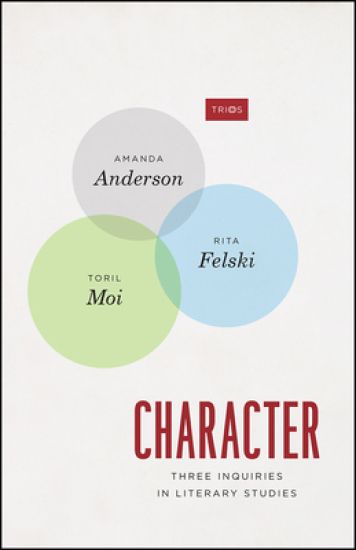
Over the last few decades, character-based criticism has been seen as either naive or obsolete. But now questions of character are attracting renewed interest. Making the case for a broad-based revision of our understanding of character, Character rethinks these questions from the ground up. Is it really necessary to remind literary critics that characters are made up of words? Must we forbid identification with characters? Does character-discussion force critics to embrace humanism and outmoded theories of the subject? Across three chapters, leading scholars Amanda Anderson, Rita Felski, and Toril Moi reimagine and renew literary studies by engaging in a conversation about character. Moi returns to the fundamental theoretical assumptions that convinced literary scholars to stop doing character-criticism, and shows that they cannot hold. Felski turns to the question of identification and draws out its diverse strands, as well as its persistence in academic criticism. Anderson shows that character-criticism illuminates both the moral life of characters, and our understanding of literary form. In offering new perspectives on the question of fictional character, this thought-provoking book makes an important intervention in literary studies.
Character

Character

Amanda Anderson; Rita Felski; Toril Moi

University of Chicago Press
2019
pokkari
Over the last few decades, character-based criticism has been seen as either naive or obsolete. But now questions of character are attracting renewed interest. Making the case for a broad-based revision of our understanding of character, Character rethinks these questions from the ground up. Is it really necessary to remind literary critics that characters are made up of words? Must we forbid identification with characters? Does character-discussion force critics to embrace humanism and outmoded theories of the subject? Across three chapters, leading scholars Amanda Anderson, Rita Felski, and Toril Moi reimagine and renew literary studies by engaging in a conversation about character. Moi returns to the fundamental theoretical assumptions that convinced literary scholars to stop doing character-criticism, and shows that they cannot hold. Felski turns to the question of identification and draws out its diverse strands, as well as its persistence in academic criticism. Anderson shows that character-criticism illuminates both the moral life of characters, and our understanding of literary form. In offering new perspectives on the question of fictional character, this thought-provoking book makes an important intervention in literary studies.
All My Friends Have Issues

All My Friends Have Issues

Amanda Anderson

Thomas Nelson Publishers
2019
nidottu
Why is it so challenging to create and keep meaningful friendships? Amanda Anderson provides the wise and witty answers, giving practical advice and sharing personal stories to guide us toward the kinds of friendships we long for. Blending faith-based insights and psychological truths, All My Friends Have Issues is a liberating guide to finding and becoming an authentic and encouraging friend. “Anderson becomes the friend we’ve always needed and, in the process, helps us become a better friend.”—Elisa Morgan, president emerita of MOPS International, speaker, and author of The Beauty of Broken“Be ready to laugh and then to learn as Amanda shares her weaknesses and foibles in her relationships with herself and her friends.”—David Stoop, PhD, clinical psychologist and author of You Are What You Think “A captivating and often hilarious book.”—Milan and Kay Yerkovich, authors of How We Love and How We Love Our Kids “Fun and informative. . . . A book I highly recommend!”—Debbie Alsdorf, speaker and author of It’s Momplicated and The Faith Dare“Warm, funny, authentic, and relatable.”—Vivian Mabuni, speaker and author of Open Hands, Willing Heart
Tainted Souls and Painted Faces

Tainted Souls and Painted Faces

Amanda Anderson

Cornell University Press
2018
pokkari
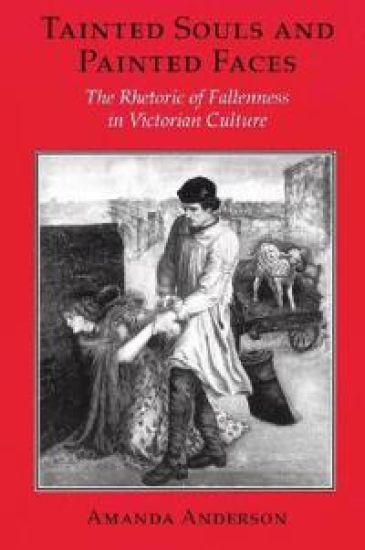
Prostitute, adulteress, unmarried woman who engages in sexual relations, victim of seduction—the Victorian "fallen woman" represents a complex array of stigmatized conditions. Amanda Anderson here reconsiders the familiar figure of the fallen woman within the context of mid-Victorian debates over the nature of selfhood, gender, and agency. In richly textured readings of works by Charles Dickens, Elizabeth Gaskell, Dante Gabriel Rossetti, and Elizabeth Barrett Browning, among others, she argues that depictions of fallen women express profound cultural anxieties about the very possibility of self-control and traditional moral responsibility.
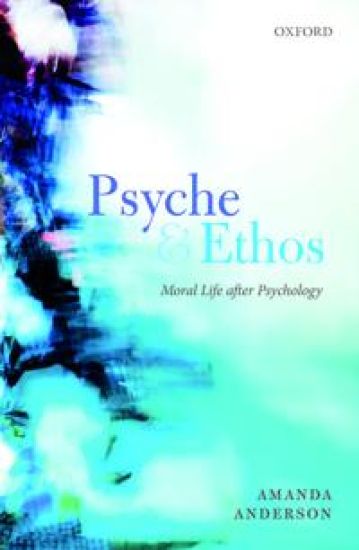
Psyche and Ethos

Psyche and Ethos

Amanda Anderson

Oxford University Press
2018
sidottu
We live in a psychological age. Contemporary culture is saturated with psychological concepts and ideas, from anxiety to narcissism to trauma. While it might seem that concern over psychological conditions and challenges is intrinsically oriented toward moral questions about what promotes individual and collective well-being, it is striking that from the advent of Freudian psychoanalysis in the late nineteenth-century up to recent findings in cognitive science, psychology has posed a continuing challenge to traditional concepts of moral deliberation, judgment, and action, all core components of moral philosophy and central to understandings of character and tragedy in literature. Psyche and Ethos: Moral Life After Psychology explores the nature of psychology's consequential effects on our understanding of the moral life. Using a range of examples from literature and literary criticism alongside discussions of psychological literature from psychoanalysis to recent cognitive science and social psychology, this study argues for a renewed look at the persistence of moral orientations toward life and the values of integrity, fidelity, and repair that they privilege. Writings by Shakespeare, Henry James, and George Eliot, and the powerful contributions of British object relations theorists in the post-war period, help to draw out the fundamental ways we experience moral time, the forms of elusive duration that constitute loss, grief, regret, and the desire for amends. Acknowledging the power and necessity of psychological frameworks, Psyche and Ethos aims to restore moral understanding and moral experience to a more central place in our understanding of psychic life and the literary tradition.
Fit for Duty?

Fit for Duty?

Sean Robson; Maria C Lytell; Carra S Sims; Stephanie Pezard; Thomas Manacapilli; Amanda Anderson; Therese Bohusch; Abigail Haddad

RAND
2017
nidottu
Military occupations can be physically demanding, yet few attempts have been made to determine the physical readiness of today's airmen to perform their jobs. As part of a broader Air Force effort to measure the physical readiness of airmen to perform their jobs, this report describes a methodology for establishing physical fitness standards for four physically demanding Air Force occupational specialties.
Bleak Liberalism

Bleak Liberalism

Amanda Anderson

University of Chicago Press
2016
nidottu
Why is liberalism so often dismissed by thinkers from both the left and the right? To those calling for wholesale transformation or claiming a monopoly on "realistic" conceptions of humanity, liberalism's assured progressivism can seem hard to swallow. Bleak Liberalism makes the case for a renewed understanding of the liberal tradition, showing that it is much more attuned to the complexity of political life than conventional accounts have acknowledged. Anderson examines canonical works of high realism, political novels from England and the United States, and modernist works to argue that liberalism has engaged sober and even stark views of historical development, political dynamics, and human and social psychology. From Charles Dickens's Bleak House and Hard Times to E. M. Forster's Howards End to Doris Lessing's The Golden Notebook, this literature demonstrates that liberalism has inventive ways of balancing sociological critique and moral aspiration. A deft blend of intellectual history and literary analysis, Bleak Liberalism reveals a richer understanding of one of the most important political ideologies of the modern era.
The Way We Argue Now

The Way We Argue Now

Amanda Anderson

Princeton University Press
2005
pokkari
How do the ways we argue represent a practical philosophy or a way of life? Are concepts of character and ethos pertinent to our understanding of academic debate? In this book, Amanda Anderson analyzes arguments in literary, cultural, and political theory, with special attention to the ways in which theorists understand ideals of critical distance, forms of subjective experience, and the determinants of belief and practice. Drawing on the resources of the liberal and rationalist tradition, Anderson interrogates the limits of identity politics and poststructuralism while holding to the importance of theory as a form of life. Considering high-profile trends as well as less noted patterns of argument, The Way We Argue Now addresses work in feminism, new historicism, queer theory, postcolonialism, cosmopolitanism, pragmatism, and proceduralism. The essays brought together here--lucid, precise, rigorously argued--combine pointed critique with an appreciative assessment of the productive internal contests and creative developments across these influential bodies of thought. Ultimately, The Way We Argue Now promotes a revitalized culture of argument through a richer understanding of the ways critical reason is practiced at the individual, collective, and institutional levels. Bringing to the fore the complexities of academic debate while shifting the terms by which we assess the continued influence of theory, it will appeal to readers interested in political theory, literary studies, cultural studies, gender studies, and the place of academic culture in society and politics.
The Powers of Distance

The Powers of Distance

Amanda Anderson

Princeton University Press
2001
pokkari
Combining analysis of Victorian literature and culture with forceful theoretical argument, The Powers of Distance examines the progressive potential of those forms of cultivated detachment associated with Enlightenment and modern thought. Amanda Anderson explores a range of practices in nineteenth-century British culture, including methods of objectivity in social science, practices of omniscience in artistic realism, and the complex forms of affiliation in Victorian cosmopolitanism. Anderson demonstrates that many writers--including George Eliot, John Stuart Mill, Charlotte Bronte, Matthew Arnold, and Oscar Wilde--thoughtfully address the challenging moral questions that attend stances of detachment. In so doing, she offers a revisionist account of Victorian culture and a tempered defense of detachment as an ongoing practice and aspiration. The Powers of Distance illuminates its historical object of study and provides a powerful example for its theoretical argument, showing that an ideal of critical detachment underlies the ironic modes of modernism and postmodernism as well as the tradition of Enlightenment thought and critical theory. Its broad understanding of detachment and cultivated distance, together with its focused historical analysis, will appeal to theorists and critics across the humanities, particularly those working in literary and cultural studies, feminism, and postcolonialism. Original in scope and thesis, this book constitutes a major contribution to literary history and contemporary theory.