Kirjojen hintavertailu. Mukana 12 595 353 kirjaa ja 12 kauppaa.

Kirjailija

Amanda D. Lotz

Kirjat ja teokset yhdessä paikassa: 17 kirjaa, julkaisuja vuosilta 2006-2025, suosituimpien joukossa After Mass Media. Vertaile teosten hintoja ja tarkista saatavuus suomalaisista kirjakaupoista.

17 kirjaa

Kirjojen julkaisuhaarukka 2006-2025.

After Mass Media

After Mass Media

Amanda D. Lotz

NEW YORK UNIVERSITY PRESS
2025
pokkari
Explores the cultural role of screen storytelling in society With significant evolutions in digital technologies and media distribution in the past two decades, the business of storytelling through screens has shifted dramatically. In the past, blockbuster movies and TV shows like Friends aimed first for domestic mass audiences, although the biggest hits circulated globally. Now, transnational distribution plays a primary role and imagined audiences are global. At the same time, the once-mass audience has significantly fragmented to enable an expansion in the range of commercially viable stories, as evident in series as varied as Atlanta, Better Things, and dozens of others that are not widely known, but deeply loved by their microaudiences. Delving into the changing landscape of commercial screen storytelling, After Mass Media explores how industrial shifts and technological advancements have remade the narrative landscape over the past two decades. Television and movies have long shaped society, whether by telling us about the worlds around us or far away. By examining the internationalization of screen businesses, the rise of streaming services with multi-territory reach, and the stories made for this environment, this book sheds light on the profound transformations in television and film production and circulation. With a keen focus on major changes in the types of screen stories being told, Amanda D. Lotz unravels the industrial roots that made these transformations possible, challenges some conventional distinctions of screen storytelling, and provides new conceptual tools to make sense of the abundance and range of screen stories on offer. Through its comprehensive analysis, After Mass Media exposes how contemporary industrial dynamics, particularly the erosion of traditional distribution models based on geography and mass audience reach, have far-reaching implications for our understanding of national video cultures.
After Mass Media

After Mass Media

Amanda D. Lotz

NEW YORK UNIVERSITY PRESS
2025
sidottu
Explores the cultural role of screen storytelling in society With significant evolutions in digital technologies and media distribution in the past two decades, the business of storytelling through screens has shifted dramatically. In the past, blockbuster movies and TV shows like Friends aimed first for domestic mass audiences, although the biggest hits circulated globally. Now, transnational distribution plays a primary role and imagined audiences are global. At the same time, the once-mass audience has significantly fragmented to enable an expansion in the range of commercially viable stories, as evident in series as varied as Atlanta, Better Things, and dozens of others that are not widely known, but deeply loved by their microaudiences. Delving into the changing landscape of commercial screen storytelling, After Mass Media explores how industrial shifts and technological advancements have remade the narrative landscape over the past two decades. Television and movies have long shaped society, whether by telling us about the worlds around us or far away. By examining the internationalization of screen businesses, the rise of streaming services with multi-territory reach, and the stories made for this environment, this book sheds light on the profound transformations in television and film production and circulation. With a keen focus on major changes in the types of screen stories being told, Amanda D. Lotz unravels the industrial roots that made these transformations possible, challenges some conventional distinctions of screen storytelling, and provides new conceptual tools to make sense of the abundance and range of screen stories on offer. Through its comprehensive analysis, After Mass Media exposes how contemporary industrial dynamics, particularly the erosion of traditional distribution models based on geography and mass audience reach, have far-reaching implications for our understanding of national video cultures.
Media Industries in the Digital Age

Media Industries in the Digital Age

Amanda D. Lotz; Timothy Havens

JOHN WILEY AND SONS LTD
2024
sidottu
The digital communication technologies that emerged at the turn of the century have profoundly disrupted long-practiced norms of nearly every media industry. In particular, internet distribution has fundamentally changed the foundation of the media industry to enable the emergence of new sectors while posing a challenge for others. Media Industries in the Digital Age reframes our understanding of media businesses in the light of these substantial changes. To develop an integrated understanding of media industries today, the book foregrounds the different funding sources that are now common. It begins by mapping the foundations and developments of media industry operation, and exploring all forms of advertiser-funded and consumer-funded media to identify connections across sectors, including digital and legacy media. The final section grounds the book’s conceptual work in examples of media making to explore how some “old” media have successfully adapted to internet disruption, and the differences and similarities of media making outside of corporations. Looking to the future, the book anticipates implications for the emerging “metaverse” media experiences and the key issues generative AI poses to the sector. Ultimately, the book argues that the contemporary differences in media industry operation vary by sector, but meaningful patterns can be identified by considering how advertiser, consumer, or government funding sets different priorities.Offering a new and original way of understanding the media industries today, this book is enlightening reading for students and scholars of media studies and media industries, as well as global industry professionals
Media Industries in the Digital Age

Media Industries in the Digital Age

Amanda D. Lotz; Timothy Havens

JOHN WILEY AND SONS LTD
2024
nidottu
The digital communication technologies that emerged at the turn of the century have profoundly disrupted long-practiced norms of nearly every media industry. In particular, internet distribution has fundamentally changed the foundation of the media industry to enable the emergence of new sectors while posing a challenge for others. Media Industries in the Digital Age reframes our understanding of media businesses in the light of these substantial changes. To develop an integrated understanding of media industries today, the book foregrounds the different funding sources that are now common. It begins by mapping the foundations and developments of media industry operation, and exploring all forms of advertiser-funded and consumer-funded media to identify connections across sectors, including digital and legacy media. The final section grounds the book’s conceptual work in examples of media making to explore how some “old” media have successfully adapted to internet disruption, and the differences and similarities of media making outside of corporations. Looking to the future, the book anticipates implications for the emerging “metaverse” media experiences and the key issues generative AI poses to the sector. Ultimately, the book argues that the contemporary differences in media industry operation vary by sector, but meaningful patterns can be identified by considering how advertiser, consumer, or government funding sets different priorities.Offering a new and original way of understanding the media industries today, this book is enlightening reading for students and scholars of media studies and media industries, as well as global industry professionals
Netflix and Streaming Video

Netflix and Streaming Video

Amanda D. Lotz

JOHN WILEY AND SONS LTD
2022
sidottu
Netflix and Streaming Video is the first book to provide a comprehensive foundation for understanding the business of subscriber-funded streaming video and its implications for the role of these services in culture. Drawing on Lotz’s two decades of research, it highlights the similarities and differences among streaming video services (Netflix; Amazon) and video distribution technologies (broadcast; satellite; internet). Making a number of provocative and thought-provoking arguments, the book first reveals how the reliance on subscriber payment and video on demand produces different norms and strategies compared to previous video businesses. It then investigates Netflix and how its particular blend of characteristics distinguishes it from other subscriber-funded video on demand services. The author expertly shows that, by understanding the underlying economic and technological dynamics of these services (and their differences), it is possible to better assess the actions taken by the companies and what the future of video may encompass. The book is a must-read for students and scholars of Media and Communications Studies, as well as those wishing to learn more about Netflix and streaming video services.
Netflix and Streaming Video

Netflix and Streaming Video

Amanda D. Lotz

JOHN WILEY AND SONS LTD
2022
nidottu
Netflix and Streaming Video is the first book to provide a comprehensive foundation for understanding the business of subscriber-funded streaming video and its implications for the role of these services in culture. Drawing on Lotz’s two decades of research, it highlights the similarities and differences among streaming video services (Netflix; Amazon) and video distribution technologies (broadcast; satellite; internet). Making a number of provocative and thought-provoking arguments, the book first reveals how the reliance on subscriber payment and video on demand produces different norms and strategies compared to previous video businesses. It then investigates Netflix and how its particular blend of characteristics distinguishes it from other subscriber-funded video on demand services. The author expertly shows that, by understanding the underlying economic and technological dynamics of these services (and their differences), it is possible to better assess the actions taken by the companies and what the future of video may encompass. The book is a must-read for students and scholars of Media and Communications Studies, as well as those wishing to learn more about Netflix and streaming video services.
Media Industry Studies

Media Industry Studies

Daniel Herbert; Amanda D. Lotz; Aswin Punathambekar

Polity Press
2020
nidottu
The study of media industries has become a thriving subfield of media studies. It already comprises a diverse intellectual history, a range of fascinating questions and topics, and many theoretical and methodological frameworks.Media Industry Studies provides the roadmap to this vibrant area of study. Blending a comprehensive overview of foundational literature with an examination of the varied scales and sites media industry studies have considered, the book explores connections among research questions, topics, and methodologies. It includes examples from many media industries – film, television, journalism, music, games – and incorporates emerging scholarship considering the industrial contexts of social and internet-distributed media.Offering an account of the intellectual traditions and approaches that have defined the subfield to date, Media Industry Studies is an indispensable resource for upper-level undergraduates, postgraduates, and scholars.
Media Industry Studies

Media Industry Studies

Daniel Herbert; Amanda D. Lotz; Aswin Punathambekar

Polity Press
2020
sidottu
The study of media industries has become a thriving subfield of media studies. It already comprises a diverse intellectual history, a range of fascinating questions and topics, and many theoretical and methodological frameworks.Media Industry Studies provides the roadmap to this vibrant area of study. Blending a comprehensive overview of foundational literature with an examination of the varied scales and sites media industry studies have considered, the book explores connections among research questions, topics, and methodologies. It includes examples from many media industries – film, television, journalism, music, games – and incorporates emerging scholarship considering the industrial contexts of social and internet-distributed media.Offering an account of the intellectual traditions and approaches that have defined the subfield to date, Media Industry Studies is an indispensable resource for upper-level undergraduates, postgraduates, and scholars.
Television Studies

Television Studies

Jonathan Gray; Amanda D. Lotz

Polity Press
2018
nidottu
Television Studies provides an overview of the origins, central ideas, and intellectual traditions of this exciting field. What have been the primary areas of inquiry in television studies? Why and how did these areas develop? How have scholars studied them? How are they developing? What have been the discipline’s key works? This book answers these questions by tracing the history of television studies right up to the digital present, surveying emerging scholarship, and addressing new questions about the field’s relationship with the digital. The second edition includes an examination of how internet-distributed services such as Netflix have adjusted the stories, industrial practices, and audience experience of television. For all those wondering how to study television, or even why to study television, this new edition of Television Studies will provide a clear and engaging overview of key topics. The book works as a stand-alone introduction and, by placing key works in a broader context, can also provide an excellent basis for an entire course.
Television Studies

Television Studies

Jonathan Gray; Amanda D. Lotz

Polity Press
2018
sidottu
Television Studies provides an overview of the origins, central ideas, and intellectual traditions of this exciting field. What have been the primary areas of inquiry in television studies? Why and how did these areas develop? How have scholars studied them? How are they developing? What have been the discipline’s key works? This book answers these questions by tracing the history of television studies right up to the digital present, surveying emerging scholarship, and addressing new questions about the field’s relationship with the digital. The second edition includes an examination of how internet-distributed services such as Netflix have adjusted the stories, industrial practices, and audience experience of television. For all those wondering how to study television, or even why to study television, this new edition of Television Studies will provide a clear and engaging overview of key topics. The book works as a stand-alone introduction and, by placing key works in a broader context, can also provide an excellent basis for an entire course.
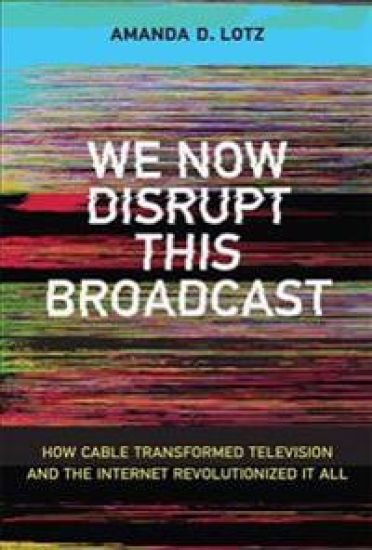
We Now Disrupt This Broadcast

We Now Disrupt This Broadcast

Amanda D. Lotz; John Landgraf

MIT Press
2018
sidottu
The collision of new technologies, changing business strategies, and innovative storytelling that produced a new golden age of TV.Cable television channels were once the backwater of American television, programming recent and not-so-recent movies and reruns of network shows. Then came La Femme Nikita, OZ, The Sopranos, Mad Men, Game of Thrones, and The Walking Dead. And then, just as "prestige cable" became a category, came House of Cards and Netflix, Hulu, Amazon Video, and other Internet distributors of television content. What happened? In We Now Disrupt This Broadcast, Amanda Lotz chronicles the collision of new technologies, changing business strategies, and innovative storytelling that produced an era termed "peak TV."Lotz explains that changes in the business of television expanded the creative possibilities of television. She describes the costly infrastructure rebuilding undertaken by cable service providers in the late 1990s and the struggles of cable channels to produce (and pay for) original, scripted programming in order to stand out from the competition. These new programs defied television conventions and made viewers adjust their expectations of what television could be. Le Femme Nikita offered cable's first antihero, Mad Men cost more than advertisers paid, The Walking Dead became the first mass cable hit, and Game of Thrones was the first global television blockbuster. Internet streaming didn't kill cable, Lotz tells us. Rather, it revolutionized how we watch television. Cable and network television quickly established their own streaming portals. Meanwhile, cable service providers had quietly transformed themselves into Internet providers, able to profit from both prestige cable and streaming services. Far from being dead, television continues to transform.
The Television Will Be Revolutionized

The Television Will Be Revolutionized

Amanda D. Lotz

New York University Press
2014
pokkari
Go behind the TV screen to explore what is changing, why it is changing, and why the changes matters Many proclaimed the "end of television" in the early years of the twenty-first century, as capabilities and features of the boxes that occupied a central space in American living rooms for the preceding fifty years were radically remade. In this revised, second edition of her definitive book, Amanda D. Lotz proves that rumors of the death of television were greatly exaggerated and explores how new distribution and viewing technologies have resurrected the medium. Shifts in the basic practices of making and distributing television have not been hastening its demise, but are redefining what we can do with television, what we expect from it, how we use it—in short, revolutionizing it. Television, as both a technology and a tool for cultural storytelling, remains as important today as ever, but it has changed in fundamental ways. The Television Will Be Revolutionized provides a sophisticated history of the present, examining television in what Lotz terms the "post-network" era while providing frameworks for understanding the continued change in the medium. The second edition addresses adjustments throughout the industry wrought by broadband delivered television such as Netflix, YouTube, and cross-platform initiatives like TV Everywhere, as well as how technologies such as tablets and smartphones have changed how and where we view. Lotz begins to deconstruct the future of different kinds of television—exploring how "prized content," live television sports and contests, and linear viewing may all be "television," but very different types of television for both viewers and producers. Through interviews with those working in the industry, surveys of trade publications, and consideration of an extensive array of popular shows, Lotz takes us behind the screen to explore what is changing, why it is changing, and why the changes matter.
The Television Will Be Revolutionized

The Television Will Be Revolutionized

Amanda D. Lotz

New York University Press
2014
sidottu
Go behind the TV screen to explore what is changing, why it is changing, and why the changes matters Many proclaimed the "end of television" in the early years of the twenty-first century, as capabilities and features of the boxes that occupied a central space in American living rooms for the preceding fifty years were radically remade. In this revised, second edition of her definitive book, Amanda D. Lotz proves that rumors of the death of television were greatly exaggerated and explores how new distribution and viewing technologies have resurrected the medium. Shifts in the basic practices of making and distributing television have not been hastening its demise, but are redefining what we can do with television, what we expect from it, how we use it—in short, revolutionizing it. Television, as both a technology and a tool for cultural storytelling, remains as important today as ever, but it has changed in fundamental ways. The Television Will Be Revolutionized provides a sophisticated history of the present, examining television in what Lotz terms the "post-network" era while providing frameworks for understanding the continued change in the medium. The second edition addresses adjustments throughout the industry wrought by broadband delivered television such as Netflix, YouTube, and cross-platform initiatives like TV Everywhere, as well as how technologies such as tablets and smartphones have changed how and where we view. Lotz begins to deconstruct the future of different kinds of television—exploring how "prized content," live television sports and contests, and linear viewing may all be "television," but very different types of television for both viewers and producers. Through interviews with those working in the industry, surveys of trade publications, and consideration of an extensive array of popular shows, Lotz takes us behind the screen to explore what is changing, why it is changing, and why the changes matter.
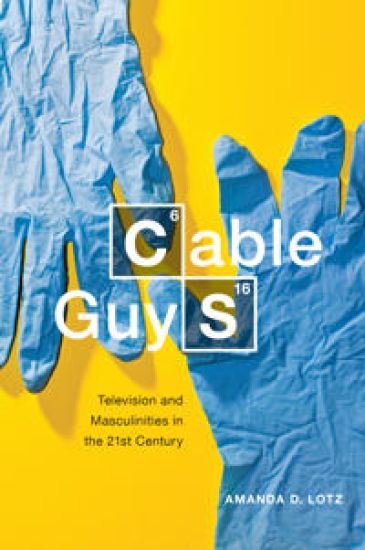
Cable Guys

Cable Guys

Amanda D. Lotz

New York University Press
2014
sidottu
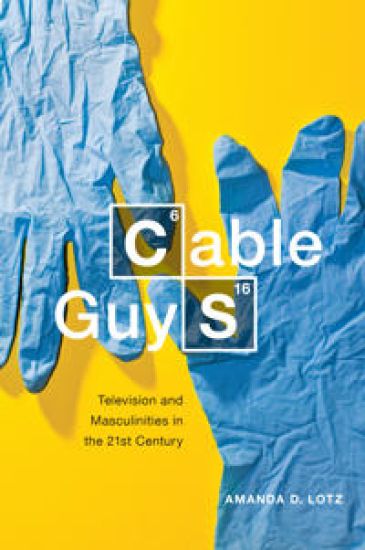
The emergence of "male-centered serials" such as The Shield, Rescue Me, and Sons Of Anarchy and the challenges these characters face in negotiating modern masculinities. From the meth-dealing but devoted family man Walter White of AMC's Breaking Bad, to the part-time basketball coach, part-time gigolo Ray Drecker of HBO's Hung, depictions of male characters perplexed by societal expectations of men and anxious about changing American masculinity have become standard across the television landscape. Engaging with a wide variety of shows, including The League, Dexter, and Nip/Tuck, among many others, Amanda D. Lotz identifies the gradual incorporation of second-wave feminism into prevailing gender norms as the catalyst for the contested masculinities on display in contemporary cable dramas. Examining the emergence of "male-centered serials" such as The Shield, Rescue Me, and Sons of Anarchy and the challenges these characters face in negotiating modern masculinities, Lotz analyzes how these shows combine feminist approaches to fatherhood and marriage with more traditional constructions of masculine identity that emphasize men's role as providers. She explores the dynamics of close male friendships both in groups, as in Entourage and Men of a Certain Age, wherein characters test the boundaries between the homosocial and homosexual in their relationships with each other, and in the dyadic intimacy depicted in Boston Legal and Scrubs. Cable Guys provides a much needed look into the under-considered subject of how constructions of masculinity continue to evolve on television.
Cable Guys

Cable Guys

Amanda D. Lotz

New York University Press
2014
pokkari
The emergence of "male-centered serials" such as The Shield, Rescue Me, and Sons Of Anarchy and the challenges these characters face in negotiating modern masculinities. From the meth-dealing but devoted family man Walter White of AMC's Breaking Bad, to the part-time basketball coach, part-time gigolo Ray Drecker of HBO's Hung, depictions of male characters perplexed by societal expectations of men and anxious about changing American masculinity have become standard across the television landscape. Engaging with a wide variety of shows, including The League, Dexter, and Nip/Tuck, among many others, Amanda D. Lotz identifies the gradual incorporation of second-wave feminism into prevailing gender norms as the catalyst for the contested masculinities on display in contemporary cable dramas. Examining the emergence of "male-centered serials" such as The Shield, Rescue Me, and Sons of Anarchy and the challenges these characters face in negotiating modern masculinities, Lotz analyzes how these shows combine feminist approaches to fatherhood and marriage with more traditional constructions of masculine identity that emphasize men's role as providers. She explores the dynamics of close male friendships both in groups, as in Entourage and Men of a Certain Age, wherein characters test the boundaries between the homosocial and homosexual in their relationships with each other, and in the dyadic intimacy depicted in Boston Legal and Scrubs. Cable Guys provides a much needed look into the under-considered subject of how constructions of masculinity continue to evolve on television.