Kirjojen hintavertailu. Mukana 12 514 766 kirjaa ja 12 kauppaa.

Kirjailija

Amanda Kirby

Kirjat ja teokset yhdessä paikassa: 14 kirjaa, julkaisuja vuosilta 1999-2026, suosituimpien joukossa Neurodiversity and Education. Vertaile teosten hintoja ja tarkista saatavuus suomalaisista kirjakaupoista.

14 kirjaa

Kirjojen julkaisuhaarukka 1999-2026.

Neurodiversity and Education

Neurodiversity and Education

Paul Ellis; Amanda Kirby; Abby Osborne

SAGE PUBLICATIONS LTD
2023
nidottu
Human brains are diverse: each one of us has a unique set of connections between billions of nerve cells. Neurodiversity is about us all. It is not an exclusive club or one condition, difficulty, difference, or disorder. Understanding more about the concept of neurodiversity helps us consider, respect and appreciate these differences. It helps us see potential rather than deficit. This clear and practical book, which is useful for all apsects of learning and education discusses how an emphasis on neurodiverse 'ability' can cultivate a better world.

Neurodiversity and Education

Neurodiversity and Education

Paul Ellis; Amanda Kirby; Abby Osborne

SAGE PUBLICATIONS LTD
2023
sidottu
Human brains are diverse: each one of us has a unique set of connections between billions of nerve cells. Neurodiversity is about us all. It is not an exclusive club or one condition, difficulty, difference, or disorder. Understanding more about the concept of neurodiversity helps us consider, respect and appreciate these differences. It helps us see potential rather than deficit. This clear and practical book, which is useful for all apsects of learning and education discusses how an emphasis on neurodiverse 'ability' can cultivate a better world.
Neurodiversity at Work

Neurodiversity at Work

Amanda Kirby; Theo Smith

Kogan Page Ltd
2021
sidottu
WINNER: Business Book Awards 2022 - Diversity, Inclusion & Equality Category SHORTLISTED: getAbstract International Book Award 2022- Learning Impact Category An organization's employees are its biggest competitive advantage. Performance gains can be achieved through cost saving, process improvement or technology adoption, but the biggest difference is made by people. This means that recruiting, engaging and retaining the very best talent has never been more important. Crucially, these employees should be a diverse group of people with different approaches, skills and strengths in problem-solving and driving innovation. As well as focusing on gender, race, age and class, it is critical that businesses also develop a neurodiverse workforce if they are committed to outperforming the competition and achieving sustainable business growth. Neurodiversity at Work is a practical guide that explains what neurodiversity is, why it's important and what the benefits are. It covers how to attract, recruit and engage neurodiverse talent and provides guidance on how to adapt HR policies, processes and workplaces to ensure that all employees, including the 2 in 10 employees in the UK who are neurodiverse, can reach their full potential. Neurodiversity at Work is packed full of case studies from leading organizations like Microsoft who are already seeing the productivity, performance and financial benefits of neurodiversity in the workplace. Individuals in these companies are also experiencing benefits in their working environments. Also featured are interviews with prominent figures in the neurodiversity community and people who have successfully adapted their HR processes for neurodiversity, including members of the ND@IBM Program and the Head of People and Culture at Autotrader. With tips, advice, examples and 'how to' actions in every chapter, this is essential reading for every HR professional.
Neurodiversity at Work

Neurodiversity at Work

Amanda Kirby; Theo Smith

Kogan Page Ltd
2021
pokkari
WINNER: Business Book Awards 2022 - Diversity, Inclusion & Equality Category SHORTLISTED: getAbstract International Book Award 2022- Learning Impact Category An organization's employees are its biggest competitive advantage. Performance gains can be achieved through cost saving, process improvement or technology adoption, but the biggest difference is made by people. This means that recruiting, engaging and retaining the very best talent has never been more important. Crucially, these employees should be a diverse group of people with different approaches, skills and strengths in problem-solving and driving innovation. As well as focusing on gender, race, age and class, it is critical that businesses also develop a neurodiverse workforce if they are committed to outperforming the competition and achieving sustainable business growth. Neurodiversity at Work is a practical guide that explains what neurodiversity is, why it's important and what the benefits are. It covers how to attract, recruit and engage neurodiverse talent and provides guidance on how to adapt HR policies, processes and workplaces to ensure that all employees, including the 2 in 10 employees in the UK who are neurodiverse, can reach their full potential. Neurodiversity at Work is packed full of case studies from leading organizations like Microsoft who are already seeing the productivity, performance and financial benefits of neurodiversity in the workplace. Individuals in these companies are also experiencing benefits in their working environments. Also featured are interviews with prominent figures in the neurodiversity community and people who have successfully adapted their HR processes for neurodiversity, including members of the ND@IBM Program and the Head of People and Culture at Autotrader. With tips, advice, examples and 'how to' actions in every chapter, this is essential reading for every HR professional.
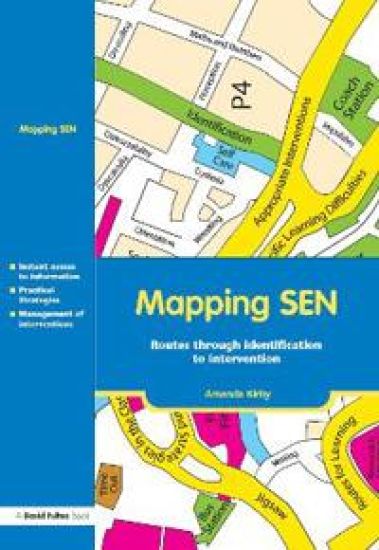
Mapping SEN

Mapping SEN

Amanda Kirby

Routledge
2020
sidottu
Providing practical guidance on enhancing learning through ICT in English this book is made up of a series of projects that supplement, augment and extend the QCA ICT scheme and provide much-needed links with Units in other subjects’ schemes of work. It includes: fact cards that support each project and clearly outline its benefits in relation to teaching and learningexamples of how activities work in "real" classroomslinks to research, inspection evidence and background reading to support each projectadaptable planning examples and practical ideas provided on accompanying downloadable resources.Suitable for all trainee and practising primary teachers.
Guide to Dyspraxia and Developmental Coordination Disorders
Built upon the good practice for which the Dyscovery Centre has become so well known, this book takes a broader view of the difficulties that those with additional needs face. It considers whether this is a health, educational or social difficulty and what the wider implications are for the individual and how they manage at home and in the community. The authors look at what happens, what can be done to help and what changes occur as the child becomes an adolescent and eventually an adult. Teachers, SENCOs, teaching assistants, occupational therapists, physiotherapists, speech and language therapists and parents of children with dyspraxia or developmental co-ordination disorders should find this book stimulates their thinking and helps them in their work.
How to Succeed in Employment with Specific Learning Difficulties
From getting started choosing a career, tips on job interviews to information on life in employment, starting from induction onwards, daily management of a workload, selling strengths, and even guidance on how to build a good balance between work and home life, Amanda Kirby identifies the best strategies to use for success, both professionally and personally. While being in a new job can be exciting, it can also provoke anxious feelings of not being quite sure what to do and when to act. The information in this book is the ideal preparation for the challenges, and new opportunities, ahead. Drawing on decades of practical experience, as well as her academic expertise, Amanda Kirby provides a comprehensive range of helpful information built from contributions from many people with specific learning difficulties who have gone through this experience, and professionals working in the field. This is an easy to use guide that will prepare anyone for all aspects of life in employment (including links to useful apps and free software) and is a must-have guide for all employers.
How to Succeed at College and University with Specific Learning Difficulties
For any adult with specific learning difficulties, going to college or university can be a challenge. From study skills to budgeting, from cooking to relationships, Amanda Kirby identifies routes to success in both education and socially. At the heart of How To Succeed with Specific Learning Difficulties at College and University is its practical approach to provide information and advice that is easy to access and to use. Drawing on decades of practical, professional and academic experience, Amanda Kirby provides solutions that are very accessible. How To Succeed with Specific Learning Difficulties at College and University provides opportunities for further reading and directs you to relevant apps and websites. Prior to Amanda Kirby's book, helpful information was very difficult to obtain; now, having this information all in one place is like a gold mine. How To Succeed with Specific Learning Difficulties at College and University covers: - Preparing for College and University - Getting and Staying Organised - Independent Living - Study Skills - Socialising and Feeling Good - Preparing for the Workplace For any adult with specific learning difficulties going to college or university can be a challenge. These can present in the work and home setting, learning new skills, meeting new people, and coping with a new environment. From study skills to budgeting, from cooking to relationships, Amanda Kirby identifies routes to success in both education and socially. At the heart of this book is its practical approach to provide information and advice that is easy to access and to use. Drawing on decades of practical, professional and academic experience Amanda Kirby provides solutions that are not only very accessible but also directs you to further reading and resources including apps and websites. Having this information all in one place is like a gold mine, as it has been previously scattered and very hard to find.
Mapping SEN

Mapping SEN

Amanda Kirby

David Fulton Publishers Ltd
2006
nidottu
Providing practical guidance on enhancing learning through ICT in English this book is made up of a series of projects that supplement, augment and extend the QCA ICT scheme and provide much-needed links with Units in other subjects’ schemes of work. It includes: fact cards that support each project and clearly outline its benefits in relation to teaching and learningexamples of how activities work in "real" classroomslinks to research, inspection evidence and background reading to support each projectadaptable planning examples and practical ideas provided on accompanying downloadable resources.Suitable for all trainee and practising primary teachers.
The Adolescent with Developmental Co-ordination Disorder (DCD)
Adolescence is hard for most of us, but for an individual with Developmental Co-ordination Disorder (DCD) it can be twice as hard. Amanda Kirby, Medical Director of the Dyscovery Centre and the mother of a DCD child herself, addresses the main difficulties encountered by adolescents with DCD, including building relationships and coping with secondary school. With a common sense approach she provides a series of practical ideas on how individuals can tackle these difficulties, making The Adolescent with Developmental Co-ordination Disorder an essential resource for adolescents with DCD, as well as parents, teachers and health professionals.
Guide to Dyspraxia and Developmental Coordination Disorders

Guide to Dyspraxia and Developmental Coordination Disorders

Amanda Kirby; Sharon Drew

David Fulton Publishers Ltd
2003
nidottu
Built upon the good practice for which the Dyscovery Centre has become so well known, this book takes a broader view of the difficulties that those with additional needs face. It considers whether this is a health, educational or social difficulty and what the wider implications are for the individual and how they manage at home and in the community. The authors look at what happens, what can be done to help and what changes occur as the child becomes an adolescent and eventually an adult. Teachers, SENCOs, teaching assistants, occupational therapists, physiotherapists, speech and language therapists and parents of children with dyspraxia or developmental co-ordination disorders should find this book stimulates their thinking and helps them in their work.
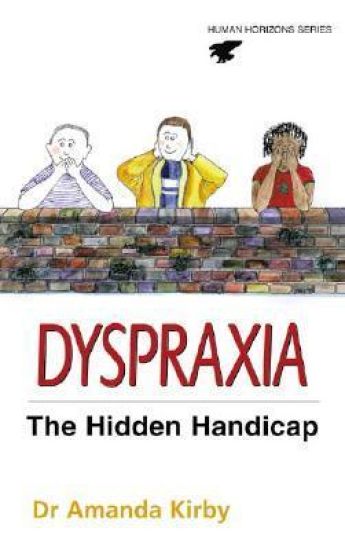
Dyspraxia

Dyspraxia

Amanda Kirby

Souvenir Press Ltd
1999
nidottu
Discusses the condition of dyspraxia which causes motor ability problems for children, and includes information on symptoms, a glossary of techincal terms, and a list of resources.