Kirjojen hintavertailu. Mukana 12 390 323 kirjaa ja 12 kauppaa.

Kirjailija

Amanda Rees

Kirjat ja teokset yhdessä paikassa: 6 kirjaa, julkaisuja vuosilta 2004-2026, suosituimpien joukossa Science, Religion, and the Human Future. Vertaile teosten hintoja ja tarkista saatavuus suomalaisista kirjakaupoista.

6 kirjaa

Kirjojen julkaisuhaarukka 2004-2026.

Science, Religion, and the Human Future

Science, Religion, and the Human Future

Amanda Rees; Franziska E. Kohlt; Tom McLeish; Charlotte Sleigh; David Wilkinson

Oxford University Press
2026
sidottu
Science, Religion, and the Human Future: Conflict, Collusion, and Consequences demonstrates that the myth of an inevitable conflict between science and faith is based on a misunderstanding of history, with potentially adverse consequences for human futures. The work focuses first upon ancient, medieval and Islamic scholars and the intimate connections they made between theology and the investigation of the natural world-and why we know so little about them. Moving into the modern era, it argues that one of the most concerning features of the science-faith relationship was their collusion in defining and validating the 'civilising mission' of Western imperialism. This collusion recontextualises the creation of the conflict thesis. Turning to the present day, the book investigates episodes of scientific controversy in which effective science communication was hindered not as a result of a clash between science and faith but because of a close and unexamined entanglement between the two. In cases ranging from space colonisation to AI, climate change to Covid-19, the problem is not so much science's split from faith as the unexamined and problematic theologies that remain implicit within it. Learning from these examples, the book outlines some productive and non-conflict-based frameworks for talking about science and faith in the future.

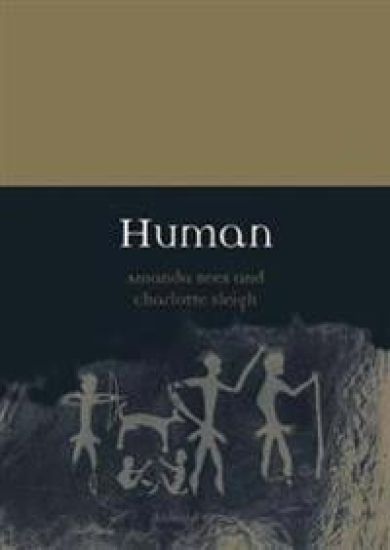
Human

Human

Amanda Rees; Charlotte Sleigh

Reaktion Books
2020
nidottu
What does it mean to be human? And what, if anything, does it have to do with being a member of the animal species Homo sapiens? This dazzling book gets to the very heart of our (rather unscientific) motivations and prejudices about humanity, showing how, by understanding them, we can go some way to resolving the world’s biggest problems. From beasts to aliens, widespread but often problematic links with six other beings are explored. Deep philosophical questions are tackled, including humanity’s common purpose, life’s meaning and what it means to be accepted as part of a community. Global in its outlook and illustrated by stunning pictures, Human is a powerful, funny and iconoclastic antidote to post-humanism.
The Infanticide Controversy

The Infanticide Controversy

Amanda Rees

University of Chicago Press
2009
sidottu
Infanticide in the natural world might be a relatively rare event, but, as Amanda Rees shows, it has enormously significant consequences. Identified in the 1960s as a phenomenon worthy of investigation, infanticide had, by the 1970s, become the focus of serious controversy. The suggestion, by Sarah Hrdy, that it might be the outcome of an evolved strategy intended to maximize an individual's reproductive success sparked furious disputes between scientists, disagreements that have continued down to the present day. Meticulously tracing the history of the infanticide debates, and drawing on extensive interviews with field scientists, Rees investigates key theoretical and methodological themes that have characterized field studies of apes and monkeys in the twentieth century. As a detailed study of the scientific method and its application to field research, "The Infanticide Controversy" sheds new light on our understanding of scientific practice, focusing in particular on the challenges of working in 'natural' environments, the relationship between objectivity and interpretation in an observational science, and the impact of the public profile of primatology on the development of primatological research. Most importantly, it also considers the wider significance that the study of field science has in a period when the ecological results of uncontrolled human interventions in natural systems are becoming ever more evident.
The Great Plains Region

The Great Plains Region

Amanda Rees

Greenwood Press
2004
sidottu
The Great Plains region has cast an indelible image on the panorama of American culture. The vast expanses of land encompassed in Kansas, Nebraska, North Dakota, Oklahoma, South Dakota and surrounding areas have been home to an often overlooked cultural diversity. The Sun Dance of the Kiowan tribe, the folk ballads of Woody Guthrie, the fiction of Willa Cather and Louise Erdrich, the Great Plains school of architecture, bierocks (a.k.a. savory pie sandwiches), Buffalo soldier fashion, Territory Jazz and Native American hip-hop-all these elements and countless other have contributed to the patchwork of Great Plains regional cultures. Detailed narrative chapters on thirteen categories, each with illustrations and sidebars, of Great Plains culture provide an unprecedented look at the many ways in which America's Heartland have served as an oft-unheralded cross-section of America's melting pot, and each concludes with recommended further resources on the topic. This volume also includes an introductory essay on Great Plains regional identity as well as a timeline, bibliography, and index.The Greenwood Encyclopedia of American Regional Cultures is the first rigorous reference collection on the many ways in which American identity has been defined by its regions and its people. Each of its eight regional volumes presents thoroughly researched narrative chapters on Architecture; Art; Ecology & Environment; Ethnicity; Fashion; Film & Theater; Folklore; Food; Language; Literature; Music; Religion; and Sports & Recreation. Each chapters includes a Resource Guide with a carefully selected list of print publications, Web sites, organizations, as well as festivals, recordings, videos, special collections, and other sources for information when appropriate. All books in this set have a volume-specific introduction, as well as a series foreword by noted regional scholar and former National Endowment for the Humanities chairman William Ferris, who served as Consulting Editor for this encyclopedia.