Kirjojen hintavertailu. Mukana 12 390 323 kirjaa ja 12 kauppaa.
Kirjailija
Amos Yong
Kirjat ja teokset yhdessä paikassa: 56 kirjaa, julkaisuja vuosilta 2005-2026, suosituimpien joukossa The Hermeneutical Spirit II. Vertaile teosten hintoja ja tarkista saatavuus suomalaisista kirjakaupoista.
Efforts to construct a Christian theology of religions have inevitably stumbled on the Christian scandal of particularity--the historical Jesus of Nazareth. What, however, if we began by focusing on the universal presence and activity of God in the world as symbolized by the Holy Spirit? Yong develops just such a pneumatological approach to religions, drawing, by way of resource, on the Pentecostal-charismatic experience of the Spirit. This book thus invites Pentecostals, charismatics, and other Christians to conceive of how a pneumatological approach to religions can invigorate the wider ecumenical conversation. At the same time, it also brings recent Pentecostal-charismatic scholarship into dialogue with a broader audience, including those interested in philosophical theology, world religions, global spiritualities, and comparative religion and theology. ""Yong is truly a pioneer."" Geoffrey Parrinder, Epworth Review Amos Yong is Professor of Theology & Mission and Director of the Center for Missiological Research at Fuller Theological Seminary, Pasadena, California.
This collection of fifteen sermons by one of the leading pentecostal theologians today provides insight into the form, style, and content of preaching in the pentecostal tradition while also being suggestive of normative homiletical theory and practice. The Kergymatic Spirit argues that Spirit-empowered preaching is apostolic not only with regard to being rooted in the scriptural traditions but also with regard to connecting the that of the early Christian message with the this of contemporary experience and discipleship. Hence, rather than only reflecting pentecostal preaching of the sort that happens in the pulpits of churches connected to the modern movement by that name, these sermons are presented as the participating in the form of gospel proclamation inspired and empowered by the divine Spirit poured out on all flesh on the Day of Pentecost by the risen Christ from the right hand of the Father. Whether read or heard (there are links to video and audio archives throughout), these homilies are illustrative of exegetical and expositional practice that connects the biblical text with Spirit-filled faithfulness in the twenty-first-century ecumenical church and world at large. ""Many of today's best preachers know how to be timeless and timely. In The Kerygmatic Spirit, Amos Yong strikes that balance. His sermons bring together profound truths and accessible language, faithfulness to the text and to the modern context, appeals to the mind with appeals to the heart and the will. Perhaps most importantly, Dr. Yong's example reminds us that our preaching is better when we theologize, and our theology is better when we preach."" --Jared E. Alcantara, Baylor University's Truett Theological Seminary, Waco, Texas ""This collection of sermons by a leading, Asian-American, Pentecostal theologian, Amos Yong, will set your hearts and minds on fire with the Holy Spirit. The homiletical focus of these sermons not only centers on the holistic work of the Spirit in the church and world, but they are fueled by the Spirit of the gospel of Jesus Christ. Read these and your spiritual burning will be matched by intellectual learning from one of the major theological thinkers in our time."" --Luke A. Powery, Dean, Duke University Chapel Amos Yong is Professor of Theology & Mission at Fuller Theological Seminary, Pasadena, California. Josh P. S. Samuel is Professor of Bible and Theology and Director of Worship and Creative Arts Ministry at Master's College and Seminary, Peterborough, Ontario. Tony Richie is adjunct Professor of Theology at Pentecostal Theological Seminary, Cleveland, Tennessee, and Lead Pastor at New Harvest Church of God, Knoxville, Tennessee.
This collection of fifteen sermons by one of the leading pentecostal theologians today provides insight into the form, style, and content of preaching in the pentecostal tradition while also being suggestive of normative homiletical theory and practice. The Kergymatic Spirit argues that Spirit-empowered preaching is apostolic not only with regard to being rooted in the scriptural traditions but also with regard to connecting the that of the early Christian message with the this of contemporary experience and discipleship. Hence, rather than only reflecting pentecostal preaching of the sort that happens in the pulpits of churches connected to the modern movement by that name, these sermons are presented as the participating in the form of gospel proclamation inspired and empowered by the divine Spirit poured out on all flesh on the Day of Pentecost by the risen Christ from the right hand of the Father. Whether read or heard (there are links to video and audio archives throughout), these homilies are illustrative of exegetical and expositional practice that connects the biblical text with Spirit-filled faithfulness in the twenty-first-century ecumenical church and world at large. ""Many of today's best preachers know how to be timeless and timely. In The Kerygmatic Spirit, Amos Yong strikes that balance. His sermons bring together profound truths and accessible language, faithfulness to the text and to the modern context, appeals to the mind with appeals to the heart and the will. Perhaps most importantly, Dr. Yong's example reminds us that our preaching is better when we theologize, and our theology is better when we preach."" --Jared E. Alcantara, Baylor University's Truett Theological Seminary, Waco, Texas ""This collection of sermons by a leading, Asian-American, Pentecostal theologian, Amos Yong, will set your hearts and minds on fire with the Holy Spirit. The homiletical focus of these sermons not only centers on the holistic work of the Spirit in the church and world, but they are fueled by the Spirit of the gospel of Jesus Christ. Read these and your spiritual burning will be matched by intellectual learning from one of the major theological thinkers in our time."" --Luke A. Powery, Dean, Duke University Chapel Amos Yong is Professor of Theology & Mission at Fuller Theological Seminary, Pasadena, California. Josh P. S. Samuel is Professor of Bible and Theology and Director of Worship and Creative Arts Ministry at Master's College and Seminary, Peterborough, Ontario. Tony Richie is adjunct Professor of Theology at Pentecostal Theological Seminary, Cleveland, Tennessee, and Lead Pastor at New Harvest Church of God, Knoxville, Tennessee.
Yes, White people can be saved. In God's redemptive plan, that goes without saying. But what about the reality of white normativity? This idea and way of being in the world has been parasitically joined to Christianity, and this is the ground of many of our problems today. It is time to redouble the efforts of the church and its institutions to muster well-informed, gospel-based initiatives to fight racialized injustice and overcome the heresy of whiteness. Written by a world-class roster of scholars, Can “White” People Be Saved? develops language to describe the current realities of race and racism. It challenges evangelical Christianity in particular to think more critically and constructively about race, ethnicity, migration, and mission in relation to white supremacy. Historical and contemporary perspectives from Africa and the African diaspora prompt fresh theological and missiological questions about place and identity. Native American and Latinx experiences of colonialism, migration, and hybridity inspire theologies and practices of shalom. And Asian and Asian American experiences of ethnicity and class generate transnational resources for responding to the challenge of systemic injustice. With their call for practical resistance to the Western whiteness project, the perspectives in this volume can revitalize a vision of racial justice and peace in the body of Christ. Missiological Engagements charts interdisciplinary and innovative trajectories in the history, theology, and practice of Christian mission, featuring contributions by leading thinkers from both the Euro-American West and the majority world whose missiological scholarship bridges church, academy, and society.
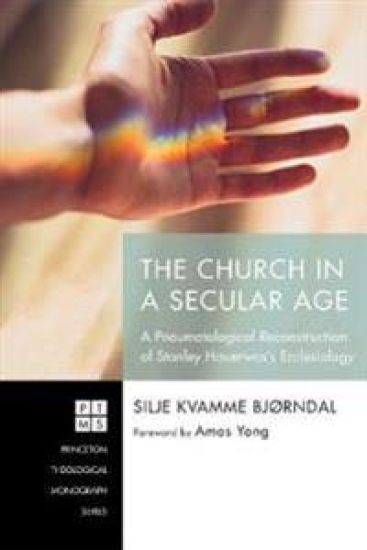
How can the church navigate the challenges of our secular age? In The Church in a Secular Age, Norwegian and Pentecostal scholar Silje Kvamme Bjorndal takes on three dynamic thinkers, each in their own way, in search for insights to this question. Philosopher Charles Taylor offers the backdrop for the conversation, as Bjorndal carefully sifts out some of his most central tenets for understanding our secular age. Bjorndal then turns to the theologian and ethicist Stanley Hauerwas and critically engages his notion of the church as a community set apart from our secular age. By bringing several of Hauerwas's interlocutors into the conversation, Bjorndal manages to bring out both the acute relevance and the shortcomings of his ecclesiology. Thus, she finds that another turn is needed in order to offer a concrete, as well as creative, contribution to this ecclesiological conversation. Considering the undeveloped pneumatological undercurrent in Hauerwas's work, it proves fruitful to engage the leading Pentecostal scholar Amos Yong and his foundational pneumatology. This engagement results in a shift of agency, from the community to the Spirit. And keeping up the dialogue with Taylor's secular age, Bjorndal demonstrates how the Spirit's agency is crucial for the church as it attempts to navigate the particular challenges (and opportunities) of a secular age. ""In her groundbreaking study, Silje Kvamme Bjorndal convincingly argues for a pneumatological reconstruction of ecclesiology. Through her focus on the agency of the Spirit in and through the church, she gives an important contribution to a renewed understanding of the church's mission in a secular age."" --Harald Hegstad, MF Norwegian School of Theology Silje Kvamme Bjorndal holds a PhD from the MF Norwegian School of Theology, and teaches at Norwegian School of Leadership and Theology. She currently works as political advisor to the Christian Democratic Party, in Church and Cultural affairs, at the Norwegian Parliament.
How can the church navigate the challenges of our secular age? In The Church in a Secular Age, Norwegian and Pentecostal scholar Silje Kvamme Bjorndal takes on three dynamic thinkers, each in their own way, in search for insights to this question. Philosopher Charles Taylor offers the backdrop for the conversation, as Bjorndal carefully sifts out some of his most central tenets for understanding our secular age. Bjorndal then turns to the theologian and ethicist Stanley Hauerwas and critically engages his notion of the church as a community set apart from our secular age. By bringing several of Hauerwas's interlocutors into the conversation, Bjorndal manages to bring out both the acute relevance and the shortcomings of his ecclesiology. Thus, she finds that another turn is needed in order to offer a concrete, as well as creative, contribution to this ecclesiological conversation. Considering the undeveloped pneumatological undercurrent in Hauerwas's work, it proves fruitful to engage the leading Pentecostal scholar Amos Yong and his foundational pneumatology. This engagement results in a shift of agency, from the community to the Spirit. And keeping up the dialogue with Taylor's secular age, Bjorndal demonstrates how the Spirit's agency is crucial for the church as it attempts to navigate the particular challenges (and opportunities) of a secular age. ""In her groundbreaking study, Silje Kvamme Bjorndal convincingly argues for a pneumatological reconstruction of ecclesiology. Through her focus on the agency of the Spirit in and through the church, she gives an important contribution to a renewed understanding of the church's mission in a secular age."" --Harald Hegstad, MF Norwegian School of Theology Silje Kvamme Bjorndal holds a PhD from the MF Norwegian School of Theology, and teaches at Norwegian School of Leadership and Theology. She currently works as political advisor to the Christian Democratic Party, in Church and Cultural affairs, at the Norwegian Parliament.
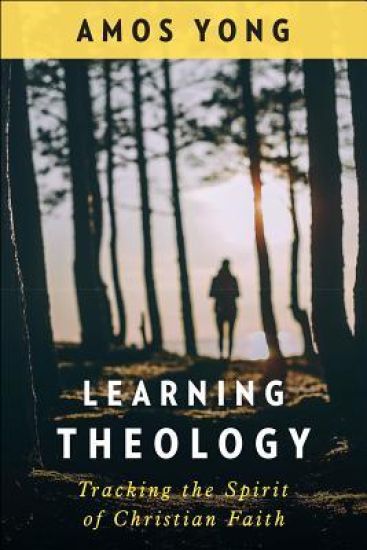
Theology—the attempt to come to a deeper, more faithful understanding of one's encounter with God—is something to which all Christians are called. In Learning Theology, Amos Yong invites the reader to lay claim to that calling and to see it as yet another opportunity to love God.Written for those taking their first course in the subject, this book introduces the foundational sources and tasks of theology. It asks what difference theology makes in our lives, how it can influence the way we write and study, and how we understand other forms of learning as part of the Spirit's leadership. Yong encourages the reader to see all of life through the lens of faith, and Learning Theology offers tools to more thoughtfully and faithfully perform that task.
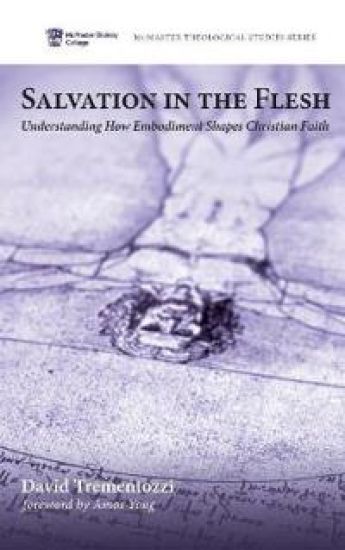
David Trementozzi contends that conservative-traditional Christianity has uncritically adopted an intellectualist (i.e., rationally-driven) view of faith in its understanding and practice of salvation. Throughout, he maintains that an intellectualist soteriology should be rejected because it prioritizes the rational over other behavioral and affective aspects of faith. An intellectualist rendering of salvation is incomplete because human experience is neither abstract nor gnostic--it is embodied and experientially relevant. An intellectualist soteriology simply cannot account for the dynamic and transforming possibilities of saving grace. Salvation in the Flesh offers an innovative perspective on the embodied nature of faith and the centrality of the Holy Spirit in the Christian doctrine of salvation. Drawing from the cognitive neurosciences and psychology, Trementozzi argues for a holistic awareness of cognition to better inform an embodied understanding of faith. In dialogue with the cognitive sciences, he appropriates Jonathan Edwards' theology of religious affections, early church practices, and pentecostal spirituality to highlight the soteriological significance of orthodoxy, orthopraxy, and orthopathy for a renewal soteriology of embodiment. In doing so, Trementozzi offers a vision of salvation that more thoroughly accounts for the multifarious ways God's saving grace interacts with human flesh and blood. ""Trementozzi articulates a sustained argument for a holistic soteriology in place of the evangelical (and Pentecostal) tendency to intellectualize faith and marginalize affective and behavioral dimensions of faith. . . . Thus, it makes an important contribution to the fields of evangelical and Pentecostal theology as well as to contemporary systematic and constructive approaches to theology."" --Steven M. Studebaker, Associate Professor, McMaster Divinity College ""David Trementozzi grants us a long overdue pneumatological soteriology that places its accent right where it belongs--embodiment. If the reader's notion of faith or of salvation starts with rational acceptance of theological propositions, then read this excellent book, and get ready to be challenged "" --Frank D. Macchia, Professor, Vanguard University of Southern California ""Salvation in the Flesh issues a passionate plea to embrace a holistic explanation of the Christian faith that accounts for the integration of intellect, behavior, and affections. Critiquing the lack of an embodied paradigm of salvation in conservative Christianity, Trementozzi invites to a renewal of soteriology by bridging the distance between orthodoxy, orthopraxy, and orthopathy. . . . This book casts a vibrant vision of salvation as embodied, ongoing, and social, creating new vistas for Christian mission, evangelism, theology, and discipleship."" --Wolfgang Vondey, University of Birmingham, United Kingdom ""Flesh, bodies, and physicality matter. At least they should to Christians. And yet sometimes overt, more often covert, claims by Christians undermine the importance of flesh. A big part of the problem is a faulty or at least limited view of salvation. David Trementozzi details the history of the problem, offers a solution, and calls us back to what matters: salvation that includes flesh. It makes my body want to jump and shout "" --Thomas Jay Oord, Professor, Northwest Nazarene University David Trementozzi is Dean of Graduate Studies and Professor of Theology at Continental Theological Seminary in Sint-Pieters-Leeuw, Belgium. David and his wife, Emily, live in Brussels with their three children: Judah, Kaleb, and Halle.
David Trementozzi contends that conservative-traditional Christianity has uncritically adopted an intellectualist (i.e., rationally-driven) view of faith in its understanding and practice of salvation. Throughout, he maintains that an intellectualist soteriology should be rejected because it prioritizes the rational over other behavioral and affective aspects of faith. An intellectualist rendering of salvation is incomplete because human experience is neither abstract nor gnostic--it is embodied and experientially relevant. An intellectualist soteriology simply cannot account for the dynamic and transforming possibilities of saving grace. Salvation in the Flesh offers an innovative perspective on the embodied nature of faith and the centrality of the Holy Spirit in the Christian doctrine of salvation. Drawing from the cognitive neurosciences and psychology, Trementozzi argues for a holistic awareness of cognition to better inform an embodied understanding of faith. In dialogue with the cognitive sciences, he appropriates Jonathan Edwards' theology of religious affections, early church practices, and pentecostal spirituality to highlight the soteriological significance of orthodoxy, orthopraxy, and orthopathy for a renewal soteriology of embodiment. In doing so, Trementozzi offers a vision of salvation that more thoroughly accounts for the multifarious ways God's saving grace interacts with human flesh and blood. ""Trementozzi articulates a sustained argument for a holistic soteriology in place of the evangelical (and Pentecostal) tendency to intellectualize faith and marginalize affective and behavioral dimensions of faith. . . . Thus, it makes an important contribution to the fields of evangelical and Pentecostal theology as well as to contemporary systematic and constructive approaches to theology."" --Steven M. Studebaker, Associate Professor, McMaster Divinity College ""David Trementozzi grants us a long overdue pneumatological soteriology that places its accent right where it belongs--embodiment. If the reader's notion of faith or of salvation starts with rational acceptance of theological propositions, then read this excellent book, and get ready to be challenged "" --Frank D. Macchia, Professor, Vanguard University of Southern California ""Salvation in the Flesh issues a passionate plea to embrace a holistic explanation of the Christian faith that accounts for the integration of intellect, behavior, and affections. Critiquing the lack of an embodied paradigm of salvation in conservative Christianity, Trementozzi invites to a renewal of soteriology by bridging the distance between orthodoxy, orthopraxy, and orthopathy. . . . This book casts a vibrant vision of salvation as embodied, ongoing, and social, creating new vistas for Christian mission, evangelism, theology, and discipleship."" --Wolfgang Vondey, University of Birmingham, United Kingdom ""Flesh, bodies, and physicality matter. At least they should to Christians. And yet sometimes overt, more often covert, claims by Christians undermine the importance of flesh. A big part of the problem is a faulty or at least limited view of salvation. David Trementozzi details the history of the problem, offers a solution, and calls us back to what matters: salvation that includes flesh. It makes my body want to jump and shout "" --Thomas Jay Oord, Professor, Northwest Nazarene University David Trementozzi is Dean of Graduate Studies and Professor of Theology at Continental Theological Seminary in Sint-Pieters-Leeuw, Belgium. David and his wife, Emily, live in Brussels with their three children: Judah, Kaleb, and Halle.
Pocos libros tienen un acercamiento que integra lo b blico, lo teol gico y lo ministerial sobre un tema tan ignorado pero necesario tanto en la teolog a como en la pr ctica eclesi stica.
In the contemporary biblical studies climate, proposals regarding the theological interpretation of Scripture are contested, particularly but not only because they privilege, encourage, and foster ecclesial or other forms of normative commitments as part and parcel of the hermeneutical horizon through which scriptural texts are read and understood. Within this context, confessional approaches have been emerging, including some from within the nascent pentecostal theological tradition. This volume builds on the author's previous work in theological method to suggest a pentecostal perspective on theological interpretation that is rooted in the conviction that all Christian reading of sacred Scripture is post-Pentecost, meaning after the Day of Pentecost outpouring of the Spirit on all flesh in anticipation of the coming reign of God. In that respect, such a pentecostal interpretative perspective is not parochially for those within the modern day movement bearing that name but is arguably apostolic in following after the scriptural imagination of the earliest disciples of Jesus the messiah and therefore has ecumenical and missional purchase across space and time. The Hermeneutical Spirit thus provides close readings of various texts across the scriptural canon as a model for Christian theological interpretation of Scripture suitable for the twenty-first-century global context. ""Amos Yong is one of the two or three Pentecostal theologians who ventures beyond the narrower confines of traditional Pentecostal writers. He has already written numerous books on the Holy Spirit, on hermeneutics, of Trinitarian faith, and ecumenical concerns. This volume reprints twelve earlier essays, but includes a fresh introduction and conclusion. I heartily commend his fresh thinking, his Trinitarian perspective, and hermeneutical sensitivity. This book is timely, and deserves a wide readership."" --Anthony C. Thiselton, Emeritus Professor, Christian Theology, University of Nottingham ""This is a valuable essay collection that contributes to the discussion of theological interpretation of scripture (TIS) by a leading evangelical and Pentecostal theologian. Yong advocates pneumatological interpretation of scripture (PIS) for the sake of a truly robust Trinitarian hermeneutics. PIS is not simply TIS done by Pentecostals, but TIS done in the light of the Pentecost event and, as such, is the privilege, and responsibility, of all Christians."" --Kevin J. Vanhoozer, Research Professor, Systematic Theology Trinity Evangelical Divinity School ""Amos Yong is a prolific theologian and represents the fast-growing Pentecostal movement. In recent decades that growth has been accompanied by a major resurgence of Pentecostal theology, of which Yong is a key representative. In this wide-ranging and creative book, Yong brings his recent work into dialogue with the renaissance of theological interpretation. This renaissance and the explosion of Pentecostalism are both important developments of our time and thus their coalescence in this book is indeed welcome. Yong rightly sees that theological interpretation opens out onto all of life and it is gratifying to see the wide-range of topics addressed including family, children, science, sin, liberation theology, other religions, disability and sport Leaning heavily on Acts 2 and Luke, Yong opens up a feast of interpretation, one which scholars of all Christian traditions will want to take note of, to learn from, and to engage in dialogue."" --Craig G. Bartholomew, Director, Kirby Laing Institute for Christian Ethics Amos Yong is Professor of Theology & Mission and Director of the Center for Missiological Research at Fuller Theological Seminary, Pasadena, California.
In the contemporary biblical studies climate, proposals regarding the theological interpretation of Scripture are contested, particularly but not only because they privilege, encourage, and foster ecclesial or other forms of normative commitments as part and parcel of the hermeneutical horizon through which scriptural texts are read and understood. Within this context, confessional approaches have been emerging, including some from within the nascent pentecostal theological tradition. This volume builds on the author's previous work in theological method to suggest a pentecostal perspective on theological interpretation that is rooted in the conviction that all Christian reading of sacred Scripture is post-Pentecost, meaning after the Day of Pentecost outpouring of the Spirit on all flesh in anticipation of the coming reign of God. In that respect, such a pentecostal interpretative perspective is not parochially for those within the modern day movement bearing that name but is arguably apostolic in following after the scriptural imagination of the earliest disciples of Jesus the messiah and therefore has ecumenical and missional purchase across space and time. The Hermeneutical Spirit thus provides close readings of various texts across the scriptural canon as a model for Christian theological interpretation of Scripture suitable for the twenty-first-century global context. ""Amos Yong is one of the two or three Pentecostal theologians who ventures beyond the narrower confines of traditional Pentecostal writers. He has already written numerous books on the Holy Spirit, on hermeneutics, of Trinitarian faith, and ecumenical concerns. This volume reprints twelve earlier essays, but includes a fresh introduction and conclusion. I heartily commend his fresh thinking, his Trinitarian perspective, and hermeneutical sensitivity. This book is timely, and deserves a wide readership."" --Anthony C. Thiselton, Emeritus Professor, Christian Theology, University of Nottingham ""This is a valuable essay collection that contributes to the discussion of theological interpretation of scripture (TIS) by a leading evangelical and Pentecostal theologian. Yong advocates pneumatological interpretation of scripture (PIS) for the sake of a truly robust Trinitarian hermeneutics. PIS is not simply TIS done by Pentecostals, but TIS done in the light of the Pentecost event and, as such, is the privilege, and responsibility, of all Christians."" --Kevin J. Vanhoozer, Research Professor, Systematic Theology Trinity Evangelical Divinity School ""Amos Yong is a prolific theologian and represents the fast-growing Pentecostal movement. In recent decades that growth has been accompanied by a major resurgence of Pentecostal theology, of which Yong is a key representative. In this wide-ranging and creative book, Yong brings his recent work into dialogue with the renaissance of theological interpretation. This renaissance and the explosion of Pentecostalism are both important developments of our time and thus their coalescence in this book is indeed welcome. Yong rightly sees that theological interpretation opens out onto all of life and it is gratifying to see the wide-range of topics addressed including family, children, science, sin, liberation theology, other religions, disability and sport Leaning heavily on Acts 2 and Luke, Yong opens up a feast of interpretation, one which scholars of all Christian traditions will want to take note of, to learn from, and to engage in dialogue."" --Craig G. Bartholomew, Director, Kirby Laing Institute for Christian Ethics Amos Yong is Professor of Theology & Mission and Director of the Center for Missiological Research at Fuller Theological Seminary, Pasadena, California.
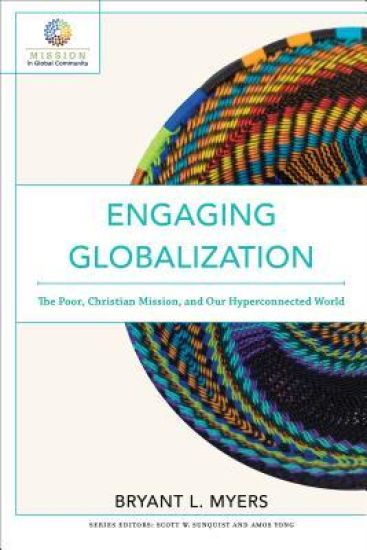
Christianity Today Book Award WinnerOutreach Resource of the Year (Multicultural)ASM (American Society of Missiology) Book of the Year AwardGlobalization is speeding up our world, extending our relationships globally and bringing us closer together in positive and not-so-positive ways. The church and many Christians, however, remain largely unaware of its seductive power, resulting in a failure of vision for mission in today's world. This up-to-date resource by a veteran leader in global development work with World Vision orients readers to the history of globalization and to a Christian theological perspective on it, explores concrete realities by focusing on global poverty, and helps readers reimagine Christian mission in ways that announce the truly good news of Christ and God's kingdom. Diagrams and sidebars that incorporate the voices of global partners are included. This is the second book in a new series that reframes missiological themes and studies for students using/featuring the common theme of mission as partnership with Christians.
Christianity Today Book Award WinnerASM (American Society of Missiology) Book of the Year AwardNamed one of Ten Outstanding Books of 2016 for Mission Studies, International Bulletin of Mission ResearchThis up-to-date textbook features global perspectives on current Christian engagement with Islam, equipping readers for mission among Muslims. Evelyne Reisacher, who has worked extensively with Muslims in Europe, helps readers move from fear to joy as they share the gospel with Muslims. Reisacher surveys areas where Muslims and Christians encounter one another in the twenty-first century, highlighting innovative models of Christian witness in everyday life. Drawing on insights from global Christianity, this survey takes account of diverse conceptions of Muslim-Christian relations. The book may surprise those who believe mission among Muslims is nearly impossible.This is the first book in the Mission in Global Community series, which reframes missiological themes and studies for students around the common theme of mission as partnership with others. Series authors draw upon their own global experience and that of their global colleagues to illumine present realities and chart a course into the future. Series editors are Scott W. Sunquist and Amos Yong.
The growth of Spirit-empowered Christianity has been nothing short of phenomenal. From a handful of believers in the early twentieth century to a global movement today numbering over 600 million people in almost every culture and denomination, those who embrace the Holy Spirit and His gifts are now the fastest growing religious group in the world. This book is an authoritative collection from more than two dozen leaders in and scholars of the Spirit-empowered movement in Asia and Oceania. Focusing on the future of the movement, these world-renowned scholars address the theological and cultural challenges of the new century and share emerging insights on how the next generation will face them."
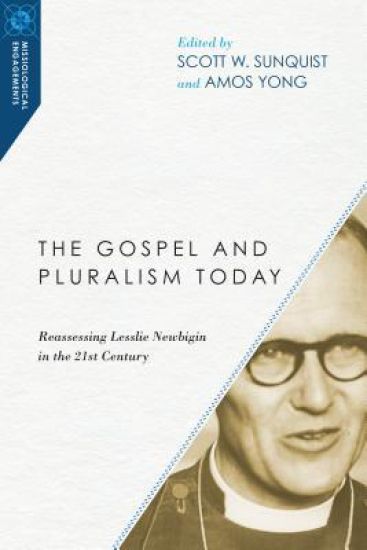
Hearts Minds Bookstore's Best Books of 2015, Theology Toward the end of the twentieth century, Lesslie Newbigin offered a penetrating analysis of the challenges of pluralism that confronted a Western culture and society reeling from the dissolution of Christendom. His enormous influence has been felt ever since. Newbigin (1909-1998) was a longtime Church of Scotland missionary to India and later General Secretary of the International Missionary Council and Associate General Secretary of the World Council of Churches. The first installment in the Missiological Engagements series, the essays in this volume explore three aspects of Newbigin?s legacy. First, they assess the impact of his 1989 book, Gospel in a Pluralist Society, on Christian mission and evangelism in the West. Second, they critically analyze the nature of Western pluralism in its many dimensions to discern how Christianity can proclaim good news for today. Finally, the contributors discuss the influence of Newbigin's work on the field of missiology. By looking backward, this volume recommends and advances a vision for Christian witness in the pluralistic world of the twenty-first century. Contributions from leading missiologists and theologians, including: William BurrowsJohn FlettVeli-Matti KärkkäinenEsther MeekWilbert Shenk Missiological Engagements charts interdisciplinary and innovative trajectories in the history, theology, and practice of Christian mission, featuring contributions by leading thinkers from both the Euro-American West and the majority world whose missiological scholarship bridges church, academy, and society.
The field of the theology of mission has developed variously across Christian traditions in the last century. Pentecostal scholars and missiologists also have made their share of contributions to this area. This book brings the insights of pentecostal theologian Amos Yong to the discussion. It delineates the major features of what will be argued as central to a viable vision and praxis for Christian mission in a postmodern, post-Christendom, post-Enlightenment, post-Western, and postcolonial world. What emerges will be a distinctively pentecostally- and evangelically-informed missiological theology, one rooted in the Christian salvation-history narrative of Incarnation and Pentecost that is yet open to the world in its many and various cultural, ethnic, religious, and disciplinary discourses and realities. The argument unfolds through dialogical engagements with the work of others, concrete case studies, and systematic theological reflection. Yong's pneumatological and missiological imagination proffers a model for Christian theology of mission suitable for the twenty-first-century global and pluralistic context even as it exemplifies how a missiological understanding of theology itself unfolds amidst engagements with contemporary ecclesial practices and academic/theological impulses.
Contemporary proposals for Christian theology from post-liberalism to Radical Orthodoxy and beyond have espoused their own methodological paradigms. Those who have ventured into this domain of theological method, however, have usually had to stake their claims vis-à-vis trends in what may be called the contemporary