Kirjojen hintavertailu. Mukana 12 390 323 kirjaa ja 12 kauppaa.

Kirjailija

Amy B.M. Tsui

Kirjat ja teokset yhdessä paikassa: 4 kirjaa, julkaisuja vuosilta 2003-2008, suosituimpien joukossa Classroom Discourse and the Space of Learning. Vertaile teosten hintoja ja tarkista saatavuus suomalaisista kirjakaupoista.

Mukana myös kirjoitusasut: Amy B. M. Tsui

4 kirjaa

Kirjojen julkaisuhaarukka 2003-2008.

Learning in School-University Partnership

Learning in School-University Partnership

Amy B.M. Tsui; Gwyn Edwards; Fran Lopez-Real; Tammy Kwan; Doris Law; Philip Stimpson; Rosina Tang; Albert Wong

Routledge Member of the Taylor and Francis Group
2008
sidottu
This volume looks at school-university partnerships from sociocultural perspectives of learning that view participation in social practice as fundamental to the process of learning. Its two major themes – school-university partnership and sociocultural and social theories of learning – have both been treated extensively in the literature. It is the bringing together of these two themes that makes this book unique. In this examination of an evolving model of school-university partnership, the Unified Professional Development Project in Hong Kong, the authors analyze the learning that takes place as the participants (student-teachers, mentor teachers, and university supervisors) mutually engage in the enterprise of improving teaching and learning in schools, developing shared practices, and creating new communities of practice. Although it describes one specific context, the book is not just about this locale. Rather, the Unified Professional Development Project is used as a context for theorizing more generally a social theory of learning for school-university partnerships that is relevant to any other similar context. This book will interest teacher educators, researchers in teacher education and teacher development, policy makers, and school practitioners who are involved in school-university partnerships.
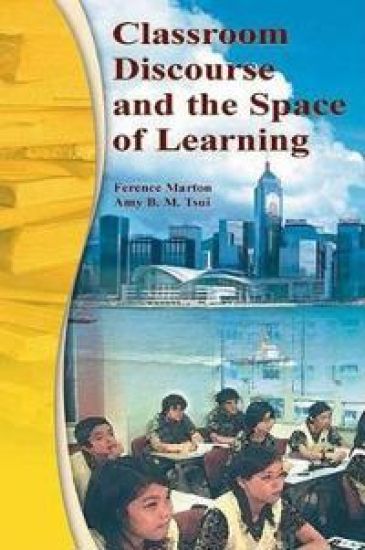
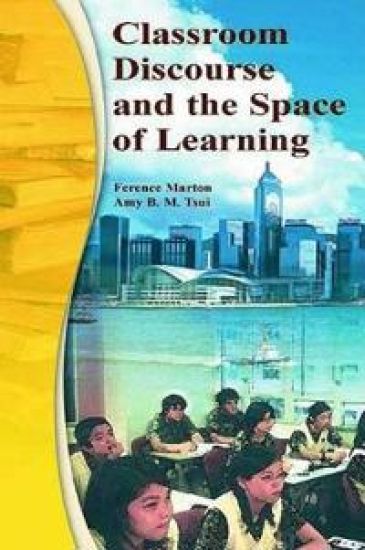
Classroom Discourse and the Space of Learning

Classroom Discourse and the Space of Learning

Ference Marton; Amy B.M. Tsui; Pakey P.M. Chik; Po Yuk Ko; Mun Ling Lo

Routledge Member of the Taylor and Francis Group
2004
sidottu
Classroom Discourse and the Space of Learning is about learning in schools and the central role of language in learning. The investigations of learning it reports are based on two premises: First, whatever you are trying to learn, there are certain necessary conditions for succeeding--although you cannot be sure that learning will take place when those conditions are met, you can be sure that no learning will occur if they are not. The limits of what is possible to learn is what the authors call "the space of learning." Second, language plays a central role in learning--it does not merely convey meaning, it also creates meaning. The book explicates the necessary conditions for successful learning and employs investigations of classroom discourse data to demonstrate how the space of learning is linguistically constituted in the classroom.Classroom Discourse and the Space of Learning:*makes the case that an understanding of how the space of learning is linguistically constituted in the classroom is best achieved through investigating "classroom discourse" and that finding out what the conditions are for successful learning and bringing them about should be the teacher's primary professional task. Thus, it is fundamentally important for teachers and student teachers to be given opportunities to observe different teachers teaching the same thing, and to analyze and reflect on whether the classroom discourse in which they are engaged maximizes or minimizes the conditions for learning;*is both more culturally situated and more generalizable than many other studies of learning in schools. Each case of classroom teaching clearly demonstrates how the specific language, culture, and pedagogy molds what is happening in the classroom, yet at the same time it is possible to generalize from these culturally specific examples the necessary conditions that must be met for the development of any specific capability regardless of where the learning is taking place and what other conditions might be present; and *encompasses both theory and practice--providing a detailed explication of the theory of learning underlying the analyses of classroom teaching reported, along with close analyses of a number of authentic cases of classroom teaching driven by classroom discourse data which have practical relevance for teachers.Intended for researchers and graduate students in education, teacher educators, and student teachers, Classroom Discourse and the Space of Learning is practice- and content-oriented, theoretical, qualitative, empirical, and focused on language, and links teaching and learning in significant new ways.
Classroom Discourse and the Space of Learning

Classroom Discourse and the Space of Learning

Ference Marton; Amy B.M. Tsui; Pakey P.M. Chik; Po Yuk Ko; Mun Ling Lo

Routledge Member of the Taylor and Francis Group
2004
nidottu
Classroom Discourse and the Space of Learning is about learning in schools and the central role of language in learning. The investigations of learning it reports are based on two premises: First, whatever you are trying to learn, there are certain necessary conditions for succeeding--although you cannot be sure that learning will take place when those conditions are met, you can be sure that no learning will occur if they are not. The limits of what is possible to learn is what the authors call "the space of learning." Second, language plays a central role in learning--it does not merely convey meaning, it also creates meaning. The book explicates the necessary conditions for successful learning and employs investigations of classroom discourse data to demonstrate how the space of learning is linguistically constituted in the classroom.Classroom Discourse and the Space of Learning:*makes the case that an understanding of how the space of learning is linguistically constituted in the classroom is best achieved through investigating "classroom discourse" and that finding out what the conditions are for successful learning and bringing them about should be the teacher's primary professional task. Thus, it is fundamentally important for teachers and student teachers to be given opportunities to observe different teachers teaching the same thing, and to analyze and reflect on whether the classroom discourse in which they are engaged maximizes or minimizes the conditions for learning;*is both more culturally situated and more generalizable than many other studies of learning in schools. Each case of classroom teaching clearly demonstrates how the specific language, culture, and pedagogy molds what is happening in the classroom, yet at the same time it is possible to generalize from these culturally specific examples the necessary conditions that must be met for the development of any specific capability regardless of where the learning is taking place and what other conditions might be present; and *encompasses both theory and practice--providing a detailed explication of the theory of learning underlying the analyses of classroom teaching reported, along with close analyses of a number of authentic cases of classroom teaching driven by classroom discourse data which have practical relevance for teachers.Intended for researchers and graduate students in education, teacher educators, and student teachers, Classroom Discourse and the Space of Learning is practice- and content-oriented, theoretical, qualitative, empirical, and focused on language, and links teaching and learning in significant new ways.
Understanding Expertise in Teaching

Understanding Expertise in Teaching

Amy B. M. Tsui

Cambridge University Press
2003
pokkari
Amy Tsui has provided a major service to the field of applied linguistics in this first detailed study of what expertise in language teaching consists of and how it develops in language teachers. Through exploring the classroom practices and knowledge of her subjects, in four illuminating case studies, Dr. Tsui succeeds in clarifying the nature of expertise in language teaching, the factors that shape and influence its development, and how teachers employ their expertise in teaching. In the process, the author critically examines an extensive literature on teacher cognition and shows how teachers’ theories, knowledge, experience and goals shape their classroom practices and their ability to move from novice to expert. Understanding Expertise in Teaching is a valuable addition to the literature on teacher cognition in language teaching and will be of considerable interest to researchers, teachers, and teacher educators in Applied Linguistics and TESOL.