Kirjojen hintavertailu. Mukana 12 459 402 kirjaa ja 12 kauppaa.

Kirjailija

Amy Erica Smith

Kirjat ja teokset yhdessä paikassa: 3 kirjaa, julkaisuja vuosilta 2019-2022, suosituimpien joukossa Religion and Brazilian Democracy. Vertaile teosten hintoja ja tarkista saatavuus suomalaisista kirjakaupoista.

3 kirjaa

Kirjojen julkaisuhaarukka 2019-2022.

The Knowledge Polity

The Knowledge Polity

Paul A. Djupe; Anand Edward Sokhey; Amy Erica Smith

OXFORD UNIVERSITY PRESS INC
2022
nidottu
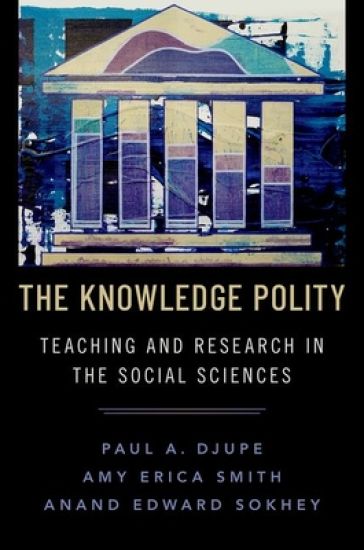
Drawing on surveys of diverse social science faculty, three acclaimed scholars develop a rich and sometimes surprising portrait of who produces research, teaches students, and contributes to the business of higher education - and how, when, and why. In The Knowledge Polity, Paul A. Djupe, Amy Erica Smith, and Anand Edward Sokhey envision academics as members of a polity where the primary output is knowledge and citizenship comes with rights and responsibilities. Leveraging the 2017 Professional Activity in the Social Sciences (PASS) Study, they develop a theoretically and empirically rich account of who produces knowledge, and how. The data enable an unparalleled understanding of the nature and sources of inequalities by gender and racial or ethnic identification in the disciplines of sociology and political science in the US. To explain those inequalities, the authors consider academics as embedded in institutional and social contexts-including their home lives-and carefully consider their personalities and changing compositions of the academic workforce. A comprehensive and wide-ranging analysis, this book documents patterns that have long been shrouded in anecdote and enables scholars from across the social and behavioral sciences to make empirically-grounded decisions about their individual and collective futures.
Religion and Brazilian Democracy

Religion and Brazilian Democracy

Amy Erica Smith

Cambridge University Press
2022
pokkari
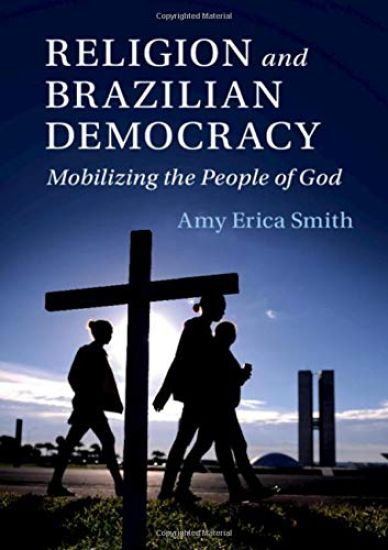
As Brazilian democracy faces a crisis of legitimacy, political divisions grow among Catholic, evangelical, and non-religious citizens. What has caused religious polarization in Brazilian politics? Does religious politics shore up or undermine democracy? Religion and Brazilian Democracy: Mobilizing the People of God uses engaging anecdotes and draws on a wealth of data from surveys and survey experiments with clergy, citizens, and legislators, to explain the causes and consequences of Brazil's 'culture wars'. Though political parties create culture war conflict in established democracies, in Brazil's weak party system religious leaders instead drive divisions. Clergy leverage legislative and electoral politics strategically to promote their own theological goals and to help their religious groups compete. In the process, they often lead politicians and congregants. Ultimately, religious politics pushes Brazilian politics rightward and further fragments parties. Yet Religion and Brazilian Democracy also demonstrates that clergy-led politics stabilizes Brazilian democracy and enhances representation.
Religion and Brazilian Democracy

Religion and Brazilian Democracy

Amy Erica Smith

Cambridge University Press
2019
sidottu
As Brazilian democracy faces a crisis of legitimacy, political divisions grow among Catholic, evangelical, and non-religious citizens. What has caused religious polarization in Brazilian politics? Does religious politics shore up or undermine democracy? Religion and Brazilian Democracy: Mobilizing the People of God uses engaging anecdotes and draws on a wealth of data from surveys and survey experiments with clergy, citizens, and legislators, to explain the causes and consequences of Brazil's 'culture wars'. Though political parties create culture war conflict in established democracies, in Brazil's weak party system religious leaders instead drive divisions. Clergy leverage legislative and electoral politics strategically to promote their own theological goals and to help their religious groups compete. In the process, they often lead politicians and congregants. Ultimately, religious politics pushes Brazilian politics rightward and further fragments parties. Yet Religion and Brazilian Democracy also demonstrates that clergy-led politics stabilizes Brazilian democracy and enhances representation.